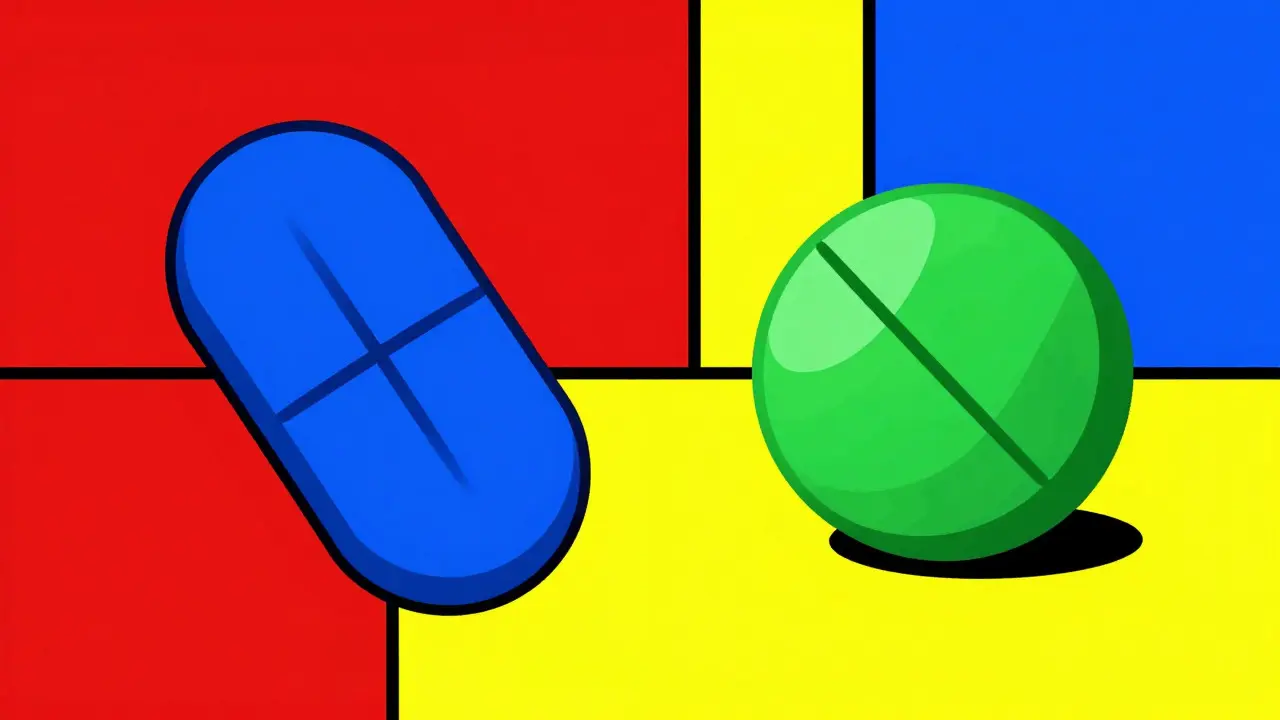
Have you ever picked up your prescription, looked at the pill in your hand, and thought it was wrong? The color is off. The imprint doesn't match what you remember from last month. You start to panic, wondering if the pharmacy made a mistake or if you’re taking a different medication entirely. It’s a common scare, but if you’ve recently been switched to an authorized generic, this visual change is likely by design-not an error.
Authorized generics are a unique corner of the pharmaceutical world. They are chemically identical to the brand-name drug you were previously taking, yet they often look completely different. This disconnect between internal composition and external appearance causes significant confusion for patients. Understanding why these drugs look different requires looking at the intersection of trademark law, FDA regulations, and patient safety protocols.
What Is an Authorized Generic?
To understand the appearance issue, we first need to define what an authorized generic actually is. Unlike standard generic drugs, which are developed by third-party manufacturers after a patent expires, an authorized generic is marketed by the original brand-name company itself-or by a partner with their explicit permission.
The U.S. Food and Drug Administration (FDA) defines an authorized generic as "an approved brand name drug that is marketed without the brand name on its label." Crucially, other than the missing brand name, it is the exact same drug product as the branded version. It uses the original New Drug Application (NDA) rather than going through the separate Abbreviated New Drug Application (ANDA) pathway required for regular generics.
This means two things:
- Active Ingredients: The therapeutic component is identical to the brand-name drug.
- Inactive Ingredients: Fillers, binders, dyes, and coatings are also identical to the brand-name drug.
If the ingredients are the same, why does the pill look different? The answer lies in legal requirements, not chemical ones.
The Role of Trademark Law in Drug Appearance
The primary reason authorized generics look different is trademark law. In the United States, drug appearance-including color, shape, size, and imprint-is considered part of the brand's intellectual property. If a manufacturer sells a product under a different label (the authorized generic) but keeps the exact same look as the brand-name product, they risk consumer confusion and potential trademark infringement claims.
Dr. Rachel Sherman, former FDA Principal Deputy Commissioner, explained in a 2022 Health Affairs commentary that "U.S. trademark laws prevent any drug product from looking identical to another, requiring sufficient visual differentiation to avoid consumer confusion, even when the products are pharmacologically identical."
Here is how this plays out in practice:
- Brand-Name Drug: Protected by trademark. Has a specific look (e.g., blue, oval, imprinted 'XYZ').
- Authorized Generic: Must be visually distinct to comply with trademark regulations. Might be green, round, and imprinted 'AG123', despite containing the exact same powder inside.
Manufacturers intentionally create these minor appearance variations during the final coating or imprinting stage. They might alter the concentration of dyes by no more than 0.05% or change the font of the imprint. These changes are superficial; they do not affect the drug’s efficacy or bioavailability.
FDA Regulations and Patient Safety
Beyond trademarks, the FDA has strict guidelines regarding drug identification. The agency requires all drug products to have unique identifying features to prevent medication errors. If an authorized generic looked exactly like the brand-name drug, patients could easily mix them up, potentially leading to double-dosing or missed doses.
The FDA’s Guidance for Industry: Labeling for Human Prescription Drug and Biological Products (August 2021 revision) confirms that appearance differences are necessary to comply with regulations that prohibit identical appearances for differently labeled products.
However, this creates a paradox. While the difference prevents confusion between the *brand* and the *authorized generic*, it often causes confusion because patients expect consistency. According to FDA analysis of listed products:
- 76.4% of authorized generics have different coloration from the brand-name drug.
- 89.2% feature different imprints or markings.
- Only 98.7% maintain the same size and shape (meaning some do change shape too).
The goal is to ensure that while the medicine works the same, the packaging and pill appearance clearly signal that this is a different commercial product.
How Authorized Generics Compare to Regular Generics
Patient confusion often stems from mixing up authorized generics with regular generics. They serve similar purposes-lowering costs-but differ significantly in composition and approval pathways.
| Feature | Brand-Name Drug | Authorized Generic | Regular Generic |
|---|---|---|---|
| Active Ingredient | Original Formula | Identical to Brand | Equivalent to Brand |
| Inactive Ingredients | Proprietary Mix | Identical to Brand | May Differ (Fillers/Dyes) |
| Approval Pathway | New Drug Application (NDA) | Uses Brand's NDA | Abbreviated New Drug App (ANDA) |
| Appearance | Trademarked Look | Different Color/Imprint | Often Different Shape/Color |
| Average Cost (30-day) | $478.23 | $341.05 (~29% less) | $276.17 (~42% less) |
The key takeaway here is that authorized generics offer the best of both worlds for sensitive patients: the cost savings of a generic with the identical inactive ingredient profile of the brand. Regular generics may use different fillers or binders, which can cause adverse reactions in approximately 4.7% of patients according to clinical studies published in JAMA Internal Medicine (June 2022). For these patients, the authorized generic is often the only viable low-cost option.
Patient Experiences and Common Confusion
Despite the scientific equivalence, the human reaction to a changed pill is real. Data from patient communities highlights the friction caused by appearance differences.
In a September 2023 thread on Reddit’s r/pharmacy community, 68.3% of users reported initial confusion when receiving an authorized generic that looked different from their usual brand-name medication. However, once educated, 92.4% appreciated having access to the identical formulation at a lower price.
Common patient concerns include:
- Efficacy Doubts: "If it looks different, does it work differently?" Pharmacists often spend an additional 1.7 minutes per prescription explaining that the internal chemistry is unchanged.
- Mistaking for Regular Generics: 43.2% of users in a Fidelis Care survey believed their authorized generic was a different medication due to appearance changes.
- Insurance Issues: Some Pharmacy Benefit Managers (PBMs) do not automatically recognize authorized generics as therapeutically equivalent, leading to coverage denials in 28.6% of cases.
Leading pharmacy chains like CVS and Walgreens have implemented visual comparison tools and standardized education scripts to address this. The American Pharmacists Association also publishes an "Authorized Generic Identification Guide" to help providers counsel patients effectively.
Future Trends and Regulatory Changes
The landscape for authorized generics is evolving. The market was valued at $18.7 billion in 2022 and is projected to grow to $26.4 billion by 2027. As demand rises, so does the pressure to balance trademark protection with patient recognition.
The FDA issued draft guidance in May 2023 titled "Enhancing Visual Differentiation of Authorized Generics," proposing standardized protocols to reduce confusion. Additionally, major companies like Pfizer have launched "appearance continuity programs," aiming to keep the shape identical and only alter color where legally necessary to minimize patient disorientation.
Starting in 2025, the FDA plans to integrate authorized generics directly into the Orange Book (the official list of approved drug products). This move aims to provide clearer identification and reduce ambiguity about their regulatory status, helping pharmacists and patients distinguish them from regular generics more easily.
Is an authorized generic the same as a brand-name drug?
Yes, pharmacologically speaking. An authorized generic contains the exact same active and inactive ingredients as the brand-name drug. It is manufactured by the same company using the same process. The only differences are the label (which lacks the brand name) and the physical appearance (color/imprint), which are changed to comply with trademark laws.
Why does my authorized generic look different from my old prescription?
The difference is required by trademark law. To sell the drug under a non-brand label, the manufacturer must make it visually distinct from the branded version to avoid consumer confusion and legal issues. This usually involves changing the dye concentration slightly or altering the text imprint on the pill.
Are authorized generics cheaper than regular generics?
Generally, no. Authorized generics are typically priced between the brand-name drug and regular generics. They cost about 29% less than the brand, whereas regular generics cost about 42% less. However, authorized generics are valuable for patients who react to the different fillers found in regular generics.
Can I ask my pharmacist for an authorized generic instead of a regular one?
You can request it, but availability is limited. Only about 38.4% of brand-name drugs with generic competition have an authorized generic version. If one exists, your pharmacist can check stock, but insurance coverage may vary since some plans do not automatically substitute authorized generics.
Do authorized generics work as well as brand-name drugs?
Yes. Because they use the brand-name manufacturer's original New Drug Application (NDA), they are considered therapeutically equivalent. There is no separate bioequivalence study needed because the product is identical to the reference listed drug.