
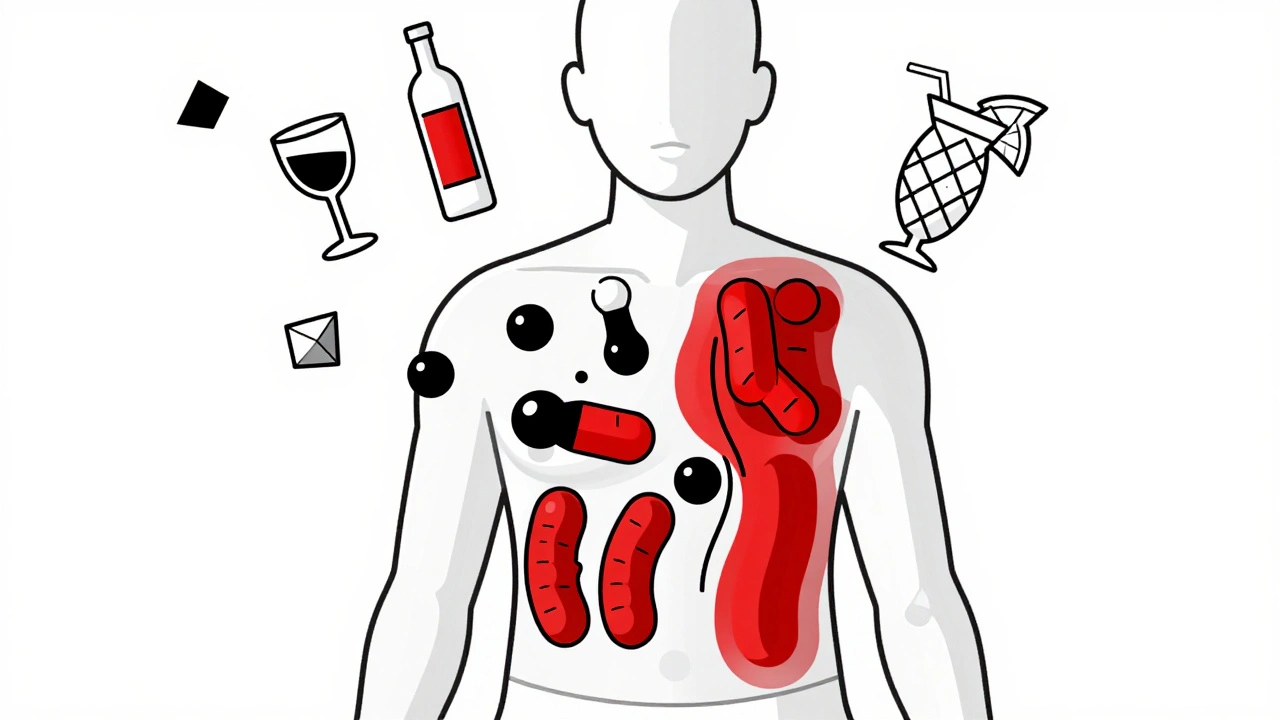
When you're trying to lose weight, alcohol might be the one thing you think you can’t give up - but it’s also one of the biggest hidden saboteurs. You’re not alone. Millions of people drink regularly while trying to shed pounds, and they’re often confused when the scale won’t budge. The problem isn’t just that alcohol has calories. It’s that it messes with your body’s entire fat-burning system, makes you hungrier, and ruins your willpower - all at once.
Alcohol Has More Calories Than You Think
Let’s start with the basics: alcohol has 7 calories per gram. That’s almost twice as much as protein or carbs, and only a little less than fat. A standard 12-ounce beer? Around 150 calories. A 5-ounce glass of wine? About 125. A 1.5-ounce shot of vodka? Just 100. Sounds manageable, right? Until you mix it.
That piña colada you order on Friday night? It’s packing 400 to 500 calories - more than a cheeseburger. Some cocktails? Over 700. And here’s the kicker: those calories don’t come with protein, fiber, or vitamins. They’re pure empty energy. Your body doesn’t need them. It doesn’t benefit from them. It just has to burn them - or store them as fat.
Your Body Treats Alcohol Like Poison
Here’s where it gets tricky. When you drink, your liver doesn’t wait to process food. It drops everything and starts breaking down alcohol first. That’s because ethanol is toxic. Your body won’t let it sit around. So while your liver is busy dealing with alcohol, fat burning stops. Research shows this interruption lasts about 1 to 2 hours per drink. During that time, any fat you ate - even earlier in the day - is more likely to be stored, not burned.
Studies from the American Journal of Clinical Nutrition found that fat storage increases by 30-40% when alcohol is in your system. That’s not a small effect. It means even if you eat clean all day, one drink can undo your progress. And it’s not just about what you eat that night. That metabolic delay lingers, affecting your body’s ability to burn fat for hours after the last sip.
Alcohol Makes You Eat More - Even When You’re Full
Here’s the second punch: alcohol doesn’t fill you up. Unlike food, it doesn’t trigger the hormones that tell your brain you’re satisfied. In fact, it does the opposite. A Cleveland Clinic study found people ate 20% more food after drinking alcohol than after drinking the same number of non-alcoholic calories.
And it’s not just about quantity. Alcohol lowers your judgment. You’re more likely to grab fries, pizza, or late-night snacks. UC San Diego research showed alcohol increases late-night snacking by 45%. That’s not willpower. That’s biology. Your brain’s reward system gets hijacked. You crave salty, fatty, sugary stuff - exactly the opposite of what you should be eating if you’re trying to lose weight.
How Alcohol Compares to Other High-Calorie Drinks
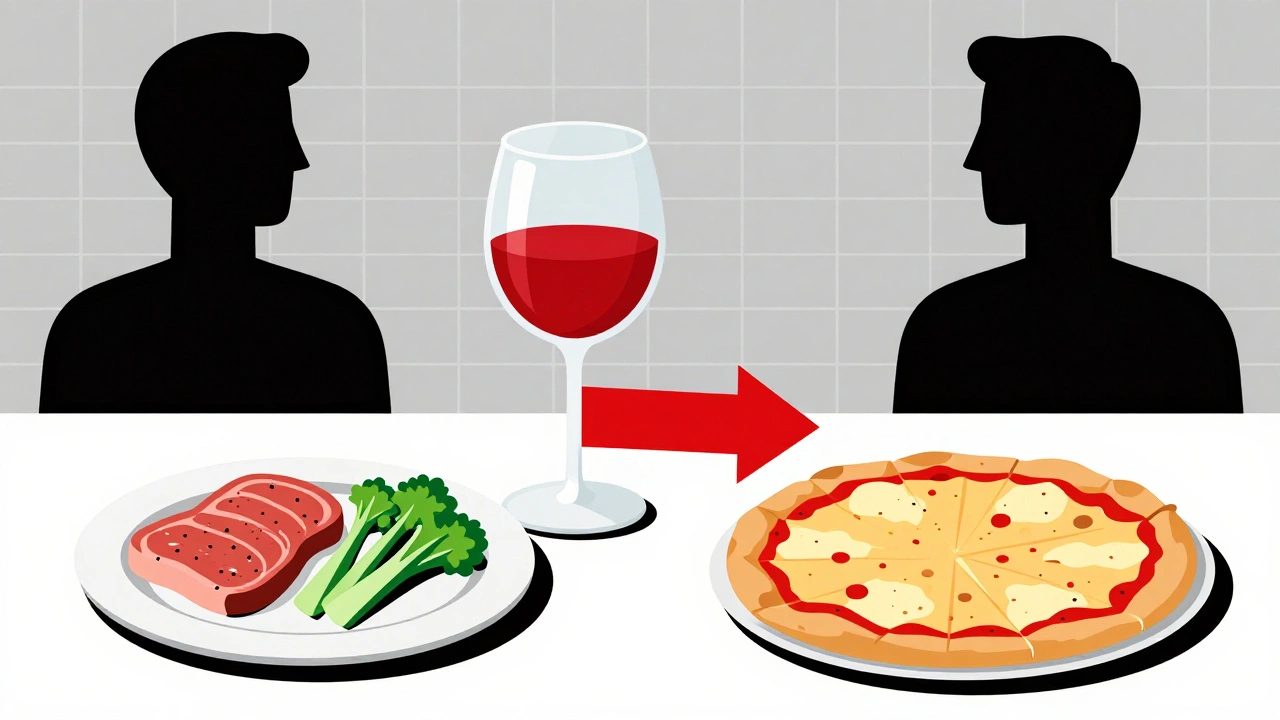
Let’s put this in perspective. A pint of lager has about 180-200 calories - roughly the same as a slice of pepperoni pizza. A large 250ml glass of wine? Around 220 calories. That’s a full ice cream sundae. But here’s the difference: you’d feel full after eating that pizza or sundae. You won’t feel full after drinking that wine. You’ll just be hungrier.
And unlike soda, which just adds sugar, alcohol also shuts down fat burning. A 2022 study in Obesity Science & Practice tracked people who cut out alcohol but kept their food intake the same. Over 12 weeks, they lost 3.2% more body fat than people who cut out other high-calorie drinks. That’s not a fluke. Alcohol has a unique metabolic effect.
Who’s Most Affected? The Data Doesn’t Lie
The numbers are clear. According to the 2022 National Health and Nutrition Examination Survey, people who drink 8 or more drinks per week are 23% more likely to be obese than non-drinkers - even when you control for diet and activity. That’s not correlation. That’s cause.
And it’s not just about being overweight. Alcohol contributes 10-12% of daily calories for regular drinkers aged 25-45. That’s enough to wipe out the 500-calorie daily deficit most experts say you need to lose a pound a week. You can’t out-exercise a six-pack of beer. You can’t out-eat a bottle of wine. The math doesn’t work.
Can You Still Drink and Lose Weight? Yes - But Only With Strategy
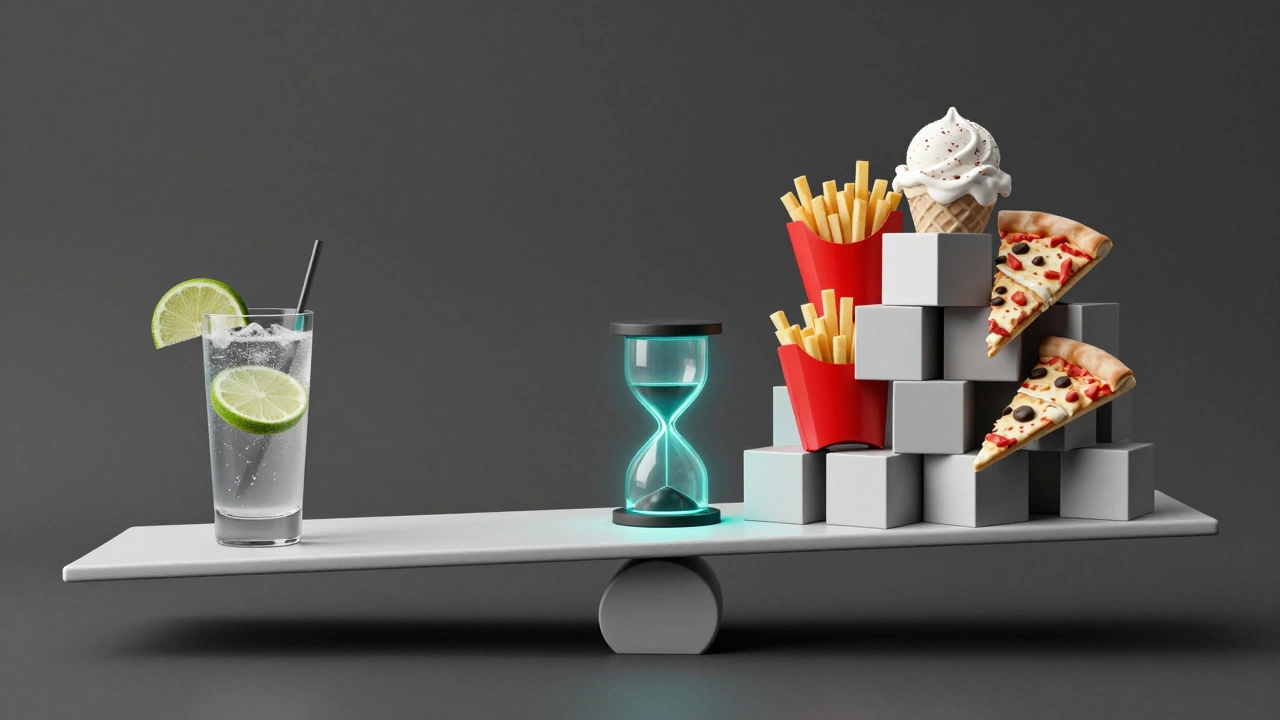
You don’t have to quit cold turkey. But you do have to be smart. Here’s what actually works, based on real clinical data:
- Choose lower-calorie options. Vodka or gin with soda water and lime? 100 calories. Skip the tonic, soda, juice, or syrups. Those add 150-200 extra calories per drink.
- Set alcohol-free days. Try 3-4 days a week without alcohol. For a moderate drinker, that cuts 750-1,200 calories per week. That’s nearly half a pound of fat.
- Watch your pours. At home, most people pour 30% more wine than a standard 5-ounce serving. That’s 35 extra calories per glass - and 245 extra per week if you drink daily. Use a measuring cup once. Then pour by sight. You’ll be surprised.
- Pre-load with protein. Eat 20-30 grams of protein (like chicken, eggs, or Greek yogurt) before drinking. A Cleveland Clinic study showed this cuts post-drinking food intake by 18%.
- Track what you drink. Most people underestimate cocktail calories by 47%. Write it down. Use an app. Don’t guess.
The Long Game: Why Most People Regain the Weight
Here’s the hard truth: many people lose weight when they cut alcohol - but then gain it back. A 2023 study in the International Journal of Obesity found 68% of people who lost weight by reducing alcohol regained it within a year - unless they added structure. That’s not because alcohol is magic. It’s because people treat it like a one-time fix.
The people who keep the weight off? They combine alcohol reduction with meal planning. The Iowa Weight Loss Center tracked 500 patients. Those who cut alcohol and followed a simple, consistent eating plan kept 82% of their weight loss after a year. The ones who just stopped drinking? Most bounced back.
What’s Next? Personalized Approaches Are Coming
Science is moving toward personalized advice. Researchers have identified three different metabolic responses to alcohol. Some people burn it off easily. Others store fat faster. Genetic testing might one day tell you if you’re in the high-risk group.
For now, the rule is simple: if you’re trying to lose weight, alcohol is a luxury, not a necessity. It adds calories, blocks fat loss, and makes you eat more. You can still enjoy it - but only if you treat it like the metabolic wildcard it is.
Start small. Pick one strategy. Track your progress. See how you feel. Your body will thank you.
Does alcohol directly turn into belly fat?
Yes - and it’s not just because of the calories. When your body processes alcohol, it prioritizes breaking it down over burning fat. This slows fat oxidation, especially around your abdomen. Studies show alcohol consumption increases visceral fat storage - the dangerous fat around your organs. That’s why many people notice their waistline expanding even if their overall weight doesn’t change much.
Is wine better than beer for weight loss?
Wine generally has fewer calories than beer - a 5-ounce glass is about 125 calories vs. 150-200 for a pint of lager. But the real difference isn’t the drink itself. It’s how you drink it. People often pour wine larger than standard servings, and they tend to sip it slowly over meals, which can lead to more food intake. Beer drinkers might consume more in one sitting. So it’s not about the drink - it’s about portion and context.
Can I drink alcohol and still lose weight?
Yes - but only if you’re careful. You need to account for alcohol calories in your daily budget, choose low-calorie options, avoid sugary mixers, and control portions. Most people who succeed do it by limiting alcohol to 1-2 drinks per week and pairing it with protein-rich meals. It’s not impossible, but it’s harder than cutting it out entirely.
Why do I feel hungrier after drinking alcohol?
Alcohol lowers levels of leptin, the hormone that tells your brain you’re full. It also increases ghrelin, the hunger hormone. On top of that, it reduces your self-control, making you more likely to reach for unhealthy snacks. This isn’t just ‘losing willpower’ - it’s a biological response. Your brain is literally wired to crave food after alcohol.
How long does alcohol slow down fat burning?
For about 1 to 2 hours per standard drink. During that time, your body focuses on breaking down alcohol instead of burning fat. If you drink multiple drinks, that window stretches. That’s why having two cocktails means your fat-burning system is paused for 2-4 hours - long enough for any extra food you eat to be stored as fat.
Are low-alcohol or non-alcoholic beers a good alternative?
Yes - especially if you’re used to drinking beer regularly. Many low-alcohol beers have 50-100 fewer calories than regular ones. Non-alcoholic beers can have as little as 20-40 calories. They’re not calorie-free, but they’re a smart swap. Just check labels - some ‘NA’ beers are high in carbs and sugar. Look for ones under 50 calories and under 5g of carbs per serving.


Eddy Kimani
December 3, 2025 AT 15:36Let’s break down the metabolic impact here - ethanol metabolism prioritizes ADH/ALDH pathway activation, which suppresses AMPK signaling and upregulates SREBP-1c, effectively shifting hepatic flux toward lipogenesis. The net effect? A 30-40% spike in de novo fatty acid synthesis during ethanol clearance. This isn’t just ‘calories in, calories out’ - it’s a biochemical hijacking of your fat oxidation machinery.
And don’t get me started on the ghrelin-leptin dysregulation. Alcohol doesn’t just lower satiety signals - it amplifies orexigenic drive via NPY upregulation in the arcuate nucleus. You’re not ‘losing willpower’ - your hypothalamus is being chemically rewired to crave fries.
Bottom line: if you’re tracking macros but ignoring alcohol, you’re running a flawed model. The energy isn’t ‘empty’ - it’s metabolically expensive.
Chelsea Moore
December 5, 2025 AT 03:30OH MY GOD. I KNEW IT. I KNEW IT ALL ALONG!!! I’ve been saying this for YEARS!!! People just don’t get it!!! It’s not just ‘a few drinks’ - it’s a SABOTAGE FACTORY!!! I cut out wine last year and lost 18 pounds without even trying!!! And now people are out here saying ‘oh I can have one glass’ - NO!!! ONE GLASS IS A SLIPPERY SLOPE TO A WHOLE BOTTLE!!! I’M NOT EVEN MAD - I’M JUST DISAPPOINTED!!!
John Biesecker
December 5, 2025 AT 12:53bro this is wild 😅 i used to think drinking was my ‘reward’ after a long week... turns out it was my body’s nightly fat-storage party 🎉
the part about liver dropping everything to process ethanol? yeah that hit different. like imagine your body’s like ‘hold up, we got poison incoming - no fat burning until this is gone’ 😭
now i just do vodka+soda on tues/thurs and call it a win. also pre-loading with eggs changed my life. no more 2am chip runs. peace out, cravings 🙌
Genesis Rubi
December 5, 2025 AT 13:12USA still leads in science, obviously. You think Europe gets this? They drink wine like water and wonder why they’re all chubby. This article? Pure American logic. No fluff. Just facts. And the data? From NIH, CDC, peer-reviewed - not some European hippie blog. We don’t sugarcoat here. We fix problems. Cut the booze. Get lean. Stay strong. That’s the American way.
Doug Hawk
December 7, 2025 AT 10:29the 1-2 hour fat burning pause per drink is the real kicker. i used to think if i worked out before drinking, i’d be fine. turns out your liver doesn’t care about your gains. it just sees ethanol and goes into emergency mode.
also the protein pre-load thing? genius. i’ve been doing chicken breast before happy hour and honestly? less cravings, less regret. small shift, big difference.
not saying quit. just say smarter. track it. measure it. respect the biochemistry.
Michael Campbell
December 8, 2025 AT 13:11they’re lying. the government knows alcohol blocks fat loss but lets it slide because liquor companies fund research. big pharma hates this. if you cut alcohol, you don’t need their weight loss pills. they don’t want you to know this. they want you addicted to both booze and meds.
Victoria Graci
December 9, 2025 AT 08:14it’s like alcohol is the ex who shows up at your party, flips the table, steals your snacks, and then says ‘you’re welcome for the chaos.’
your body’s like ‘i was doing fine, i had a plan, i was burning fat like a boss’ - and then BAM - ethanol walks in, slaps a ‘do not disturb’ sign on your mitochondria, and starts a rave in your liver.
the real tragedy? you don’t even enjoy it anymore. you’re just eating nachos while your metabolism screams into a pillow.
we need a new word for this. not ‘drinking.’ not ‘socializing.’ just… metabolic betrayal.
Saravanan Sathyanandha
December 10, 2025 AT 12:22In India, we have a tradition called ‘thandai’ during festivals - a spiced milk drink with a touch of bhang. While not alcohol in the Western sense, it carries similar metabolic implications. Many of my friends who cut down on festive indulgences saw not just weight loss, but improved sleep and clarity. The body, regardless of culture, responds to toxins the same way.
What I admire here is the clarity of science - not moralizing, but explaining. The liver does not care if you are American, Indian, or Australian. It only cares about ethanol concentration.
Small changes. Consistency. Respect the biology. That is universal wisdom.
alaa ismail
December 10, 2025 AT 19:28just stopped drinking for a month and my pants fit like they did in college. no joke. no gym changes. just no booze. weird how simple it is.