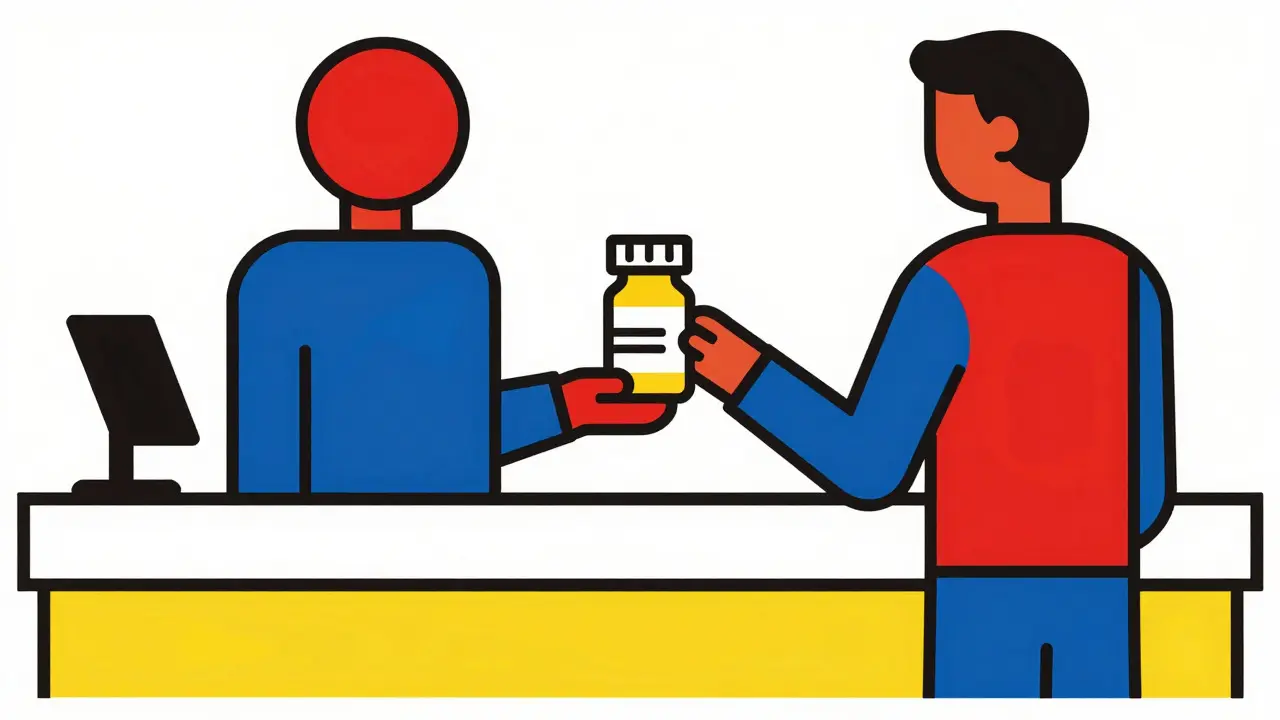
Walking into a pharmacy counter today feels like navigating a maze of labels. You ask for your usual medication, and the pharmacist hands you something that looks different but claims to be the same. Is it a standard generic? A biosimilar? Or is it an authorized generic? If you are confused, you are not alone. The landscape of affordable medications has shifted dramatically in 2025 and 2026, with new regulations, fewer authorized generic launches, and a surge in biosimilars changing how we access care.
This guide cuts through the jargon to explain what authorized generics actually are, which recent options have hit the market, and why they might-or might not-save you money compared to traditional alternatives.
What Exactly Is an Authorized Generic?
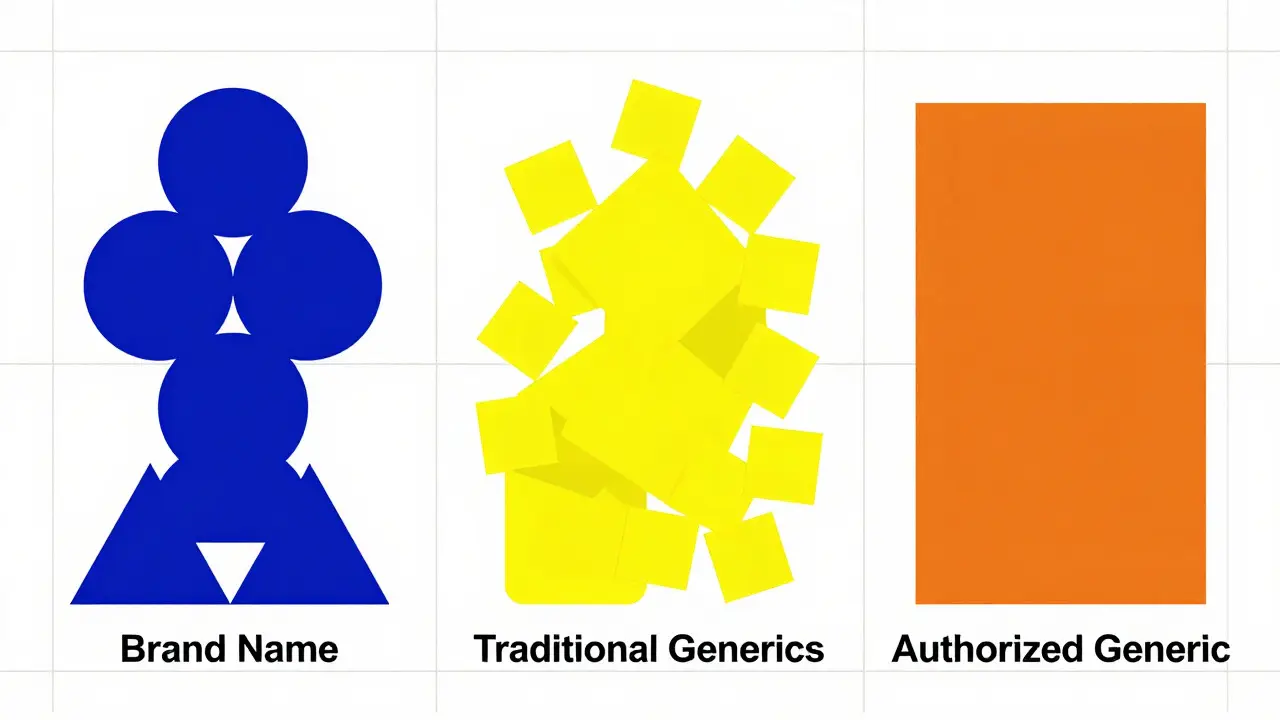
To understand the current options, we first need to define the product. An authorized generic is a drug approved under Section 505(c) of the Federal Food, Drug, and Cosmetic Act that is marketed by the brand-name company (or its affiliate) under a different label or packaging but contains the identical formulation as the brand-name drug. Unlike traditional generics, which must submit an Abbreviated New Drug Application (ANDA) to prove bioequivalence and may use different inactive ingredients (fillers, dyes), authorized generics are chemically and physically identical to the original brand.
The U.S. Food and Drug Administration (FDA) maintains a specific list of these products. As of the October 10, 2025 update, there are 1,247 authorized generic products listed. This represents about 7% of all generic entries in the FDA’s Orange Book. These drugs typically receive an 'A' rating for therapeutic equivalence, meaning doctors and pharmacists can treat them as interchangeable with the brand name without clinical concern.
Recent Approved Options: The 2025-2026 Landscape
If you are looking for newly released authorized generics, the news is mixed. The overall number of new authorized generic launches has dropped significantly. In 2022, there were 37 new launches; by 2025, that number fell to just 12. However, two notable additions appeared in the most recent FDA update from October 2025:
- Xyrem (sodium oxybate): Jazz Pharmaceuticals introduced an authorized generic version of this central nervous system agent, marketed under a different label to compete with emerging generic versions.
- Trulance (plecanatide): Ironwood Pharmaceuticals distributed an authorized generic of this gastrointestinal drug, aiming to capture price-sensitive patients while maintaining control over the supply chain.
It is crucial to distinguish these from other recent approvals that often get confused with authorized generics. For instance, several denosumab products (such as Ospomyv, Xbryk, Bildyos, and Bilprevda) and ustekinumab biosimilars (like Otulfi, Selarsdi, Yesintek, and Pyzchiva) were approved in 2025. These are not authorized generics. They are either traditional small-molecule generics or biosimilars manufactured by entirely different companies using distinct processes. Only when the original brand manufacturer sells their own product under a generic label does it qualify as an authorized generic.
Authorized Generics vs. Traditional Generics: The Key Differences
Why would a brand company sell its own drug at a lower price? And how does it compare to the generic you usually get? Let’s break down the differences.
| Feature | Brand Name | Traditional Generic | Authorized Generic |
|---|---|---|---|
| Manufacturer | Original Brand Company | Different Company (ANDA holder) | Original Brand Company (or affiliate) |
| Active Ingredients | Identical to itself | Bioequivalent (must match blood levels) | Identical to Brand |
| Inactive Ingredients | Proprietary Formula | May Differ (different fillers/dyes) | Identical to Brand |
| Pricing | Highest | Lowest (often 80-90% less than brand) | Moderate (typically 10-15% less than brand) |
| Market Share Capture | N/A | 8-12% within 6 months | 15-20% within 6 months |
The biggest takeaway here is cost versus consistency. Traditional generics offer massive savings because multiple manufacturers compete on price. Authorized generics, however, are priced only slightly below the brand name. According to Dr. Lisa Bero, a Professor of Clinical Pharmacy at UCSF, this modest discount often undermines the perceived value for patients who expect deep savings.
However, for sensitive medications, consistency matters. A 2024 study in JAMA Internal Medicine found that physicians prefer authorized generics for narrow therapeutic index drugs-medications where slight changes in absorption can affect safety. Because authorized generics use the exact same fillers and manufacturing process as the brand, they eliminate the risk of adverse reactions caused by different inactive ingredients found in some traditional generics.
Why Are Authorized Generics Declining?
You might wonder why these products are becoming rarer. The answer lies in regulatory pressure. The Federal Trade Commission (FTC) has cracked down on "product hopping" strategies, where brand companies launch authorized generics just before patent expiration to confuse prescribers and delay true generic competition.
A landmark example was the 2023 $1.2 billion settlement between the FTC and Teva Pharmaceuticals regarding Copaxone. This legal action signaled a clear message: use authorized generics to save patients money, not to block competition. Consequently, many pharma giants have shifted focus toward biosimilars for biologic drugs or accepted traditional generic competition for small molecules.
Looking ahead, the proposed RELIEF Act (H.R. 4086), introduced in May 2025, could further shrink this market. The bill aims to enforce immediate price parity between authorized and traditional generics. If passed, the financial incentive for brands to launch authorized generics would largely disappear.
Navigating Your Prescription: Practical Tips
So, what should you do when you pick up your medication? Here is how to ensure you get the best option for your health and wallet.
- Check the Labeling: Authorized generics often look very similar to the brand but lack the brand logo. Look for the National Drug Code (NDC). If the NDC matches the brand manufacturer but the package says "Generic," it is likely an authorized generic.
- Talk to Your Pharmacist: A 2025 survey by the American Pharmacists Association found that 63% of pharmacists struggle to identify authorized generics without checking the Orange Book. Ask specifically: "Is this made by the same company as the brand name?"
- Review Insurance Coverage: Some insurance plans, like Blue Cross Blue Shield in certain regions, have excluded specific authorized generics from coverage if they negotiated better rebates for traditional generics. Always check your formulary tier.
- Consider Sensitivity: If you have experienced side effects with traditional generics in the past, ask your doctor if an authorized generic is available. It offers the closest possible alternative to the brand without the brand price tag.
The Future of Affordable Medications
While authorized generics are fading, the broader goal of lowering drug costs remains urgent. The rise of biosimilars offers a parallel path for expensive biologic treatments. In 2025, five interchangeable biosimilars to Stelara were approved, providing robust competition in a space previously dominated by high prices.
For small molecule drugs, traditional generics remain the gold standard for affordability. As the FDA continues to streamline approval processes, we can expect more traditional generic options to enter the market, driving prices down further. Until then, authorized generics serve as a niche but vital tool for patients who need formulation certainty alongside moderate cost savings.
Are authorized generics cheaper than brand names?
Yes, but only slightly. Typically, authorized generics cost 10-15% less than the brand-name version. This is much less of a discount compared to traditional generics, which can be 80-90% cheaper. The small difference exists because the brand company still controls the manufacturing and marketing costs.
How can I tell if my medication is an authorized generic?
It can be tricky. The packaging will look different from the brand, often simpler. Check the manufacturer name on the box; if it is the same as the brand company, it is likely an authorized generic. You can also verify the National Drug Code (NDC) against the FDA’s Orange Book or ask your pharmacist directly.
Why are there fewer authorized generics now?
Regulatory scrutiny from the FTC has reduced their numbers. Authorities view some authorized generic launches as anti-competitive tactics to delay true generic entry. Additionally, pending legislation like the RELIEF Act aims to remove the pricing advantages that make them attractive to brand companies.
Are authorized generics safer than traditional generics?
They are not necessarily "safer" for everyone, but they are more consistent. Since they use the exact same inactive ingredients as the brand, they reduce the risk of allergic reactions or sensitivities to fillers that sometimes differ in traditional generics. This makes them preferable for patients with known sensitivities.
Will my insurance cover an authorized generic?
Coverage varies. Some insurers treat authorized generics as brand-name drugs for reimbursement purposes, meaning higher copays. Others may exclude them if they have contracts with traditional generic manufacturers. Always check with your pharmacy benefit manager (PBM) before filling the prescription.