

Imagine a pain so intense that people call it the "suicide headache." For those living with cluster headaches is a primary headache disorder characterized by severe, one-sided pain around the eye or temple, it isn't just a bad migraine. It's an excruciating experience that can make you feel like your eye is being pushed out of its socket. The good news is that you don't have to just "tough it out." While medications exist, high-flow oxygen therapy has become the gold standard for stopping these attacks in their tracks without the side effects of heavy drugs.
What Exactly Are Cluster Headaches?
Unlike a typical tension headache, cluster headaches happen in "clusters," meaning you might have several attacks a day for weeks, followed by months of no pain at all. An attack usually lasts between 15 and 180 minutes. The pain is almost always on one side of the head and often comes with other symptoms. You might notice your eye tearing up, your nose getting stuffed on one side, or even a drooping eyelid. Because the pain hits so fast and so hard, the seconds count when it comes to treatment.
How Oxygen Therapy Stops the Pain
When a cluster attack hits, oxygen therapy acts as a non-pharmacological rescue. It involves breathing 100% pure medical oxygen at a high flow rate. Why does this work? While scientists are still studying the exact mechanism, it's believed that the high concentration of oxygen constricts the blood vessels in the brain and inhibits the release of certain chemicals that trigger the pain. For about 78% of people, this can stop the pain entirely within 15 minutes.
The beauty of using oxygen is the safety profile. Unlike triptans, which are common medications for this condition, oxygen doesn't carry cardiovascular risks. This makes it a lifesaver for people who have heart issues or high blood pressure and cannot take traditional migraine medications.
The Essential Setup: Equipment and Dosage
You can't just use a standard nasal cannula (those little prongs that sit in your nose) for a cluster headache; they simply don't deliver enough oxygen fast enough. To get real relief, you need a specific setup.
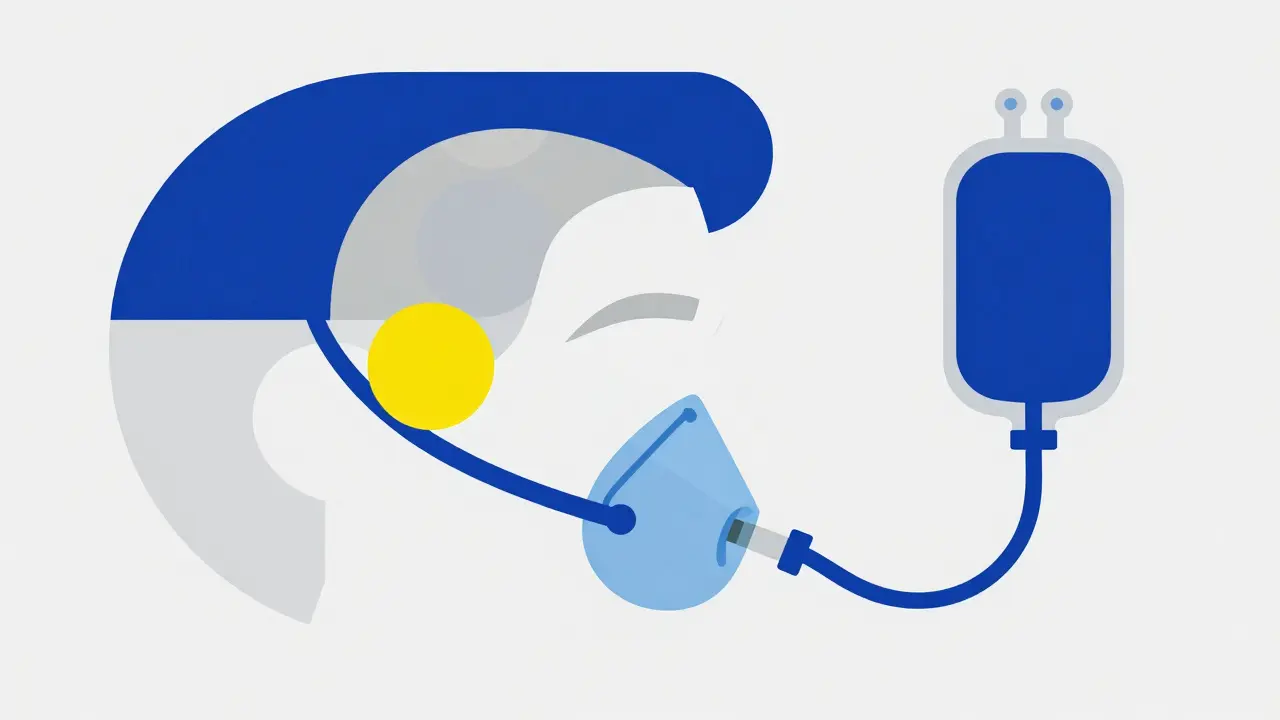
The most critical piece of gear is the non-rebreather mask. This is a face mask with a reservoir bag attached. The bag collects the pure oxygen, and a one-way valve prevents you from breathing back in the carbon dioxide you just exhaled. To make this work, you need a flow rate of 100% oxygen, typically between 12 and 15 liters per minute (L/min). If the flow is too low-say, only 4 L/min-you're far less likely to find relief.
| Feature | High-Flow Oxygen | Subcutaneous Sumatriptan | Intranasal Zolmitriptan |
|---|---|---|---|
| Efficacy (Pain-Free at 15m) | ~78% | ~74% | ~50% |
| Common Side Effects | None reported | Chest tightness, dizziness | Nasal irritation, nausea |
| Cardiovascular Risk | None | High (Contraindicated) | Moderate |
| Delivery Method | Non-rebreather Mask | Injection | Nasal Spray |
Getting the Right Tools: Concentrators and Tanks
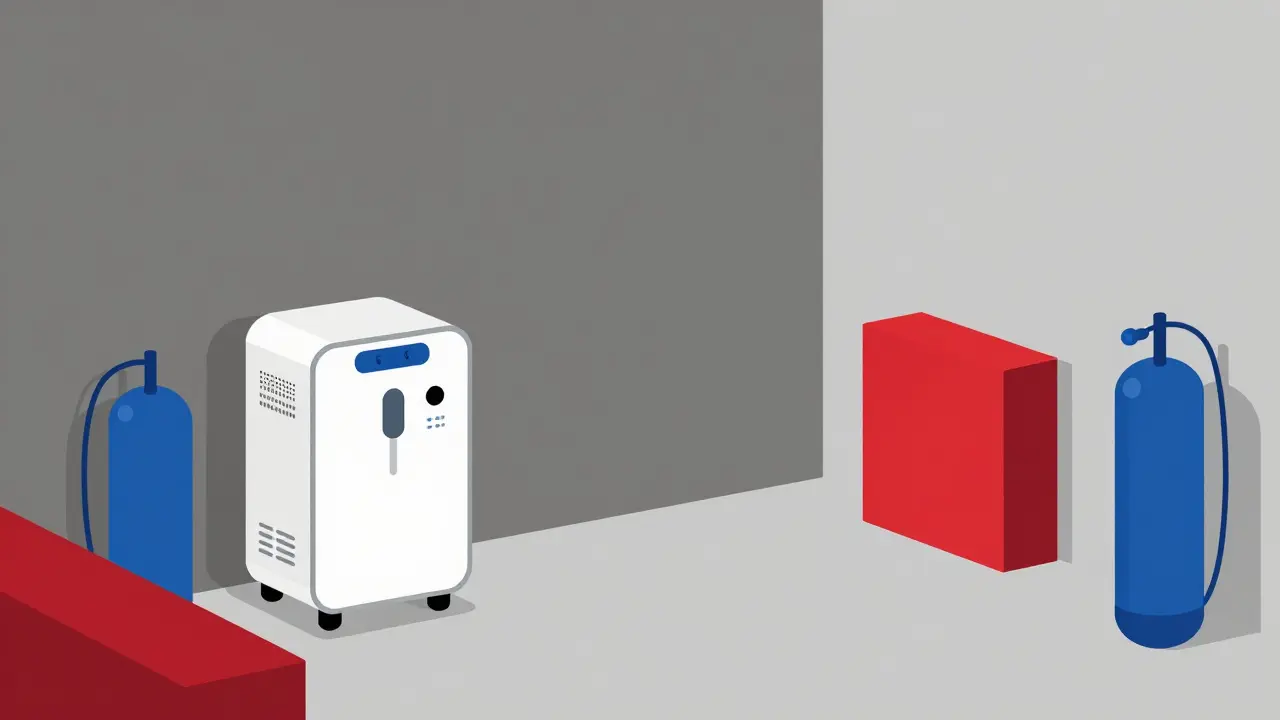
Depending on your lifestyle, you'll likely choose between two main sources of oxygen. An oxygen concentrator is a machine that pulls oxygen from the air around you and concentrates it. These are great for home use because you never run out of gas. Models like the Invacare Perfecto2 can push out the 15 L/min needed for a cluster attack. However, they are bulky and need a power outlet.
For people who need to be mobile, portable concentrators like the Inogen One G5 offer a way to carry relief in a bag, though some older portable models don't hit the high flow rates required for cluster headaches. This is where medical oxygen tanks come in. They provide a high, consistent flow, but they are heavy and eventually run empty. Recently, the FDA cleared the O2VERA, a portable concentrator specifically designed to hit that 15 L/min mark, which is a huge win for patients who travel or work in offices.
Practical Tips for Maximum Relief
If you've just received your equipment, there's a slight learning curve. Most people figure it out after a few attacks, but a few common mistakes can keep you in pain longer than necessary. First, the seal is everything. If the mask is leaking around your cheeks, you aren't getting that 100% concentration. Make sure the strap is snug.
Timing is also a huge factor. You want to start the oxygen within 5 to 10 minutes of the pain starting. If you wait an hour, the attack is much harder to break. A pro tip from the community is to "station" your oxygen. Instead of having one machine in the bedroom, keep a tank or a concentrator in the living room and another in your office. Reducing the time it takes to get the mask on your face can mean the difference between a 10-minute recovery and an hour of agony.
Dealing with the Insurance Headache
Ironically, getting the treatment for a headache often causes a different kind of headache: insurance paperwork. In the U.S., Medicare and some private insurers can be stubborn. They may require you to prove that you've tried and failed two different triptan medications before they'll pay for a concentrator. This is often documented using the ICD-10 code G44.0 for cluster headaches.
If you're hitting a wall with your insurance, don't give up. Organizations like Clusterbusters provide handbooks and advocacy tools to help you fight for coverage. Many patients find that a strong letter of medical necessity from a neurologist, specifically mentioning the cardiovascular risks of triptans, helps speed up the approval process.
When Oxygen Isn't Enough
It's important to be realistic: oxygen doesn't work for everyone. About 20% of people find that even 15 L/min doesn't touch the pain. Some predictors for this include having no history of smoking or having attacks that last longer than three hours. If you're in this group, don't panic. There are other options, including neuromodulation devices like gammaCore, which use electrical stimulation to calm the nerve responsible for the pain.
How quickly does oxygen therapy work for cluster headaches?
For most people, high-flow oxygen provides significant or complete relief within 15 minutes. Some users report feeling the pain subside in as little as 8 to 10 minutes if they start treatment immediately after the attack begins.
Can I use a regular nasal cannula instead of a mask?
Generally, no. Nasal cannulas do not deliver a high enough concentration of oxygen to be effective for most cluster headache patients. A non-rebreather mask with a reservoir bag is required to ensure you are breathing 100% oxygen at the necessary flow rates.
What is the correct flow rate for cluster headache treatment?
The gold standard is a flow rate of 12 to 15 liters per minute (L/min). While some relief can be found at 4 L/min, clinical data shows that 12 L/min is significantly more effective at making patients pain-free within 15 minutes.
Are there any side effects to breathing pure oxygen?
Oxygen therapy is remarkably safe and has no significant adverse events reported in clinical trials, making it safer than pharmacological alternatives like triptans, which can cause chest tightness or dizziness.
What should I do if my insurance denies oxygen therapy?
Request a detailed "Letter of Medical Necessity" from your neurologist. Ensure they include the ICD-10 code G44.0 and document why other treatments (like triptans) are either ineffective or unsafe for you due to cardiovascular concerns.
Next Steps for Relief
If you're currently suffering from these attacks, your first step is to get a formal diagnosis from a neurologist who specializes in headaches. Once confirmed, ask for a prescription for medical-grade oxygen and a non-rebreather mask. Don't settle for low-flow options; be specific about the 12-15 L/min requirement.
For those who already have the gear but aren't seeing results, check your mask seal and your timing. If you're still in pain, talk to your doctor about "bridge" therapies or neuromodulation to complement your oxygen use during a cluster cycle.


caesar simpkins
April 19, 2026 AT 09:05Oh my god, the description of the pain is just haunting! I've seen people go through this and it is absolutely brutal, like a literal nightmare in waking hours. Getting that oxygen fast is truly the only thing that saves some people from total despair.
Absolute game changer!
Quinton Bangerter
April 19, 2026 AT 12:03Sure, "medical grade" oxygen is the gold standard according to the pamphlets. But have you noticed how the insurance companies just happen to make it impossible to get unless you've been drugged up on triptans first? It's a racket. They want you dependent on the pharma cycle before they give you a simple gas tank. Follow the money, people. It's all about the subscription model of healthcare.
Arthur Luke
April 20, 2026 AT 11:00The distinction between the nasal cannula and the non-rebreather mask is a really important point here. I think a lot of people just assume any oxygen delivery is the same, but the flow rate actually makes the difference between relief and just wasting time.
Ms. Sara
April 21, 2026 AT 15:34If you are fighting with your insurance provider, do not let them brush you off with a generic denial. Be assertive. Call your representative, demand a peer-to-peer review between your neurologist and their medical director, and keep a log of every single call. You have to fight for this equipment because the cost of the pain is way higher than the cost of a concentrator.
Akshata Kembhavi
April 23, 2026 AT 09:18This is really helpful info. It's crazy how much the equipment matters.
Valorie Darling
April 25, 2026 AT 04:51idk why everyone is acting like this is some secret medical discovery... just get the tank and stop complaining about the insurance paperwork lol its not that deep
Tanya Rogers
April 25, 2026 AT 19:27It is fascinating how the masses cling to the notion of "gold standards" without questioning the underlying physiological volatility. While the 15 L/min threshold is clinically cited, the individual variance in cranial vascular response suggests that a monolithic approach to treatment is intellectually lazy. One must wonder why we prioritize immediate symptomatic relief over the pursuit of a systemic cure.
anne camba
April 26, 2026 AT 16:18The duality of pain... and the machine... brings such a strange mechanical dependence to the human condition!!! It's almost poetic, in a tragic sort of way, that we must breathe purity to escape agony; yet, we are tethered to a plastic hose... truly a modern tragedy.
Don Drapper
April 27, 2026 AT 12:54The sheer inefficiency of the American healthcare procurement process is an absolute travesty! To force a patient in the throes of an excruciating neurological event to navigate a labyrinth of ICD-10 codes is not merely bureaucratic failure-it is a calculated assault on human dignity! The audacity of these insurance conglomerates to dictate the flow rate of life-saving oxygen is nothing short of monstrous!
Cynthia Didion
April 27, 2026 AT 13:56American tech like O2VERA is obviously the only real solution here. Everything else is just inefficient.
aman motamedi
April 29, 2026 AT 07:08I find the information regarding the non-rebreather mask to be most illuminating. It is prudent to follow the professional guidance provided.