
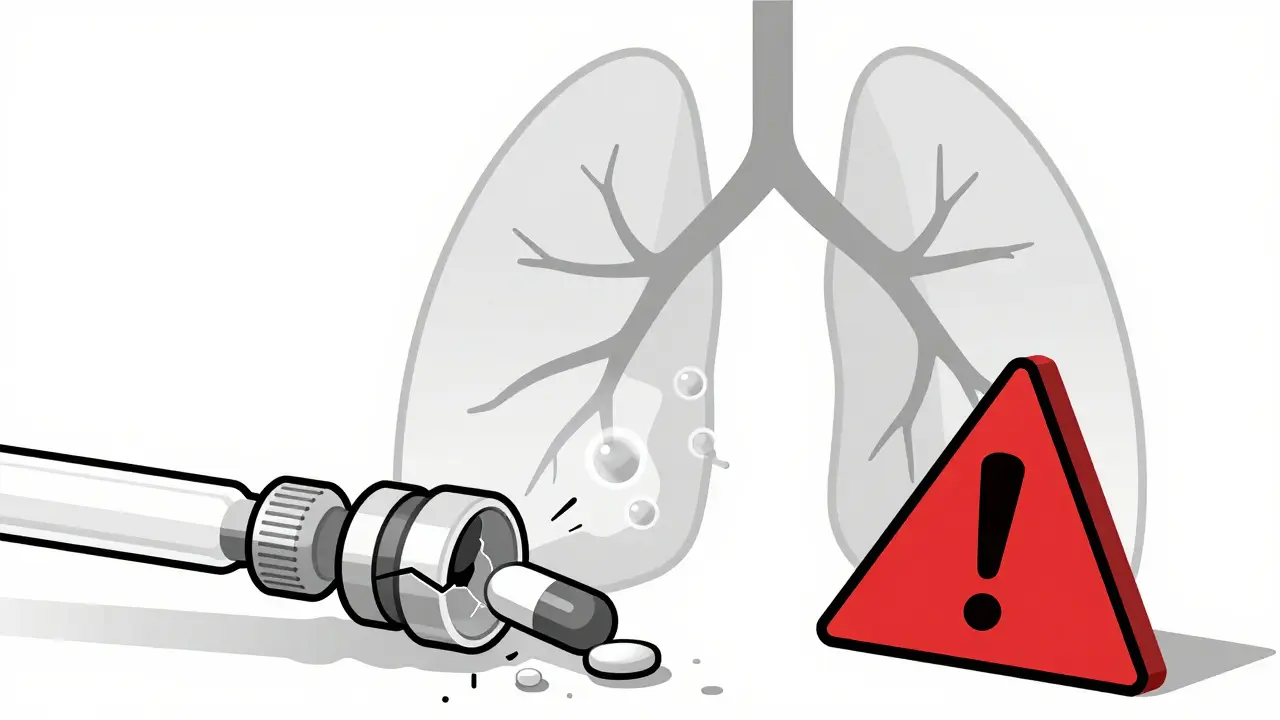
When a patient can’t swallow, feeding tubes become lifelines. But giving meds through those tubes? That’s where things get risky. Every year, thousands of patients face complications-not because the medicine doesn’t work, but because it was given wrong. Crushed pills, half-flushed tubes, or mixing meds with formula can lead to blockages, failed treatments, or even poisoning. This isn’t theoretical. In VA hospitals, medication errors tied to feeding tubes caused 15-20% of all adverse events in 2023. And it’s happening everywhere-from ICU beds to home care setups.
Why Tube Compatibility Matters More Than You Think
Not all medications can go through every tube. It’s not just about size-it’s about chemistry, coating, and how the drug breaks down. A 2023 NIH study tested 323 oral medications for tube compatibility. The results? Only 78% of immediate-release tablets dissolved properly in 5 minutes. For extended-release pills? Just 32%. That means most time-release capsules, patches, or coated tablets shouldn’t be crushed. Ever. Take mycophenolate (Cellcept®). Crushing it releases toxic particles that can damage lung tissue if aspirated. Valganciclovir (Valcyte®) and finasteride (Proscar®) are absolute no-gos. Even psyllium (Metamucil®), a common laxative, can clog a tube in minutes. These aren’t edge cases-they’re standard warnings backed by FDA draft guidance from 2021. Tubes come in sizes: 5 to 16 French (that’s 1.7 to 5.3 mm wide). Smaller tubes, like the 8 French NG tubes common in home care, are especially vulnerable. A single crushed tablet with insoluble fillers? It’s like pouring sand into a straw. Blockage isn’t rare-it’s expected if you skip the rules.Flushing Isn’t Optional. It’s the First Line of Defense
You can have the perfect medication, but if you don’t flush, it’s useless. And dangerous. The standard? 15-30 mL of water. Before. Between. After. Always. Cleveland Clinic’s rule is simple: use at least 15 mL of water for every 10 mL of medication. Why? Because meds don’t move on their own. They stick. They clump. They settle. Without enough water, you’re not delivering the drug-you’re building a clog. Real-world data shows 65% of tube blockages are caused by medication administration. Nurses report rushing through flushes-using 5 mL instead of 15. That’s not a shortcut. That’s a risk. One VA hospital tracked 120 tube blockages in a year. 78 of them? Directly tied to under-flushing. And don’t forget: flush before the med to clear the tube. Flush between each med to prevent chemical reactions. Flush after to push everything through. Skip any step, and you’re gambling with patient safety.What Medications Can You Actually Give Through Tubes?
Some meds are built for tubes. Others? Not even close. Safe to use:- Immediate-release tablets that dissolve completely (check dissolution time)
- Liquid formulations (preferred whenever available)
- Prevacid® SoluTabs (they disperse evenly-unlike granules)
- Tablets labeled for enteral use (rare, but exist)
- Enteric-coated pills (like duloxetine capsules)
- Extended-release tablets (diltiazem ER, metformin XR)
- Time-release capsules
- Any tablet with a coating labeled “not for crushing”
Why Crushing Pills Is a Hidden Danger
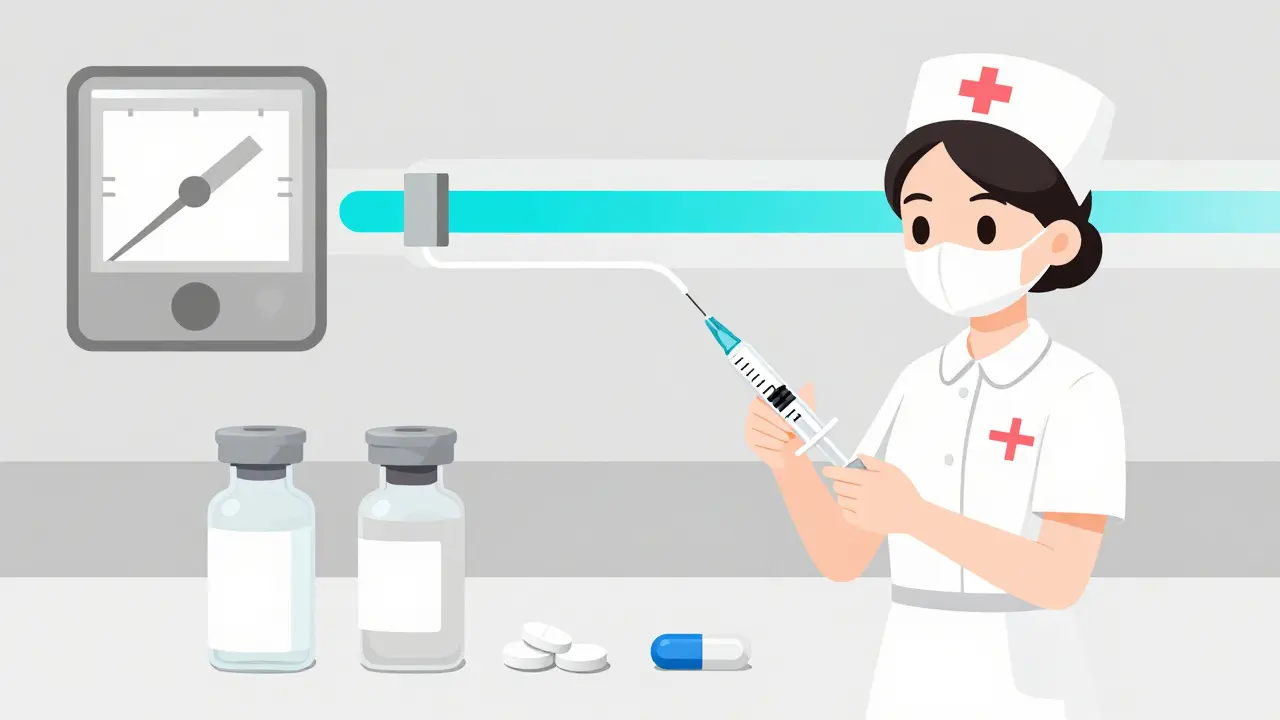
Crushing seems easy. It’s not. Most tablets contain binders, fillers, and coatings that don’t dissolve. When crushed, these particles can block the tube or alter drug absorption. Take doxycycline. It needs stomach acid to dissolve. If you crush it and give it through a tube, it may not absorb at all. The patient gets no benefit. But you think they did. That’s a treatment failure. Or consider phenytoin. It has a narrow therapeutic range: 10-20 mcg/mL. If you switch from a capsule to a crushed tablet, levels can drop or spike. The Cleveland Clinic says: monitor serum levels after any formulation change. No exceptions. Even liquids aren’t foolproof. Some contain alcohol, sugar, or dyes that react with tube materials or feed formulas. Always check compatibility before mixing.Tube Placement: The First Step You Can’t Skip
Before you give one drop of medicine, confirm the tube is where it should be. NG tubes? OG tubes? G-tubes? All need verification. RCH guidelines say: check pH and document it. A gastric pH under 5.5? Likely in the stomach. A pH above 6? Could be in the lungs or intestines. Never assume. Never guess. Radiographic confirmation is gold standard, especially in new or unstable patients. In one case, a patient on home care was given meds through a tube thought to be in the stomach. It wasn’t. The meds went into the lungs. The patient was hospitalized for chemical pneumonia. Documentation showed no pH check. No verification. Just assumption.Real Consequences: What Happens When You Cut Corners
A 68-year-old man with Parkinson’s was on levodopa through his G-tube. His family mixed it with his formula to “make it easier.” The feed slowed. His tremors worsened. He fell. He broke his hip. Why? Because ASPEN found that levodopa is the only drug that actually benefits from being given without feed. Mixing it with nutrition cuts absorption by 40%. He got half the dose. Every day. Another patient got crushed diltiazem ER. The extended-release beads were broken. The drug released all at once. His heart rate dropped dangerously low. He was readmitted. His meds were changed. His family was devastated. These aren’t outliers. They’re predictable. The ISMP lists enteral medication errors among the top 10 preventable mistakes in healthcare. You can’t rely on memory. You need systems.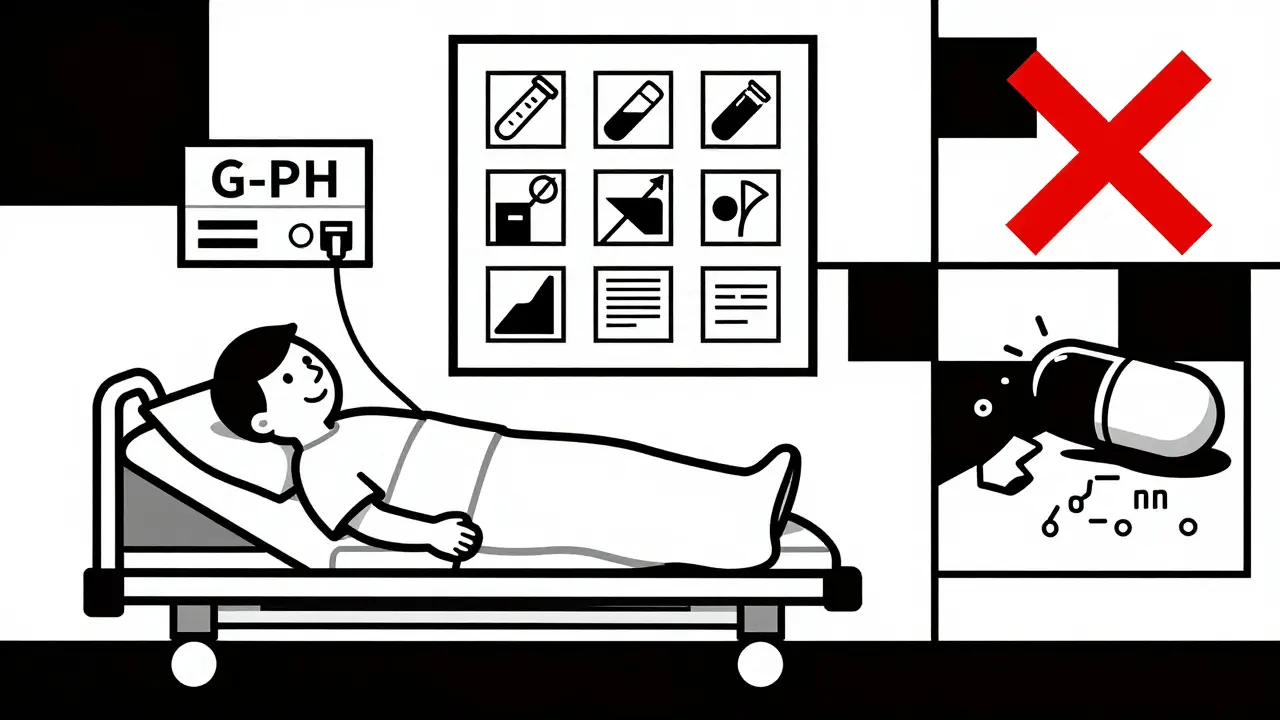
How to Get It Right: A Practical Checklist
Follow this every time:- Check tube placement with pH test or X-ray. Document.
- Verify compatibility using a trusted database (e.g., ASPEN, NIH, or institutional guidelines).
- Use liquid forms whenever possible. Ask the pharmacist.
- If crushing is necessary, use a mortar and pestle. Add 15 mL water. Stir. Draw up slowly. No clumps.
- Flush 15 mL before the med.
- Flush 15 mL between each medication.
- Flush 15-30 mL after the last med.
- Never mix meds with formula. Always give separately.
- Document everything: meds given, flush volumes, tube verification, and any issues.
What’s Changing? The Future of Enteral Meds
The FDA’s 2021 draft guidance is pushing manufacturers to test their drugs for tube compatibility. The goal? Labeling that says “suitable for enteral administration.” That’s new. Right now, almost nothing is labeled that way. The VA has rolled out electronic alerts in their CPRS system. If a provider orders a crushed extended-release tablet, the system flags it. It won’t let you proceed without a pharmacist override. That’s how you stop errors before they happen. Pharmaceutical companies are starting to design tube-friendly versions. Liquid suspensions, dispersible tablets, and pre-formulated syringes are emerging. But they’re expensive. And slow to arrive. For now, the best tool you have is knowledge. And discipline.Can I mix medications with enteral feeding formula?
No. Mixing meds with formula can cause clumping, chemical reactions, or reduced absorption. Even if it seems to dissolve, you can’t be sure the full dose is delivered. Always give meds separately, flush between, and wait at least 30 minutes before resuming feedings unless otherwise directed.
Is it okay to crush all tablets if I can’t find a liquid form?
No. Many tablets have coatings or time-release mechanisms that are destroyed by crushing. Crushing extended-release, enteric-coated, or sustained-release pills can lead to overdose, underdose, or tube blockage. Always check compatibility first. If no safe alternative exists, consult a pharmacist for compounded options.
How much water should I use to flush the tube?
Use at least 15 mL of water before the first medication, 15 mL between each medication, and 15-30 mL after the last one. For every 10 mL of medication, use 15 mL of flush. More is always safer than less. Under-flushing is the most common cause of tube blockages.
Do I need to check tube placement every time I give a med?
Yes. Tube migration happens-especially in restless or mobile patients. pH testing is quick and reliable. A gastric pH under 5.5 confirms placement. Never assume the tube is still in place just because it was checked yesterday. Always verify before administering.
What should I do if the tube gets blocked?
Do not force water or use cola or enzymes unless directed. First, try gentle aspiration with a 60 mL syringe. If that fails, use warm water (37°C) and a push-pull motion. If still blocked, contact a pharmacist or nurse specialist. Never use wires or sharp objects. Blockages are often preventable with proper flushing.
Are there any medications that should be given without feeding?
Yes. Levodopa is the only drug with strong evidence that it absorbs better when given without feedings. For others, withholding feedings isn’t usually needed. But always check individual drug guidelines. Some antibiotics or antifungals may require a 1-2 hour gap before or after feeding.




PRITAM BIJAPUR
February 18, 2026 AT 22:53Every time I see someone crush a pill for a feeding tube, I think of that one time in Bangalore when a nurse did it without checking compatibility - the tube clogged so bad they had to replace it with a surgical G-tube. 🤯 It’s not just about meds, it’s about respect for the body’s chemistry. We treat tubes like plumbing, but they’re biological highways. One wrong move and the whole system collapses. I’ve seen patients deteriorate because someone thought ‘it’ll dissolve’ - no, it won’t. Not if it’s enteric-coated. Not if it’s extended-release. Not if it’s got silica fillers. We need to stop treating medicine like a DIY project. 🧪💧
Haley DeWitt
February 20, 2026 AT 02:15I just want to say… I’m so tired of seeing nurses rush through flushes. Like, 5 mL? Really? 😭 I’ve been on the floor for 12 years, and every time someone says ‘it’s fine, the tube’s clear,’ I cringe. I’ve seen three patients go into acute respiratory distress because they skipped the 15 mL flush between meds. Please. Just. Use. The. Water. 🙏💧
Adam Short
February 22, 2026 AT 00:04Let me be blunt: this whole system is a British-designed mess. We’ve got Americans giving crushed diltiazem to elderly patients while sipping Starbucks, and Indians wondering why their G-tubes keep failing. The FDA’s draft guidance? A joke. We need a global standard - not some ‘check a database’ nonsense. You want safety? Standardize the tubes. Standardize the flush volumes. Standardize the damn training. This isn’t rocket science - it’s basic hygiene. And if you’re too lazy to flush, maybe you shouldn’t be touching a patient.
Linda Franchock
February 22, 2026 AT 11:03Oh honey, I wish I had a dollar for every time I caught someone mixing meds with formula. 🙃 Like, no. Just… no. I had a guy last week who swore ‘it tasted better’ when he mixed his levodopa with vanilla Boost. Spoiler: he had a seizure. Because absorption dropped 40%. And now he’s in rehab. So yeah. I’m sarcastic. But I’m also the one who taught 87 nurses how to flush properly. You’re not saving time - you’re just buying a trip to the ICU.
Geoff Forbes
February 23, 2026 AT 01:33Look, I’m not a nurse but I read the NIH study. 78% of tablets dissolve in 5 min? That’s pathetic. And you’re telling me we’re still using 1980s protocols? Why aren’t pharma companies making tube-specific formulations? Because profit. They’d rather sell you 50 different pills than one easy-to-administer liquid. And don’t get me started on the ‘check pH’ rule - half the time the syringe is dirty. It’s a system built on trust and prayer. We need robots. Or at least color-coded flushes. Blue for before. Red for between. Green for after. Simple. Like traffic lights.
Jonathan Ruth
February 23, 2026 AT 14:51Let’s be real - most of these ‘guidelines’ are just bureaucratic noise. I’ve worked in 3 VA hospitals. The real problem? Understaffing. Nurses have 12 patients and 2 minutes per med. They’re not skipping flushes because they’re lazy - they’re skipping because they’re exhausted. And yes, crushing pills is dangerous - but so is burnout. We’re punishing the workers for a broken system. Fix the staffing ratios first. Then we can talk about 15 mL flushes. Until then, this is performative safety.
Kancharla Pavan
February 24, 2026 AT 05:08How can you even consider giving meds through tubes without verifying placement? It’s not just negligence - it’s a moral failure. I’ve seen patients die because someone assumed the tube was still in the stomach. One patient. A 72-year-old widow. She didn’t have family to advocate for her. So they gave her crushed valganciclovir. She aspirated. She never woke up. And now? They’re still doing it. Why? Because no one was held accountable. You don’t get a second chance when your lungs fill with toxic particles. This isn’t a protocol issue - it’s a soul issue. If you don’t verify placement, you don’t deserve to be near a patient. Period.
Dennis Santarinala
February 25, 2026 AT 12:04Hey - I just wanted to say I love how detailed this post is. Seriously. I’ve been a home care nurse for 15 years, and this checklist? I’m printing it. I’m laminating it. I’m hanging it above my med cart. The part about flushing between meds? I used to skip it. Not anymore. I’ve had 3 blockages in the last year - all because I rushed. Now I take 3 minutes per med. It’s slower. But my patients are healthier. And honestly? That’s what matters. You don’t need fancy tech. You just need discipline. And a 60 mL syringe. 💪💧
John Haberstroh
February 26, 2026 AT 22:27It’s wild how we treat enteral meds like they’re just… water. But they’re not. They’re chemical cocktails with side effects we barely understand. I once watched a pharmacist spend 45 minutes cross-referencing a single crushed tablet against 8 databases. He said, ‘This isn’t about compliance - it’s about chemistry.’ And that stuck with me. Every pill has a personality. Some are shy and need acid. Some are explosive and need time. Some are clingy and need 30 mL to budge. We’re not giving medicine - we’re negotiating with molecules. And if you’re not treating it like that? You’re just guessing.
guy greenfeld
February 28, 2026 AT 15:09Who really controls the databases? I’ve looked at the ASPEN guidelines - they’re funded by pharma. And guess what? They only list drugs that have been tested… by pharma. What about the 300+ off-label meds? No data. No warnings. Just ‘use at your own risk.’ And the VA alerts? They’re just a Band-Aid. The real conspiracy? They don’t want you to know that 60% of tube-compatible liquids are priced 800% higher than the pill. They’d rather you die slowly than pay for the safe version. Wake up. This isn’t medicine. It’s a market.
Sam Pearlman
March 1, 2026 AT 11:40Wait - so you’re telling me I can’t mix my dad’s blood pressure med with his Ensure? But it tastes so much better that way 😅 I mean, come on. He’s 89. He doesn’t care about pharmacokinetics. He just wants to not gag. Isn’t compassion more important than a 15 mL flush? Also, I’ve been doing this for 3 years. He’s still alive. So… maybe the rules are just for people who like paperwork?
Steph Carr
March 2, 2026 AT 18:57Okay, but let’s talk about the real hero here - the pharmacist. 🙌 I’ve seen them stay late, call manufacturers, compound custom suspensions, and argue with doctors who think ‘crushing is fine.’ They’re the unsung heroes. And yet, they’re the only ones who can override the VA alerts. That’s insane. Why is the gatekeeper the person with the least authority? We need to elevate pharmacy to the same level as nursing. Maybe then, someone would actually listen.
Prateek Nalwaya
March 4, 2026 AT 05:32Just had a patient yesterday with an 8 French NG tube. Gave her liquid amoxicillin - no issues. Then crushed a tablet of omeprazole. Didn’t flush. Tube blocked. We had to do a fluoroscopic procedure to clear it. Took 45 minutes. Cost $2,200. She was confused. Didn’t understand why we couldn’t just ‘push water.’ I showed her the residue left in the tube - it looked like ground concrete. She said, ‘Oh. I didn’t know.’ That’s the problem. Not malice. Ignorance. We need better education. Not just for nurses. For families. For caregivers. For the guy who’s feeding his mom at home after 10 PM, exhausted, and just wants to get it done. We need compassion. And clear visuals. Maybe a video. Maybe a diagram. Maybe a meme. But we need to reach them.