
Drug Safety Signal Calculator
Calculate Safety Signal Detection
Compare how FDA Sentinel Initiative and the old FAERS system would detect drug safety issues. Enter your scenario to see the difference between raw reports and calculated rates.
FAERS System (Old Reporting System)
Number of adverse events reported:
The old system only receives voluntary reports. It cannot calculate the actual rate because it doesn't know how many people took the drug.
FDA Sentinel Initiative
Actual rate of adverse events:
Sentinel calculates the true rate using real-world data and denominator information, enabling meaningful safety assessments.
The U.S. Food and Drug Administration doesn’t wait for patients to get hurt before acting. Since 2008, it’s been using FDA Sentinel Initiative to catch dangerous drugs before they cause widespread harm. This isn’t just another reporting system. It’s a nationwide network of health data that scans millions of patient records in near real time to spot hidden risks - all without ever moving the data out of hospitals or insurance companies.
Why the FDA Needed a New System
Before Sentinel, the FDA relied on the FDA Adverse Event Reporting System (FAERS), where doctors, patients, and drug makers voluntarily report side effects. It sounds simple, but it’s deeply flawed. Only about 1% to 10% of serious adverse events ever get reported. Many people don’t connect a symptom to a drug. Others don’t know how to report. And without knowing how many people took the drug in the first place, it’s impossible to tell if a side effect is rare or common. Take a drug that causes a heart rhythm problem. If 10 people report it, is that a lot? You can’t say unless you know how many people took the drug - and when. FAERS doesn’t track that. Sentinel does.How Sentinel Works: Data That Stays Put
Sentinel doesn’t collect data in one place. Instead, it connects to hundreds of health systems, insurers, and clinics across the country. Each partner keeps its own data - electronic health records, insurance claims, pharmacy logs - locked behind its own firewall. The FDA doesn’t see your name, your diagnosis, or your prescription history. It only sees aggregated results. Here’s how it works in practice:- A red flag pops up - maybe a spike in liver injuries linked to a new diabetes drug, or a pattern of strokes in elderly patients using a blood thinner.
- The FDA writes a precise analytical query: “Find all patients over 65 who took Drug X in the last 6 months and had a stroke within 30 days.”
- The query is sent securely to every data partner in the Sentinel network.
- Each partner runs the query on its own data and returns only the numbers - no names, no records, just totals.
- The FDA gets back a single, clean answer: “Out of 42,000 patients, 17 had strokes - a rate of 0.04%.”
Beyond Claims: The Rise of Real-World Evidence
Early on, Sentinel mostly used insurance claims data - things like diagnosis codes and pharmacy fills. But claims data is shallow. It tells you someone got a prescription, not whether they took it, or if they had a rash, or if they fell at home. That’s why Sentinel started pulling in electronic health records (EHRs). These are the actual clinical notes from doctors’ visits - symptoms, exam findings, lab results, even handwritten observations. The challenge? EHRs are messy. A doctor might write “patient seems dizzy” or “fatigue noted.” Computers don’t understand that easily. Enter artificial intelligence. The Sentinel Innovation Center now uses natural language processing to read those notes and extract meaning. It can identify patterns like “fatigue + fever + joint pain” across thousands of records, flagging possible autoimmune reactions to a drug. Machine learning helps spot signals that human analysts might miss - like a small uptick in kidney injury among a specific age group using a generic version of a drug.
What Sentinel Has Actually Found
Sentinel isn’t theoretical. It’s changed real decisions. - In 2018, it helped confirm an increased risk of pancreatitis with a popular diabetes drug, leading the FDA to update the warning label. - In 2020, it detected a rare but serious blood clotting issue linked to a flu vaccine in older adults - prompting a targeted safety advisory. - It played a key role in evaluating the safety of COVID-19 vaccines, tracking side effects like myocarditis in young men within days of rollout - faster than any traditional study could have. Since 2016, Sentinel has completed over 400 safety evaluations. More than half of those directly influenced FDA actions - from label changes to restricted use warnings.How It Compares to Old Systems
| Feature | FAERS (Old System) | FDA Sentinel Initiative |
|---|---|---|
| Data Source | Voluntary reports from patients and providers | Automated, structured data from millions of patient records |
| Denominator Data | Unknown - can’t calculate rates | Known - knows how many people used the drug |
| Speed | Months to years to detect patterns | Weeks to detect signals |
| Data Detail | Basic symptoms and drug name | Full clinical history, lab results, comorbidities |
| Privacy | Reports can include personal info | Data never leaves partner’s system |
| Scale | ~2 million reports/year | Over 280 million patient records analyzed annually |
Limitations - It’s Not Perfect
Sentinel isn’t magic. It still has blind spots. - It can’t catch side effects that happen outside the healthcare system - like a patient taking too much of a drug at home and never seeing a doctor. - Rare events - like one in a million - might still slip through unless millions of people use the drug. - Data quality varies. Some clinics still use outdated coding systems. Others don’t record symptoms consistently. - It can’t prove cause-and-effect. It finds associations - then scientists dig deeper to confirm if the drug is truly to blame. But compared to what came before? It’s a revolution.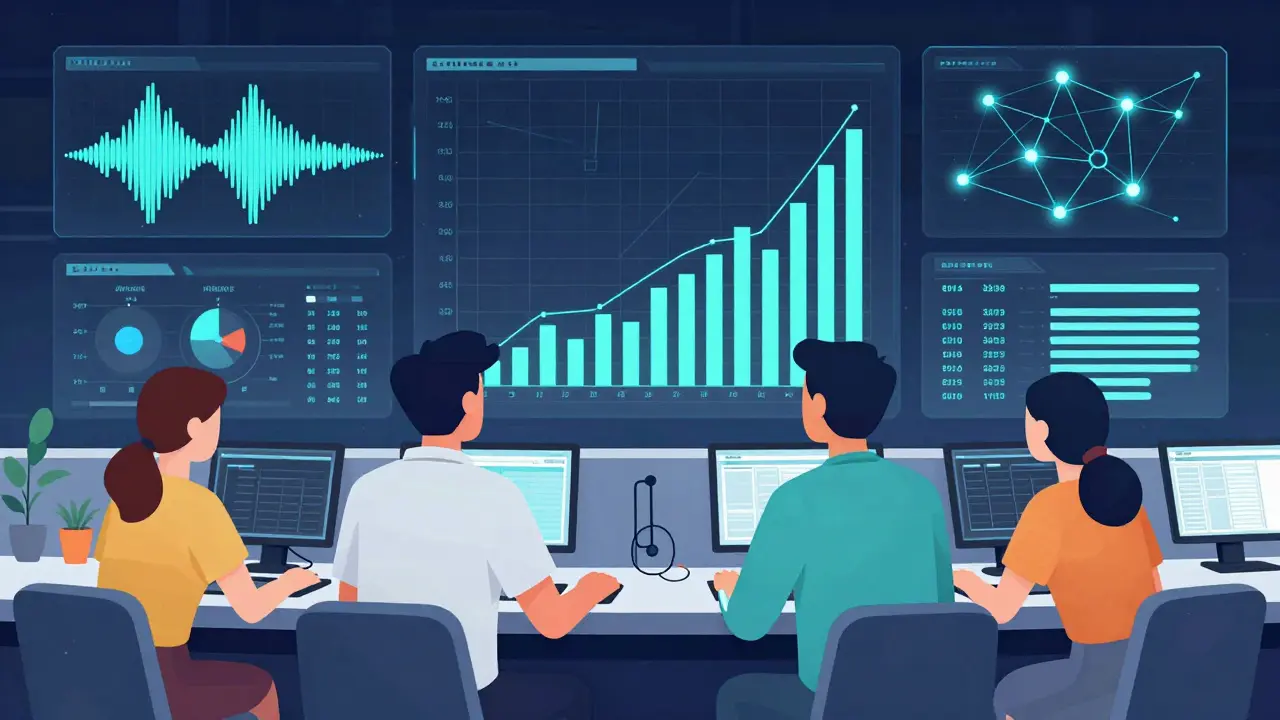
The Bigger Picture: A Global Model
Sentinel didn’t just change how the FDA works. It changed how the world thinks about drug safety. Countries like the UK, Canada, and the EU are now building their own versions. The World Health Organization has called Sentinel a “blueprint” for global safety monitoring. The system’s distributed design - keeping data local while enabling analysis - is now seen as the gold standard for balancing privacy and public health. And it’s growing. In 2023, the FDA invested over $300 million to upgrade Sentinel 3.0, adding better AI tools, expanding to include data from Medicare and Medicaid, and improving integration with international networks.Who Uses It - And Why
Sentinel isn’t just for the FDA. Academic researchers use it to study long-term drug effects. Drug companies use it to monitor their own products after launch. Public health agencies use it to track vaccine safety. Even insurance companies use the insights to improve patient care. It’s become the backbone of what experts call a “learning health system” - where every patient’s experience helps improve the next.What’s Next
The next phase is even more ambitious: - Using AI to predict which patients are most at risk for side effects before they even happen. - Integrating wearable data - like heart rate monitors or glucose trackers - into safety analysis. - Building real-time dashboards so regulators can see emerging signals as they happen. The goal? Not just to react to danger - but to prevent it.How is FDA Sentinel different from the old adverse event reporting system?
Sentinel uses real-world data from millions of patient records - insurance claims and electronic health records - to calculate actual rates of side effects. The old system, FAERS, only collects voluntary reports, which are incomplete and don’t include how many people took the drug. Sentinel knows the denominator; FAERS doesn’t.
Does Sentinel track my personal health data?
No. Your personal information - name, address, Social Security number - never leaves your doctor’s or insurer’s system. Sentinel only receives anonymous, aggregated numbers like “17 people out of 42,000 had a stroke.” The system is designed to protect privacy while still finding patterns.
Can Sentinel prove that a drug causes a side effect?
Not alone. Sentinel finds statistical associations - like a higher number of heart attacks in users of a certain drug. But proving cause requires follow-up studies: checking if the timing matches, ruling out other causes, and comparing to similar groups. Sentinel flags the issue; scientists then investigate further.
Why does Sentinel use a distributed network instead of one central database?
Privacy and security. By keeping data where it is, Sentinel avoids the risks of a single massive database being hacked or misused. It also respects laws and policies that prevent health data from being moved without consent. The distributed model lets the FDA analyze data at scale without ever owning it.
How fast does Sentinel detect drug safety problems?
Weeks, not years. Traditional studies can take 3-5 years to complete. Sentinel can detect a potential safety signal in as little as 2-6 weeks after a new drug hits the market. That’s why it was critical during the COVID-19 vaccine rollout - it helped identify rare heart inflammation cases in young men within weeks.
Nicholas Miter
January 26, 2026 AT 23:27This is actually one of the most quietly brilliant public health innovations in decades. The fact that they can analyze millions of records without ever touching personal data is a masterclass in privacy-preserving analytics. It’s not just safer-it’s smarter.
Shweta Deshpande
January 27, 2026 AT 10:16I work in rural healthcare and I’ve seen how broken the old reporting system was. Patients would come in with weird symptoms and we’d wonder if it was the new med, but we had no way to know if others had the same thing. Sentinel changes that. Now when we see a pattern, we know we’re not alone. It’s like having a national watchdog that actually listens. I’ve even started sharing anonymized local trends with our regional health network-small steps, but it matters.
Mohammed Rizvi
January 27, 2026 AT 13:05So the FDA finally stopped relying on people to remember to file a form after their knee swelled up like a water balloon? Took ‘em long enough. I’ve been telling my grandma to report her weird dizziness after that new blood pressure pill, but she thinks it’s just ‘old age.’ Now at least someone’s actually looking.
TONY ADAMS
January 28, 2026 AT 04:11they’re just spying on us under the guise of safety lmao
Rakesh Kakkad
January 29, 2026 AT 11:30The architectural elegance of this system cannot be overstated. The distributed data paradigm, leveraging federated learning principles, ensures compliance with stringent data sovereignty regulations while enabling statistical power at an unprecedented scale. The absence of centralized data repositories mitigates systemic vulnerabilities inherent in monolithic architectures. This is not merely an improvement-it is a paradigmatic shift in pharmacovigilance.
Uche Okoro
January 31, 2026 AT 07:47The utilization of NLP-driven phenotyping from unstructured EHR narratives introduces a non-trivial confounding bias due to inconsistent documentation practices across heterogeneous clinical settings. The signal-to-noise ratio remains suboptimal without standardized ontology alignment. Furthermore, the reliance on claims data as a proxy for medication adherence is methodologically flawed-compliance is not inferable from prescription fills.
Sally Dalton
February 1, 2026 AT 01:30i just love that this system actually helps real people instead of just collecting paperwork. my cousin had a bad reaction last year and we had no idea if it was the drug or just bad luck. knowing that this kind of thing is being watched makes me feel so much better about meds. also, typo: 'recrods' in my head but i know you meant records 😅
SWAPNIL SIDAM
February 1, 2026 AT 13:25When I first heard about this, I thought, 'Oh great, another government project that costs billions and does nothing.' But then I read about how they caught the myocarditis link with the COVID vaccine in weeks. That’s not bureaucracy-that’s lifesaving. I’m honestly impressed. This is what public service should look like.
eric fert
February 2, 2026 AT 20:55Let’s be real-this isn’t about safety. It’s about control. They’re building a database of every single American’s medical behavior under the banner of 'public health.' You think they won’t use this to deny insurance? To flag 'high-risk' patients before they even get sick? To pressure doctors into avoiding certain prescriptions? The 'privacy' claims are a joke. Data doesn’t stay put-it gets repurposed. And once you give the government the keys to this kind of surveillance infrastructure, there’s no turning back. This isn’t innovation. It’s the slippery slope wearing a lab coat.
Suresh Kumar Govindan
February 3, 2026 AT 16:48It is a facade. The data is aggregated, yes-but aggregation is merely obfuscation. Who decides the queries? Who audits the algorithms? The FDA, a body historically captured by pharmaceutical interests, now wields the power to manipulate statistical thresholds to suppress or amplify signals. This is not transparency. It is algorithmic governance cloaked in scientific language.
Faisal Mohamed
February 4, 2026 AT 03:53There’s a metaphysical irony here: the system preserves privacy by refusing to know the individual, yet it seeks to understand the collective with near-omniscient precision. In doing so, it reduces human suffering to probabilistic curves-and in that reduction, we risk losing the narrative, the lived experience behind the 0.04%. Is safety worth the erasure of the patient’s voice? Or are we becoming data ghosts in a machine that calculates our risk but never asks how we feel?
Betty Bomber
February 4, 2026 AT 10:24honestly? this is the first thing the fda has done in years that actually makes me feel like they’re trying to protect us. i used to be so scared of new meds, but now i know there’s someone out there watching for weird patterns. also, i think they meant 'records' not 'recrods' in that one line but like… i forgive them 😊