
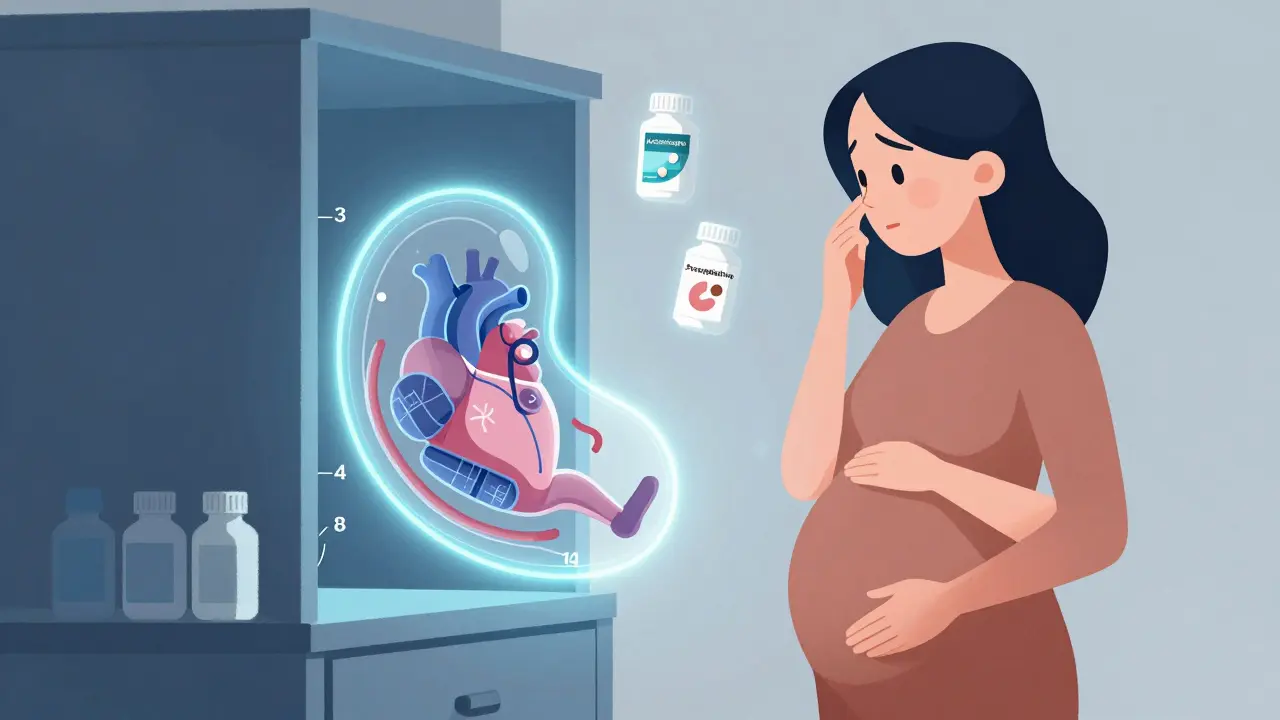
When you're pregnant, even a simple headache can feel like a life-or-death decision. You reach for the bottle of acetaminophen, but then you stop. First trimester medication safety isn't just a warning on a label-it's a real, measurable risk window that shapes your baby’s future. And most people have no idea how narrow or how dangerous it really is.
Why the First 12 Weeks Are Everything
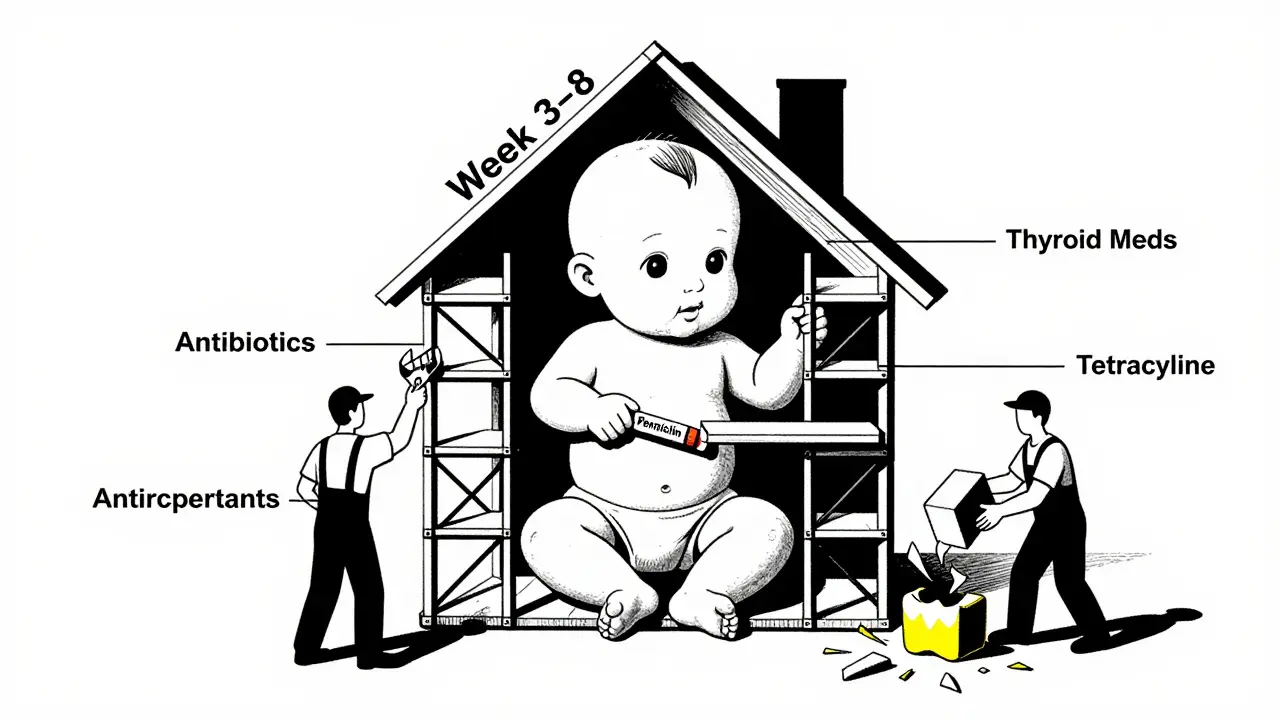
The first trimester isn’t just the start of pregnancy-it’s the entire construction phase of your baby’s body. From day 17 to day 56 after conception, every organ forms. That’s a 40-day window where a single exposure to the wrong medication can cause permanent, life-altering birth defects. The CDC says 90% of major birth defects happen in this time. Not later. Not in the third trimester. Right here, right now.Think of it like building a house. You don’t install the roof after the walls are up-you lay the foundation first. Your baby’s heart, brain, limbs, eyes, ears, and digestive system all take shape between weeks 3 and 8. Miss a step, and the structure doesn’t just need a fix-it needs a rebuild. And your body doesn’t know you’re pregnant until you miss your period. By then, you might already be in the danger zone.
The Most Common Medications-and Their Hidden Risks
You’d think if a drug is sold over the counter, it’s safe. That’s not true. Here’s what’s actually in most medicine cabinets during early pregnancy:- Acetaminophen (Tylenol): Used by 30% of pregnant women. It’s still the go-to for fever and pain. But new studies show prolonged use-more than a few days-may raise the risk of ADHD by 30% and autism by 20%. Not guaranteed. Not certain. But enough to make you think twice before taking it every day for weeks.
- NSAIDs (ibuprofen, naproxen): Used by nearly 5% of pregnant women. These can cause miscarriage in the first trimester. A Canadian study of over 4,700 pregnancies found a 1.6x higher risk. And while the FDA warns about kidney problems after 20 weeks, the damage can start much earlier.
- Pseudoephedrine (Sudafed): A common cold remedy. But it’s linked to a 1.2 to 1.3 times higher risk of gastroschisis-a rare abdominal wall defect where organs stick outside the body. Avoid it in the first 12 weeks.
- Acetaminophen + Codeine: Even if you’re only taking it for a bad cough, codeine crosses the placenta. It’s not a teratogen, but it can cause neonatal withdrawal. And if you’re taking it for more than a few days, you’re risking your baby’s breathing after birth.
Prescription meds are trickier. Amoxicillin? Safe. Progesterone? Often prescribed after IVF-no major risks found. But what about antidepressants? Paroxetine is a red flag. Studies show a 1.5 to 2 times higher risk of heart defects, especially ventricular septal defects. Fluoxetine and sertraline? No clear link to birth defects. But they can cause jitteriness, breathing trouble, or feeding issues in newborns if taken late in pregnancy.
The Antibiotics You Can and Can’t Take
Infections don’t wait for pregnancy to end. But not all antibiotics are created equal.- Safe: Penicillins (like amoxicillin), cephalosporins (like cephalexin), and erythromycin. These have decades of safe use.
- Avoid: Tetracycline. It stains developing teeth yellow and weakens bones. Even if you’re 14 weeks along, it’s too late.
- Unclear: Fluoroquinolones (like ciprofloxacin). Animal studies show cartilage damage. Human data? Almost none. Most doctors won’t prescribe them unless there’s no other option.
And here’s the twist: sometimes not taking the antibiotic is worse. A urinary tract infection left untreated can lead to preterm labor. A severe sinus infection can make you too sick to eat or sleep. The goal isn’t to avoid all meds-it’s to pick the right one.
What About Allergies, Acid Reflux, and Anxiety?
Pregnancy brings a whole new set of discomforts. And you’re not supposed to just suffer.- Allergies: Loratadine (Claritin) and cetirizine (Zyrtec) are low-risk. Diphenhydramine (Benadryl) is okay occasionally, but it can make you drowsy-and drowsiness increases fall risk.
- Heartburn: Famotidine (Pepcid) and ranitidine (Zantac) used to be common. But Zantac was pulled from the market due to contamination. Famotidine? No solid data on first-trimester safety. Omeprazole? Better studied, but still not ideal unless you’re really struggling.
- Anxiety/Depression: Stopping your antidepressant can be more dangerous than staying on it. Untreated depression raises the risk of preterm birth, low birth weight, and even suicide. If you’re on fluoxetine or sertraline, talk to your doctor before quitting. Don’t switch meds on your own.
The Real Danger: Not Taking What You Need
Here’s the part no one tells you: sometimes the medicine you’re scared of is safer than the disease.Take epilepsy. Stopping seizure meds increases the chance of a seizure during pregnancy by 400%. A seizure can cut off oxygen to the baby. The risk of birth defects from the meds? Around 4-6%. The risk from a seizure? Up to 15%. That’s not a gamble-it’s a math problem.
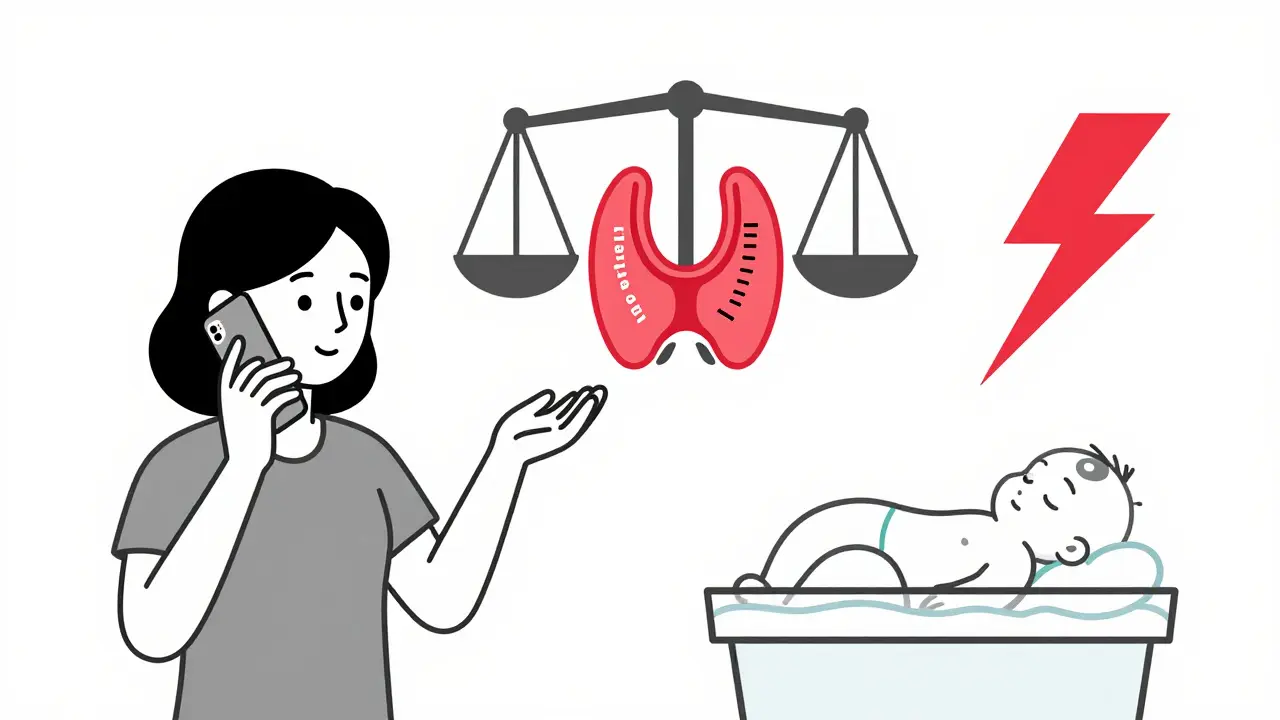
Same with thyroid medication. If your TSH is above 2.5 mIU/L in the first trimester, your baby’s brain development slows. Levothyroxine is safe. But 30-50% of women need a dose increase during pregnancy. If you don’t adjust it, you’re not protecting your baby-you’re hurting them.
And what about hydroxychloroquine for lupus? It’s safe. It reduces flare-ups. It lowers the risk of preterm birth. Yet many women stop it out of fear. That’s the opposite of safety.
What You Should Do Right Now
If you’re pregnant-or thinking about it-here’s your action plan:- Write down everything you take. Prescription, OTC, vitamins, herbs, supplements. Even the cough syrup you used last week.
- Don’t stop anything without talking to your provider. Especially antidepressants, seizure meds, or thyroid pills.
- Use MotherToBaby. It’s a free service run by teratology experts. Call them. Text them. Ask about any medication. They’ve handled over 15,000 cases a year. They know the data.
- Ask your doctor: “Is there a non-drug option?” For nausea, try ginger or acupressure. For back pain, try prenatal yoga or physical therapy. For sleep, try a warm bath and consistent bedtime.
- Use the lowest dose for the shortest time. Even if a drug is “safe,” that doesn’t mean more is better.
The Big Problem: No One Knows
Here’s the truth no one wants to admit: we don’t know what most drugs do to babies. The FDA says only 10% of approved medications have enough data to judge pregnancy safety. Ninety-eight percent of drug labels don’t give clear info. That’s not a flaw-it’s the system.Drug companies aren’t required to test on pregnant women. So we’re guessing. Based on animal studies. Based on a few hundred case reports. Based on what someone read online.
That’s why you get conflicting advice. One doctor says “acetaminophen is fine.” Another says “avoid it.” Both are right, depending on how often and how long you use it.
This isn’t about fear. It’s about awareness. You’re not being paranoid. You’re being smart.
Final Thought: You’re Not Alone
Sixty-eight percent of pregnant women worry about medication risks. Forty-two percent have stopped a needed medication because they were scared. Thirty-one percent got different advice from different doctors.You’re not failing if you’re unsure. You’re human. The system is broken. But you can still make good choices. You don’t need to be perfect. You just need to be informed.
So next time you reach for a pill, pause. Ask. Research. Call MotherToBaby. Talk to your provider. And remember: the goal isn’t zero risk. It’s the best possible risk-for you and your baby.


Bennett Ryynanen
January 1, 2026 AT 12:21Yo I just found out my wife took ibuprofen for a headache at 6 weeks and now I’m having a panic attack in the middle of the night. Like… we didn’t know. No one tells you this shit until it’s too late. I’m scrolling through CDC stats and my hands are shaking. We’re calling MotherToBaby tomorrow. No more guessing.
Chandreson Chandreas
January 2, 2026 AT 15:46Bro this post hit different 😔
My sister took acetaminophen for 3 weeks straight during her first trimester and now her kid has mild ADHD. Not the end of the world, but man… it’s a weight. The system’s broken, but awareness is power. Keep sharing this.
Darren Pearson
January 4, 2026 AT 11:30While the emotional resonance of this piece is commendable, one must acknowledge the inherent methodological limitations of observational epidemiology in teratology. The relative risks cited are often confounded by socioeconomic variables, maternal comorbidities, and recall bias. A more rigorous discourse requires reference to prospective cohort studies-preferably those published in JAMA Pediatrics or The Lancet.
Frank SSS
January 5, 2026 AT 09:09So… you’re telling me the only safe thing to do is lie on the couch and cry while eating ice cream? Because honestly, that’s what I did. And now my kid’s 4 and he’s brilliant. Maybe the meds didn’t matter. Or maybe I just got lucky. Either way, I’m not losing sleep over it anymore.
Brady K.
January 7, 2026 AT 04:47Let’s be real - the real danger isn’t the meds. It’s the fact that we’re expected to be pharmacologists at 8 weeks pregnant while being told to ‘just relax.’ Meanwhile, Big Pharma’s sitting on 90% of the data, laughing. You want safety? Demand clinical trials on pregnant people. Until then, we’re all just guessing with Google.
Kayla Kliphardt
January 8, 2026 AT 07:04Can I ask - what’s the source for the 30% ADHD increase with acetaminophen? I’ve seen conflicting studies and I’m trying to make an informed choice, not just panic.
John Chapman
January 10, 2026 AT 01:30Y’all are overthinking this. I took everything and had two healthy kids. Stop scaring people. If you’re worried, talk to your OB. But don’t let fear turn pregnancy into a minefield. 😊
Urvi Patel
January 10, 2026 AT 19:28Acetaminophen causes autism? Bro you got to be kidding me. In India we give it to babies for fever and no one’s autistic. This is just western anxiety dressed up as science. Chill the fuck out.
anggit marga
January 11, 2026 AT 10:00Why are we even talking about meds when the real issue is that men don’t get pregnant? You think men would be this scared if they had to carry the baby? Nah. This whole thing is designed to make women feel guilty. Just take the damn pill.
Joy Nickles
January 12, 2026 AT 18:18Okay but like… I took Zantac for 3 months?? And now I’m scared my baby is gonna have cancer?? And also I used Benadryl for sleep?? And I didn’t even know about the fall risk?? I’m gonna cry in the shower again. 😭😭😭😭😭
Emma Hooper
January 14, 2026 AT 13:01Oh honey. You think this is bad? Wait till you find out what’s in your prenatal vitamin. Some of those brands have lead. And your gummy vitamins? Sugar bombs with fake dyes. You’re not safe unless you’re reading the full ingredient list and cross-referencing with PubMed. And even then… you’re still rolling the dice.
Martin Viau
January 15, 2026 AT 06:18As a Canadian, I’m shocked no one referenced the 2021 CMAJ meta-analysis on NSAID exposure and miscarriage. The OR was 1.6, yes - but the absolute risk increase was 0.8%. That’s not a crisis. It’s a statistical blip. We’re conflating relative risk with clinical significance. This post is fearmongering dressed as education.
Marilyn Ferrera
January 16, 2026 AT 02:08Call MotherToBaby. Seriously. They’re free, confidential, and staffed by PhD teratologists. I’ve called them twice - once for a weird herb I took, once for an antibiotic. They gave me data, not fear. You deserve that peace.
Robb Rice
January 17, 2026 AT 21:24I appreciate the intent of this post, but the tone risks inducing unnecessary anxiety. While evidence-based caution is warranted, blanket statements like 'the structure doesn't just need a fix-it needs a rebuild' are misleading. Human development is remarkably resilient. Balance is key.
Harriet Hollingsworth
January 18, 2026 AT 23:33My sister-in-law took ibuprofen and now her son needs surgery for a heart defect. She didn’t know. She didn’t ask. She just took it. And now? She’s a mom who can’t look at a pill bottle without crying. Don’t be her.