

Every year, millions of unused pills, patches, and liquids sit in medicine cabinets across America. Some are expired. Others were prescribed but never taken. Many are kept out of fear - fear of throwing them away, fear of someone else finding them, or fear of doing it wrong. But here’s the truth: how you prepare your unused medications for take-back events matters more than you think. It’s not just about cleaning out a cabinet. It’s about stopping drug misuse, protecting water supplies, and keeping your family safe.
Why This Matters
In 2022, over 18 million Americans misused prescription drugs. Most of those drugs didn’t come from dealers. They came from home medicine cabinets - often from a grandparent’s leftover painkillers or a child’s unused ADHD medication. The DEA estimates that 70% of misused prescriptions are taken from family or friends. That’s why take-back events exist. Since 2010, over 16,500 authorized collection sites across the U.S. have safely removed nearly 30,000 tons of pharmaceutical waste. These aren’t just bins in a parking lot. They’re part of a national effort to prevent addiction, overdose, and environmental damage.And the environmental side? It’s serious. Studies show 80% of U.S. streams contain traces of pharmaceuticals. That’s not just aspirin or ibuprofen. It’s antibiotics, antidepressants, hormones - all flushed down the toilet or tossed in the trash. When these chemicals enter water systems, they affect fish, wildlife, and even drinking water. Proper disposal through take-back events ensures medications are incinerated under strict controls, not washed into rivers or buried in landfills.
What You Can Bring
Not everything in your medicine cabinet can go to a take-back event. But most can. Here’s what’s accepted at nearly every authorized site:- Prescription medications (including controlled substances like oxycodone, Adderall, or Xanax)
- Over-the-counter drugs (pain relievers, cold meds, antacids)
- Prescription patches (fentanyl, nicotine, estrogen)
- Vitamins and supplements
- Pet medications
- Topical ointments and creams
What’s not allowed? Hydrogen peroxide, aerosol cans (like inhalers), iodine-based products, thermometers, and illegal drugs. If you’re unsure, check the site’s rules ahead of time - most pharmacies and hospitals list this online.
The Simple Three-Step Rule
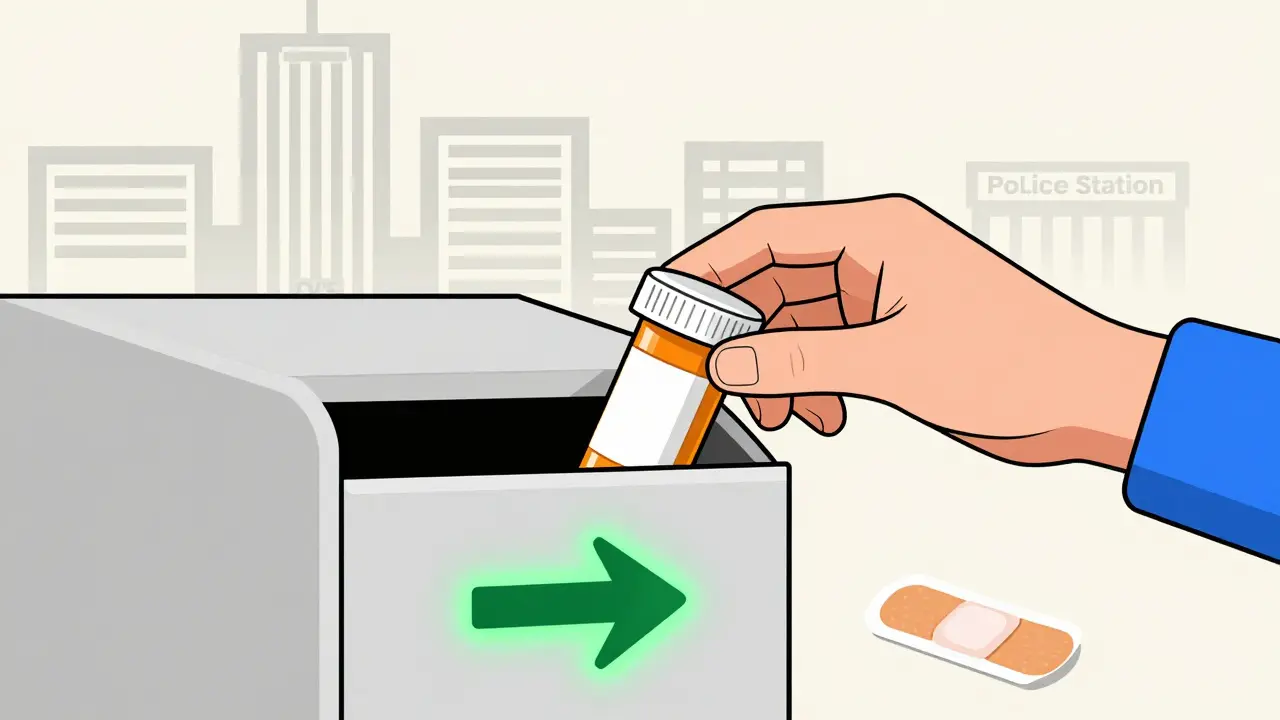
The best way to prepare your meds? Keep it simple. Follow these three steps every time:- Remove personal info. Use a permanent marker to black out your name, prescription number, and pharmacy details on the bottle. If the label is faded or peeling, just cover the whole thing. This isn’t optional - it’s required by HIPAA. Your privacy matters, even when you’re disposing of pills.
- Keep it in the original container. Over 90% of collection sites require this. Why? It helps staff verify what’s being dropped off. If the bottle says "OxyContin 10mg" and has your name on it (even if covered), they know exactly what they’re handling. Don’t pour pills into a plastic bag unless you have no other option.
- Don’t mix medications. Keep pills from different prescriptions separate. Even if they’re both painkillers, don’t dump them into one bag. This helps prevent errors during processing.
That’s it. No need to rinse, crush, or dilute anything. Just remove your name, keep the bottle, and bring it as-is.
What If You Don’t Have the Original Bottle?
Sometimes you lose the bottle. Maybe the cap broke. Or you moved and the label got ruined. That’s okay. If you can’t find the original container:- Use a small, sealable plastic container - like a pill bottle from a new prescription or a clean, empty contact lens case.
- Or, use a zip-lock bag. Make sure it’s sealed tightly. No leaks.
- Write the name of the medication on the outside with a marker. "Lisinopril 10mg" or "Amoxicillin 500mg" - anything to identify it.
Some sites, like Walgreens kiosks, will accept this. Others might ask for more. But as of 2024, the DEA’s "Every Day is Take Back Day" initiative encourages flexibility. If you’ve done your best to protect privacy and identify the contents, most sites will take it.
Special Cases: Patches, Liquids, and Sharps
Some items need extra care.Transdermal patches (like fentanyl or nicotine patches): Fold them in half, adhesive side in. This prevents accidental skin contact. Place them in a sealed container. Most sites require this - it’s a safety rule, not a suggestion.
Liquid medications: Keep them in their original bottle. If the bottle is cracked or leaking, pour it into a sealed plastic container and label it. Don’t mix liquids with pills. Some sites have separate bins for liquids.
Insulin pens and sharps: These are trickier. Most hospital-based collection sites accept insulin pens. But only 32% of retail pharmacies do. If you have insulin, check ahead. Some clinics offer sharps disposal boxes for free. Don’t toss needles in the trash - they’re a hazard to sanitation workers.
What Happens After You Drop It Off?
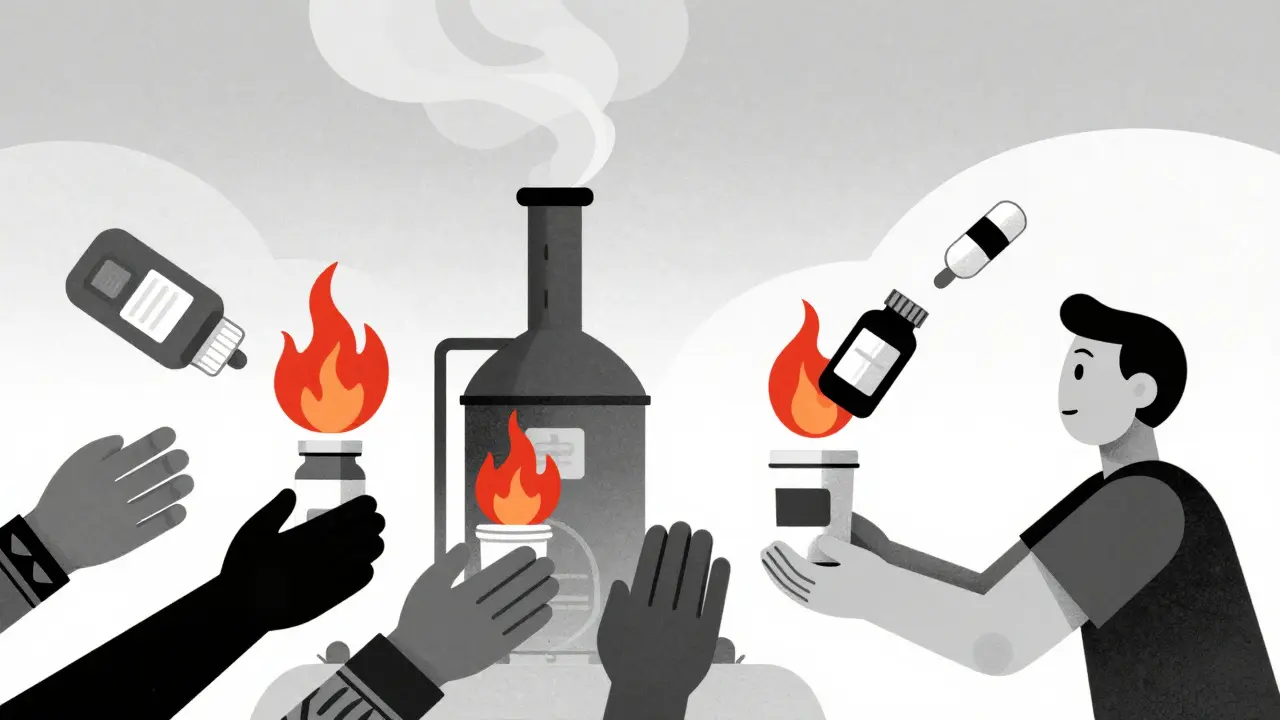
Once you hand over your meds, they’re not sitting around. Collection sites send them to licensed incinerators. These aren’t regular trash burners. They’re high-temperature, EPA-regulated facilities that destroy drugs completely - no ash, no residue, no leaching into soil or water. In 2024, Stericycle alone incinerated nearly 30,000 tons of pharmaceutical waste. That’s the equivalent of over 100 million prescription bottles safely destroyed.And here’s the win: every time you do this, you reduce the chance someone in your household - or a stranger - finds those pills and misuses them. You also help prevent contamination of rivers, lakes, and drinking water.
Common Mistakes (And How to Avoid Them)
Most people get it right. But some slip up. Here are the top three mistakes - and how to dodge them:- Not covering personal info - 41% of rejected submissions fail here. Use a thick black marker. Cover every word. If you’re not sure, cover the whole label.
- Putting liquids in the wrong container - 29% of rejections involve leaking or unsealed liquids. Use a plastic bottle with a tight cap. Double-bag if needed.
- Bringing prohibited items - inhalers, aerosols, and thermometers are common mistakes. Check the site’s list ahead of time. If in doubt, leave it out.
Pro tip: Do this in daylight. It’s easier to see what you’re marking. And if you’re unsure, call the site before you go. Most are happy to help.
Why You Shouldn’t Flush or Trash It
You’ve probably heard: "Flush it if you can’t take it back." That advice is outdated. The FDA stopped recommending flushing in 2023. Flushing sends drugs straight into water systems. Even modern water treatment plants can’t filter out all pharmaceuticals. And throwing pills in the trash? That’s a risk too. Curbside trash can be picked through. Pets, kids, or even scavengers might find them. Take-back events are the only way to guarantee safe, permanent destruction.Where to Find a Collection Site
You don’t need to wait for a special event. Most sites are permanent. Use the DEA’s online locator tool - it’s updated monthly. Enter your zip code, and it shows:- Pharmacies with drop boxes (like CVS, Walgreens, Rite Aid)
- Hospital and police station drop-off points
- VA medical centers (which accept pet meds too)
71% of Americans live within five miles of a permanent collection site. In most states, you can find one within 10 minutes. And they’re open year-round. No appointment needed. Just walk in, hand over your meds, and leave.
What’s Changing in 2025
The system is getting better. In 2024, the DEA launched "Every Day is Take Back Day," pushing for consistent rules nationwide. Thirty-eight states are testing simplified protocols - like allowing zip-lock bags without original containers. Early results show participation could jump by 22% if these changes stick. The FDA is spending $8.7 million on public education to make this easier. The goal? Raise participation from 15% to 50% - which would stop over 6 million pounds of drugs from entering waterways each year.Final Thought
You don’t need to be an expert to do this right. You just need to remove your name, keep it in a container, and drop it off. It takes five minutes. The impact? It’s huge. You’re protecting your family. You’re protecting your community. You’re protecting the environment. And you’re helping stop addiction before it starts.Can I mix different medications in the same bag for disposal?
No. Even if they’re both painkillers or both antibiotics, keep them separate. Mixing medications can cause confusion during processing and increase the chance of errors. Most collection sites require each prescription to be in its own container or clearly labeled section. If you’re using a zip-lock bag, separate each type with a piece of paper or use different bags.
What if my medication bottle is empty but I still have the label?
If the bottle is completely empty and dry, you can throw it in the recycling bin. But if there’s any residue - even a few drops - keep the bottle. Cover your personal info with a marker, then bring it to the collection site. Empty bottles with residue are still considered pharmaceutical waste and must be disposed of properly.
Do I need to remove pills from blister packs before disposal?
No. Leave pills in their blister packs. In fact, it’s better to keep them there. Blister packs help prevent spills and make it easier for staff to verify what you’re turning in. Just cover the label with a marker and place the whole pack in a container or zip-lock bag. Don’t pry out the pills - that just creates more mess.
Can I bring expired pet medications to a human take-back site?
Yes. Most collection sites accept pet medications. That includes antibiotics, flea/tick preventatives, and heartworm pills. Just follow the same rules: remove personal info, keep in original container if possible, and don’t mix with human meds. VA hospitals and some animal clinics also host take-back events specifically for pets.
What if a collection site refuses my medication even though I followed the rules?
It happens. Sometimes staff misinterpret rules or have local policies that aren’t widely known. If you’re turned away, ask for the reason. If it’s unclear, call the DEA’s hotline or visit their website to confirm current guidelines. You can also try another site - many pharmacies have different policies. Don’t give up. Your effort matters, and persistence helps improve the system.
Next time you clean out your medicine cabinet, don’t just toss it. Don’t flush it. Don’t ignore it. Take it to a drop-off site. It’s quick. It’s safe. And it makes a real difference.
Donnie DeMarco
March 12, 2026 AT 03:08Man, I just cleaned out my cabinet last week and tossed a whole bag of old pills in the trash like a dummy. Thanks for the wake-up call. I’m going back tonight with a marker and a ziplock. Seriously, why isn’t this taught in high school? Like, next to sex ed and how to change a tire?
LiV Beau
March 13, 2026 AT 20:19OMG YES!! 🙌 I did this last month and felt like a superhero. Took my mom’s old Xanax and my dad’s leftover blood pressure pills. We’re saving the planet one pill bottle at a time 💊🌍 #TakeBackDay
Mike Winter
March 15, 2026 AT 14:08It’s curious how we treat pharmaceutical waste with such casual disregard, given the profound ecological and social ramifications. The act of disposal becomes not merely logistical, but ethical. One wonders: if we knew the bioaccumulative consequences of flushing a single tablet, would we still hesitate? Perhaps the real crisis isn’t the pills - it’s the normalization of neglect.
Kenneth Zieden-Weber
March 17, 2026 AT 08:34So let me get this straight - you’re telling me I don’t have to crush my hydrocodone into a smoothie and flush it like some 2012 YouTube tutorial? Sweet. I was starting to feel guilty for not being a mad scientist. Thanks for killing the myth. Also, why do we still have inhalers on the banned list? They’re just pressurized plastic. Let’s be real.
Bridgette Pulliam
March 17, 2026 AT 19:50I appreciate the clarity here. As someone who works in public health outreach, I’ve seen too many people hesitate because they think they need to be perfect. The fact that zip-lock bags are now acceptable? Huge win. It removes the barrier of guilt. You don’t need the original bottle to do the right thing. Just do it.
Chris Bird
March 18, 2026 AT 10:02Why are we even having this conversation? Big Pharma made billions selling these drugs. Now they want us to pay for the cleanup? This is just another way to shift responsibility. The government should be paying to incinerate these, not asking grandma to mark her name with a Sharpie.
Tom Bolt
March 18, 2026 AT 21:26MY BROTHER GOT ADDICTED BECAUSE HE FOUND HIS DAD’S OXYCOTIN BOTTLE IN THE GARBAGE CAN. I’M NOT KIDDING. I’M TALKING ABOUT A 19-YEAR-OLD WHO STOLE FROM HIS OWN FATHER. THIS ISN’T ABOUT THE ENVIRONMENT - IT’S ABOUT SURVIVAL. IF YOU DON’T DO THIS, YOU’RE PUTTING YOUR FAMILY AT RISK. NO EXCUSES.
Adam Kleinberg
March 20, 2026 AT 18:58They say 'take-back events' but what they really mean is 'government surveillance' - who’s tracking what you dropped off? And why do they need the original bottle? Are they building a database of who took what? I’m not handing over my meds unless I get a notarized receipt that says 'no data collected.'
Gene Forte
March 21, 2026 AT 03:58This is one of the most important public service messages I’ve seen in years. It’s simple. It’s clear. It’s necessary. Taking five minutes to drop off old pills isn’t a chore - it’s a gift. To your children. To your neighbors. To the rivers. Do it. Not because you have to. Because you care.
Shourya Tanay
March 22, 2026 AT 17:04From an epidemiological standpoint, the transdermal patch folding protocol is particularly critical. The dermal bioavailability of residual fentanyl on adhesive surfaces post-disposal poses a non-trivial risk to sanitation workers, particularly in non-urban jurisdictions where PPE compliance is suboptimal. The FDA’s 2024 guidance on fold-and-seal protocols aligns with WHO’s 2023 occupational safety framework for pharmaceutical waste handling. Kudos to the DEA for operationalizing this.
Denise Jordan
March 24, 2026 AT 04:53Yeah, sure. I’ll take my 17-year-old’s expired Adderall to a Walgreens kiosk. Because nothing says 'responsible parenting' like walking into a pharmacy with a bag of your kid’s ADHD meds. Next they’ll want me to sign a waiver and take a quiz.
David L. Thomas
March 25, 2026 AT 05:10Just dropped off my mom’s meds at CVS today. She’s 82, has 12 bottles, and was terrified she’d get in trouble. We covered the labels, kept the bottles, didn’t mix anything. Took 3 minutes. She cried. Said she felt like she was finally 'doing right.' Honestly? That’s why this matters. Not the stats. Not the rivers. It’s the old lady who finally feels safe.