
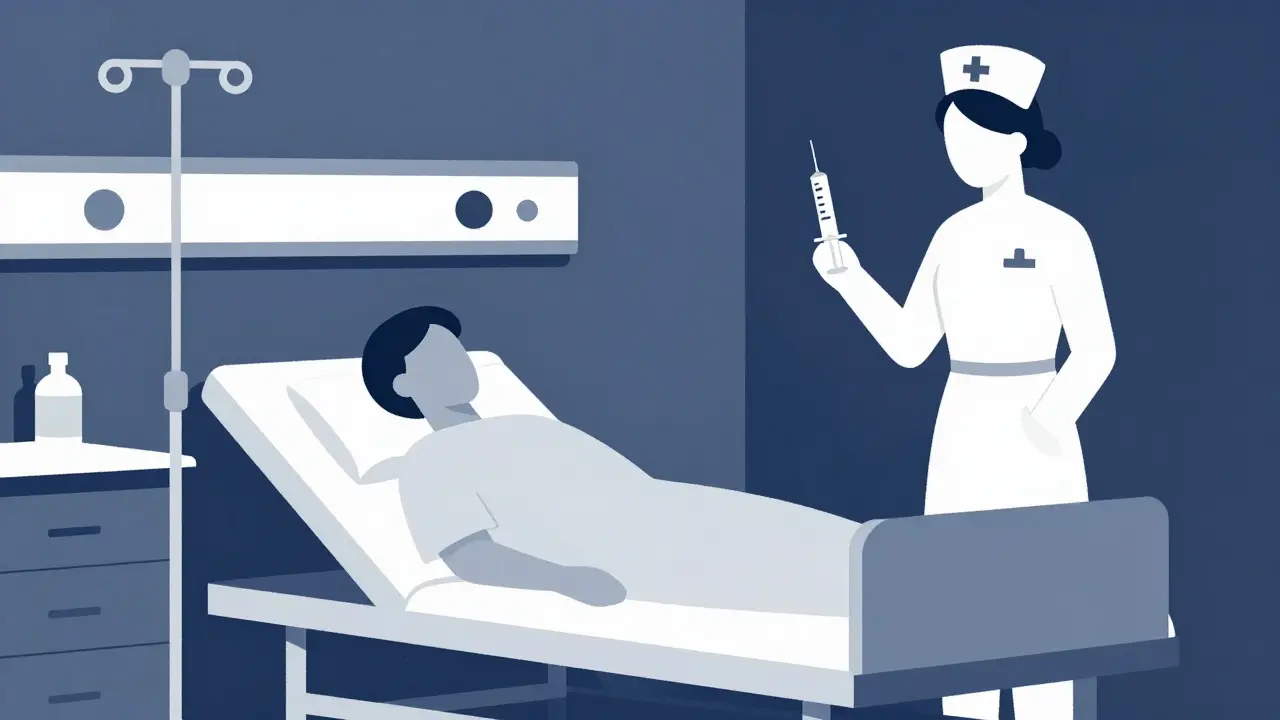
Getting back on your feet after surgery depends heavily on one thing: the medicines you take during the initial recovery phase. It is easy to assume the doctors handle everything perfectly, but Postoperative Medication Safety is a complex process involving strict protocols to prevent harmful errors in the operating room and recovery ward. Understanding how these safety nets work helps you spot potential issues and protects your health.
Short-term medications are the drugs prescribed immediately after the procedure, usually to manage pain, prevent infection, or stop blood clots. Unlike your daily vitamins, these require careful handling because small mistakes can lead to serious complications. In fact, studies show that about 30% of medication errors happen specifically in surgical environments. Knowing the basics of what to expect can give you peace of mind while you heal.
Understanding Short-Term Medications in Recovery
When you wake up in the recovery room, you aren't just waiting to go home; you are receiving active treatment. Short-Term Medications are pharmaceutical agents administered during the immediate postoperative period, typically lasting from hours to several weeks depending on the specific procedure. These include intravenous painkillers, antibiotics given through a drip, or blood thinners like heparin.
The safety of these drugs relies on timing. For example, if you need a booster dose for pain control, the syringe used must be fresh for that specific session. Reusing needles or syringes between different patients is strictly forbidden by the Centers for Disease Control and Prevention (CDC) , which updated its guidelines in November 2023 to emphasize sterile techniques even more strongly. If you notice a nurse reaching for a vial that doesn't look sealed or clean, ask about it. It's never rude to question how your medicine was prepared.
The Golden Rules of Hospital Safety
Hospitals follow rigorous standards to keep you safe, but these rules are designed for the team members working behind the scenes. Understanding them helps you recognize good practice when you see it.
- Labeling Everything: Every cup, bowl, or syringe filled with medicine must be labeled immediately. Empty containers cannot be pre-labeled. This prevents mix-ups where one medication looks identical to another. The Joint Commission standards require that if a label falls off, the medicine is discarded. If you see a container without a clear tag showing the drug name and time, let the staff know.
- Verification Process: Before any high-alert medication (like insulin or strong painkillers) enters your body, two professionals must independently check it. This is called "double-checking." It sounds redundant, but it catches over 90% of potential dosage errors before they reach the patient.
- Secure Storage: Medications aren't left lying around. They must be stored in secure areas to prevent unauthorized access. This security measure also ensures the right person gives the right dose.
High-Alert Medications: What to Watch For
Not all drugs carry the same risk level. Some are classified as High-Alert Medications which have a heightened risk of causing significant harm when used in error . These include opioids for pain, heparin for blood clots, and vasopressors for blood pressure. According to the Institute for Safe Medication Practices (ISMP), these specific drugs accounted for a large portion of serious incidents reported in surgical settings.
If you are prescribed an opioid for severe pain, ensure the concentration matches your history. Sometimes, different strengths of the same drug exist in the system. Ask the nurse to read out the name and strength before administration. If you are taking home prescription pills later, pay attention to whether these high-risk meds are included in your discharge packet. They often require stricter monitoring than standard antibiotics.

Communication: The Missing Link in Safety
Mistakes often happen during verbal exchanges. Surgeons might give orders quickly during a busy operation, and nurses need to confirm they heard correctly. This is where the "read-back" protocol comes in. When a doctor gives a verbal order, the receiver repeats it back to ensure accuracy. Research suggests this simple habit reduces verbal order errors by 55%.
You can use this same technique when talking to your care team. If a doctor says, "Take this twice a day," you repeat, "Just to confirm, I take this medication twice daily." This simple loop of communication ensures everyone is on the same page. It also empowers you to catch misunderstandings early, especially regarding timing and dosage frequency.
Transitioning Home: Medication Reconciliation
Discharge is a critical moment. Leaving the hospital means moving from the hands of experts to managing your own care. A major source of risk occurs here if the new list of medicines at home doesn't match what was used in the hospital. This process is known as Medication Reconciliation the gold standard for comparing old and new medications to ensure no conflicts occur during transitions of care .
A study highlighted by the World Health Organization noted that proper reconciliation could reduce adverse drug events by up to 67% in surgical patients. When you are leaving, ask for a printed summary of exactly what you were given in the hospital and what you are taking home. Compare the doses yourself. Do not rely solely on memory. If there is a gap between what you were given last night and the pills in your bag today, ask the discharge pharmacist to clarify.
Comparison: Clinical vs. Home Safety Standards
| Aspect | Hospital Protocol | Home Practice |
|---|---|---|
| Preparation | Sterile, controlled environment by trained staff | Patient or caregiver prepares doses, less sterility |
| Labeling | Required immediately on all containers | Pills in original bottles usually sufficient |
| Storage | Secure locked carts or rooms | Cupboards away from children/pets |
| Verification | Two-person independent check | Patient reads label alone |
| Supervision | Anesthesiologists and Nurses monitor vital signs | Patient self-monitors symptoms |
Implementing Personal Safety Measures
While you cannot control the operating room, you control your own intake once you leave the facility. Start by keeping a log of every dose you take. Write down the time, amount, and how you feel afterwards. This helps you report side effects accurately to your doctor. Also, organize your medications clearly. Use a weekly pill organizer if you are struggling to remember schedules.
If you have family helping you, designate one person as the primary medication manager to avoid confusion. This works particularly well for elderly patients who may forget instructions. Finally, store your medicines safely. Keep them away from moisture and heat, and never share them with others. Many people think sharing painkillers is harmless, but it bypasses safety checks designed for your specific condition.
Can I reuse my pain relief patches?
No, reusable patches are generally not allowed for short-term acute pain management. Most post-surgery patches have a timed release mechanism. Once removed, the adhesive degrades and the dosage becomes unreliable. Always discard used patches carefully.
What if I miss a dose of my antibiotic?
If you miss a dose, do not double up. Take the missed dose as soon as you remember, but if it is nearly time for the next scheduled dose, skip the missed one. Maintain the interval between doses to keep consistent levels in your body.
Are short-term meds safe to buy online?
Only purchase prescription medications from verified pharmacies with a valid prescription. Online markets often sell unregulated versions of drugs like opioids. Stick to accredited pharmacies listed on the regulatory body website for your region.
Why does the hospital change my meds before discharge?
Hospitals switch from injectable IV medications to oral tablets for convenience. This change allows for a smoother transition to home care. The effectiveness remains similar, but the delivery method changes to support your continued recovery.
What should I ask about 'High Alert' meds?
Ask the nurse to identify which meds are considered high-alert. Specifically request to know the exact strength in milligrams or units. Understanding that these drugs require strict monitoring helps you know why extra precautions are being taken.





Victor Ortiz
April 2, 2026 AT 11:04Hospitals cut corners constantly despite claiming high standards.
Most people don't realize how often they get sloppy during shift changes.
The CDC guidelines mean nothing without enforcement mechanisms in place.
Patients usually stay too quiet to report what they see.
We need more transparency regarding drug handling protocols immediately.
Safety nets are full of holes in reality.
Rocky Pabillore
April 2, 2026 AT 21:21Common folk rarely understand the nuances of sterile technique requirements.
Your average person would reuse a needle before asking about vials.
True expertise comes from understanding pharmacology beyond basic pamphlets.
Ignorance is the real killer here disguised as concern.
Only those trained properly know the difference between saline and clear fluids.
Do not expect nurses to lower their standards for public opinion sake.
Cullen Zelenka
April 4, 2026 AT 05:49It is great to see people taking an active role in their own healing process.
Knowledge really is power when you are lying in a hospital bed.
You can recover faster just by paying attention to the details mentioned here.
Keep your spirit up and trust the team mostly.
Recovery takes time but you are stronger than you think.
James DeZego
April 5, 2026 AT 09:09Pharmacists play a key role in dispensing accurate information 💊.
Verifying the NDC number ensures the correct product is dispensed.
Always cross reference strengths with original prescriptions 📝.
Understanding half life aids timing decisions well.
Arun Kumar
April 6, 2026 AT 01:16In my family we always prioritize communication with doctors regardless of hierarchy.
There are many cultures where questioning staff is considered disrespectful but safety overrides tradition here.
Reading back orders ensures the right medicine goes into the vein at the right time.
Family members can act as extra sets of eyes during administration times.
Labeling containers prevents accidental mix ups that could hurt recovery progress greatly.
Medication lists should be updated daily to track any new additions to the regimen.
Checking expiration dates on discharge meds is another simple step toward security.
Double checking doses saves lives when errors slip through the cracks silently.
Storage of narcotics at home needs to be child proof for everyone involved.
Understanding high alert meds helps patients advocate for themselves effectively later on.
Many complications arise simply because nobody read the label aloud carefully enough.
Trust is essential but verification builds true confidence in the treatment plan.
Nurses work incredibly hard under pressure to keep these systems running smoothly day after day.
Everyone deserves a safe transition from clinical setting back to comfortable living spaces at last.
Please share these tips with friends who might undergo procedures soon too.
Rod Farren
April 7, 2026 AT 14:37Pharmacokinetics dictate that timing is crucial for peak serum levels.
Bioavailability drops significantly if oral intake follows IV administration without washout periods.
Half-lives matter immensely when switching from heparin to warfarin bridges.
Titration schedules must align with renal function parameters closely.
Monitoring INR levels prevents hemorrhagic events during transitions.
Clinicians monitor sedation depth via RASS scales frequently.
Adverse drug event tracking systems log these occurrences accurately.
Cara Duncan
April 7, 2026 AT 17:12Thank you for sharing such vital information 🙏🌟.
Russel Sarong
April 8, 2026 AT 19:31The stakes are incredibly high when it comes to blood thinners!
Just thinking about a mistake makes me nervous!!!
They say double checking catches ninety percent of errors which is amazing!!!!
We must remain vigilant against complacency in healthcare settings!!!
Communication loops save lives literally!!!
Read backs prevent disasters!!!
Stay aware of what enters your body at all costs!!!
Jenny Gardner
April 10, 2026 AT 16:49Please observe all safety protocols outlined in the post!!!
Proper adherence to these rules ensures maximum efficacy!!!
It is imperative that labels remain intact on all containers!!!
Negligence leads to preventable harm!!!
We must respect the training behind these procedures!!!
Owen Barnes
April 11, 2026 AT 11:50The procedure for reconciliations at discharge is strictly enforced.
Patients should verify each dosage written down carefully.
Mistakes occur due to hasty transcriptions sometimes.
Storing pills away from moisture is good advice.
Make sure to separate old meds from new ones.
I belive organization helps avoid confution later on.
Hygiene matters much more than peaple think.
Callie Bartley
April 12, 2026 AT 17:55Systems are always failing us despite these fancy guidelines written up here.
Insurance companies won't cover the pharmacist review anyway.
It is annoying how complex everything gets when you just want to feel better.
Nobody explains why prices go up after surgery either.
Safety is just a marketing word used to calm nerves mostly.
People suffer while bureaucracy fills out paperwork endlessly.
Eleanor Black
April 13, 2026 AT 23:08My grandmother experienced difficulties with her pain management during hip replacement surgery recently.
She struggled with the transition from intravenous morphine to oral tablets specifically.
It was challenging to manage the schedule without assistance at home.
We found that a dedicated pill organizer solved most confusion regarding timing.
Her nurse explained the importance of verifying concentrations before swallowing anything.
That level of caution really did help prevent potential overdoses occurring accidentally.
Documentation of side effects helped the doctor adjust dosages quickly when needed.
We noticed that dizziness often appeared after the evening dose initially.
Taking notes proved invaluable during follow up appointments subsequently.
Communication remained consistent throughout the entire three week recovery period thankfully.
The pharmacy team was patient in answering questions about interactions with food.
We realized that hydration played a larger role than expected in absorption rates.
Keeping a log book alongside the bottle helped track consumption accurately over time.
The peace of mind gained from these steps outweighed the effort required significantly.
😇 Recovery became much smoother once we implemented these checks systematically and kept going.
❤️ This approach truly supports long term wellness goals.
Julian Soro
April 14, 2026 AT 03:13You got this and staying informed makes recovery easier.