
When cancer hurts, it’s not just the body that suffers
Imagine waking up every morning with a dull ache that turns into a sharp stab when you move. Then add nausea, exhaustion, and the fear that no one truly understands what you’re going through. For cancer pain control, this isn’t rare-it’s the daily reality for 70 to 90% of people with advanced cancer. Yet most of that pain can be managed. Not just eased. Actually controlled. And when pain is under control, something surprising happens: quality of life improves-not just physically, but emotionally, socially, and spiritually.
Why pain gets ignored in cancer care
It’s not that doctors don’t care. It’s that pain gets buried under treatments, tests, and timelines. Many patients don’t report pain because they’re told, “It’s just part of the disease.” Others fear being seen as weak, or worse-addicted. Studies show 65% of cancer patients avoid talking about pain because they’re scared of opioids. Meanwhile, 40% of oncology nurses haven’t been trained in the latest pain guidelines. That’s not negligence. It’s a system failure.
Here’s the truth: cancer pain isn’t like a headache you take an aspirin for. It’s complex. It can be bone-deep from metastases, burning from nerve damage, or crushing from tumors pressing on organs. And if you don’t measure it, you can’t fix it.
The 0-to-10 scale that saves lives
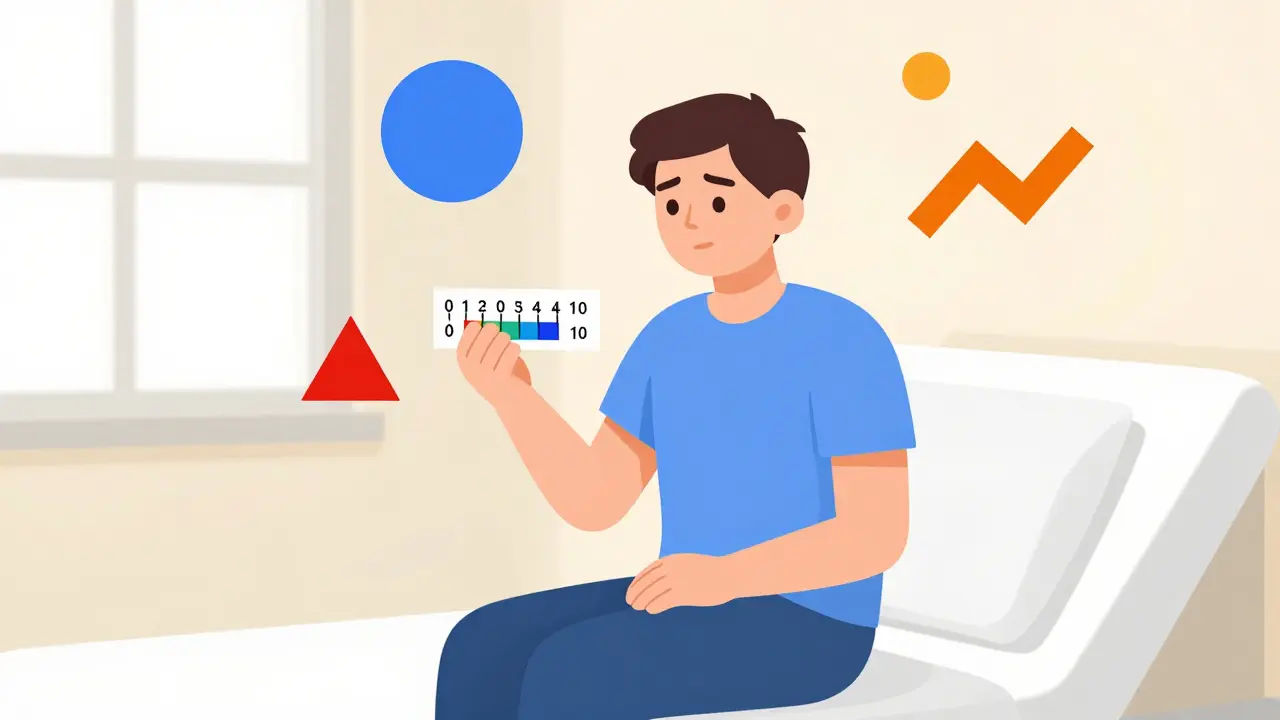
Every time a cancer patient sees a doctor, they should be asked: “On a scale from 0 to 10, how bad is your pain right now?” That’s not a suggestion. It’s a requirement from the National Comprehensive Cancer Network (NCCN). A 0 means no pain. A 10 means the worst pain imaginable. If you score a 7 or higher, you need help now-not tomorrow, not next week.
Doctors don’t guess. They ask. They record. They track. Pain isn’t something you endure. It’s a symptom to treat-just like high blood pressure or fever. If your pain score doesn’t drop after treatment, something’s wrong. And you deserve better.
How pain meds really work (step by step)
The World Health Organization’s three-step ladder isn’t old-fashioned-it’s still the gold standard. Here’s how it works in practice:
- Step 1 (Mild pain): Acetaminophen (up to 4,000 mg a day) or ibuprofen (400-800 mg three times daily). Simple. Safe. Effective-for mild pain.
- Step 2 (Moderate pain): Add a weak opioid like codeine (30-60 mg every 4 hours). Not strong enough for everyone, but it helps many.
- Step 3 (Severe pain): Strong opioids like morphine (5-15 mg every 4 hours). Yes, this sounds scary. But when used correctly, it’s life-changing. You take it on a schedule, not just when it hurts. And you get extra doses for sudden spikes-called breakthrough pain.
Doctors don’t just give a pill and walk away. They titrate. That means they slowly increase the dose-by 25 to 50% every day or two-until the pain is under control. If you’re still hurting after 48 hours, your dose isn’t high enough. That’s not failure. That’s normal.
When opioids aren’t enough-or too much
Not everyone responds to morphine. Some get nauseated. Others feel foggy. A few even develop opioid-induced hyperalgesia-where the medicine makes pain worse. That’s when doctors switch. Not because you’re “tolerant.” But because your body needs a different key to unlock relief.
They use equianalgesic tables to convert one opioid to another. If you’re on 100 mg of morphine a day, switching to oxycodone might mean starting at only 50-75 mg. Why? Because your body hasn’t fully adjusted. It’s safer. More precise.
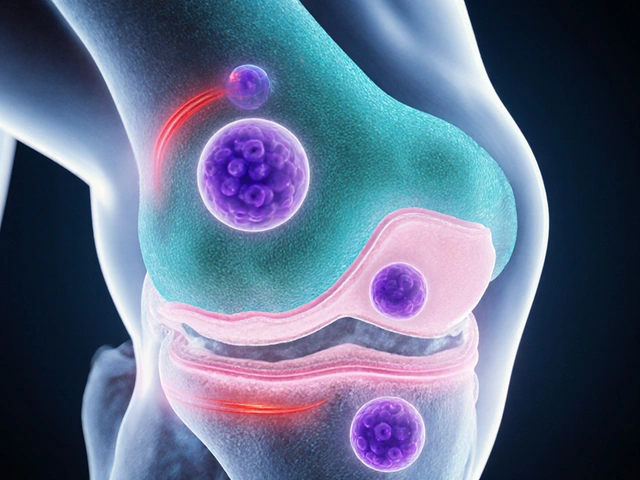
And if the pain is from bone metastases? Radiation helps. A single 8 Gy dose can knock out pain in days. Bisphosphonates like zoledronic acid, given every few weeks, strengthen bones and reduce fractures. These aren’t “last resort” options. They’re part of the plan.
The hidden tools: meds that aren’t opioids
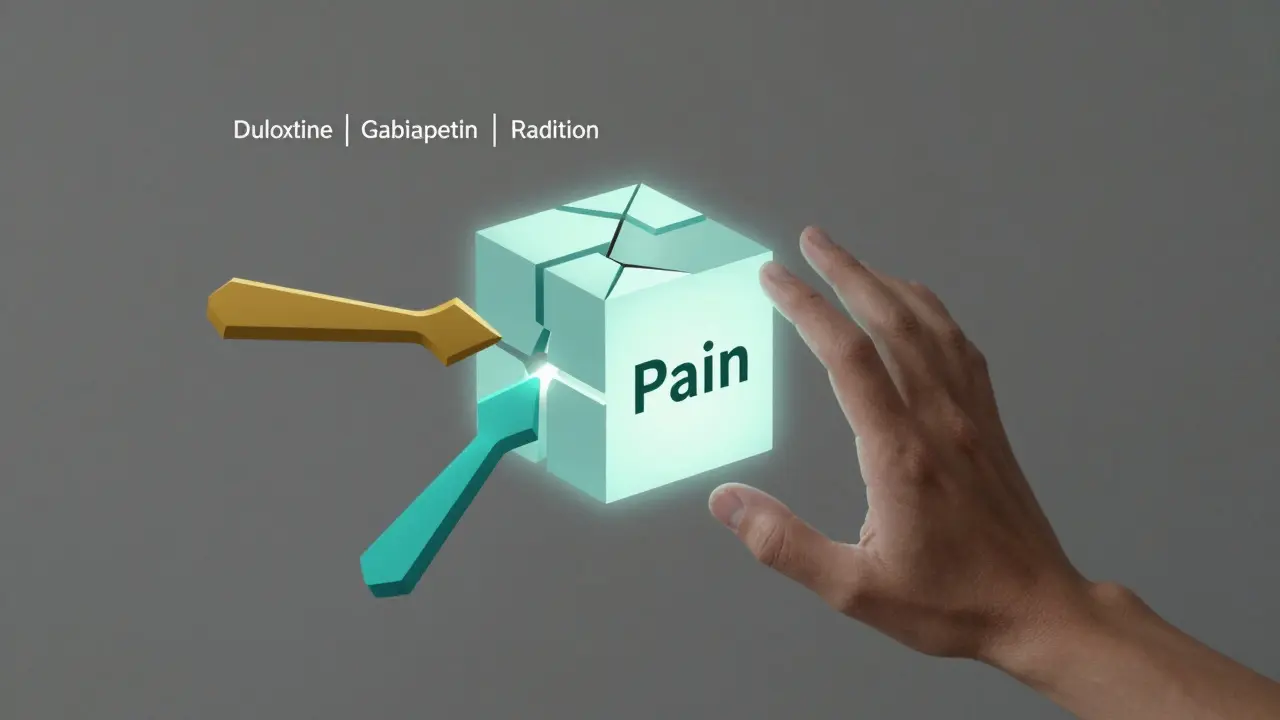
Antidepressants like duloxetine (30-60 mg daily) help with nerve pain. Gabapentin (100-1,200 mg three times a day) calms burning sensations. Dexamethasone (4-16 mg daily) reduces swelling around tumors. These aren’t add-ons. They’re essential. Many patients feel better with just one of these, even before touching opioids.
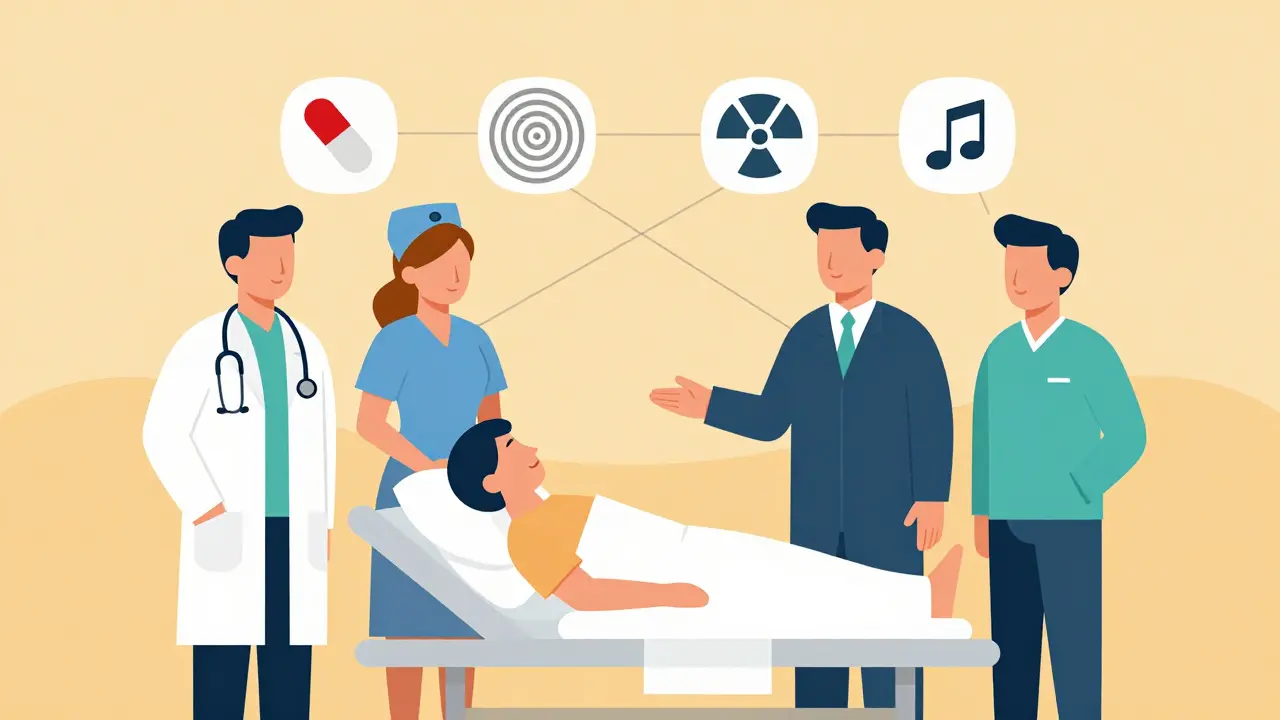
And then there’s the non-drug stuff. Acupuncture. Massage. Mindfulness. Music therapy. These aren’t “nice to haves.” A 2022 study showed patients who got even 30 minutes of guided relaxation daily reported 30% less pain. You don’t need a fancy clinic. Just a quiet room and 10 minutes a day.
Early palliative care isn’t giving up-it’s fighting smarter
Too many people think palliative care means “stop treatment.” That’s wrong. Palliative care means “treat the whole person.” And the best time to start? Right after diagnosis.
Seventeen studies show that when patients get palliative care within eight weeks of being told they have cancer, their quality of life improves by 20 to 30%. Not just pain. Mood. Sleep. Ability to talk with family. Even survival. One study found those patients lived 2.5 months longer than those who waited.
Palliative teams aren’t just doctors. They’re nurses, social workers, chaplains, pharmacists. They ask: “What matters most to you?” “Can you still hug your grandkids?” “Are you scared to be alone?” They don’t fix death. They help you live until it comes.
The barriers no one talks about
Here’s what stops pain control in real life:
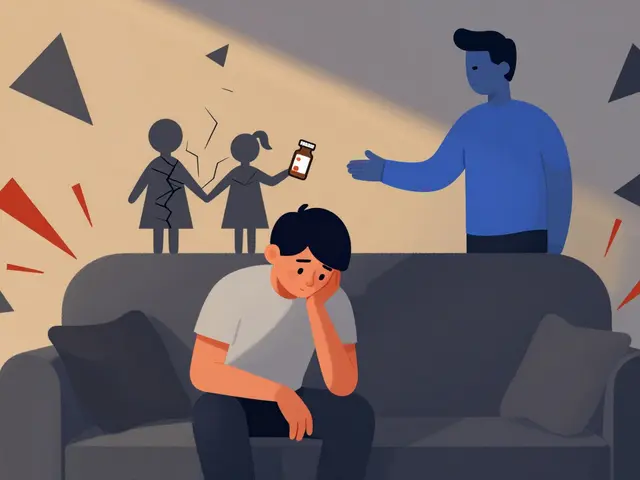
- Cultural silence: 28% of Asian and Hispanic patients underreport pain because they believe suffering is honorable. That’s not strength. It’s isolation.
- Insurance gaps: Physical therapy, counseling, acupuncture? Often not covered. Even when they work.
- Regulatory fear: Some doctors avoid strong opioids because they’re scared of audits or lawsuits-even though cancer is explicitly exempt from CDC’s opioid limits.
And here’s the kicker: if your doctor doesn’t mention palliative care, ask for it. Say: “I’m still in pain. Can you refer me to a palliative care team?” That’s not asking for help. That’s demanding it.
What’s new in 2026
Technology is catching up. Apps now let patients log pain, nausea, and fatigue in real time. One 2021 study showed this improved documentation accuracy by 22%. Genetic tests can now tell if your body metabolizes morphine slowly-meaning you need less. AI tools are being tested to predict pain spikes before they happen.
And new drugs? Twelve are in late-stage trials targeting cancer pain at the source-like blocking signals from bone destruction or nerve compression. No opioids needed.
You’re not alone in this
Cancer pain doesn’t have to be your normal. It’s not a badge of honor. It’s a medical problem. And like any medical problem, it can be solved-with the right tools, the right team, and the right voice.
If you or someone you love has cancer and is in pain, speak up. Track your pain. Ask for help. Demand a pain score. Ask for a palliative care consult. You’re not being difficult. You’re being smart.
Because you don’t have to suffer to be brave.
Is palliative care the same as hospice?
No. Hospice is for people in the final months of life who are no longer seeking curative treatment. Palliative care can start at diagnosis and continue alongside chemotherapy, surgery, or radiation. It’s about managing symptoms and improving quality of life-no matter the stage of cancer.
Will opioids make me addicted?
The risk of addiction in cancer patients using opioids for pain is very low-less than 1% when used as directed. Addiction is about compulsive use despite harm. Cancer patients use opioids to relieve suffering, not to get high. Fear of addiction is one of the biggest reasons pain goes untreated. Talk to your doctor about your concerns.
What if my pain meds stop working?
It’s not uncommon. Cancer changes. Tumors grow. Nerves get more sensitive. If your pain isn’t controlled, your doctor should adjust your dose, switch medications, or add non-opioid options like gabapentin or radiation. Don’t wait. Don’t suffer in silence. Reassessment is part of the plan.
Can I use over-the-counter painkillers for cancer pain?
Only for mild pain. Acetaminophen or ibuprofen might help early on, but they won’t touch moderate or severe cancer pain. Taking too much can damage your liver or kidneys. Always check with your care team before using OTC meds regularly.
How do I know if I need a palliative care team?
If your pain is not controlled after trying standard treatments, if you’re feeling anxious or depressed, if you’re struggling with sleep, appetite, or daily tasks, or if your family feels overwhelmed-ask for a referral. You don’t need to wait for a crisis. Early involvement makes the biggest difference.
Are there non-drug ways to manage cancer pain?
Yes. Radiation can stop bone pain in days. Nerve blocks, acupuncture, massage, meditation, and music therapy all help. Physical therapy keeps you moving and reduces stiffness. Even simple things like a warm bath or a supportive pillow can make a difference. These aren’t alternatives-they’re partners to medication.
What to do next
If you’re living with cancer and in pain:
- Start tracking your pain daily-use a notebook or a free app.
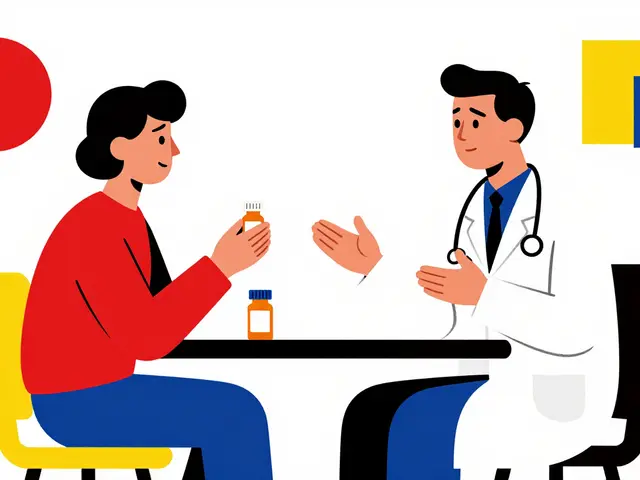
- Ask your oncologist: “What’s my pain score today? What’s the plan to reduce it?”
- Request a palliative care consultation. Say it out loud: “I want to live as well as I can. Can you help me with that?”
- Bring a family member to appointments. Pain is easier to manage when someone else is listening.
- If your doctor says no to stronger meds or palliative care, ask why-and get a second opinion.
You don’t have to endure pain to be strong. You’re not weak for wanting relief. You’re human. And you deserve to feel better.
Solomon Ahonsi
February 4, 2026 AT 08:51George Firican
February 5, 2026 AT 05:44Matt W
February 6, 2026 AT 16:55Anthony Massirman
February 7, 2026 AT 03:21Nick Flake
February 8, 2026 AT 17:36Akhona Myeki
February 10, 2026 AT 11:01Chinmoy Kumar
February 11, 2026 AT 12:42Brett MacDonald
February 12, 2026 AT 13:52Sandeep Kumar
February 13, 2026 AT 18:35Gary Mitts
February 14, 2026 AT 11:50