
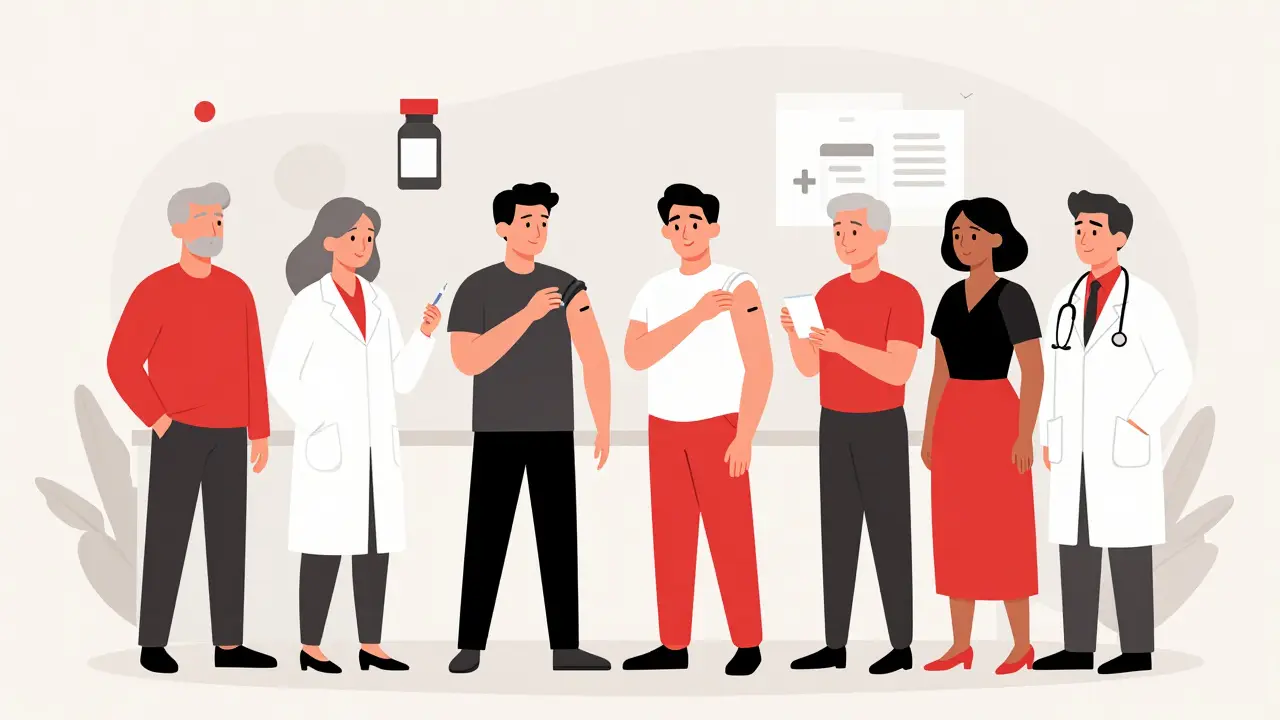
Shingles isn't just a rash. For many people, it's months of burning pain, sleepless nights, and a risk of long-term nerve damage called postherpetic neuralgia. The good news? There's a vaccine that works better than anything we've had before. The recombinant zoster vaccine, sold under the brand name Shingrix, is now the gold standard for preventing shingles - and it's not just for older adults. If you're wondering whether you or someone you care about should get it, here's exactly who needs it, why, and what to expect.
Who Exactly Should Get the Recombinant Zoster Vaccine?
The answer is simpler than you might think: almost everyone over 50. The recombinant zoster vaccine is a two-dose vaccine recommended by the CDC for all adults aged 50 and older, regardless of whether they've had shingles before or received the old Zostavax vaccine. That means even if you got shingles last year, you still need Shingrix. The virus that causes shingles - varicella-zoster - never leaves your body after chickenpox. It just hides in your nerves. So having one outbreak doesn't protect you from another. Shingrix reduces your risk of getting shingles again by more than 90%.
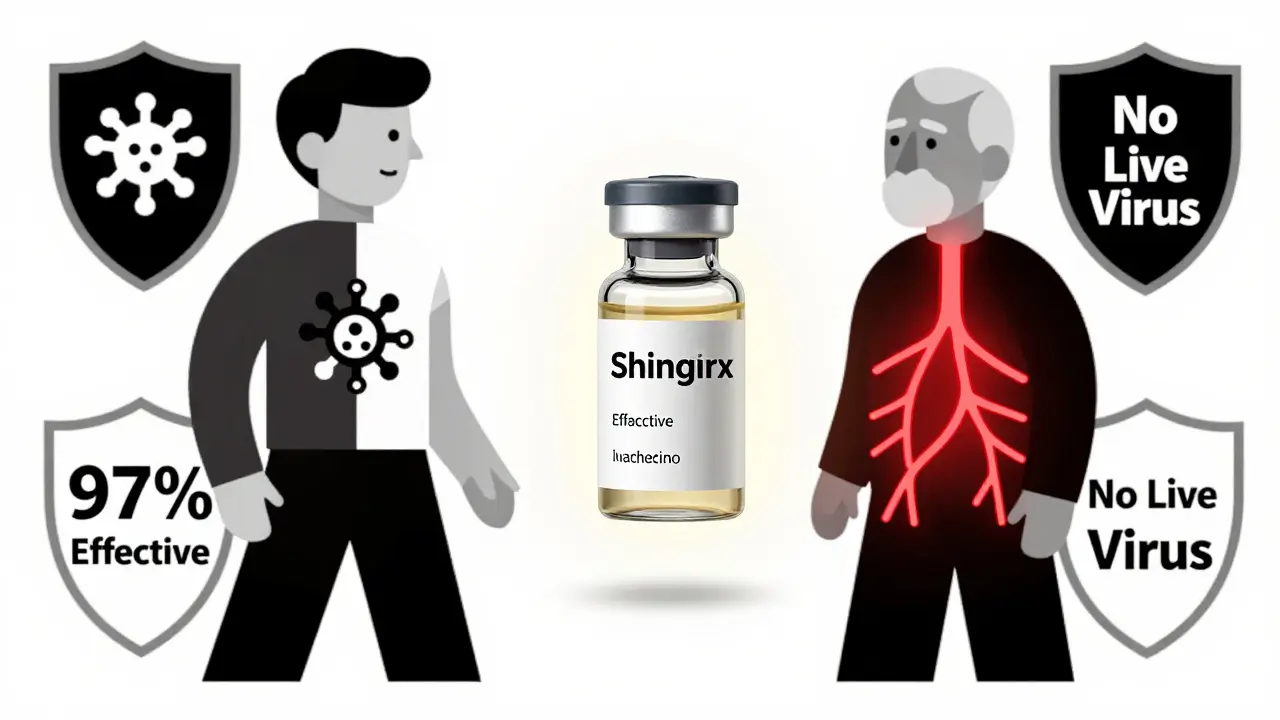
But here's the bigger shift: it's not just for people 50 and up anymore. If you're 19 or older and your immune system is weakened - whether from cancer treatment, HIV, organ transplant, autoimmune diseases like rheumatoid arthritis, or long-term steroid use - you're also a candidate. Before Shingrix, people with weakened immune systems couldn't get vaccinated at all. The old Zostavax vaccine used a live virus and was too risky. Shingrix doesn't contain live virus. It's made from a piece of the virus (glycoprotein E) and a powerful adjuvant that boosts your immune response. That makes it safe for people who were previously left unprotected.
Why Shingrix Over the Old Vaccine?
The old shingles vaccine, Zostavax, is gone. It was discontinued in the U.S. in November 2020. Why? Because Shingrix is simply better. Zostavax was only about 51% effective at preventing shingles. For people over 70, its effectiveness dropped to below 40%. And it offered just 67% protection against the worst complication - postherpetic neuralgia.
Shingrix? It's in a different league. Clinical trials show it's over 97% effective at preventing shingles in people aged 50 to 59. For those 60 to 69, it's 97.4%. Even for people 70 and older - who are at highest risk - it's still 91.3% effective. For postherpetic neuralgia? It cuts the risk by 91% in younger adults and 89% in older adults. That’s not a small improvement. That’s the difference between a 1 in 5 chance of shingles and a 1 in 20 chance.
It also lasts longer. Studies show protection stays above 90% for at least seven years after the second dose. Some experts believe it could last 15 to 20 years. That’s not just better - it’s a game-changer.
How the Vaccine Works - And What You Need to Know
Shingrix isn't a single shot. It's two doses, given 2 to 6 months apart. If you're immunocompromised, the second dose can be given as early as 1 to 2 months after the first. This isn't a suggestion - it's a requirement. Skipping the second dose cuts your protection dramatically.
Each dose is 0.5 mL and injected into your upper arm. It's not a skin prick like a flu shot. It goes deep into the muscle. You'll need to schedule two appointments. That's one reason some people don't complete the series. But don't delay the second shot. If you miss the window, just get it when you can. You don't need to restart the whole series.
The vaccine must be kept cold - between 2°C and 8°C (36°F to 46°F). If it warms up too much, it becomes ineffective. That's why pharmacies and clinics store it properly. You don't have to worry about this - just make sure you get it from a licensed provider.
What Side Effects to Expect (And What to Ignore)
Shingrix is effective - and it lets you know it. About 80% of people have pain, redness, or swelling at the injection site. Around 45% feel muscle aches. Forty percent get tired. One in three has a headache. Some get chills, fever, or stomach upset. These aren't rare side effects - they're common.
Here's the key: they're temporary. Most symptoms peak within 24 to 48 hours and fade within two to three days. You might need to take it easy for a day or two. Some people call it "Shingrix flu." But it's not shingles. You won't get a rash. You won't be contagious. This is your immune system doing its job.
Severe reactions are rare. If you've ever had a life-threatening allergic reaction to any vaccine ingredient, don't get it. That's the only true contraindication. If you're sick with a fever, wait until you're better. But don't skip it because you're nervous about sore arms. The pain of shingles lasts months. The pain from the shot lasts hours.
Who Should Skip It?
Very few people should avoid Shingrix. You should not get it if:
- You've had a severe allergic reaction (like anaphylaxis) to any component of the vaccine
- You're currently sick with a moderate or severe illness (wait until you recover)
- You tested negative for varicella-zoster immunity (extremely rare - most adults over 50 had chickenpox)
That's it. If you're over 50, or 19+ and immunocompromised - and you're not allergic - you should get it. Even if you're healthy. Even if you think you're "too young." Even if you're not sure you had chickenpox. The CDC says: if you're 50+, get Shingrix. Period.
Cost and Coverage - Is It Worth It?
Shingrix costs about $175 for both doses. That sounds steep, but most insurance covers it fully. Medicare Part D covers 100% of the cost for eligible adults. Most private insurers do too. If you're uninsured, some pharmacies offer discount programs. The price of one shingles outbreak - doctor visits, missed work, pain medication, lost sleep - can easily exceed $1,000. Prevention is cheaper.
And if you got Zostavax before? You still need Shingrix. The CDC recommends waiting at least five years after Zostavax before getting Shingrix. But if you got Zostavax less than five years ago, you can still get Shingrix now. It's safe. It's effective. And you'll get better protection.
What Happens If You Don't Get It?
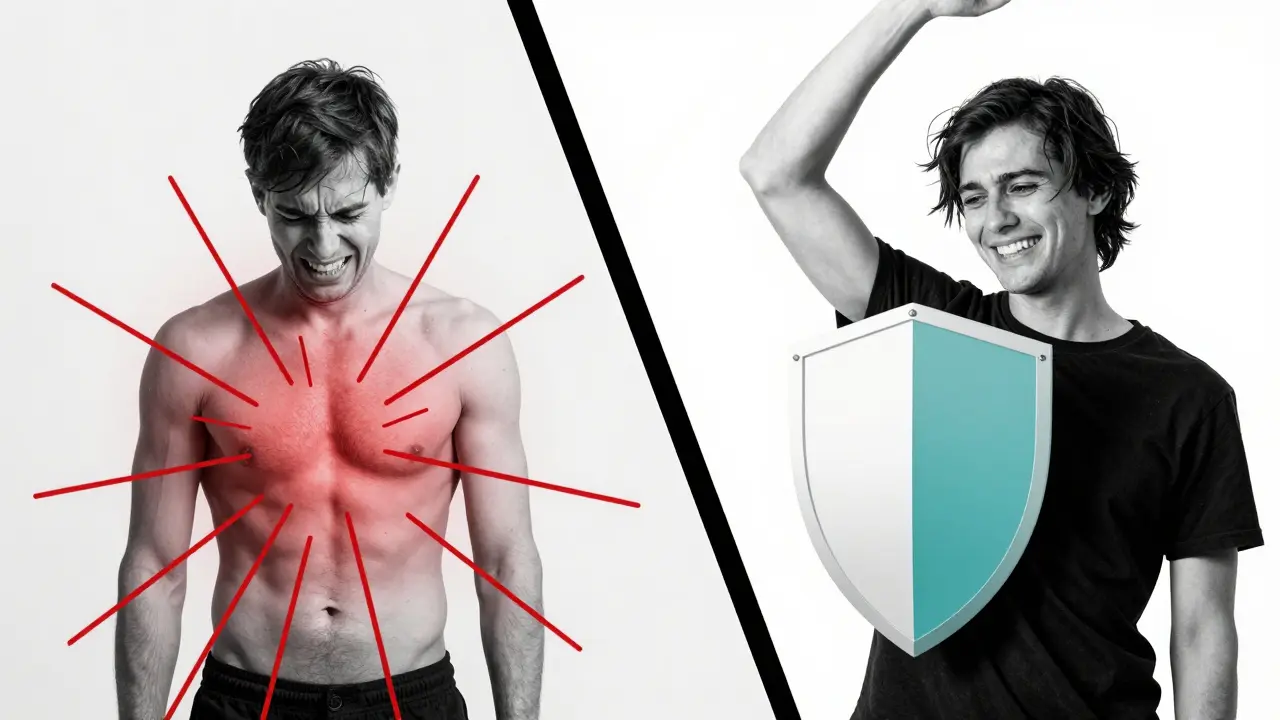
One in three people in the U.S. will get shingles in their lifetime. By age 85, that risk jumps to 50%. And shingles doesn't just hurt - it can blind you, paralyze your face, or cause brain inflammation. Postherpetic neuralgia can last for years. It's the leading cause of chronic pain in older adults.
Right now, only about 35% of adults over 60 have been vaccinated. That's far below the Healthy People 2030 goal of 70%. Most people who get shingles didn't get the vaccine. They assumed they were safe. Or they were scared of side effects. Or they forgot. Don't be one of them.
Next Steps - What to Do Now
Check your vaccination record. Did you get two doses of Shingrix? If not, schedule an appointment. Talk to your doctor, pharmacist, or local clinic. Most pharmacies offer it without a prescription. Bring your insurance card. Ask if they have it in stock - it's widely available now.
If you're 19 to 49 and have a condition that weakens your immune system - like diabetes on insulin, lupus, or are on biologic drugs - talk to your specialist. You might be eligible too.
And if you've had shingles already? Get vaccinated. It won't cure your current pain, but it will prevent the next one. And there will be a next one if you don't.
Do I need Shingrix if I already had shingles?
Yes. Having shingles once doesn't protect you from getting it again. Shingrix reduces your risk of a second outbreak by more than 90%. The CDC recommends getting the vaccine even if you've had shingles in the past.
Can I get Shingrix if I'm over 80?
Yes. Shingrix is recommended for all adults 50 and older, with no upper age limit. Even people in their 90s benefit from the vaccine. While effectiveness drops slightly with age, it still prevents more than 90% of shingles cases in people 70+.
What if I only got one dose?
One dose offers partial protection - around 60-70%. But you need both doses for full, lasting protection. If you missed your second shot, get it as soon as possible. You don't need to restart the series. Just complete the second dose, even if it's been over a year.
Is Shingrix safe if I have an autoimmune disease?
Yes. Shingrix is safe for people with autoimmune conditions like rheumatoid arthritis, lupus, or multiple sclerosis - even if you're on medications that suppress your immune system. Unlike the old Zostavax, it doesn't contain live virus. The CDC specifically recommends it for adults 19+ with immunocompromising conditions.
Can I get Shingrix at the same time as my flu shot or COVID booster?
Yes. Shingrix can be given at the same visit as other vaccines, including flu, pneumonia, or COVID-19 shots. Just use different arms. There's no need to space them out. This makes it easier to stay up to date on all your vaccines.
Final Thought
Shingles isn't something you "get over." It's something you prevent. The recombinant zoster vaccine is the most effective tool we have. It's safe, it's covered, and it works. If you're 50 or older - or 19+ and immunocompromised - don't wait. Get both doses. Your future self will thank you.

Gwen Vincent
February 25, 2026 AT 03:07I got Shingrix last year after my mom had a terrible outbreak. She was in pain for months and couldn't sleep. I was skeptical at first - I thought, 'I'm healthy, why bother?' But after seeing what it did to her, I got both doses. The arm hurt for a day. That's it. No rash. No fever. Just a tiny bit of soreness. Worth every second.
Lillian Knezek
February 25, 2026 AT 12:48They say it's safe but... have you seen the ingredients list? Adjuvants? GMOs? This isn't medicine - it's a bioengineered trap. Big Pharma wants you scared of your own immune system. I got shingles in '09 and I'm still here. Natural immunity > lab-made fear.
Maranda Najar
February 26, 2026 AT 04:05Oh my GOD. I just read this and I'm CRYING. This isn't just a vaccine - it's a lifeline. My aunt had shingles and it turned her life into a nightmare. She couldn't walk. Couldn't hold her grandkids. She said the pain felt like glass in her nerves. I got my first dose yesterday. I'm getting the second. I'm not letting anyone I love suffer like she did. This is sacred. This is protection. This is love in a syringe.
Christina VanOsdol
February 27, 2026 AT 05:02Let’s break this down statistically: 97% efficacy? That’s not 'effective' - that’s near-perfect. But here’s the catch: 80% of people get local reactions? That’s not 'side effects' - that’s a systemic inflammatory response. And yet, the CDC says it’s safe? Hmm. Meanwhile, the adjuvant (AS01B) is literally a TLR4 agonist. That’s not a booster - that’s an immune sledgehammer. Are we sure we’re not trading short-term pain for long-term autoimmunity? I’m not saying no - I’m saying: investigate the long-term data. Not just the 7-year trial.
Matthew Brooker
February 27, 2026 AT 08:11If you’re over 50 and haven’t gotten this yet - stop scrolling and call your pharmacy. Seriously. It’s easy. It’s free with insurance. And it’s one of the few things in medicine that actually works better than the hype. I got mine with my flu shot. Took 10 minutes. My arm was sore for a day. My future self is already thanking me.
Joseph Cantu
February 28, 2026 AT 18:36They say 'no live virus' - but what about the aluminum? The formaldehyde? The glutamate? This isn't prevention - it's chemical conditioning. And who benefits? The same corporations that sold us the flu shot that didn't work last year. They’re milking fear. They know you’re scared of shingles. They’re selling you a solution that’s expensive, painful, and barely tested. I’m 52. I’m not getting it. I’d rather risk the rash than the cocktail.
Jacob Carthy
March 1, 2026 AT 04:05My buddy got shingles last year. He’s a Marine. Tough guy. Cried in the ER. Said it felt like his spine was on fire. He got Shingrix after. Said it hurt more than basic training. But he’s not gonna get it again. That’s all you need to know. Get the shot. Don’t be a dummy.
Lisandra Lautert
March 1, 2026 AT 05:29One dose = partial protection. Two doses = full protection. No exceptions.
Cory L
March 2, 2026 AT 13:05Shingrix is the MVP of vaccines. It’s like the LeBron James of immunization - dominant, efficient, and doesn’t quit. I’m 47 and immunocompromised from a transplant. I was told I couldn’t get vaccinated before. Now? I got both doses. No drama. Just peace of mind. If you’re eligible - do it. Your body will thank you.
Bhaskar Anand
March 3, 2026 AT 17:48In India, we have our own traditional remedies for shingles - neem oil, turmeric paste, ashwagandha. Why are we blindly following American guidelines? Vaccines are not always the answer. We’ve survived for centuries without this. Why change now?
kirti juneja
March 3, 2026 AT 22:18I’m 42 and have lupus. I was terrified to get Shingrix. But my rheumatologist said it’s one of the safest vaccines for autoimmune patients. I got it. My arm was sore for two days. I felt fine after. I’m so glad I did. If you’re immunocompromised - please, talk to your doctor. This isn’t just about shingles. It’s about staying alive to see your kids grow up.
Gabrielle Conroy
March 4, 2026 AT 20:35Just got my second dose yesterday! 💉✨ The first one felt like a bee sting. The second? Same. No fever. No fatigue. Just a little soreness. I’m so glad I didn’t skip it. My mom had shingles for 18 months. I don’t want that for me. If you’re on the fence - do it. It’s not scary. It’s just smart.
John Smith
March 5, 2026 AT 23:3297% effective? Really? That’s what they told us about the flu shot in 2018. And 2019. And 2020. And 2021. And 2022. And 2023. You think this is different? It’s just another expensive placebo wrapped in clinical jargon. I’ll take my chances with the rash.
Shalini Gautam
March 6, 2026 AT 21:35I got Shingrix in India last month. The clinic was clean. The nurse was sweet. Cost me $10. I’m 55. No side effects. I’m happy. You don’t need to be in the US to get this right. Just do it. Simple.
Natanya Green
March 7, 2026 AT 19:30I got the first dose… then I got the second dose… then I got the third dose… wait, no - I only needed two. But I was so nervous I thought I missed one. I called my pharmacist at 11pm. She laughed. Said I was fine. I cried. Then I hugged my dog. I’m so glad I did this. My future self is already a little less scared.