
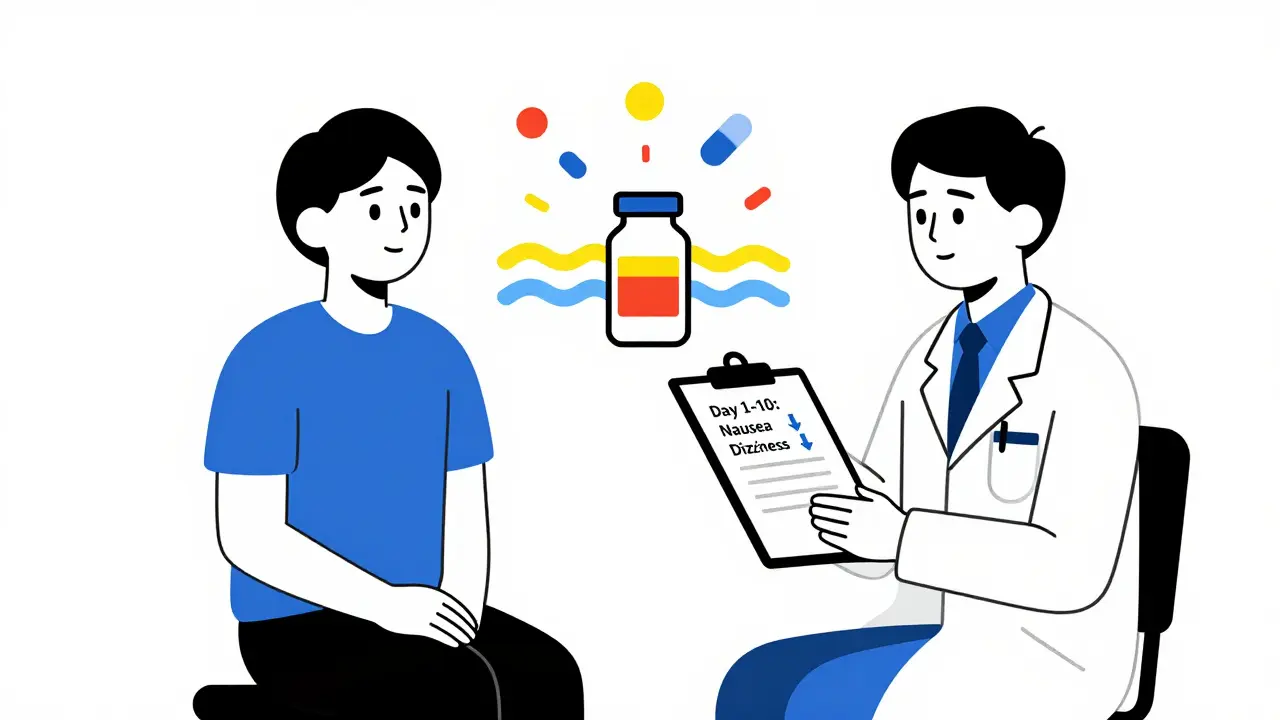
Many people stop taking their medication because of side effects-feeling sick, dizzy, tired, or just plain uncomfortable. But stopping cold turkey doesn’t fix the problem. It often makes it worse. The real solution isn’t quitting. It’s communicating-the right way, at the right time, with the right info.
Why Side Effects Don’t Mean You Should Quit
It’s normal to feel alarmed when your body reacts to a new pill. Nausea. Headaches. Trouble sleeping. These can feel like red flags. But here’s the truth: most side effects aren’t warnings to stop. They’re signs your body is adjusting. Data from the British Heart Foundation shows that 68% of common side effects fade within 7 to 14 days. That’s not a coincidence. Your body learns how to handle the medicine. What felt unbearable on day three might be barely noticeable by day ten. Stopping too soon means you never give it a chance to settle. And it’s not just about discomfort. Quitting meds like blood pressure pills, antidepressants, or antibiotics without talking to your doctor can lead to serious consequences: rebound high blood pressure, worsening depression, or antibiotic-resistant infections. Side effects are annoying. Stopping treatment can be dangerous.What to Say Before You Start a New Medication
Don’t wait until you’re feeling awful to speak up. Ask the right questions before you even fill your first prescription. Start with: “What side effects are most common with this drug?” Then follow up: “How many people actually experience them?” Some drugs have side effects that affect 1 in 10 people. Others affect 1 in 100. Knowing the odds helps you put things in perspective. Also ask: “Do these side effects usually go away?” and “Is there a better time of day to take this?” Taking a pill with food, at night, or splitting the dose can make a huge difference. One patient on a blood pressure med had terrible nausea until their pharmacist suggested taking it with a small apple. Nausea dropped from six times a day to just one or two.Track Your Symptoms Like a Pro
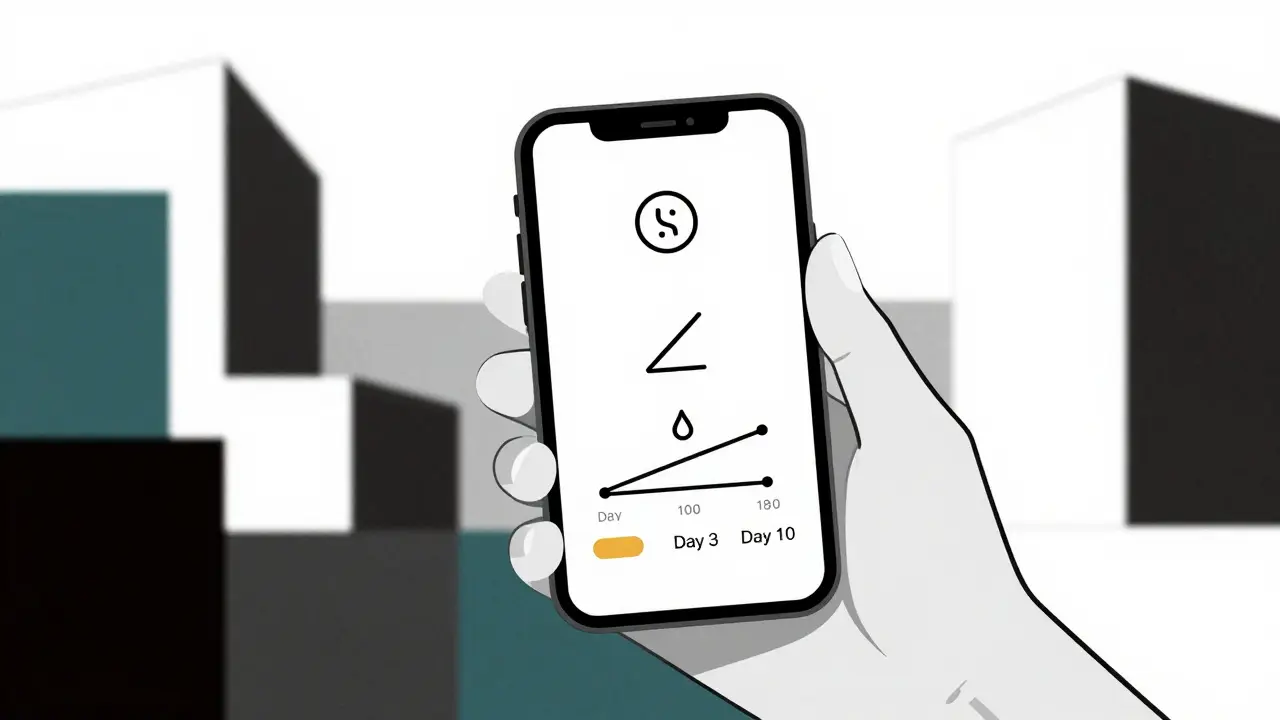
If you start feeling off, don’t just remember it vaguely. Write it down. Use a notebook, a notes app, or even a spreadsheet. Record:- What you felt (e.g., dizziness, dry mouth, fatigue)
- When it happened (time of day, how long after taking the pill)
- How bad it was (rate it 1-10)
- What you were doing when it happened (e.g., walking, eating, driving)
- What helped (or made it worse)
Use the SWIM Framework to Talk Clearly
When you sit down with your doctor or pharmacist, don’t ramble. Use SWIM:- Severity: “It’s a 7 out of 10-I can’t focus at work.”
- When: “It starts 45 minutes after I take it.”
- Intensity: “It happens every day, and it’s getting worse.”
- Management: “I’ve tried taking it with food, but it didn’t help.”
Reframe Side Effects-They Might Mean It’s Working
This sounds strange, but it works. Some side effects aren’t bugs-they’re features. For example, SSRIs (common antidepressants) often cause nausea or jitteriness early on. That’s not a sign it’s failing. That’s your brain chemistry adjusting. A 2021 study in PMC found that when patients were told, “These symptoms mean the medication is starting to work,” their anxiety dropped by 37%, and they were 29% less likely to quit. It’s not about pretending you feel fine. It’s about changing your story. Instead of: “This drug is making me sick,” try: “My body is reacting because this is new. Let’s figure out how to make it easier.”What to Do When Side Effects Are Unbearable
Some side effects are serious-and you shouldn’t ignore them. If you have:- Swelling of the face, lips, or throat
- Difficulty breathing
- Severe rash or blistering skin
- Thoughts of self-harm or suicide
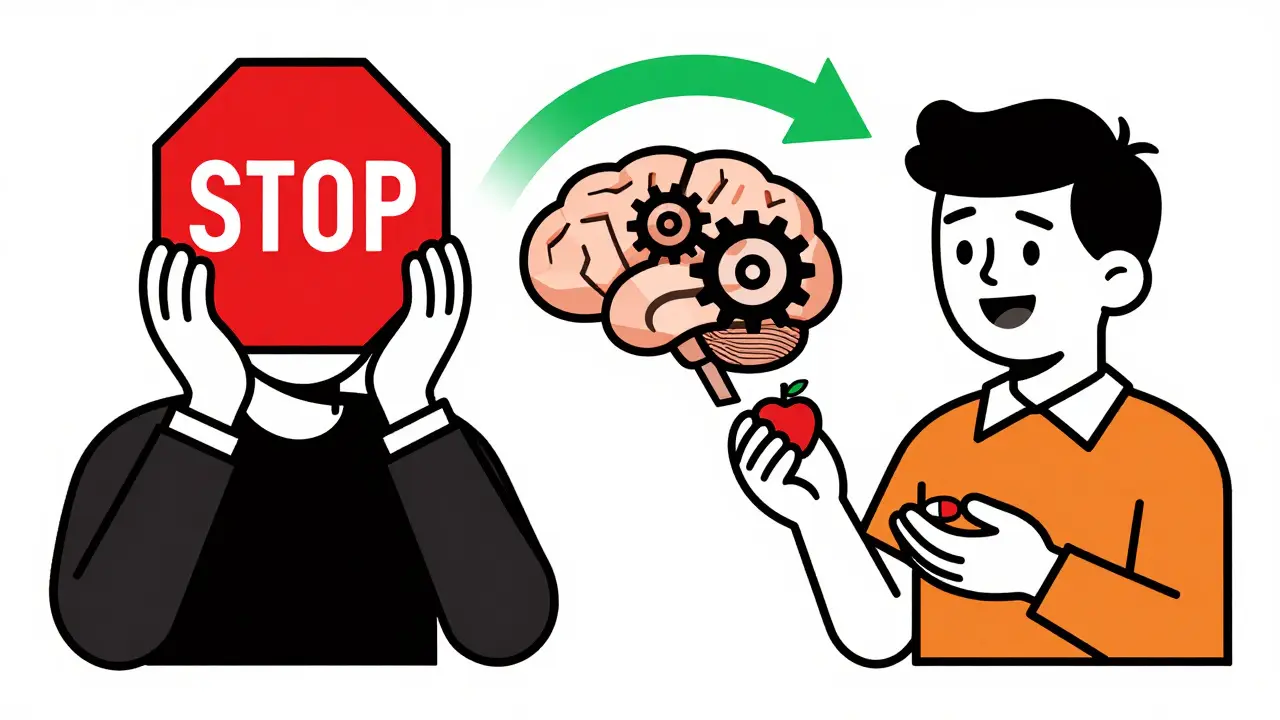
Don’t Guess. Don’t Self-Adjust.
It’s tempting to skip a dose, cut the pill in half, or take it every other day to “reduce the side effects.” Don’t. Medications are dosed precisely. Skipping doses can cause your condition to flare up. Blood pressure meds can spike. Antibiotics can breed resistant bacteria. Antidepressants can trigger withdrawal symptoms that feel worse than the original problem. If you’re struggling, talk to your provider. They can:- Lower your dose gradually
- Switch you to a similar drug with fewer side effects
- Add a second, small med to counteract the side effect (like an anti-nausea pill)
- Change the timing or how you take it
Real People, Real Wins
A 58-year-old woman in Belfast was on a statin for cholesterol. She had muscle pain so bad she stopped taking it. Her doctor didn’t scold her. Instead, they asked: “When does the pain happen?” She said: “After I go for my walk.” Turns out, exercise made the side effect worse. They switched her to a different statin and told her to walk before taking the pill-not after. The pain disappeared. She’s been on it for two years now. Another man on an antidepressant felt like he was floating. He thought it meant the drug wasn’t working. His pharmacist explained: “That’s a common early side effect. It usually fades.” He kept going. By week three, it was gone. His mood improved. He didn’t know that until he stuck with it.Your Next Steps
1. Make a list of every medication you’re taking-name, dose, time, reason. 2. Track side effects for the next 10 days. Use a simple app or paper. 3. Write down 3 questions to ask your doctor: “What’s normal?” “What can we change?” “What happens if I keep going?” 4. Don’t quit unless you’ve talked to someone who can help you safely adjust. You didn’t start this medication to quit. You started it to feel better. Side effects are a bump, not a dead end. With the right conversation, you can keep going-and finally get the results you’re hoping for.Should I stop my medication if I feel side effects?
No-not unless it’s a medical emergency like swelling, trouble breathing, or suicidal thoughts. Most side effects are temporary and manageable. Stopping without talking to your doctor can make your condition worse. Instead, track your symptoms and bring them up at your next appointment.
How long do medication side effects usually last?
For most people, common side effects like nausea, dizziness, or fatigue last 7 to 14 days as your body adjusts. Some may linger longer, especially with certain antidepressants or blood pressure drugs. If side effects get worse or don’t improve after two weeks, talk to your provider.
Can I change when I take my medication to reduce side effects?
Yes, often. Taking a pill with food, at bedtime, or splitting the dose can reduce side effects. For example, if a medication causes drowsiness, taking it at night helps. If it causes nausea, taking it with a small snack makes a big difference. Always check with your doctor or pharmacist first-some meds must be taken on an empty stomach.
What if my doctor says to just ‘tough it out’?
If your doctor dismisses your concerns without offering solutions, it’s okay to ask for a second opinion or ask to speak with a pharmacist. Many clinics now have medication therapy management programs designed specifically to help patients manage side effects. You deserve a partner in your care-not someone who just tells you to endure discomfort.
Are there apps that help track side effects?
Yes. Apps like Medisafe, MyTherapy, and Dosecast let you log symptoms, set reminders, and generate reports to share with your doctor. A 2023 JAMA study found patients using FDA-authorized apps had 18% higher adherence rates. Even a simple notes app on your phone works if you record the basics: what you felt, when, and how bad.
Can side effects mean the medication is working?
Sometimes. For example, antidepressants can cause nausea or jitteriness at first because they’re changing brain chemistry. Blood pressure meds might cause mild dizziness because they’re lowering your pressure. A 2021 study showed that when patients were told side effects were a sign the treatment was active, their anxiety dropped and they were less likely to quit. It’s not about ignoring discomfort-it’s about understanding it.
What if I can’t afford my medication?
Cost is a common reason people stop meds. Talk to your pharmacist-they can often suggest generic versions, patient assistance programs, or coupons. Many drug manufacturers offer free or low-cost options for those who qualify. Never skip doses to make it last longer-this can be dangerous. Ask for help before you quit.



Kelly Beck
January 7, 2026 AT 05:12Okay but like… I just started a new antidepressant and honestly? The first week felt like my brain was a toaster on fire. But I tracked everything in Notes-time, mood, how much coffee I drank (yes, really). By day 9, the jitteriness? Gone. The nausea? Just a ghost. I almost quit on day 4. So glad I didn’t. This post? Lifesaver. 🙌
Tiffany Adjei - Opong
January 7, 2026 AT 09:03Wow. So you’re saying if I feel weird, I should just… wait? What if it’s not ‘adjusting’-what if it’s the drug slowly poisoning me? I’ve seen too many people ‘just tough it out’ and end up in the ER. This feels like corporate pharma propaganda wrapped in a wellness blog. 🤔
Jeane Hendrix
January 7, 2026 AT 14:49Wait-so you’re telling me I should write down *when* I feel dizzy? Like… in a spreadsheet? 😅 I’m not a scientist, I’m a single mom who forgot her keys yesterday. But… I do use MyTherapy app. It’s dumb but kinda helps. I guess I’ll try tracking the ‘how bad’ part. 1-10? Okay. I’ll say 8. Because 8 feels real.
Melanie Clark
January 8, 2026 AT 04:04It's important to note that the pharmaceutical industry has a vested interest in maintaining adherence rates. The 68% statistic cited? Likely cherry-picked from industry-funded trials. The real issue is that many side effects are underreported in clinical settings due to patient fear of being dismissed. This article reads like a script written by a drug rep. You're not supposed to question. You're supposed to comply.
And let's not forget the cost factor-many people can't afford to 'wait it out' when they're skipping meals to pay for pills. This whole narrative assumes privilege. It's not just about communication-it's about access.
Also, 'SWIM framework'? Sounds like a marketing buzzword invented by someone who's never actually been nauseous at 3 a.m. while trying to hold down a job. Just saying.
Mukesh Pareek
January 9, 2026 AT 19:39From a pharmacovigilance standpoint, the temporal association between drug administration and symptom onset is critical for causality assessment. The WHO-UMC criteria for adverse drug reaction evaluation requires systematic documentation of onset, duration, and dechallenge/rechallenge patterns. Your anecdotal tracking, while commendable, lacks the granularity required for clinical validity. Consider using the Naranjo Scale for objective assessment.
Tom Swinton
January 11, 2026 AT 16:38I just want to say… I was on a beta-blocker for anxiety and I thought I was having a heart attack every time my heart slowed down. I almost quit. But I wrote it all down-time, pulse, what I ate, even the weather. Took it to my doc. She said, ‘You’re not having a heart attack. You’re having a normal reaction to a drug that’s working.’ She lowered my dose. I’ve been on it for a year now. I’m calmer than I’ve ever been. I cried when I realized it wasn’t me failing-it was the medicine trying to help. Thank you for this. Really.
Matt Beck
January 13, 2026 AT 11:30✨ So here’s the thing 🌟… Side effects? They’re not bugs… they’re *features* of your body waking up 🧠💥… Like when your soul finally hears the music after years of silence… yeah. It’s loud. It’s weird. It’s uncomfortable. But it’s *alive*. 🎶 And if you quit… you go back to the silence. And I don’t know about you… but I’d rather feel the storm than live in the void. 🌪️💛 #TrustTheProcess #MedicationIsNotTheEnemy
Katie Schoen
January 15, 2026 AT 04:18Bro. I took a statin and got muscle pain so bad I could barely lift my coffee cup. I thought I was dying. Called my doc. She said: ‘Try taking it in the morning instead of at night.’ I did. Pain vanished. I didn’t even know that was a thing. Also, I now take it with a banana. No joke. It’s weird. But it works. So yeah. Talk. Track. Don’t quit. 😎
Gabrielle Panchev
January 16, 2026 AT 06:15Okay, but what if your doctor is just… not listening? What if they roll their eyes when you say ‘I feel weird’? What if they say ‘Everyone feels that way’? I’ve been told that five times. I’ve been on three different meds. I’ve tracked everything. I’ve used apps. I’ve printed charts. I’ve cried in the parking lot. And still, they say ‘It’s fine.’ So now I’m just… done. I’m not quitting because I’m lazy. I’m quitting because I’m exhausted. And this article? It doesn’t fix that.
Katelyn Slack
January 16, 2026 AT 21:23i just wanted to say thank you for writing this. i was gonna stop my antidepressant last week. i thought i was broken. turns out i just needed to take it at night. i feel like a idiot for not asking sooner. but now i’m gonna keep going. 💛
Lily Lilyy
January 18, 2026 AT 17:11This is so good. So simple. So true. You don’t have to suffer. You don’t have to be brave alone. You just have to speak. One word. One sentence. One note. That’s enough. Your body is trying to tell you something. Listen. Then talk. Then keep going. You got this. 💪❤️