

When a woman hits menopause, her body doesn’t just stop having periods-it starts changing how medicines work. Post-menopausal women are more likely to be on five or more prescriptions at once, and that’s where things get risky. A 72-year-old woman in Belfast might be taking blood pressure pills, cholesterol medicine, a joint pain reliever, a thyroid tablet, and a calcium supplement. Each one interacts differently with her changing hormones, liver, and kidneys. What was safe at 50 might be dangerous at 65. This isn’t theoretical-it’s happening every day in clinics, pharmacies, and homes.
Why Medication Safety Changes After Menopause
Estrogen levels drop sharply after menopause. That’s not just about hot flashes-it affects how drugs are absorbed, broken down, and cleared from the body. The liver slows down. Kidneys filter less efficiently. Fat tissue increases, and muscle mass declines. These shifts mean a dose that worked fine at 55 could become too strong-or too weak-by 65.
Take statins. A woman on simvastatin might start feeling muscle pain after menopause because her body can’t clear the drug as quickly. Or consider blood thinners. With less estrogen, clotting factors shift, making some women more prone to bleeding or clots. That’s why a medication that was perfectly safe for years suddenly needs a dose change.
And it’s not just hormones. Most post-menopausal women have at least two chronic conditions-high blood pressure, osteoporosis, diabetes, arthritis. Each one brings its own drugs. Add supplements, over-the-counter painkillers, and herbal remedies, and you’ve got a cocktail that’s hard to track. The World Health Organization says 40% of older adults get prescriptions from multiple doctors. No one’s seeing the full picture.
Hormone Therapy: The Good, the Bad, and the Risky
Hormone therapy (HT) is still the most effective treatment for severe hot flashes and night sweats. But it’s not one-size-fits-all. The Endocrine Society’s 2015 guidelines make it clear: estrogen alone can be safe for women who’ve had a hysterectomy. But adding progesterone? That changes everything.
The Women’s Health Initiative study found that women taking estrogen plus progestin had a 24% higher risk of breast cancer after 5.6 years. Estrogen alone? No increase in risk. That’s why doctors now recommend estrogen-only therapy for women without a uterus-especially if they start it before 60 or within 10 years of menopause.
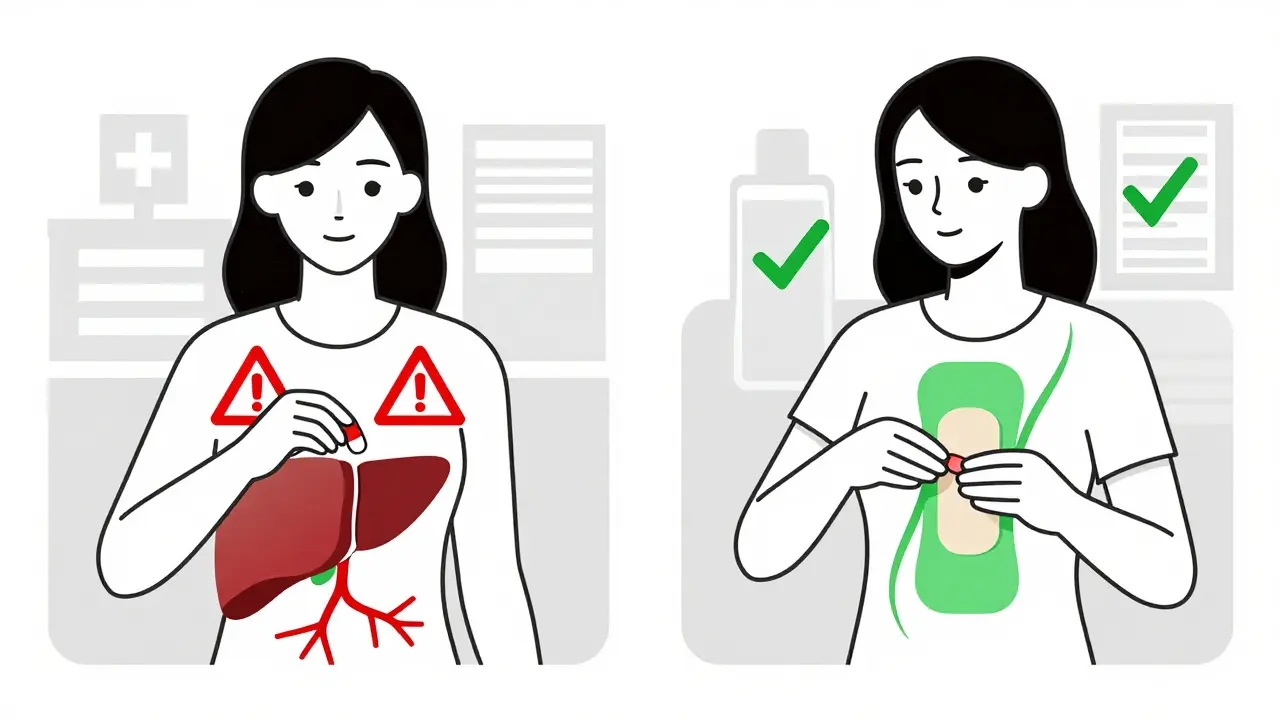
Delivery method matters too. Oral estrogen goes through the liver first, increasing clotting risk. Transdermal patches or gels skip that step. Studies show they cut the risk of blood clots by 30-50%. For a woman with a history of migraines, high triglycerides, or a family history of clots, a patch is often the safer choice.
But HT isn’t for everyone. Absolute no-go zones include: active breast cancer, history of stroke or heart attack, unexplained vaginal bleeding, or a past blood clot. Even if you’re 10 years past menopause, starting HT now can do more harm than good. The USPSTF says the risks outweigh the benefits for chronic disease prevention in older women.
Polypharmacy: When More Pills Mean More Danger
“Polypharmacy” sounds technical, but it just means taking too many drugs. For post-menopausal women, that’s the norm-not the exception. Nearly half of women over 65 take five or more medications. That’s not because they’re sickly-it’s because each condition gets its own treatment, and no one steps back to ask: “Do we really need all of these?”
One study found that 15% of older women are on at least one medication that’s risky for their age. The Beers Criteria lists 30 of them. Think long-acting benzodiazepines like diazepam. They raise hip fracture risk by 50% in women over 65. Or NSAIDs like diclofenac. They can cause stomach bleeding, especially when combined with blood thinners. The WHO’s “Mrs. Poly” case study showed a woman hospitalized after a bleeding ulcer from continued NSAID use-despite being told to stop it.
And here’s the kicker: 40% of women stop taking prescribed meds within a year because of side effects or fear. That’s not just non-compliance-it’s a system failure. Many don’t know they can talk to their doctor about cutting back. They think if a pill was prescribed, it must be necessary.
Deprescribing: Taking Pills Off the List
Deprescribing isn’t about quitting medicine-it’s about smart reduction. It’s asking: “Is this still helping? Is the risk worth it?”
The WHO says structured deprescribing reduces adverse drug events by 33%. That’s huge. But it takes planning. You can’t just stop a blood pressure pill overnight. Tapering matters. Benzodiazepines need 8-12 weeks. Antidepressants, 4-8 weeks. Even calcium and vitamin D might be reduced if bone density is stable.
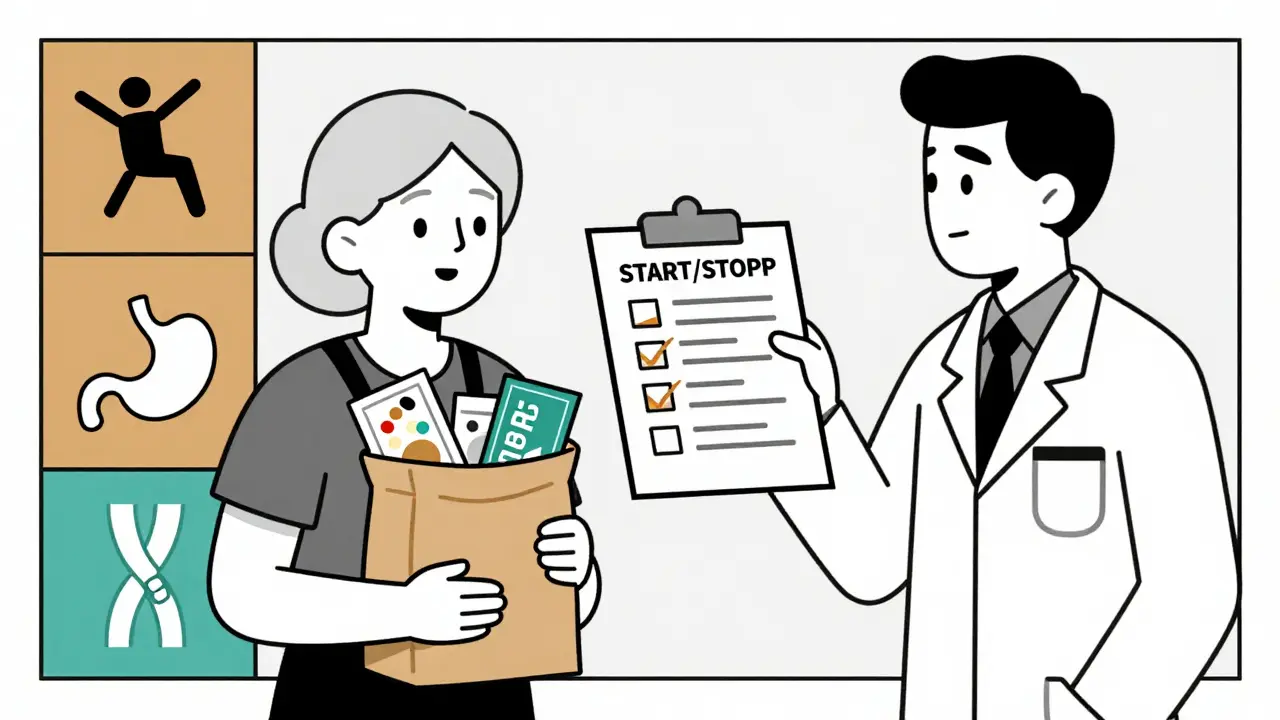
Ask your doctor for a “brown bag review.” Bring every pill, capsule, and supplement you take-prescription, OTC, herbal. Let them see the full stack. That’s when you’ll spot duplicates, interactions, or meds that haven’t been reviewed in years.
Use the START/STOPP criteria-it’s a tool doctors use to find inappropriate prescriptions and missed opportunities. For example: Is someone on a long-term proton pump inhibitor (PPI) for heartburn? That’s fine short-term. But after two years? It raises risk of bone fractures and infections. Time to reassess.
Non-Hormonal Alternatives That Actually Work
Not everyone wants hormones. And that’s okay. There are effective non-hormonal options.
SSRIs like paroxetine or escitalopram can cut hot flash frequency by 50-60%. But they come with trade-offs: sexual dysfunction in 30-40% of users, drowsiness, or nausea. Gabapentin, originally for seizures, also reduces hot flashes. It’s not perfect, but for women with breast cancer history or clotting risks, it’s a solid alternative.
For bone health, bisphosphonates like alendronate are gold standard-but they’re not for everyone. Some women can’t swallow the pill. Others have kidney issues. Newer options like denosumab (injection every six months) or romosozumab (12-month course) are changing the game. And don’t forget lifestyle: weight-bearing exercise, protein intake, and vitamin D levels above 30 ng/mL matter more than people realize.
For heart health, aspirin was once pushed for prevention. But new data shows it increases bleeding risk by 58% in women over 65. For most, the risks outweigh the benefits. Blood pressure control, statins (if needed), and walking 30 minutes a day do more than aspirin ever did.
What You Can Do Right Now
Here’s what works:
- Keep a current list of every medication and supplement. Include dosage, why you take it, and who prescribed it.
- Use a pill organizer. One study found 81% fewer errors when women used them. Even a simple 7-day box helps.
- Ask for a medication review at least once a year. More often if you’ve been hospitalized or started new drugs.
- Speak up about side effects. If you’re dizzy, tired, or have stomach pain-don’t assume it’s just aging.
- Know your risks. If you have migraines with aura, avoid estrogen. If you’ve had a clot, avoid oral estrogen. If you’re over 65, avoid long-acting sleeping pills.
There’s no magic bullet. But there is a smarter way. Post-menopausal women aren’t just older-they’re uniquely vulnerable to medication errors. The system often fails them. But you can protect yourself. Ask questions. Bring your pills. Demand a review. Your body changed. Your meds should too.
Can I still take hormone therapy after age 60?
It’s possible-but only if you started before 60 or within 10 years of menopause. Starting hormone therapy after 60 or more than 10 years post-menopause increases stroke, heart attack, and breast cancer risk. The USPSTF recommends against it for disease prevention. If you’re considering it for severe symptoms, transdermal estrogen (patch or gel) is safer than pills. Always discuss your personal risks with your doctor.
Why are some medications dangerous for post-menopausal women?
After menopause, your liver and kidneys process drugs more slowly. Fat increases, muscle decreases, and hormone levels drop. These changes make some drugs more potent or harder to clear. For example, NSAIDs can cause dangerous bleeding in older women. Benzodiazepines raise fall and fracture risk. Even common drugs like antihistamines or sleeping pills can cause confusion or dizziness. The Beers Criteria lists 30 medications that should be avoided in adults over 65.
How do I know if I’m taking too many pills?
If you’re taking five or more prescription medications, you’re in the polypharmacy range. Red flags include: memory lapses, dizziness, falls, stomach pain, fatigue, or confusion after starting a new drug. Also, if you’re seeing multiple doctors without one person coordinating care, you’re at risk. A brown bag review-bringing all your meds to one appointment-is the best way to find unnecessary or risky combinations.
Are non-hormonal treatments for hot flashes effective?
Yes. SSRIs like paroxetine and SNRIs like venlafaxine reduce hot flashes by 50-60%. Gabapentin and clonidine also work well. They’re not as fast as estrogen, but they’re safe for women who can’t use hormones-like those with breast cancer history or blood clots. Side effects include nausea, drowsiness, or sexual problems, but many women tolerate them well. Talk to your doctor about trying one if hormones aren’t right for you.
Should I stop taking aspirin for heart health after menopause?
For most women over 65, the answer is yes. Aspirin reduces stroke risk slightly but increases stomach bleeding risk by 58% in older women. The benefits don’t outweigh the dangers unless you’ve already had a heart attack or stroke. If you’re on aspirin for primary prevention (no prior heart issues), talk to your doctor about stopping it. Lifestyle changes-exercise, diet, blood pressure control-are safer and more effective long-term.


Jimmy V
March 13, 2026 AT 21:07Devin Ersoy
March 14, 2026 AT 14:18Serena Petrie
March 15, 2026 AT 16:28Kathy Leslie
March 16, 2026 AT 14:22Sally Lloyd
March 17, 2026 AT 20:51Elsa Rodriguez
March 18, 2026 AT 07:14Scott Smith
March 18, 2026 AT 08:41Rosemary Chude-Sokei
March 19, 2026 AT 22:18rakesh sabharwal
March 21, 2026 AT 15:41Buddy Nataatmadja
March 23, 2026 AT 01:34douglas martinez
March 23, 2026 AT 10:48mir yasir
March 23, 2026 AT 23:42