
Key Takeaways for Pharmacy Safety
- Use at least two unique patient identifiers (Full Name and DOB) for every transaction.
- Combine manual checks with barcode scanning to reduce errors by up to 89%.
- Patient counseling is the final safety net where most errors are caught.
- Standardized protocols reduce the risk of "sound-alike, look-alike" name mix-ups.
The Danger of the Wrong-Patient Mix-up
A Wrong-Patient Error is a medication error where a prescription is released to an individual other than the intended patient. These aren't just "near misses." According to the Institute for Safe Medication Practices (ISMP), these errors are among the most dangerous because they often lead to unanticipated drug interactions or the failure of a patient to receive necessary treatment. In the US alone, medication-related events contributed to roughly 1.3 million emergency department visits in 2022.
Why does this happen? Often, it's a combination of high volume and human fatigue. When a technician is under pressure to clear a line of ten people, the temptation to skip a verification step grows. However, the cost of a mistake is far higher than the time saved. Independent pharmacies can lose an average of $12,500 per incident in direct costs and lost revenue, not to mention the potential for legal action and loss of trust.
Proven Identification Protocols
The gold standard for prevention is the dual-identifier system. Relying on a name alone is a recipe for disaster, especially since approximately 22% of these errors involve "sound-alike, look-alike" names. To stop this, pharmacies must implement a non-negotiable verification process.
A robust workflow requires staff to ask for and verify two specific pieces of information before the bag even leaves the counter:
- Full Legal Name: Do not ask "Are you Mr. Smith?" Instead, ask "Can you please state your full name?" This forces the patient to provide the information rather than simply nodding in agreement.
- Date of Birth (DOB): This is the most reliable second identifier to distinguish between family members or people with identical names.
When these two points are compared against the Pharmacy Information System and the physical label on the bottle, the risk of error drops significantly. Data shows that manual dual-verification reduces errors by about 45%, but humans are still fallible. To reach near-zero error rates, technology needs to step in.
Technology as a Safety Guardrail
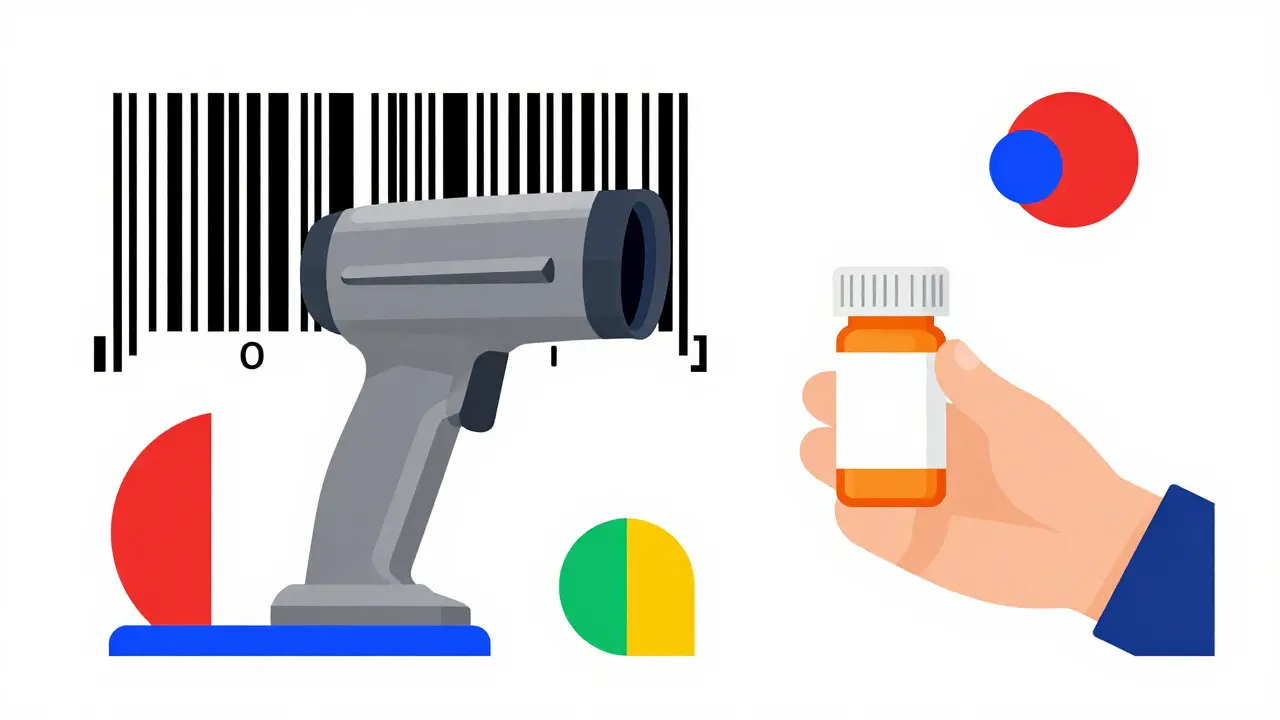
If you want to move from "reducing" errors to "eliminating" them, you need a system that makes a mistake physically impossible. This is where barcode scanning and software locks come into play. Many leading chains, such as Walgreens, have seen a 63% reduction in errors by requiring a barcode scan of a patient ID card before the system allows the transaction to close.
For those in hospital settings, Radio Frequency Identification (RFID) technology provides an even tighter net. By using RFID wristbands, some facilities have documented a 78% drop in dispensing errors. Modern software like PioneerRx or QS/1 now includes mandatory fields that prevent a technician from completing a pickup until both the name and DOB are confirmed.
| Method | Error Reduction Rate | Implementation Cost | Main Weakness |
|---|---|---|---|
| Dual-Identifier (Manual) | ~45% | Low (Training only) | Human fatigue/bypass |
| Barcode Scanning | 63% - 78% | Medium ($15k-$50k) | Workflow bottlenecks |
| Dual-ID + Barcode + Counseling | ~89% | High | Time intensive |
The Power of the Final Safety Net: Counseling
Technology is great, but the most effective safety net is a human conversation. Patient counseling is where the final check happens. When a pharmacist explains the medication, the dosage, and the purpose of the drug, they often realize the patient doesn't recognize the medicine or isn't the person who ordered it. In fact, about 83% of dispensing errors are caught during this final stage before the patient even leaves the store.
To make counseling effective, pharmacists should use open-ended questions. Instead of saying "This is your blood pressure medication, right?" try "Can you tell me what this medication is for?" If the patient looks confused or says, "I've never taken this before," you've just stopped a potentially dangerous error.
Building a Culture of Safety
No amount of software can fix a culture where staff feel pressured to cut corners. A "culture of safety" means that any employee, from the newest technician to the lead pharmacist, feels empowered to stop a transaction if something feels wrong. If a technician isn't 100% sure about an ID, they should be praised for pausing the process, not scolded for slowing down the line.
Implementation isn't overnight. The Pharmacy Quality Alliance suggests a 90-day rollout for new protocols: 30 days for training, 30 days for a pilot test, and 30 days for full implementation. This allows staff to adjust to the new workflow without feeling overwhelmed, which prevents them from reverting to old, unsafe habits during peak hours.
Future Outlook: Biometrics and AI
We are moving toward a world where a name and birthdate might not be enough. Some pharmacies are already piloting biometric systems, such as fingerprint verification, to ensure a 1:1 match between the patient and the prescription. While privacy concerns remain a hurdle, the accuracy is nearly 92%.
Looking further ahead, AI-assisted voice recognition and facial matching are predicted to become standard by 2027. These tools could virtually eliminate the "look-alike" name problem by verifying identity through biological markers. However, the core lesson remains: technology is a tool, but standardized protocols and human vigilance are the foundation of patient safety.
Why is a name and date of birth not enough?
While dual-identifiers are far better than a name alone, human error still occurs. Staff may misread a date, or two patients in the same family may have very similar names and birthdates (such as twins). Adding a barcode scan or a physical ID check provides a technical layer of verification that doesn't rely on human sight or memory.
How do I handle patients who get annoyed by repeated ID checks?
Transparency is key. Explain that these checks are a mandatory safety protocol designed to protect them from receiving the wrong medication. Most patients, including the 68% surveyed by the ECRI Institute, appreciate these measures once they understand the potential risk of a medication error.
What is the most common cause of wrong-patient errors?
The most common causes include "sound-alike" patient names (accounting for roughly 22% of cases), high-stress peak hours where protocols are bypassed, and a lack of standardized verification steps across the pharmacy staff.
Can e-prescribing help prevent these errors?
Yes, indirectly. By using Computerized Physician Order Entry (CPOE) systems, pharmacies eliminate the risk of illegible handwriting. This reduces transcription errors by about 30%, ensuring that the patient's name is correctly entered into the system from the start.
What should a pharmacy do after a 'near miss' occurs?
Every near miss should be logged and analyzed. Instead of blaming the individual, the pharmacy should look for the system failure that allowed the mistake to happen. Was the counter too crowded? Was the software lagging? This data allows for targeted training and process improvements.
Next Steps for Pharmacy Managers
If you are running a pharmacy and want to tighten your safety net, start with a gap analysis. Check your current error logs-how many near-misses happened in the last quarter? If you aren't logging them, that's your first step.
- For Independent Pharmacies: If budget is a barrier for high-end barcode systems, start by mandating a "Double-Check" policy where a second staff member verifies the identity of the patient for high-risk medications (like anticoagulants or insulin).
- For Chain Pharmacies: Focus on reducing "protocol fatigue." Ensure that the barcode scanning process is integrated smoothly into the workflow so technicians aren't tempted to bypass it during the rush.
- For All: Schedule a 4-6 hour training block for all certified pharmacy technicians to reinforce the dual-identifier protocol and the importance of open-ended counseling questions.
![Buy Generic Lexapro (Escitalopram) Online Cheap-Safe UK Options, Prices, and Checks [2025]](/uploads/2025/09/thumbnail-buy-generic-lexapro-escitalopram-online-cheap-safe-uk-options-prices-and-checks.webp)
Darius Prorok
April 5, 2026 AT 20:56Everyone knows the dual-ID system is basic. The real issue is the software lag in most chain pharmacies which makes the staff just want to bypass everything to keep the line moving.
jack hunter
April 6, 2026 AT 04:09biometrics is just a way for them to track us more better. why do we need a fingerprint for a pill? sounds like a sliding slope to total survellence state lol
Grace Lottering
April 6, 2026 AT 20:12Fingerprints are for control. Total surveillance. Absolutely unacceptable.
Nathan Kreider
April 7, 2026 AT 04:04It's really heartening to see a focus on safety! I'm sure the pharmacists are doing their best even when it's super busy. Small steps make a big difference for everyone.
Benjamin cusden
April 7, 2026 AT 15:58The reliance on 'counseling' as a final safety net is laughably primitive. In a truly optimized medical environment, the system should be fail-safe before the human element is even introduced. Manual verification is a relic of a bygone era.
GOPESH KUMAR
April 9, 2026 AT 00:47We talk about 'systems' and 'protocols' as if they are the cure for human fallibility. But the paradox is that the more we rely on a machine to tell us who a person is, the less we actually see the person standing in front of us. We are essentially outsourcing our vigilance to a barcode. It is quite an irony that in trying to save the patient, we stop recognizing them as a human being and treat them as a data point to be scanned. This obsession with efficiency is just a mask for our own laziness. We want the machine to be the moral agent so we don't have to feel the guilt of a mistake. In the end, a 92% accuracy rate in biometrics still leaves a void where a human life can fall through. It's a systemic failure of the spirit disguised as a technological advancement.
Laurie Iten
April 10, 2026 AT 11:49the idea of a culture of safety is interesting... it assumes people actually trust their bosses enough to speak up without fear of being fired for slowing things down
Victoria Gregory
April 12, 2026 AT 03:13I totally agree with the point about the culture of safety!! 😊 It's all about the vibes in the workplace and making sure everyone feels supported 💖. If we just lead with kindness and understanding, the errors will naturally drop because people won't be so stressed out!!! ✨
Windy Phillips
April 12, 2026 AT 08:38One would think that basic professional competence would suffice; however, it seems we must now implement 'biometrics' because simple attention to detail has become an extinct trait in the modern workforce... truly tragic.
Ruth Swansburg
April 13, 2026 AT 18:47Standardization is the only way forward. We must maintain rigorous checks to protect patients.
Kathleen Painter
April 14, 2026 AT 09:58I've worked in a few different healthcare settings over the years and I've noticed that when you actually take the time to mentor the newer techs and explain the 'why' behind the DOB check, they're way less likely to skip it during a rush. It's not just about the rule, it's about making them realize that a simple mistake can actually change someone's life forever. I remember a girl I trained who almost gave a blood thinner to the wrong person because they had the same last name, and after that, she became the most diligent person on the team. If we can just shift the perspective from 'following a rule' to 'protecting a person,' the whole workflow changes for the better and the stress levels actually go down because everyone is on the same page. It takes patience and a bit of extra time during the onboarding process, but the long-term payoff in patient safety is absolutely worth the initial investment of effort.
Nikhil Bhatia
April 15, 2026 AT 15:57Too many bullet points. Just use the scanners.
Jitesh Mohun
April 16, 2026 AT 14:03listen up you guys need to stop complaining and just do the job right if you dont want to kill people it is not that hard just check the damn id
Jay Vernon
April 16, 2026 AT 18:19I don't mind the ID checks at all! 👍 Just glad they are being careful with my meds! 😊
shelley wales
April 18, 2026 AT 05:17It's great that there are so many options for different types of pharmacies to improve their safety.