

One in five college students experiences a panic attack during their time on campus. For many, it’s not just a bad day-it’s a sudden rush of fear, a racing heart, and the terrifying feeling that something is terribly wrong, even when nothing is. Panic disorder doesn’t care if you’re acing your classes or hanging out with friends. It shows up in the library, during exams, on the bus, or right before you walk into a lecture hall. If you’re a college student dealing with this, you’re not alone-and you don’t have to suffer in silence.
What Panic Disorder Actually Feels Like
Panic disorder isn’t just being nervous. It’s sudden, intense episodes of fear that come out of nowhere. Your body goes into full alarm mode: chest tightens, breath gets shallow, hands shake, and your mind screams something’s wrong. These attacks usually peak within 10 minutes but can feel like hours. Afterward, you’re exhausted-and you start dreading the next one.
For students, this isn’t just uncomfortable. It’s disruptive. You skip class because you’re afraid of having an attack. You avoid group projects. You cancel plans. You start believing that being around people or in crowded places will trigger it again. Over time, this leads to isolation, falling grades, and a sense of helplessness. The worst part? Many students think they’re just "weak" or "overreacting." They’re not. Panic disorder is a real, treatable condition.
Why College Is a Perfect Storm for Panic Attacks
College life isn’t just about parties and late-night pizza. It’s a high-pressure environment with constant change. You’re away from home for the first time, managing your own schedule, dealing with financial stress, and trying to build a new social circle-all while keeping up with demanding coursework. Sleep is poor. Caffeine is high. Alcohol is everywhere. And mental health services? Often underfunded and hard to access.
Studies from the American Psychological Association show that students with panic disorder are 3x more likely to drop out than their peers. Why? Because panic doesn’t wait for finals week-it shows up during a 9 a.m. seminar, a group presentation, or even a walk across campus. The unpredictability makes it worse. You never know when it’ll strike, so you start avoiding everything.
Five Proven Strategies That Actually Work
There’s no magic cure, but research-backed strategies can help you take back control. These aren’t just "relax and breathe" tips-they’re tools used by therapists and proven by clinical trials.
- Grounding techniques stop panic in its tracks. When your mind races, use the 5-4-3-2-1 method: Name 5 things you see, 4 you can touch, 3 you hear, 2 you smell, and 1 you taste. This forces your brain out of panic mode and back into the present. It works because panic thrives on future fear-grounding pulls you into now.
- Controlled breathing isn’t just for yoga. Try box breathing: inhale for 4 seconds, hold for 4, exhale for 4, hold for 4. Repeat 5 times. This activates your parasympathetic nervous system, which calms your body’s fight-or-flight response. Do it before class, during a test, or even while waiting in line at the cafeteria.
- Exposure therapy is the gold standard for panic disorder. It sounds scary, but it’s simple: you slowly face the situations you fear-like walking into a crowded room or riding the bus-while using breathing and grounding. Over time, your brain learns these places aren’t dangerous. Campus counseling centers often offer this for free.
- Regular sleep and reduced caffeine make a huge difference. Students who get under 6 hours of sleep are 2.5x more likely to have panic attacks. Swap energy drinks for water. Skip the extra espresso before class. Even small changes in routine can reduce attack frequency by up to 60%.
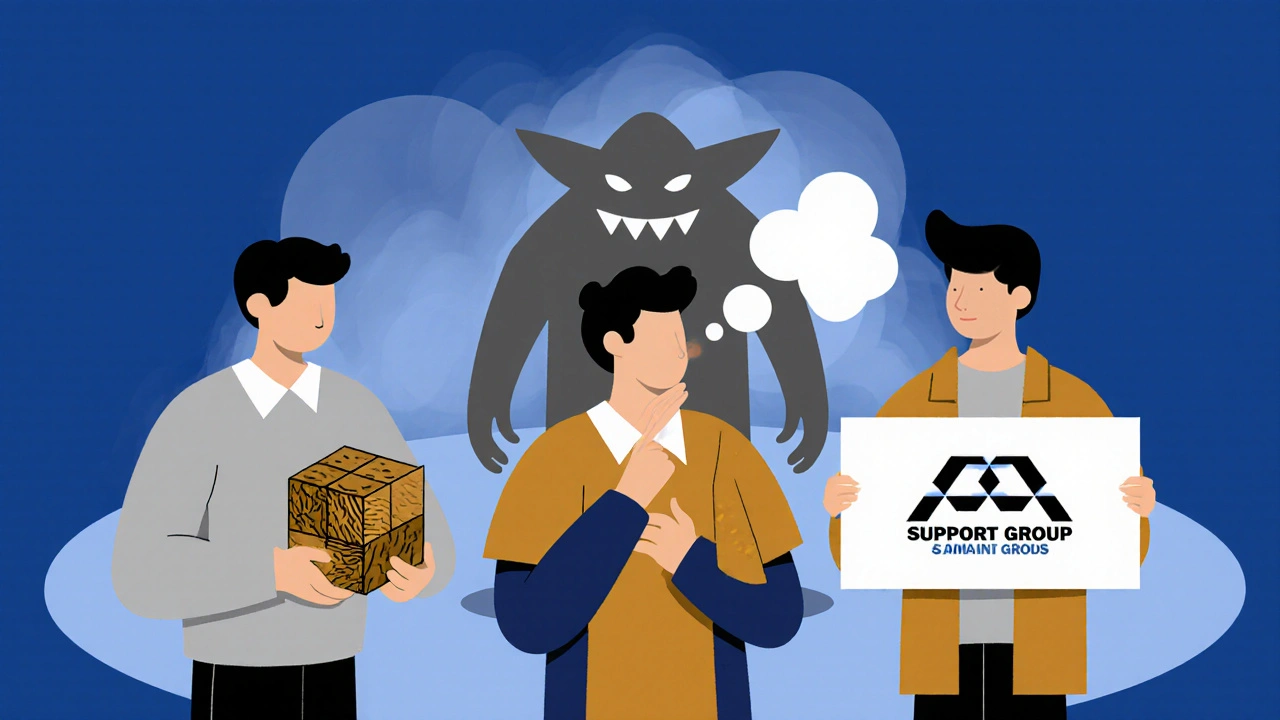
- Join a support group. Talking to others who get it reduces shame. Many universities have student-led mental health groups. You don’t have to speak-just listening helps. One student told me, "Hearing someone say, ‘I had an attack in the library too,’ made me feel less broken."

How to Get Help on Campus
Most colleges offer free counseling services, but students rarely use them because they think it’s too hard to get in. That’s outdated. Many schools now offer walk-in hours, online therapy through platforms like Talkspace or BetterHelp (often covered by student fees), and group sessions specifically for anxiety.
Don’t wait until you’re overwhelmed. Make an appointment with your campus health center. Tell them you’re having panic attacks. They’ll connect you with a licensed therapist who specializes in anxiety disorders. Some campuses even have peer mentors-other students trained to help you navigate resources.
And if you’re worried about stigma? You don’t have to tell your professors or roommates. You can use accommodations without disclosing your diagnosis. For example, you can request extended time on exams or the option to take tests in a quiet room. These are legal rights under the Americans with Disabilities Act.
What Not to Do
When panic hits, it’s tempting to do things that feel like they help-but actually make things worse.
- Avoiding everything sounds safe, but it trains your brain to believe the world is dangerous. Avoidance is what keeps panic alive.
- Self-medicating with alcohol or drugs might numb the fear for a while, but it increases anxiety long-term and can trigger more attacks.
- Checking your heart rate constantly. Yes, it’s tempting to feel your pulse after an attack. But this reinforces the fear. Your heart is fine. Checking it just makes you more anxious.
- Waiting for it to go away on its own. Panic disorder doesn’t resolve without intervention. The sooner you act, the faster you recover.
Real Stories: How Students Got Through It
Jamal, a junior majoring in engineering, had his first panic attack during a midterm. He thought he was having a heart attack. He skipped class for two weeks. Then he visited campus counseling. He started weekly therapy and began practicing breathing before every exam. By the end of the semester, he was presenting in front of his class without fear.
Maya, a first-year biology student, used to hide in the bathroom between lectures. She felt like everyone was judging her. She joined a campus anxiety support group and learned grounding techniques. Now she leads the group. "I used to think I was broken," she says. "Now I know I just needed the right tools."
You’re Not Behind
College isn’t a race. It’s a journey. And panic disorder doesn’t mean you’re failing-it means you’re human. Many successful people, from athletes to CEOs, have managed panic disorder while thriving. You don’t have to be perfect. You just have to be consistent.
Start small. Pick one strategy from this list. Try it for a week. Notice what changes. Maybe you sleep better. Maybe you show up to class more. Maybe you don’t cancel plans with your roommate. Those are wins.
Panic disorder doesn’t define you. But how you respond to it? That does.
Can panic disorder go away on its own without treatment?
No. While some people may have fewer attacks over time, panic disorder rarely disappears without intervention. Avoiding situations or hoping it gets better often makes symptoms worse. Evidence-based treatments like cognitive behavioral therapy (CBT) have an 80% success rate in reducing or eliminating panic attacks when practiced consistently.
Is it normal to have panic attacks during exams?
Yes. High-stress situations like exams, presentations, or group work are common triggers for panic attacks in students. It’s not a sign of being unprepared-it’s a physiological response to perceived threat. Many students experience this, and campuses offer accommodations like extended time or quiet testing rooms to help.
Can I use campus counseling even if I’m not sure I have panic disorder?
Absolutely. You don’t need a diagnosis to seek help. Campus counselors are trained to assess symptoms and determine if what you’re experiencing is panic disorder, generalized anxiety, or something else. Early support can prevent symptoms from worsening. Most services are free and confidential.
Will telling my professors about my panic disorder hurt my grades?
No. Under the Americans with Disabilities Act, colleges must provide reasonable accommodations for mental health conditions. You can request adjustments like flexible deadlines, alternative testing environments, or excused absences without revealing your diagnosis. Professors are legally required to honor these requests without judgment.
How long does it take to see improvement with therapy?
Many students notice a reduction in panic attacks within 4 to 8 weeks of starting cognitive behavioral therapy (CBT). Some report feeling calmer after just a few sessions. Consistency matters more than speed. Even practicing breathing or grounding for 5 minutes a day can lead to meaningful progress over time.

Abdula'aziz Muhammad Nasir
November 19, 2025 AT 08:45Been there. As a grad student from Nigeria, I saw classmates collapse from anxiety in the library. No magic fix, but consistent sleep and walking 20 mins a day changed everything. You don't need therapy to start healing-just movement and routine. Campus resources are there for a reason. Use them.
Jessica Engelhardt
November 21, 2025 AT 02:34OMG I had a panic attack during my econ final and literally crawled under the desk 😭 I thought I was dying. Turns out? Caffeine + no sleep + pretending I had it all together = disaster. Now I drink water and nap before tests. Best decision ever. 🙌
Tara Stelluti
November 22, 2025 AT 07:25So let me get this straight-you’re telling me the solution to panic disorder is breathing and not skipping class? Wow. Groundbreaking. I guess the real problem was just that people were too lazy to do the bare minimum. Classic.
Jeff Moeller
November 23, 2025 AT 23:15It’s not about control. It’s about surrender. Panic isn’t your enemy-it’s your body screaming that you’ve been living in a lie. The 5-4-3-2-1 trick? That’s not a technique. It’s a ritual. A return to the body when the mind has abandoned you. You don’t fix panic. You learn to listen to it.
Herbert Scheffknecht
November 24, 2025 AT 06:19They say college is a melting pot. But what they don’t say is it’s also a pressure cooker for the soul. We’re told to hustle, to grind, to be productive-but no one tells us what happens when your nervous system says no. Panic isn’t weakness. It’s the body’s last protest before collapse. And we’re all one bad semester away from joining the protest.
Will Phillips
November 25, 2025 AT 03:43Anyone else notice how this article reads like a corporate wellness pamphlet? Like oh sure just breathe and do some grounding and hey presto your panic disorder is fixed. Meanwhile the university is charging $70k a year and has a 6 week wait for counseling. This isn’t about breathing. It’s about systemic neglect and a culture that treats mental health like a side hustle
Arun Mohan
November 26, 2025 AT 11:53Let’s be real-most of these students just need to grow up. Panic attacks? Sounds like a cry for attention wrapped in clinical jargon. Back in my day, we just pushed through. If you couldn’t handle a 9am lecture, maybe you shouldn’t be in college. This is the age of coddling. The world doesn’t care if you feel anxious. You adapt or you fall behind.
Margaret Wilson
November 27, 2025 AT 05:06YESSSSSSS I did the 5-4-3-2-1 thing during a group presentation and somehow didn’t pass out 🙏 I’m basically a mental health guru now. Also I bought a fidget spinner. Game changer. 💖
william volcoff
November 27, 2025 AT 22:18Interesting. The article mentions exposure therapy as the gold standard. But what if you can’t access it? What if your campus doesn’t offer it? Or your insurance won’t cover it? The advice is great-but it’s useless if the infrastructure isn’t there. We need policy change, not just personal hacks.
Freddy Lopez
November 29, 2025 AT 00:48There is a profound irony in how we treat mental health: we medicalize it, then privatize the cure. The tools listed-breathing, grounding, sleep-are not new. They are ancient. Yet we make them contingent on institutional access. Perhaps the real disorder isn’t in the mind, but in the system that makes healing a privilege.
Brad Samuels
November 29, 2025 AT 02:10I used to hide in the bathroom between classes too. I didn’t tell anyone. Then one day, I sat next to a girl in the library who was crying. I didn’t say anything. Just slid a granola bar over. She looked at me. We didn’t talk. But she smiled. That was the first time I didn’t feel alone. Sometimes, silence is the best therapy.
Mary Follero
November 30, 2025 AT 01:50Start small. Seriously. I started with one deep breath before I opened my laptop each morning. Then I added a 5-minute walk. Then I told one friend. Now I lead a weekly chill group on campus. You don’t need to fix everything at once. Just show up. Even if it’s shaky. Even if you’re scared. Just show up.
Ankita Sinha
November 30, 2025 AT 18:08Wait, so you’re saying caffeine causes panic attacks? I thought it was just because people are weak. Also, why is everyone so obsessed with breathing? Isn’t that what lungs are for? Just saying.
Tyrone Luton
December 1, 2025 AT 05:18It’s not about the breathing. It’s about the silence between breaths. That’s where the truth lives. Panic doesn’t come from external stress-it comes from the gap between who you are and who you think you’re supposed to be. The 5-4-3-2-1 method isn’t a trick-it’s a mirror. And mirrors are terrifying. But necessary.
Brad Samuels
December 2, 2025 AT 19:25That’s exactly it. The silence after a panic attack? That’s when you hear the voice you’ve been ignoring. The one that says ‘you’re not broken, you’re just tired.’ I didn’t need therapy to hear it. I just needed to stop running.