
Throwing away old pills might seem like a simple chore, but if you’re not careful, you’re leaving your personal health data out in the open. Prescription labels don’t just say ibuprofen 200mg-they list your full name, address, doctor’s name, prescription number, and sometimes even your date of birth. That’s enough for someone to steal your identity, fake prescriptions, or even get access to your insurance. And it’s happening more than you think.
Why Your Prescription Bottle Is a Privacy Risk
Most people don’t realize that a discarded pill bottle contains Protected Health Information (PHI), which is legally protected under HIPAA. Even if you’re not a healthcare provider, you’re still responsible for protecting your own data. A 2021 study found that 42% of prescription bottles thrown in the trash still had readable labels. That means someone rummaging through your bin could find your name, your diagnosis, or even your SSN if it’s printed on the label.
Real cases are out there. One woman in Ohio discovered $1,200 in fraudulent insurance charges after someone used her old oxycodone bottle to get more pills. Another family in Texas had their credit cards drained after a thief used the doctor’s name and Rx number to call in fake refills. These aren’t rare. They’re predictable.
The Only Safe Way: Drug Take-Back Programs
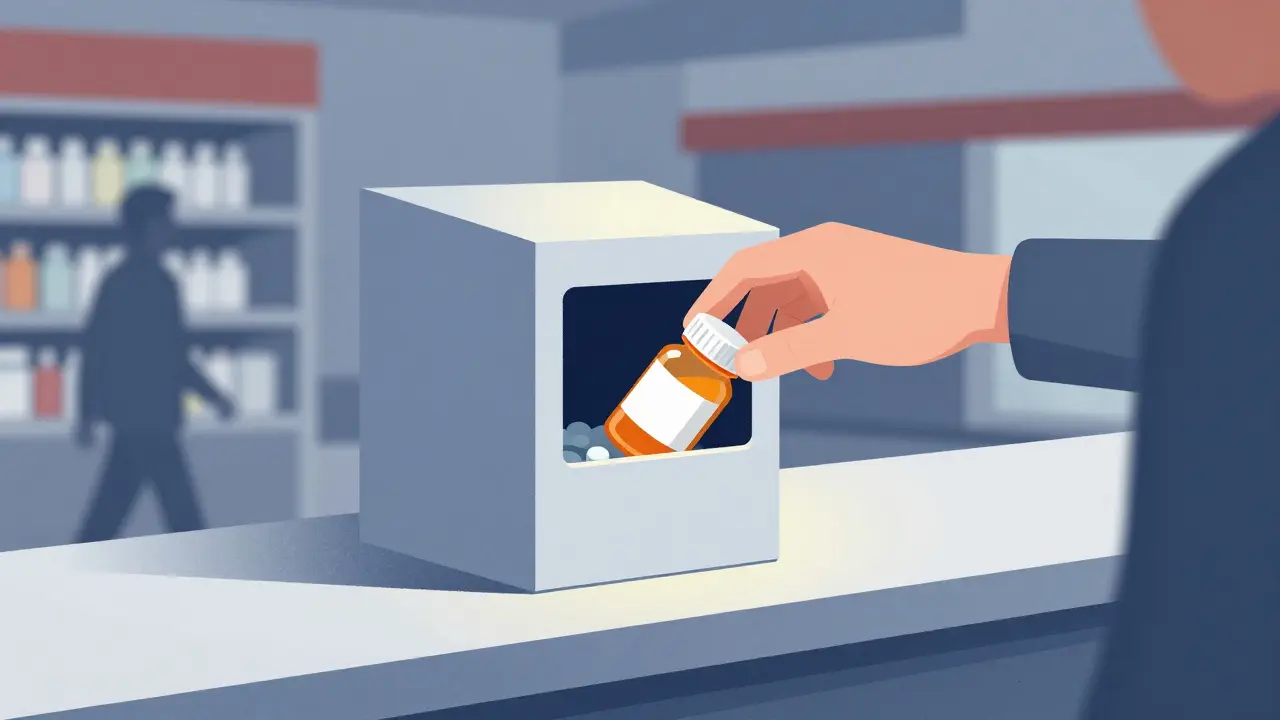
If you want zero risk, go to a take-back program. These are run by the DEA and local police departments. They collect unused medications at pharmacies, hospitals, and community centers-no questions asked. The drugs are destroyed in secure incinerators, and your name never leaves the container.
The DEA’s National Prescription Drug Take Back Day happens twice a year. In April 2024 alone, over 821,000 pounds of meds were collected across the U.S. But you don’t have to wait for those days. Most chain pharmacies like Walgreens, CVS, and Rite Aid have year-round drop boxes near the pharmacy counter. Just walk in, hand over your old pills, and leave. No need to remove labels. No need to worry. The pharmacy handles it all.
What If There’s No Take-Back Option?
If you live in a rural area or can’t get to a drop-off point, you’ll need to dispose of meds at home. But you can still protect your privacy-just follow the FDA’s five-step method exactly.
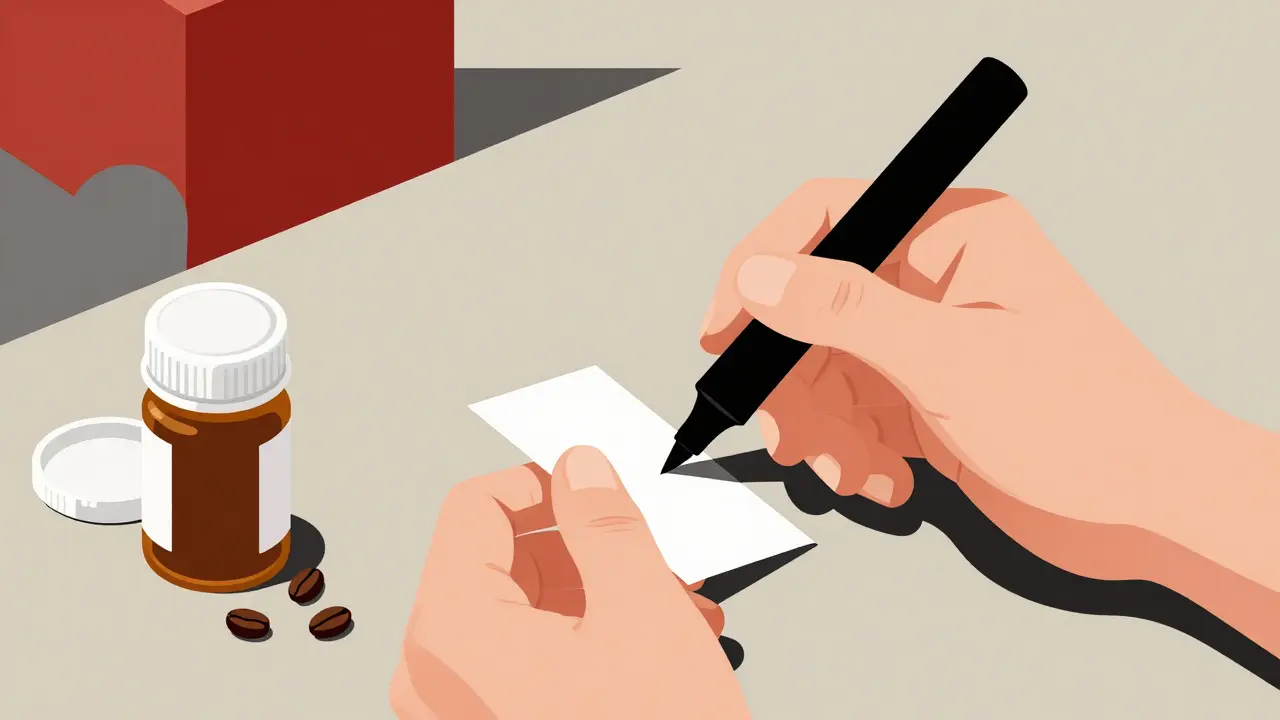
- Take the pills out of the bottle. Don’t just toss the whole thing. Empty the contents into a sealable plastic bag.
- Mix them with something unappetizing. Used coffee grounds, kitty litter, or even dirt work best. This makes the pills unappealing and harder to fish out.
- Seal the mixture in a container. Use a yogurt tub, a jar with a lid, or even a ziplock bag inside a cardboard box. This prevents animals or kids from digging through it.
- Destroy the label. This is the step most people skip. Use a permanent marker (like a Sharpie Industrial) to black out your name, address, and Rx number. Or peel the label off and soak it in vinegar for 10 minutes to dissolve the ink. Duct tape over it works too-just make sure it’s fully covered.
- Throw it in the trash. Don’t recycle the bottle. Most recycling centers won’t take it anyway, and the plastic may still have trace chemicals.
Pro tip: If you’re worried about labels sticking, try using a hairdryer to warm the bottle. The adhesive softens, and the label peels off cleaner.
What Medications Should You Flush?
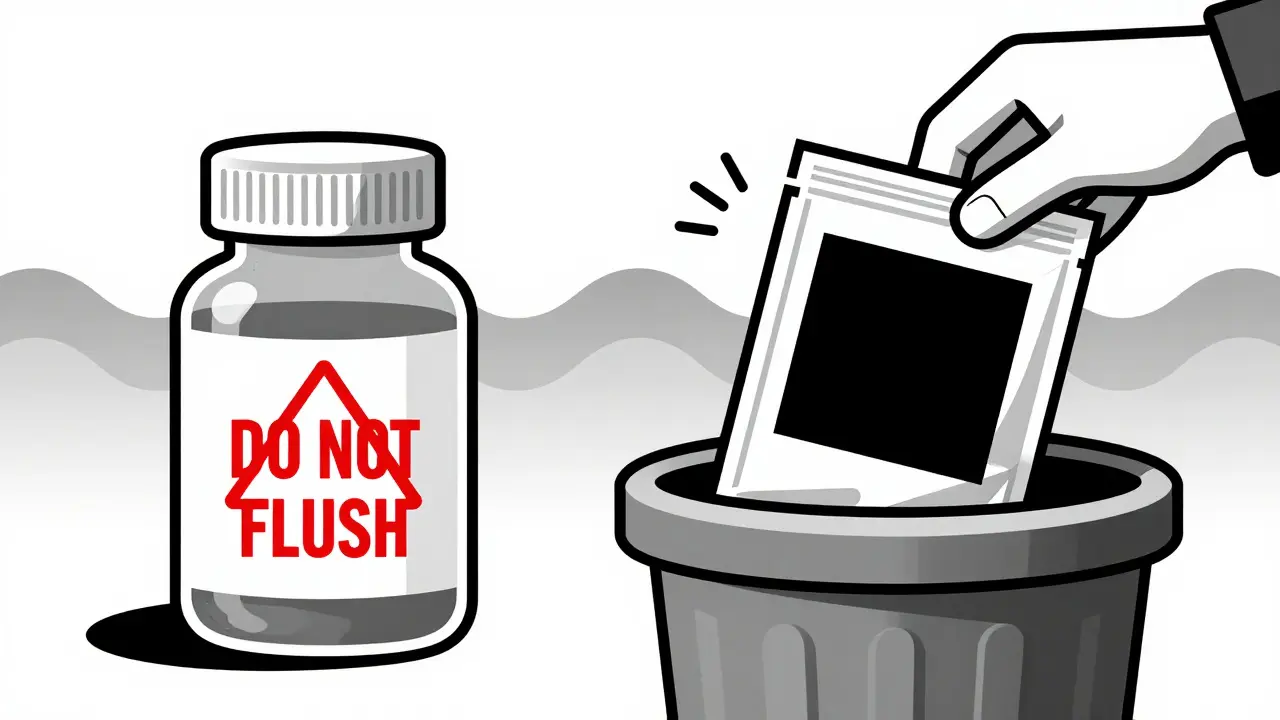
Not all meds go in the trash. The FDA keeps a short list of drugs that are so dangerous if accidentally ingested-especially by kids or pets-that you should flush them immediately. As of May 2024, this list includes:
- Fentanyl patches
- Oxycodone (OxyContin, Percocet)
- Hydrocodone (Vicodin)
- Buprenorphine (Suboxone)
- Alprazolam (Xanax)
- Methadone
These are the only ones you should ever flush. Everything else? Mix and trash. Flushing the wrong meds pollutes water supplies. The EPA estimates 3.2 million pounds of pharmaceuticals end up in U.S. waterways each year. Don’t add to that.
Smart Tools to Make It Easier
There are products designed to simplify this process. DisposeRx pouches, for example, cost about $2 each. You pour your pills in, add water, shake, and the activated carbon inside neutralizes the drugs. The pouch becomes safe to throw away. Best part? You can scribble over the label on the pouch before sealing it-no need to remove the original bottle.
Some pharmacies now offer mail-back envelopes. Walgreens sells them for under $7. You put your pills in, seal it, and drop it in the mailbox. The company tracks it and destroys it at a certified facility. No one ever sees your name.
There are also free apps like DisposeRx’s tool that tell you if your medication is on the FDA Flush List. Just scan the label or type in the name. It’s faster than calling your pharmacist.
What Doesn’t Work
Don’t rely on these methods:
- Just rinsing the bottle. Ink doesn’t wash off easily. Someone with a flashlight and a magnifying glass can still read it.
- Throwing the bottle in recycling. Most recycling centers reject pill bottles because of contamination risk.
- Flushing everything. That’s worse for the environment than throwing it away.
- Leaving the label on. Even if you think no one will look, someone always does.
A 2023 study found that 68% of people who dispose of meds at home skip the label removal step. That’s a huge risk.
Why This Matters Beyond Privacy
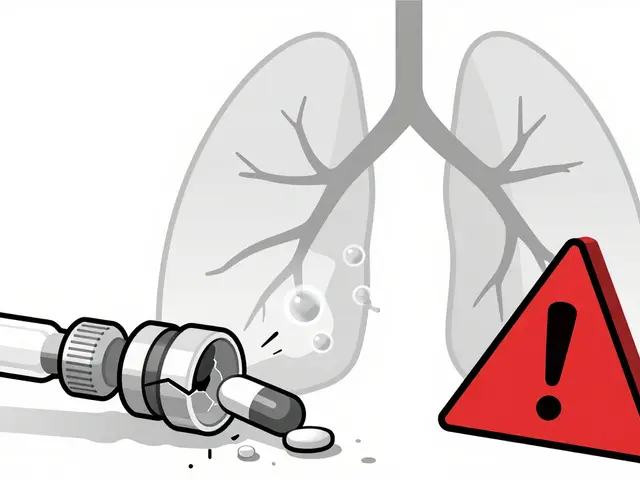
Protecting your privacy isn’t just about identity theft. It’s about stopping prescription drug abuse. Empty bottles with your name on them are a goldmine for people looking to get high. A 2022 DEA report showed that 9.5 million pounds of unused prescriptions were collected over 12 years-because people finally started caring about safe disposal.
And it’s not just your safety. It’s your neighbor’s kid. Your elderly parent. Your dog. One bottle left in the trash can lead to an overdose. One unreadable label can prevent a tragedy.
What’s Changing in 2025 and Beyond
The rules are getting stricter. In March 2024, the HHS Office for Civil Rights fined 17 healthcare providers a total of $4.2 million for improper PHI disposal. They’re now auditing pharmacies and clinics more closely.
By 2026, more pharmacies will have smart kiosks that automatically destroy labels and meds in one step. The Safe Drug Disposal Act of 2024, if passed, will fund free disposal programs nationwide.
But you don’t need to wait. The tools are here now. The steps are simple. You just need to do them.
Quick Checklist for Safe Disposal
- ✅ Check if your med is on the FDA Flush List
- ✅ Go to a take-back program if you can
- ✅ If not, remove pills from bottle
- ✅ Mix with coffee grounds or kitty litter
- ✅ Seal in a container
- ✅ Black out or remove the label
- ✅ Throw in trash-not recycling
- ✅ Don’t flush unless it’s on the list
It takes five minutes. But it could save you thousands-and maybe a life.
Can I just throw my old pill bottle in the recycling bin?
No. Most recycling centers won’t accept pill bottles because they’re considered medical waste. Even if they do, the plastic may still have traces of medication, and your personal info might still be readable. Always remove the label completely and throw the bottle in the trash.
What if I can’t find a take-back location near me?
Use a mail-back envelope from a pharmacy like Walgreens or CVS-they’re cheap and secure. Or use a DisposeRx pouch. If neither is available, follow the FDA’s five-step trash disposal method: remove pills, mix with coffee grounds or kitty litter, seal in a container, destroy the label, and throw it away.
Is it safe to flush medications?
Only if they’re on the FDA’s Flush List. That includes fentanyl patches, oxycodone, methadone, and a few others. Flushing anything else pollutes water supplies and harms wildlife. Always check the list first-don’t guess.
Why does the label matter so much?
The label has your full name, address, doctor’s name, prescription number, and sometimes your birthdate. That’s enough for someone to impersonate you, get more pills, or steal your insurance. Identity theft from discarded prescriptions is real-and rising.
Do I need to remove the label from every bottle?
Yes-even if you think it’s empty. Residue can still be dangerous, and the label still has your info. Always remove pills first, then destroy the label. Don’t skip this step, even if it’s annoying.
Are there free ways to destroy the label?
Yes. Use a permanent marker to black out the info. Or soak the label in vinegar for 10 minutes-it dissolves the ink. Duct tape works too, as long as it fully covers the text. You don’t need to buy special tools-just be thorough.
What if I’m elderly or have trouble reading small print?
Ask a family member, pharmacist, or caregiver to help. Many pharmacies offer free disposal services and will take your bottles without asking questions. You can also use a magnifying glass or smartphone camera to zoom in on the label. Your safety is worth the extra step.
waneta rozwan
January 18, 2026 AT 05:30Okay, but let’s be real-how many people actually do this? I’ve seen neighbors just toss bottles in the recycling like it’s nothing. I once found a whole bottle of Xanax in a public bin with the label still readable. Like… are we all just waiting for someone to steal our identity and turn it into a Netflix docu-series?
kanchan tiwari
January 18, 2026 AT 13:03They’re not just stealing your pills-they’re stealing your DNA. Seriously. I read this study where hackers used prescription labels to extract your gut microbiome from residue and then cloned your bio-data to fake your medical records. The government knows. They just don’t care. That’s why they want you to flush everything-so they can track you through the water supply. Wake up.
Bobbi-Marie Nova
January 20, 2026 AT 08:48Bro, I used to just rinse the bottles and toss ‘em. Then I got a Sharpie and now I treat my old pill containers like they’re classified CIA files. It’s not that hard. Just black out the label, toss the bottle, and feel like a tiny superhero. Also, kitty litter is the MVP of this whole process. Who knew?
Joie Cregin
January 21, 2026 AT 23:51I love that you mentioned the mail-back envelopes. My grandma uses them-she’s 82, has shaky hands, and can’t read the tiny print. The pharmacy mailed her a free one after she asked. She just drops the bottle in, seals it, and tosses it in the mailbox. No stress. No drama. Just quiet, safe, dignity. That’s the kind of system we need more of.
Corey Sawchuk
January 23, 2026 AT 02:54Take-back programs are the gold standard. I’ve dropped off meds at my local police station twice. They had a little bin by the front desk. No ID needed. No questions. Just hand it over and walk away. The whole thing took 40 seconds. Why aren’t these everywhere? Why do we have to be so damn proactive?
brooke wright
January 23, 2026 AT 04:38Wait, so you’re telling me I can’t just throw my old Adderall bottle in the trash with the label on because someone might use it to get high? But my neighbor’s kid does Adderall for fun and he’s literally got a whole drawer full of them from his brother’s prescriptions? Like… who’s the real problem here? Also, I’m not blacking out my label. I’m not ashamed.
vivek kumar
January 24, 2026 AT 23:21There is a fundamental flaw in your argument. You assume that people care enough to destroy labels. But data shows that 68% of users do not. Therefore, the only scalable solution is mandatory label removal by pharmacies at point of dispensing. Why should the patient bear this burden? The system is broken. The DEA should enforce label destruction as part of the dispensing protocol. This is not a personal responsibility-it is a public health infrastructure failure.
Nick Cole
January 26, 2026 AT 01:16I used to think this was overblown until my mom got hit with $3,000 in fraudulent charges because someone used her old pain med bottle to get a refill. She didn’t even know it was gone until the bank called. I now keep a Sharpie in my bathroom cabinet. I don’t care if it’s annoying. I care that she’s not broke.
Riya Katyal
January 26, 2026 AT 02:19Oh sweetie, you think the FDA gives a damn about your privacy? They’re too busy getting paid by Big Pharma to flush the right drugs. The real problem? They let you keep the damn bottles in the first place. Why not just make all prescriptions come in tamper-proof, self-destructing packaging? Oh right-because profit > safety.
Henry Ip
January 27, 2026 AT 07:03Good guide. I’ve been doing the coffee grounds thing for years. Also, if you’re worried about the label, just cut it out with scissors and burn it in a firepit. Works every time. And if you’re in a city with no drop-off? Google ‘DEA take back near me’-you’d be surprised how many libraries and fire stations have bins. It’s not hard. Just do it.
Nicholas Gabriel
January 28, 2026 AT 01:26And don’t forget-the label doesn’t just have your name. It has your doctor’s name, your insurance ID, your prescription number, your pharmacy’s phone number, and sometimes even your birth date. That’s a full identity theft toolkit. And yes, people are using it. I know someone who got a fake prescription filled in their name for oxycodone. They got a letter from their insurer saying they’d been prescribed 120 pills in a month. They didn’t even know they had a prescription. That’s not a glitch. That’s a crime. And it’s preventable.
Cheryl Griffith
January 29, 2026 AT 23:25I just throw mine in the trash. Label and all. I’ve never had a problem. And I’m not going to spend 20 minutes with vinegar and duct tape for something that’s statistically unlikely to hurt me. I’ve got better things to do with my life.