
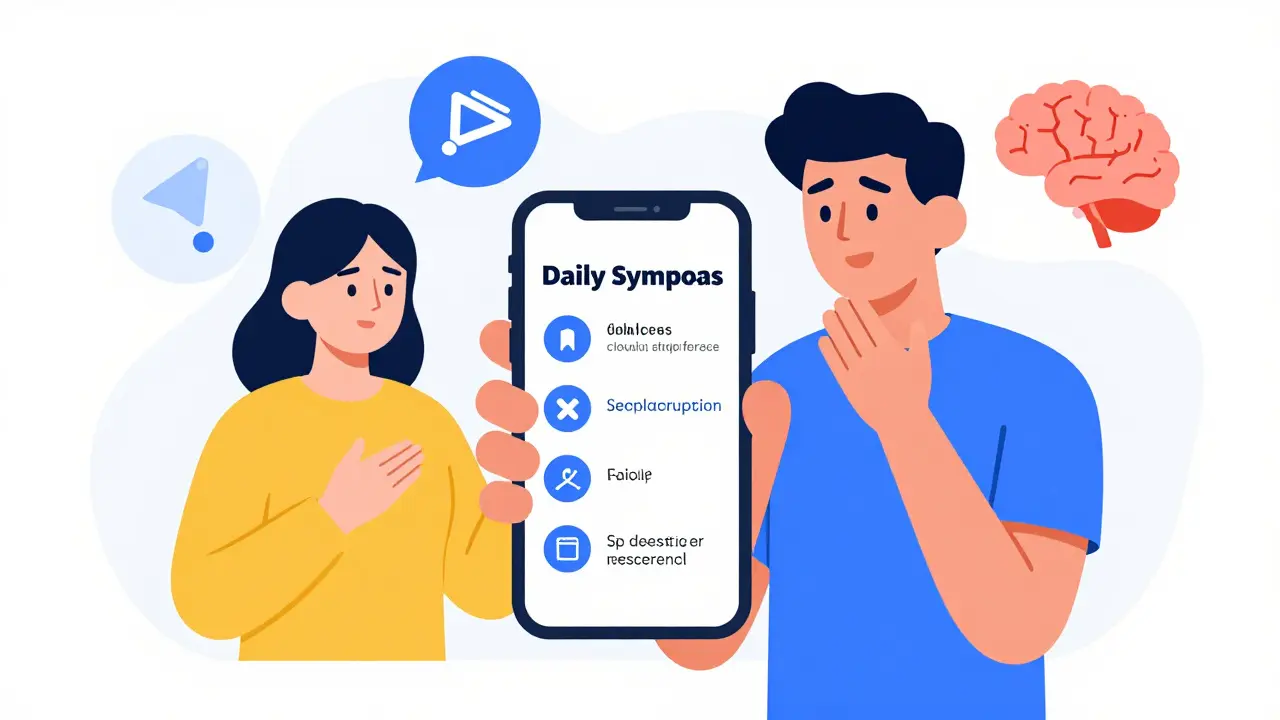
PRO Adverse Event Calculator
Report Your Symptoms
Calculate how many more side effects you'd report versus doctors using FDA data
Results
Your voice matters!
FDA studies show patients report 30-40% more adverse events than doctors. This tool demonstrates how your daily reports improve drug safety monitoring.
Example: If you report 100 cases of fatigue, doctors would likely report only 24 cases (100 ÷ 4.2)
Source: FDA 2019 study on oncology treatment monitoring
When you take a new medication, you’re not just a name on a chart. Your fatigue, your nausea, your trouble sleeping-these aren’t just side effects to be logged. They’re data. And that data is changing how drugs are monitored, approved, and improved. Patient-Reported Outcomes (PROs) are your voice, turned into science. No doctor interpreting. No nurse summarizing. Just you, reporting how you truly feel.
What Exactly Are Patient-Reported Outcomes?
PROs are direct reports from patients about their health, symptoms, and how a treatment affects their daily life. The U.S. Food and Drug Administration defines them clearly: information that comes straight from the patient, without anyone else filtering it. That’s it. No clinical jargon. No assumptions. Just what you feel.
This isn’t new thinking. The idea started in the 1980s with studies on chronic illness, but it only became a regulatory priority in the last 15 years. Today, if a drug company wants approval for a cancer treatment, they must include PRO data. The FDA’s 2022 draft guidance made that official: for oncology drugs, they now require three core areas to be tracked-symptoms like pain or nausea, physical function, and disease-specific issues. These aren’t vague questions. They’re validated tools like PRO-CTCAE, which lists 78 specific symptoms rated on frequency and severity scales.
Why Your Reports Matter More Than You Think
Clinicians miss things. Not because they’re careless, but because they see you for 15 minutes every few weeks. You live with the side effects 24/7.
A 2019 FDA study found patients reported 30-40% more adverse events than doctors did. Fatigue? Patients reported it 4.2 times more often. Numbness or tingling from nerve damage? 3.8 times more. Brain fog? Five times more. These aren’t minor differences. They’re signals that could mean a drug’s risk profile is worse than we thought.
PROs catch problems earlier. In one study, patients flagged serious side effects in 14 days on average. Clinicians, relying on clinic visits, took 42 days. That’s almost six weeks of exposure-time when a patient might be getting sicker while waiting for their next appointment.
And it’s not just about danger. PROs show what matters to you. A drug might shrink a tumor but leave you too tired to play with your kids. That’s not a win. That’s a trade-off you should be able to decide on-before you start taking it.
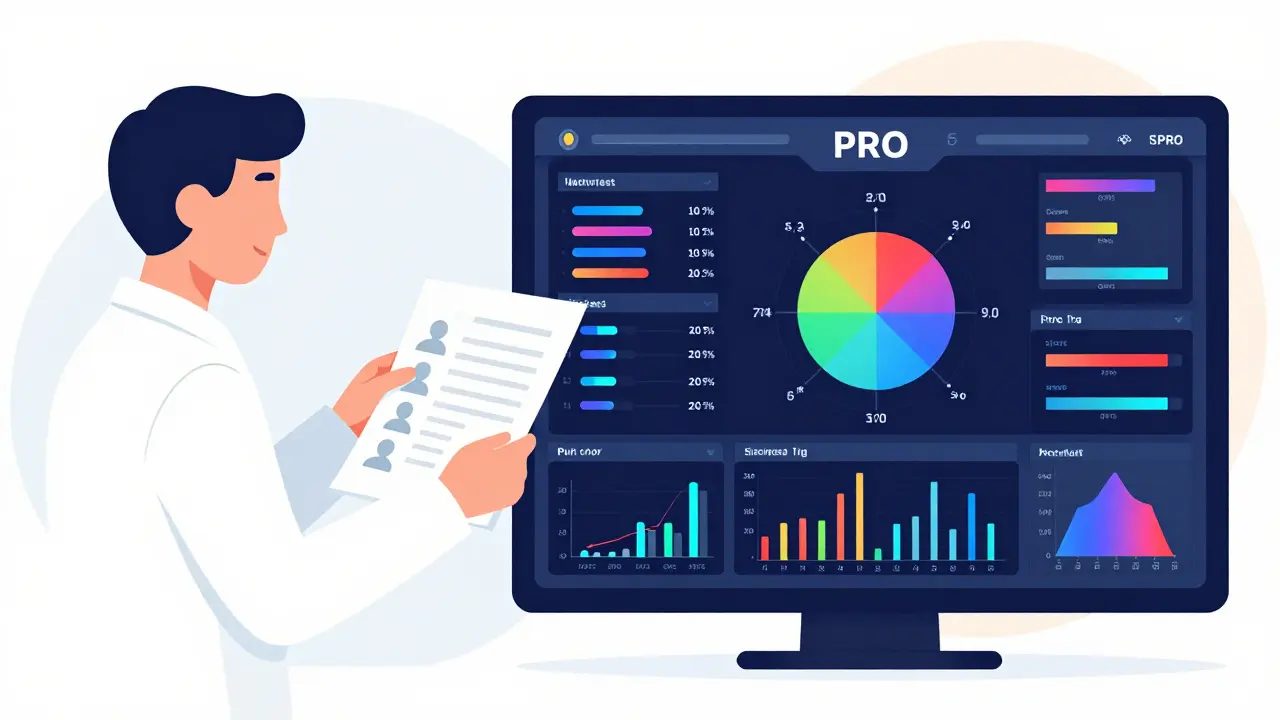
How It Works: From Paper to Phone
Years ago, PROs meant paper questionnaires mailed out every few weeks. People lost them. Forgot to fill them out. Returned them incomplete. Response rates? As low as 65%.
Now? Most trials use ePRO-electronic PROs. That means apps on your phone, web portals, or even automated calls. Response rates jumped to 85-92%. Why? Because it’s easier. You get a reminder. You answer in two minutes while waiting for your coffee. No postage. No forms to find.
These tools aren’t just convenient-they’re smarter. Modern ePRO systems can detect patterns. If you report worsening pain every Tuesday, the system flags it. If your sleep scores drop over three days, your care team gets an alert. That’s not magic. That’s data working for you.
And it’s getting more advanced. Some trials now link your PRO responses to wearable data. Pfizer tested this in an eczema trial: patients reported itchiness, and a wearable device tracked how often they scratched. The two matched 73% of the time. That kind of validation gives regulators confidence the data is real.
The Hidden Costs and Challenges
PROs aren’t perfect. And they’re not easy to get right.
First, the tools have to be validated. That means testing them on hundreds of patients over 18-24 months. It costs between $500,000 and $750,000 to develop one new PRO instrument. That’s why most trials use existing ones-like PROMIS for physical function or EORTC QLQ-C30 for cancer. But not every disease has a good tool. For rare conditions like sickle cell disease, researchers have to build extras on top of the standard ones.
Then there’s the burden. One Reddit user described it: “I had to fill out three different surveys, three times a week. It became a job.” That’s real. Too many questions, too often, and patients burn out. A 2022 survey found 68% of patients felt they never got feedback on how their reports were used. That’s frustrating. If you’re giving your time and honesty, you deserve to know it mattered.
Technical issues are another problem. 32% of patients reported app crashes or login problems. 27% said the questions were confusing. Language matters too. If you’re not a native English speaker, translation has to be perfect-forward and back. That costs $25,000 per language. And if you don’t have a smartphone or reliable internet? You’re left out.
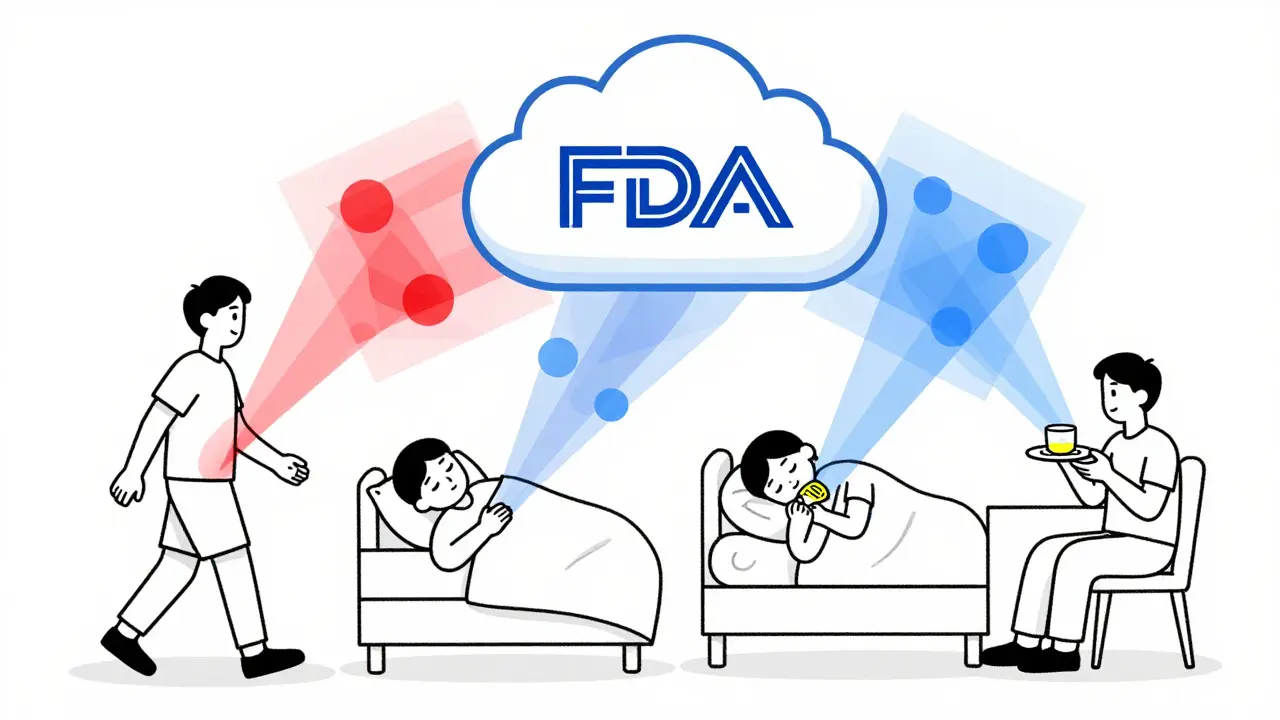
What You Can Do
You don’t need to be a scientist to make PROs work. You just need to be honest and consistent.
- Answer even when you feel fine. Baseline data matters.
- Don’t wait until your next appointment to report something new. Use the app or portal right away.
- If a question doesn’t make sense, flag it. Patient feedback helps improve the tools.
- Ask your care team: “How is my feedback being used?”
One breast cancer patient on MedHelp shared: “Reporting my side effects through the app helped my oncologist lower my dose before I ended up in the ER.” That’s the power of your voice.
The Future Is Here
By 2026, the European Medicines Agency plans to require PRO data for every new drug application. The FDA is already there for cancer drugs. Other areas-mental health, autoimmune diseases, chronic pain-are next.
Technology is catching up too. AI is now being used to scan patient-written notes for hidden safety signals. Roche’s pilot system pulled adverse event info from free-text entries with 82% accuracy. Blockchain is being tested to keep your data private while still letting researchers use it.
And the numbers show it’s here to stay. The global PRO market was worth $1.87 billion in 2022. By 2028, it’ll be nearly $3.9 billion. Every major pharmaceutical company now has a dedicated PRO team. Why? Because regulators demand it. And because patients demand better.
You’re not just a participant in a trial. You’re a partner in safety. Your daily reports help prevent harm, improve treatments, and make sure the next drug that comes along is safer for everyone.
What’s the difference between a patient-reported outcome and a doctor’s note?
A doctor’s note is their interpretation of what you say-often simplified or focused on clinical signs. A patient-reported outcome is your exact words, in your own language, about how you feel, think, and function. It’s direct, unfiltered, and personal. For example, a doctor might write ‘mild fatigue,’ but you might report ‘I couldn’t get out of bed until noon and had to cancel my grandson’s visit.’ That level of detail changes how we understand a drug’s impact.
Do I have to use an app to report outcomes?
No. While most trials use apps or web portals now (ePRO), paper forms are still available if you don’t have access to technology. You can also use automated phone systems where you answer questions by pressing buttons or speaking. The goal is to make reporting easy for you, not harder. If you’re struggling with the method, tell the study team-they’ll find a solution.
Can I stop reporting if it becomes too much?
Yes. Participation in any clinical trial is voluntary, including PRO reporting. You can pause or stop at any time without penalty. But if you’re feeling overwhelmed, consider talking to the study team first. They might adjust the frequency, simplify the questions, or switch to a different method. Your well-being matters more than the data.
How do I know my data is safe and private?
All PRO systems used in clinical trials follow strict privacy rules, like HIPAA in the U.S. or GDPR in Europe. Your name and personal details are separated from your responses. Data is stored securely, often encrypted, and only accessible to authorized researchers. Some companies now use blockchain to ensure your data can’t be altered or accessed without permission. You’ll always get a consent form explaining exactly how your information is protected.
Why do some PRO tools have so many questions?
They’re designed to capture a full picture. A single symptom like pain can be affected by sleep, stress, activity, and medication timing. Validated tools include questions about all these factors to make sure the data is accurate and meaningful. But researchers are working to shorten them. Many newer tools use adaptive testing-where your answer to one question determines the next-so you only answer what’s relevant to you.
What happens to my PRO data after the trial ends?
Your data becomes part of the drug’s safety record. Regulators like the FDA and EMA use it to decide whether the drug should be approved or if warnings need to be added. In some cases, the data is shared with other researchers (without your identity) to help improve future treatments. You won’t get individual results, but the overall findings are often published in medical journals and shared with patient groups.
Roshan Joy
January 11, 2026 AT 23:07Love this! 🙌 I’ve been on a trial for 8 months and honestly, the app reminders saved me. I forgot how bad my nausea was until I started logging it daily. Turns out, my doc had no clue I was this wiped out. Now they adjusted my dose. Small wins, y’know?
Adewumi Gbotemi
January 13, 2026 AT 00:14This is good stuff. In Nigeria, most people don’t even know they can report how they feel. We just take the medicine and suffer. If this can spread, it will change lives.
Michael Patterson
January 14, 2026 AT 07:53Okay but let’s be real-this whole PRO thing is just pharma’s way to shift responsibility onto patients. You think they care if you’re tired? No. They care if the data makes their drug look less toxic. And don’t even get me started on the $750k they spend on validating a questionnaire while my rent’s due. Typo: pharma not pharma. 😅
Matthew Miller
January 16, 2026 AT 06:20Wow. So now we’re supposed to be unpaid data-entry clerks for Big Pharma? You think your 2-minute app log is gonna change anything? The FDA doesn’t give a damn about your ‘brain fog’ unless it shows up in a statistically significant p-value. And even then, they’ll bury it under a 500-page appendix. This is performative patient engagement. Pathetic.
Madhav Malhotra
January 17, 2026 AT 10:46As an Indian guy who’s been in two trials, I can say this: the language on these apps? Often doesn’t translate right. ‘Fatigue’ in Hindi can mean ‘tired’ or ‘spiritually drained’-big difference. But they just Google translate it. Still, I’m glad they’re listening. My cousin’s trial used voice notes. That helped a lot.
Priya Patel
January 19, 2026 AT 09:15OMG YES. I reported my insomnia and they actually called me back within 48 hours. I thought I was just being dramatic, but turns out, my sleep score was the lowest in the cohort. They lowered my dose before I had a meltdown. I cried. Not because I was sad-because someone actually saw me. 💕
Jason Shriner
January 19, 2026 AT 13:02So… you’re telling me my daily moans into a phone are now ‘scientific data’? Next they’ll patent my sighs. 🤡 I spent 20 minutes last Tuesday explaining that ‘I feel like my bones are made of wet cardboard’ and the algorithm just tagged it as ‘mild fatigue.’ I’m not a data point. I’m a person who just wants to nap without guilt.
Alfred Schmidt
January 20, 2026 AT 18:05STOP. STOP. STOP. You think this is empowering? It’s exploitation. You’re giving your emotional labor for free so some corporate lawyer can say ‘we collected patient feedback!’ while they jack up the price of the drug by 300%. And if you miss a day? They send you a ‘gentle reminder’ like you’re a child who forgot to brush their teeth. I’m done.
Vincent Clarizio
January 21, 2026 AT 10:01Let’s think deeper here. This isn’t just about data-it’s about the erosion of trust in medical authority. We’ve been conditioned to believe doctors are infallible. But PROs force us to confront the truth: medicine is guesswork wrapped in jargon. Your fatigue isn’t a symptom-it’s a rebellion. Your sleeplessness isn’t a side effect-it’s your soul screaming. And now, finally, the system has to listen. Not because it’s convenient. But because you refused to be silent.
Sam Davies
January 23, 2026 AT 05:54Oh, lovely. Now we’re all amateur epidemiologists. Next thing you know, they’ll ask us to peer-review the FDA’s guidelines. How quaint. I suppose my 3am TikTok rants about ‘chemo brain’ are now ‘validated patient-reported outcomes.’ How very 2024. 🙄
Christian Basel
January 23, 2026 AT 22:50PROs are a regulatory artifact, not a clinical innovation. The industry uses them for compliance, not care. The metrics are cherry-picked, the tools are outdated, and the burden is disproportionately high for marginalized populations. It’s a performative compliance framework masquerading as patient-centricity. End of discussion.
Alex Smith
January 25, 2026 AT 16:33Actually, I think this is kinda beautiful. I used to think my anxiety was ‘just in my head.’ Then I started logging it daily-time of day, triggers, intensity. My therapist used it to adjust my CBT plan. Turns out, my panic attacks spiked every time I had to call my mom. Who knew? The app didn’t judge. It just recorded. That’s power.
Jennifer Littler
January 26, 2026 AT 07:40As someone who works in clinical trials, I can confirm: PROs are now the #1 factor in FDA review for oncology. But here’s the catch-only 12% of sites have proper ePRO training. Most patients are left to figure it out themselves. If you’re struggling, ask for help. Seriously. We’re not here to punish you. We’re here to listen.
Sean Feng
January 26, 2026 AT 11:24Yeah whatever. I filled out the forms once. Then the app crashed. Then they emailed me three times. Then I stopped. I don’t owe them my mental bandwidth. If they want data, they should pay me. Or hire someone to do it for me.
Priscilla Kraft
January 27, 2026 AT 11:07Just wanted to say thank you to the team who made the app voice-enabled. I’m blind. The old paper forms were impossible. Now I can report my pain while making tea. No one asked me if I needed accessibility. They just built it. That’s how you do inclusion right.