
Many people over 65 take five or more medications every day. Some of those pills might not even be helping anymore - but you’re still paying for them. Maybe it’s that sleep aid your doctor gave you five years ago, or the vitamin D you’re still taking even though your blood test showed normal levels. Maybe it’s a stomach acid pill you’ve been on since your last bout of heartburn, and you haven’t had symptoms in over a year. These aren’t just wasted dollars - they’re potential risks. And here’s the truth: you don’t have to keep taking them.
What Deprescribing Actually Means
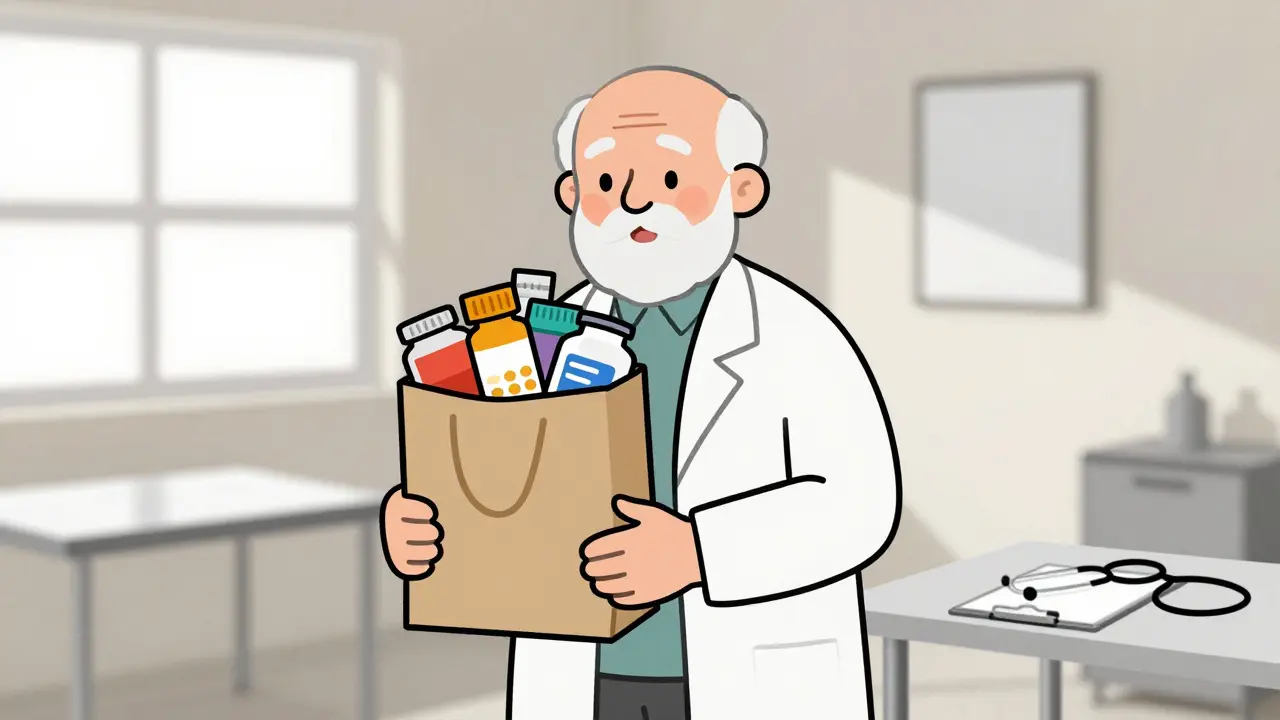
Deprescribing isn’t about quitting meds cold turkey. It’s not skipping doses or stopping because you’re tired of the cost. It’s a planned, safe, and doctor-guided process of reducing or stopping medications that no longer do more good than harm. This is especially common in older adults who’ve been on multiple prescriptions for years, sometimes seeing different doctors for different conditions. Each one added a pill - but no one ever stepped back to ask: Do I still need all of these? According to the American Academy of Family Physicians, the average patient brings in a "brown bag" of medications and ends up with 2.3 unnecessary pills identified during a single review. That’s not just a few bucks - that’s hundreds, sometimes over a thousand dollars a year gone. And it’s not just money. Unnecessary meds increase your risk of falls, confusion, kidney damage, and hospital visits. One study found that 37% of hospitalizations in adults over 65 from medication problems could have been avoided.Why You’re Paying for Pills You Don’t Need
It’s not your fault. The system doesn’t make it easy. You see a cardiologist for your blood pressure, a rheumatologist for your joints, a neurologist for your headaches. Each one prescribes something new. No one talks to the others. Your primary care doctor might not even know what’s been added. Meanwhile, your pharmacy keeps refilling everything automatically. Over-the-counter pills and supplements make it worse. You buy a $40 bottle of "heart health" gummies, then another $60 bottle of turmeric for inflammation. Your doctor never asked. You never told them. But when you go in for your annual checkup, you’re taking 12 different things - and you’re paying $800 a year for them. The numbers don’t lie. A 2022 Medicare study found that one unnecessary $50/month medication costs $600 a year. Eliminate three of those, and you’ve saved $1,800. Avoid one medication-related hospital stay - which averages $15,700 - and you’ve saved more than most people make in a year.How to Start the Conversation
You don’t need to be an expert. You just need to show up prepared. Step 1: Gather everything. Take every pill, capsule, patch, liquid, and supplement you take - even the ones you only use once in a while. Put them in a bag. Include vitamins, herbal teas, OTC painkillers, and eye drops. Don’t leave anything out. Your doctor needs to see the full picture. Step 2: Write down what each one is for. If you don’t know why you’re taking something, write "don’t know" next to it. That’s okay. That’s the whole point of this visit. Step 3: Bring your cost list. Write down how much each medication costs per month. You can find this on your pharmacy receipt or your insurance portal. If you’re paying $120 a month for a sleep aid you haven’t used in six months, say that. Numbers matter. Step 4: Ask these five questions:- Why am I taking this?
- What’s the benefit right now?
- What are the risks - like dizziness, memory issues, or falls?
- Can I stop it? Can I lower the dose?
- Who should I check in with if I feel different after stopping?

What Happens After You Ask
Your doctor won’t say, "Okay, stop everything." That’s not how it works. They’ll look at your list using tools like the Beers Criteria - a widely accepted list of 53 medications that are risky for older adults. They’ll also use the Medication Appropriateness Index, which checks 10 factors for each drug: Is the dose right? Is it still needed? Is there a better option? If a medication can be stopped safely, they’ll suggest a taper. That means slowly lowering the dose over weeks or months. For example, if you’re on a high-dose sleeping pill, they might cut it in half for two weeks, then take it every other night, then stop. This avoids withdrawal symptoms like rebound insomnia or anxiety. Some meds can’t be stopped fast - like blood pressure or seizure drugs. Others, like acid reducers or certain antidepressants, can often be cut quickly with no issues. Your doctor will know which is which. One 2021 study found that patients who stopped unnecessary proton pump inhibitors (stomach acid pills) saved an average of $420 a year - and had 25% fewer cases of pneumonia. That’s not just money. That’s better health.Where to Find Extra Help
You don’t have to do this alone. Community pharmacists are often overlooked - but they’re your secret weapon. Under Medicare Part D, most pharmacies offer free Medication Therapy Management (MTM). That’s a 30-minute session with a pharmacist who reviews your entire list, checks for duplicates, spots drug interactions, and finds cheaper alternatives. One 2022 study found these sessions identify an average of $1,200 in annual savings per patient. You can also ask your doctor about Medication Therapy Management programs offered through your health system. Kaiser Permanente’s program, for example, saved patients $47 per month on average - and had 92% patient satisfaction. And if you’re on a fixed income, check out the Inflation Reduction Act. Since 2023, insulin costs are capped at $35/month. And Medicare now covers comprehensive medication reviews for high-risk patients - no extra charge.What Could Go Wrong (And How to Avoid It)
Some people try to stop meds on their own. They read online. They feel better. They quit. But 18% of those who self-deprescribe end up in the ER with side effects like high blood pressure spikes, seizures, or severe anxiety. That’s why you need your doctor. Not because they’re the boss - but because they have the tools to do it safely. Also, don’t assume a pill is "safe" just because it’s natural. Herbal supplements can interact with prescriptions. St. John’s Wort can make your blood thinner useless. Garlic pills can raise your bleeding risk before surgery. Your doctor needs to know about them all.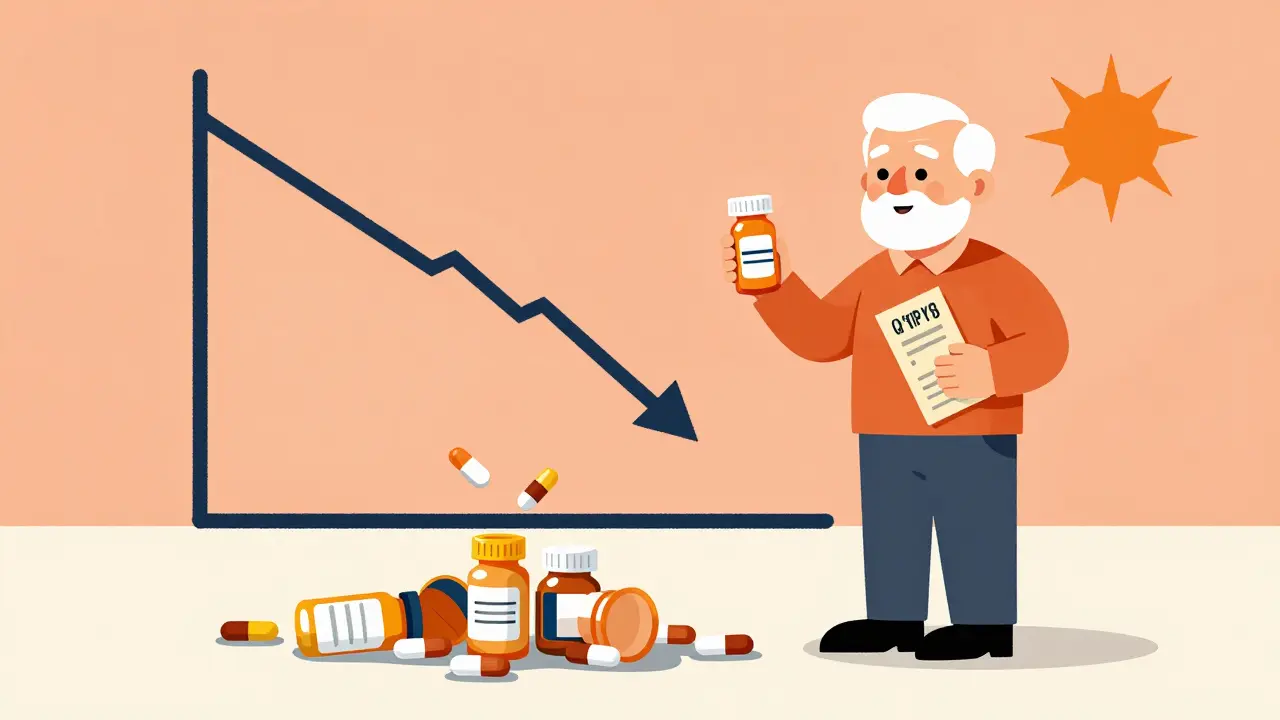
Real Savings, Real Stories
A 72-year-old woman in Ohio stopped three pills after a brown bag review: a $120/month sleep aid, a $60/month herbal blend, and a $40/month calcium supplement she didn’t need. Her annual savings: $840. She also stopped feeling foggy in the mornings. A man in Florida cut his monthly pill cost from $280 to $90 by stopping a $75/month vitamin D supplement (his levels were fine), a $100/month migraine med that was really just a blood pressure pill, and a $105/month acid reducer he hadn’t needed in three years. He saved $1,980 a year. These aren’t rare cases. They’re happening every day in clinics across the country.It’s Not Just About Money - It’s About Control
You’re not being asked to give up your health. You’re being asked to take it back. Too many people feel powerless - like they have to take whatever their doctor gives them. But you have the right to ask. To question. To say, "I don’t want to keep paying for this if it’s not helping." Deprescribing isn’t about being lazy. It’s about being smart. It’s about using your money wisely, protecting your body, and living better - not just longer. And the best part? You don’t need permission. You just need to show up with your bag of pills and a few questions. The rest? That’s your doctor’s job too.What to Do Next
Start today. Don’t wait for your next appointment.- Grab a bag. Put in every pill, supplement, and cream you take.
- Write down the cost of each one.
- Write down why you think you take them.
- Call your doctor’s office. Say: "I’d like to schedule a medication review. I want to see what I can safely stop to save money and feel better."
Is deprescribing safe?
Yes, when done properly under medical supervision. Deprescribing follows structured steps - like tapering doses slowly and monitoring for side effects. Stopping meds on your own can be dangerous, but working with your doctor reduces risks significantly. Studies show that when done correctly, deprescribing improves safety and doesn’t worsen health outcomes.
Can I stop taking a pill if I feel fine?
Not always. Some medications work preventatively - like blood pressure or cholesterol drugs - even if you don’t feel symptoms. Others, like sleep aids or acid reducers, may be unnecessary after a few months. Your doctor will help you decide which ones you can safely stop based on your health history and current needs.
What if my doctor says no?
Ask why. If they can’t give you a clear reason you still need the medication, ask for a second opinion. You can also request a referral to a pharmacist who specializes in medication reviews. Many insurance plans cover this service at no extra cost. Don’t take "no" as final if you believe a pill isn’t helping you.
How long does it take to stop a medication safely?
It varies. Some pills can be stopped in days. Others, like antidepressants or blood pressure meds, need to be tapered over weeks or months. Your doctor will create a plan based on the specific medication and your health. Never rush it. The goal is safety, not speed.
Will my insurance cover a medication review?
Yes. Medicare Part D requires pharmacies to offer free Medication Therapy Management (MTM) to eligible patients. Many private insurers and health systems also cover these reviews. Ask your pharmacist or doctor’s office - it’s often no extra cost.
Can deprescribing help younger people too?
Absolutely. While it’s most common in older adults, people in their 40s and 50s who take multiple prescriptions - especially for anxiety, sleep, pain, or acid reflux - can also benefit. One in seven adults between 40 and 64 are on five or more medications. If you’re taking more than you need, it’s worth asking.



Jacob Cathro
January 20, 2026 AT 02:18Paul Barnes
January 21, 2026 AT 17:05thomas wall
January 23, 2026 AT 15:24Shane McGriff
January 24, 2026 AT 00:04sagar sanadi
January 24, 2026 AT 06:59kumar kc
January 25, 2026 AT 11:07Thomas Varner
January 26, 2026 AT 22:01Art Gar
January 28, 2026 AT 20:48Edith Brederode
January 29, 2026 AT 10:03clifford hoang
January 29, 2026 AT 16:35Arlene Mathison
January 30, 2026 AT 07:54Emily Leigh
January 31, 2026 AT 17:45Renee Stringer
February 1, 2026 AT 10:10Nadia Watson
February 3, 2026 AT 00:50Courtney Carra
February 4, 2026 AT 13:51