
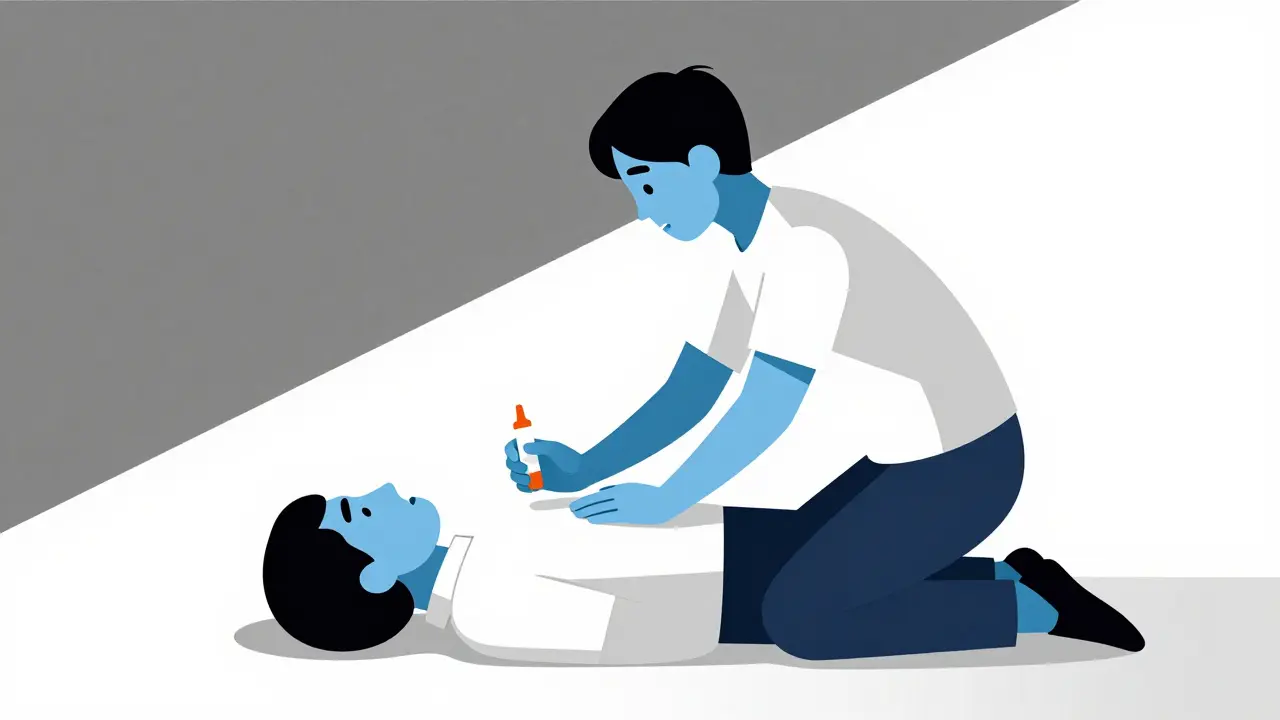
When someone overdoses on opioids, time doesn’t just matter-it disappears. Every minute without oxygen can lead to brain damage. And in many cases, the difference between life and death comes down to one thing: whether someone nearby knows how to respond. Opioid overdoses are not rare. In the U.S. alone, over 87,000 people died from opioid-related overdoses in 2023. Most of those deaths involved fentanyl, a synthetic opioid so powerful that even a tiny amount can stop breathing. But here’s the truth: naloxone works. It’s not magic. It’s science. And it’s available to almost anyone, right now.
What Happens During an Opioid Overdose?
Opioids-whether prescription painkillers, heroin, or fentanyl-bind to receptors in the brainstem. That’s the part of your brain that tells your lungs when to breathe. When too much opioid floods the system, that signal shuts down. Breathing slows. Then stops. Oxygen stops reaching the brain. Skin turns blue, gray, or purple. Pupils shrink to pinpoints. The person becomes unresponsive, no matter how hard you shake them or shout their name. You might hear a gurgling sound-the death rattle-as fluid builds up in the airway. Cold, clammy skin. No movement. No breathing. This isn’t just a drug problem. It’s a physiological crisis. Fentanyl is the biggest threat today. It’s 50 to 100 times stronger than morphine. And it’s mixed into almost every kind of street drug-pill, powder, even fake Xanax. The CDC says 88% of opioid deaths in 2023 involved fentanyl. That means even people who didn’t think they were using opioids are at risk.How to Spot an Opioid Overdose (Even If You’re Not Sure)
You don’t need to be a doctor to recognize an overdose. Look for these three key signs:- Unresponsive: The person doesn’t wake up when you shout their name or shake their shoulder firmly.
- Abnormal breathing: Fewer than 2 breaths every 15 seconds. Or no breathing at all. Sometimes it’s shallow, gasping, or irregular.
- Cyanosis: Lips, fingernails, or skin turn blue, purple, or ashen. On darker skin tones, it looks gray or ashy.
What Naloxone Does-and Doesn’t Do
Naloxone is the only medicine that can reverse an opioid overdose. It works by kicking opioids off the brain’s receptors. Think of it like a key that fits the lock better than the opioid does. It doesn’t cure addiction. It doesn’t get you high. It doesn’t work on alcohol, cocaine, or benzodiazepines. But if opioids are in the system, naloxone can bring someone back to life in minutes. There are two main ways to use it:- Intranasal spray (like Narcan): One spray in each nostril. No needle. No training needed. Just spray and go.
- Intramuscular injection: A shot in the thigh muscle. Comes in auto-injectors (like Evzio) or syringes.
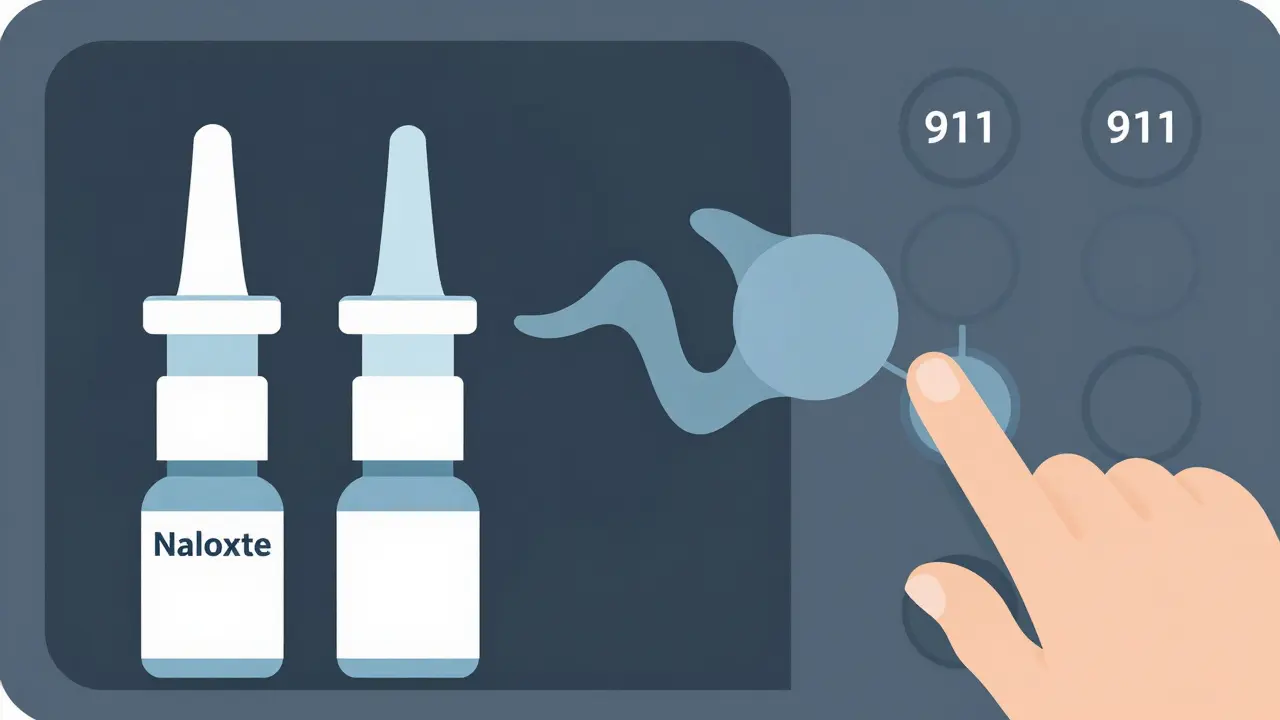
What to Do When Someone Overdoses
There are four steps. Do them in order. Don’t skip one.- Recognize the signs. Look for unresponsiveness, slow or no breathing, blue skin.
- Call 911 immediately. Even if you give naloxone, they still need medical help. Tell the dispatcher it’s a possible opioid overdose.
- Give naloxone. Use one spray in each nostril. Or give the injection in the thigh. If they don’t respond after 2 to 3 minutes, give another dose. Fentanyl often needs two or more doses.
- Keep breathing for them. If they’re not breathing on their own, give rescue breaths. One breath every 5 seconds. Watch for chest rise. Don’t stop until help arrives.
Why Naloxone Isn’t Enough-And What Needs to Happen Next
Naloxone saves lives. But it’s not a solution. It’s a bandage on a broken system. In 2023, U.S. pharmacies distributed 1.2 million naloxone kits. That sounds like a lot. But experts say we need 2.1 million just to cover the people at highest risk. Cost is still a barrier. A single nasal spray can cost $25 to $130. But generic versions launched in 2022 cut prices by 40%. Many pharmacies now give naloxone for free or at low cost. Some states let you pick it up without a prescription. Libraries, community centers, and even public restrooms in cities like Philadelphia and Vancouver now carry naloxone kits. But here’s the hard truth: naloxone doesn’t fix why people use opioids. Trauma. Pain. Isolation. Lack of treatment. A 2023 study in the New England Journal of Medicine showed that without access to medication-assisted treatment-like methadone or buprenorphine-reversing an overdose just delays the next one.What Not to Do
There are dangerous myths floating around. Don’t fall for them.- Don’t put them in a cold shower. It doesn’t help. It can cause drowning or shock.
- Don’t give them coffee or stimulants. That won’t wake them up. It could trigger a heart attack.
- Don’t leave them alone after naloxone. They can relapse into overdose. Stay until EMTs arrive.
- Don’t wait to call 911. Even if you’re scared of police, legal protections exist. All 50 U.S. states and Canadian provinces have Good Samaritan laws that protect you from drug possession charges if you call for help.
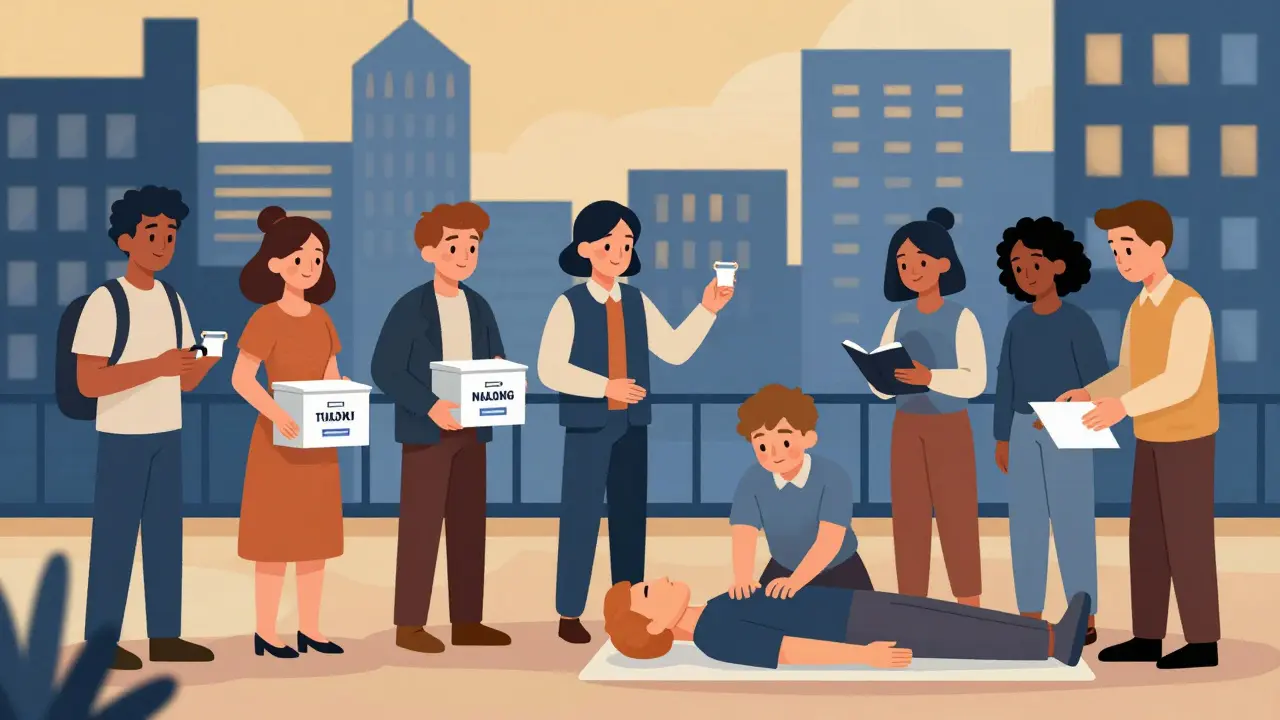
Real Stories From the Front Lines
One user on Reddit shared that they reversed three overdoses in 2022 using Narcan. The first took four minutes to work. The second needed two doses because the heroin was laced with fentanyl. Another person in Texas said they used Narcan on their brother. He woke up coughing 90 seconds after the spray. The EMTs told her: “Two more minutes and he wouldn’t have made it.” These aren’t rare. A 2022 survey by the National Harm Reduction Coalition found that naloxone reversed overdoses 87% of the time when given promptly. That’s not luck. That’s preparation.How to Get Naloxone and Learn How to Use It
You don’t need a prescription in most places. Walk into any pharmacy and ask for naloxone. Many offer it for free. If you’re unsure, search “naloxone near me” or check with local harm reduction groups. Training takes 20 to 30 minutes. Most community centers, clinics, and online programs (like Next Distro) offer free video tutorials. Practice with a trainer spray-it looks like the real thing but has no medicine. Learn the recovery position. Know where you keep your kit. Keep it away from heat. Naloxone degrades above 40°C (104°F). Don’t leave it in a hot car.Final Thought: You Don’t Need to Be a Hero
You don’t need courage. You need knowledge. You don’t need to be a doctor. You just need to act. Someone you know might be at risk. A neighbor. A friend. A family member. Maybe even someone you don’t realize is struggling. Naloxone is simple. It’s safe. It’s legal. And it’s one of the few tools we have that actually works in real time. If you learn nothing else about opioids, learn this: if someone isn’t breathing, give naloxone. Call 911. Keep breathing for them. Do that, and you might just save a life.Can naloxone hurt someone if they didn’t overdose on opioids?
No. Naloxone has no effect on non-opioid substances like alcohol, cocaine, or benzodiazepines. If someone didn’t take opioids, naloxone won’t harm them. It’s safe to use even if you’re unsure. The risk of not acting far outweighs any theoretical risk of giving it.
How long does naloxone last, and why might someone need more than one dose?
Naloxone lasts 30 to 90 minutes. But many opioids, especially fentanyl, can last 3 to 6 hours. That means the person can slip back into overdose after naloxone wears off. That’s why multiple doses are often needed. If breathing doesn’t improve after 2 to 3 minutes, give another dose. Don’t assume one is enough.
Is naloxone available without a prescription?
Yes. In all 50 U.S. states and most Canadian provinces, you can get naloxone without a prescription from pharmacies. Many community organizations and harm reduction programs give it out for free. Some states allow pharmacists to dispense it under standing orders, meaning you can walk in and ask for it like you would for pain relievers.
Can I use naloxone on myself?
It’s possible, but not recommended. If you’re overdosing, you won’t be able to administer it yourself. Naloxone is designed for bystanders-friends, family, or strangers-to use on someone who’s unresponsive. If you’re at risk, carry it and train someone close to you to use it on you.
What should I do after giving naloxone?
Stay with the person. Even if they wake up, they need medical care. Rebound overdose is real. Put them in the recovery position (on their side). Keep monitoring their breathing. Don’t let them leave until paramedics arrive. Call 911 even if you think they’re fine-internal complications like pulmonary edema can develop hours later.
Why do some people need two doses of naloxone?
Fentanyl and other synthetic opioids are so strong that one dose of naloxone often isn’t enough. They bind tightly to opioid receptors and can overwhelm the first dose. If breathing doesn’t improve after 2 to 3 minutes, give a second dose. Some people need three or more. Don’t hesitate. More naloxone is better than not enough.
James Moreau
March 26, 2026 AT 00:05Just wanted to say this is one of the clearest, most practical guides I’ve seen on this topic. No fluff, just facts. I’ve carried Narcan in my backpack for over a year now after a friend went down at a party last winter. Didn’t think I’d ever use it. Then I did. And it worked. No drama, no judgment - just spray, call 911, and hold their hand.
People act like it’s a magic bullet, but honestly? It’s just a tool. Like a fire extinguisher. You hope you never need it, but if you do, you’re damn glad it’s there.
Seth Eugenne
March 26, 2026 AT 15:01🙌 This needs to be mandatory in every high school health class. I work at a community center and we hand out naloxone kits like gum. People are scared to use it because they think they’ll ‘mess up’ - but it’s literally impossible to mess up. Spray both nostrils. Done. No needle. No training. Just breathe for them until help comes.
Also, if you’re reading this and don’t have a kit? Go to your pharmacy today. Ask for it. They’ll give it to you for free. Seriously. Do it.
Brandon Shatley
March 26, 2026 AT 19:30i had no idea fentanyl was in everything now. like i thought it was just heroin or pills but nooo its in fake xanax and even some weed now? crazy. i used to think overdoses were just for junkies but now i get it - its anyone. my cousin took a pill she thought was Adderall and almost died. she had no idea.
got my naloxone last week. kept it in my wallet. hope i never have to use it but if i do i know what to do. thanks for the info man.
Zola Parker
March 28, 2026 AT 09:40So we’re just handing out a band-aid while the whole damn hospital is on fire? Naloxone saves lives, sure - but it doesn’t fix why people are using in the first place. Trauma. Poverty. Lack of mental health care. We’re treating symptoms like they’re the disease.
And don’t get me started on the ‘just say no’ nonsense. Real change means decriminalization, safe supply, housing, therapy - not more spray cans. This is harm reduction, not harm solution.
Kevin Y.
March 30, 2026 AT 00:54Thank you for this meticulously researched and compassionate overview. The clarity with which you’ve presented the physiological mechanisms, the actionable steps, and the legal protections is profoundly helpful.
I’ve distributed over 300 naloxone kits through my clinic this year. Every single one came with a 15-minute training session. We’ve seen over 80 reversals. Not one person has been harmed by the administration of naloxone - not even once.
It is not a moral issue. It is a medical imperative.
Korn Deno
March 31, 2026 AT 06:53Life is fragile. Breathing is not a given. We treat addiction like a personal failure when it’s really a biological negotiation gone wrong.
Naloxone doesn’t judge. It doesn’t care if you’re a parent, a veteran, a student, or a stranger on the street. It just says: here’s your chance. Will you take it?
Maybe the real miracle isn’t the drug. Maybe it’s us - finally deciding to act before it’s too late.
Caroline Bonner
April 1, 2026 AT 12:41I’m from Canada and we’ve had naloxone available over-the-counter since 2018 - and guess what? It didn’t make people use more drugs. It made them live longer. We’ve had over 300,000 doses distributed in Ontario alone. And yes, people are still dying - but not as fast. Not as often. Not alone.
And here’s the thing: when you give someone a chance to wake up, you’re not enabling them - you’re giving them a chance to heal. Recovery doesn’t happen in a vacuum. It happens after someone survives. After someone knows someone cared enough to act.
Carry it. Know how to use it. Teach someone else. It’s not heroism - it’s humanity.
Linda Foster
April 1, 2026 AT 23:51While the information presented is accurate and commendable, I must emphasize the importance of formal medical follow-up following naloxone administration. The pharmacokinetic profile of fentanyl necessitates prolonged observation, as the half-life of the opioid exceeds that of the antidote.
Furthermore, while over-the-counter availability is a positive step, standardized training protocols remain essential to ensure optimal outcomes and reduce potential misapplication. Public health initiatives should be coupled with structured education frameworks.
Rama Rish
April 2, 2026 AT 02:58got naloxone from my local clinic last month. no prescription. just asked. they gave it to me with a demo spray.
my bro is on methadone now. he says he feels seen for the first time in years.
thank you for not making this about shame.
Kevin Siewe
April 2, 2026 AT 23:06I’ve been a paramedic for 12 years. I’ve seen overdoses in alleys, apartments, and parking lots. The ones who survive? Usually because someone didn’t panic. They called 911. They gave naloxone. They kept breathing for them.
You don’t need to be brave. You just need to be there.
And if you’re scared to act? That’s okay. But do it anyway. Because someone’s life might depend on it - and you might be the only one who shows up.
Amber Gray
April 3, 2026 AT 23:08Why are we giving free drugs to junkies? This is just enabling. If they didn’t want to die, they wouldn’t do drugs. Let nature take its course. Taxpayers shouldn’t fund this nonsense.