Imagine picking up your monthly prescription for blood pressure medication. The bottle looks different than last month. The pill is a slightly different shade of blue. You take it anyway, assuming it’s just a new batch. But what if that small change meant you were taking the wrong dose? Or worse, what if the pharmacist accidentally dispensed a similar-looking drug entirely?
This isn’t a hypothetical nightmare scenario. It happens more often than we’d like to admit. Generic medications are drugs that contain the same active ingredients as brand-name drugs but are sold under different names and often at lower costs. They make up roughly 90% of all prescriptions filled in the United States today. While they save patients billions of dollars annually, their sheer volume and physical variability introduce specific risks that pharmacists must navigate daily.
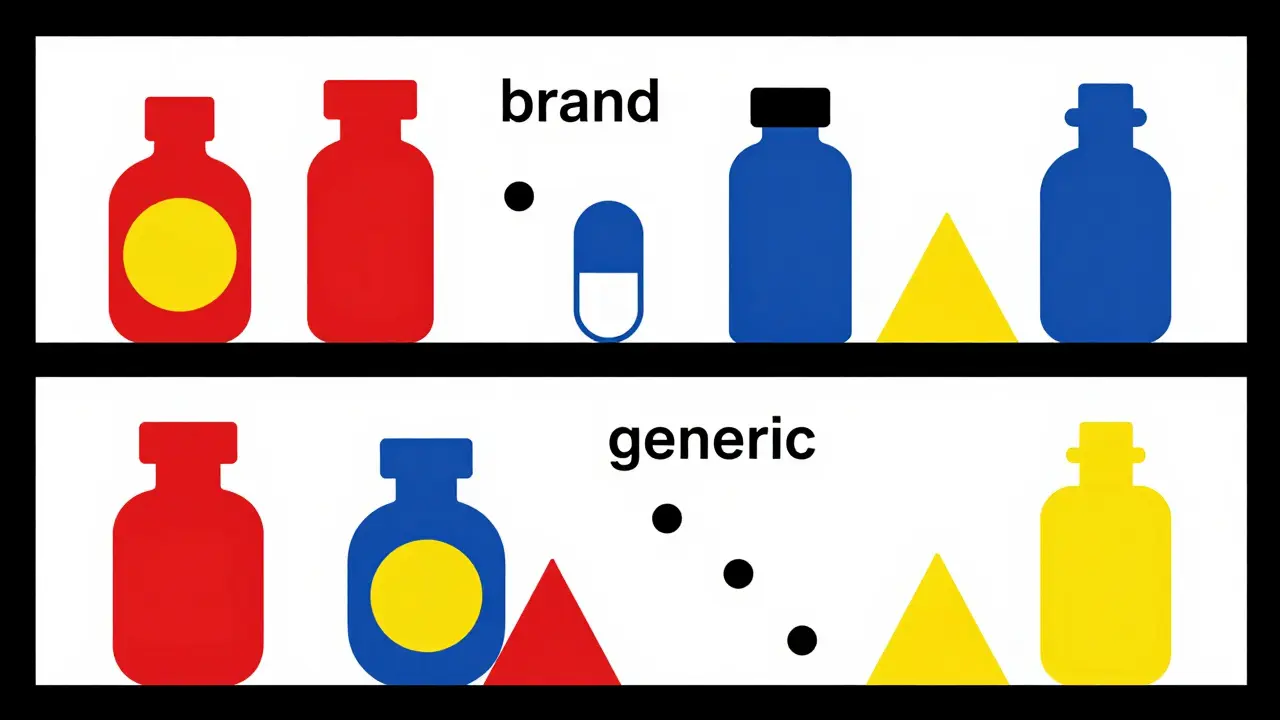
Medication errors aren’t just typos on a label. According to data from the Agency for Healthcare Research and Quality (AHRQ), these mistakes contribute to 7,000-9,000 preventable deaths each year in the U.S. alone. When we zoom in on generics, the complexity increases. Different manufacturers produce identical chemical compounds with varying inactive ingredients, colors, shapes, and sizes. This creates a perfect storm for confusion-both for healthcare professionals and patients.
Why Generic Medications Pose Unique Risks
You might wonder why generics cause issues when they’re legally required to be bioequivalent to brand-name drugs. Bioequivalence means the generic delivers the same amount of active ingredient into your bloodstream within a similar timeframe. However, "similar" has a range. The FDA allows an absorption window of 80-125% compared to the brand name. For most drugs, this doesn’t matter. But for narrow-therapeutic-index drugs-like warfarin or levothyroxine-those slight variations can tip a patient from safe to dangerous.
Beyond chemistry, there’s the visual factor. Look-alike/sound-alike (LASA) errors are rampant. A study by Knudsen (2007) found that nearly half of all prescription corrections stemmed from administrative causes, while over half came from clinical issues like dosage or strength discrepancies. In community pharmacies, dispensing errors occur at a rate of 1.4 per 10,000 prescriptions. That sounds low until you realize millions of scripts are filled every day.
- Multiple Manufacturers: One generic drug may have ten different makers. Each might use a different dye or shape.
- Inactive Ingredients: Fillers and binders vary. Some patients develop allergies to specific excipients not present in other versions.
- Patient Perception: If a pill changes color, patients often think they’ve been given the wrong med, leading them to stop treatment or double-dose.
The real danger lies in the gap between expectation and reality. A patient expects consistency. When that breaks down without clear communication, trust erodes-and so does safety.
How Errors Happen: From Prescription to Pill Bottle
To fix a problem, you first need to understand where it starts. Most medication errors don’t happen in isolation. They creep in through weak links in the chain: prescribing, transcribing, dispensing, and administration.
Prescribers often write orders based on brand names they know well. When a pharmacy substitutes a generic, the system should flag any critical differences. But here’s the catch: many electronic health records (EHRs) lack detailed info about which manufacturer supplied the generic. So if a doctor writes “Metoprolol,” they might not know whether the patient gets Metoprolol Tartrate or Succinate-or even which company made it.
Then comes the pharmacist. Under time pressure, especially in high-volume retail settings, human error creeps in. A quick glance at a barcode scanner might miss a mismatched strength. A rushed verification step could overlook a look-alike package. And finally, the patient walks out with instructions they barely understood.
| Error Stage | Typical Cause | Risk Level |
|---|---|---|
| Prescribing | Vague order (e.g., no specified formulation) | High |
| Transcription | Manual entry typo or misread handwriting | Medium |
| Dispensing | Wrong strength/form due to packaging similarity | Very High |
| Counseling | No explanation of manufacturer change | Medium-High |
Each stage offers a chance to catch the mistake. Miss one, and the risk multiplies.
Prevention Tools That Actually Work
Technology alone won’t solve everything-but done right, it dramatically cuts errors. Let’s talk about what works in practice.
Computerized Physician Order Entry (CPOE) systems let doctors enter prescriptions digitally instead of writing them by hand. Leapfrog Group data shows CPOE reduces medication errors by 55% in hospitals and 48% in primary care. No more guessing what “MD” meant-was it milligrams or metformin?
Next up: Bar Code Medication Administration (BCMA). Before giving a drug, nurses scan both the patient’s wristband and the medication barcode. If they don’t match, the system alerts them immediately. BCMA slashes potential adverse events by 50%. Imagine catching a wrong-generic swap before it ever reaches the patient.
But perhaps the most powerful tool is Clinical Decision Support Systems (CDSS). These software programs review every prescription against thousands of rules: drug interactions, allergy checks, dosing limits, and yes-even generic substitution flags. In one case reported by AHRQ, a CDSS caught a labeling error where a twice-weekly dose was mistakenly labeled as twice-daily. Without that alert, the patient would have overdosed.
Still, tech has limits. Too many alerts lead to “alert fatigue.” Pharmacists start ignoring warnings because half are false positives. The WHO warns against excessive stop alerts-they drown out the ones that truly matter.
The Human Factor: Counseling and Reconciliation
Even the best technology fails if people aren’t engaged. That’s why medication reconciliation remains gold standard. Done properly, it involves comparing a patient’s current meds against new orders, discharge lists, or refill requests. Pharmacists spend 15-20 minutes per patient doing this thoroughly-and find an average of 2.3 discrepancies per person. Those aren’t trivial numbers.
And then there’s counseling. Mandatory counseling for first-fill medications catches 12-15% of potential errors at the final hurdle. Yes, it takes 3-5 extra minutes per encounter. But consider this: Reddit threads full of pharmacists sharing stories show how many times a simple question-“Does this look different?”-prevents disaster.
Patients need to understand why their pill changed appearance. They need reassurance that generics are safe. And they need permission to ask questions without feeling rushed. Building that rapport isn’t optional-it’s essential.
Correcting Mistakes: What To Do When Things Go Wrong
Let’s be honest: errors will still happen. The goal isn’t perfection-it’s rapid detection and correction. Here’s how to respond when something slips through:
- Stop distribution immediately. If you suspect a wrong generic was dispensed, halt further fills until reviewed.
- Contact the patient. Call them directly. Don’t wait for them to notice. Explain clearly what happened and what to do next.
- Document everything. Record the error type, root cause, and corrective actions taken. This helps identify patterns later.
- Report internally. Share near-misses and actual errors with your team. Learning culture beats blame culture every time.
- Follow up medically. Coordinate with prescribers to monitor for adverse effects. Adjust therapy if needed.
One real-world example: A patient received lamotrigine ER instead of immediate-release due to a packaging mix-up. Because the pharmacy had a formal incident reporting system, they caught it within hours. The patient called after noticing unusual dizziness. Blood levels were checked, no harm done-but the process exposed a flaw in shelf organization. Fixing that layout prevented future repeats.
Building a Safer System: Practical Steps for Pharmacies
If you run a pharmacy-or work in one-you can implement changes tomorrow. Start small. Focus on impact.
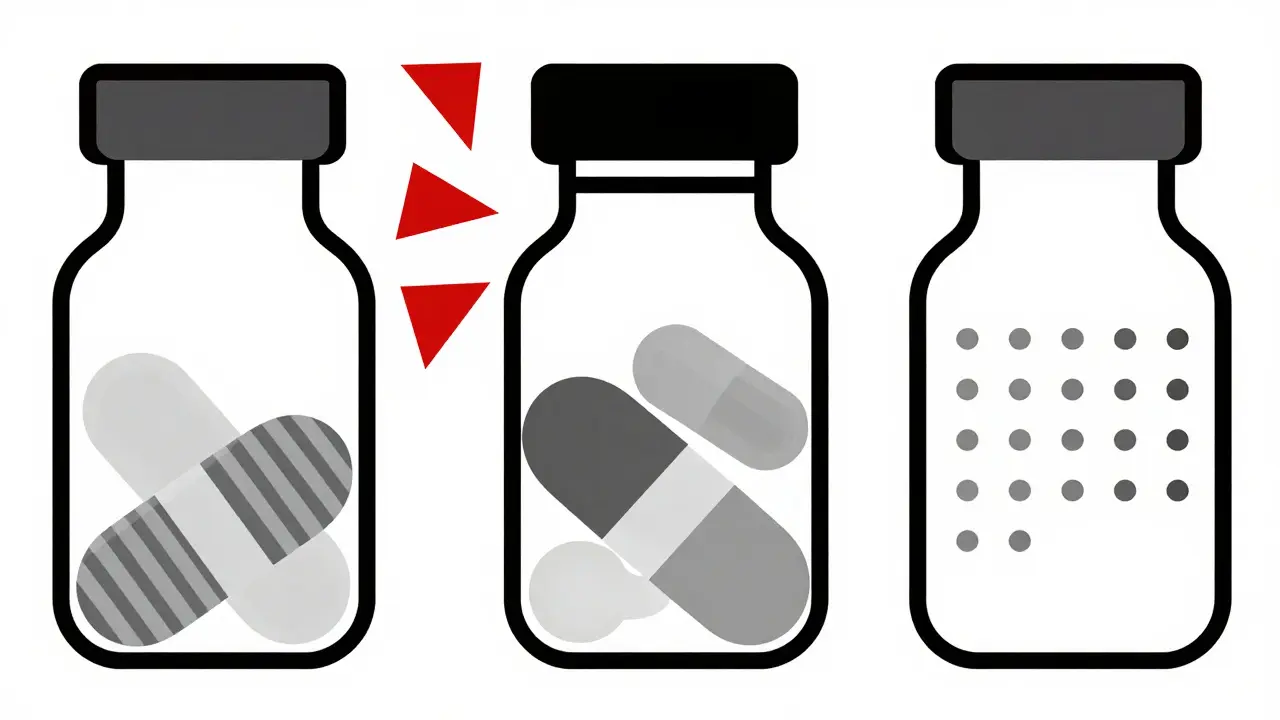
- Train staff on LASA drugs. Create posters showing side-by-side comparisons of commonly confused generics. Update quarterly.
- Standardize storage. Keep look-alike packages far apart. Use dividers or separate shelves.
- Update reference tools. Subscribe to updated drug databases like Epocrates or Micromedex. Outdated info kills accuracy.
- Implement mandatory counseling scripts. Train technicians to always mention manufacturer changes during pickup.
- Track errors formally. Even basic spreadsheets help spot trends. Only 28% of community pharmacies currently track errors systematically. Be part of the majority who do.
Investing in CDSS integration costs $25k-$75k for mid-sized shops. Sounds steep? Compare that to the cost of one lawsuit-or losing customer trust forever.
Frequently Asked Questions
Are generic drugs less effective than brand-name drugs?
No. By law, generics must demonstrate bioequivalence to the brand-name version, meaning they deliver the same active ingredient in the same amount and speed. While minor variations exist (within 80-125% absorption range), these rarely affect efficacy for most medications. Exceptions apply only to narrow-therapeutic-index drugs like thyroid hormones or anticoagulants.
Why does my generic pill look different sometimes?
Different manufacturers produce generics using unique inactive ingredients (fillers, dyes, binders). As supply chains shift, pharmacies may receive batches from various companies. Appearance changes-including color, shape, size-are normal and don’t indicate reduced quality. Always verify with your pharmacist if unsure.
What should I do if I think I got the wrong generic?
Contact your pharmacy immediately. Bring the bottle and any remaining pills. Ask to speak with the pharmacist on duty. They’ll check records, compare labels, and advise whether to continue, switch, or seek medical evaluation. Never stop taking prescribed meds abruptly without consulting your provider.
Can technology completely eliminate pharmacy errors?
Not entirely. Technology significantly reduces errors-CPOE cuts them by ~55%, BCMA by 50%-but human judgment remains vital. Alert fatigue, poor database updates, and workflow gaps mean tech supports rather than replaces careful practice. Combined with training and counseling, however, overall error rates can drop by 70-75% globally by 2030, according to WHO projections.
Is medication reconciliation really necessary for refills?
Yes, especially for chronic conditions or polypharmacy patients. Refills aren’t static; lifestyles, comorbidities, and other meds change. Regular reconciliation identifies duplications, interactions, and outdated therapies. Studies show it uncovers 2+ discrepancies per patient on average-many involving generic substitutions gone unnoticed.
How much does implementing CDSS cost for independent pharmacies?
For mid-sized independent pharmacies, integrating Clinical Decision Support Systems typically ranges from $25,000 to $75,000 upfront, plus ongoing maintenance fees. Implementation takes 3-6 months with vendor support. While significant, this investment pays off via fewer errors, improved compliance, enhanced patient satisfaction, and reduced liability exposure.
Do insurance plans influence generic substitution practices?
Absolutely. Managed care organizations control about 90% of U.S. prescriptions. Their formularies dictate which generics are preferred, reimbursed, or blocked. Real-time prescription processing systems automatically reject non-preferred generics unless overridden. This drives consistency but also requires pharmacists to stay informed about plan-specific rules to avoid delays or denials.
What role do pharmacists play in preventing generic-related errors?
Pharmacists serve as final gatekeepers. They verify prescriptions, assess appropriateness, counsel patients, reconcile meds, and intervene when systems fail. Their expertise bridges technology and humanity-catching subtle cues machines miss. Training in LASA recognition, updated references, and proactive communication makes them indispensable defenders of patient safety.