
Why nightmares won’t go away-even when you think you’ve moved on
For people with PTSD, nightmares aren’t just bad dreams. They’re relentless. They replay the same terror night after night, often with brutal detail. You wake up sweating, heart pounding, convinced you’re still in danger-even if the trauma happened years ago. And no matter how much therapy you’ve done for anxiety or flashbacks, these nightmares stick around. That’s because standard PTSD treatments don’t always touch the nightmare part. It’s like treating a broken leg but ignoring the infection in the wound.
Up to 72% of people with PTSD have recurring nightmares. Some report them every night. Others get them several times a week. And they don’t just mess with sleep-they wreck your day. You’re exhausted. Irritable. Avoiding bed. Staying up late just to delay the inevitable. Over time, this drains your energy, your relationships, your sense of safety. You start to feel like you’ll never get a good night’s rest again.
What is Imagery Rehearsal Therapy (IRT)?
Imagery Rehearsal Therapy (IRT) is a simple, structured way to take back control of your dreams. It doesn’t erase the trauma. It doesn’t ask you to forget what happened. Instead, it changes the script of the nightmare while you’re awake-so when you sleep, your brain doesn’t automatically replay the horror.
Developed in the early 2000s and backed by decades of research, IRT is now the first-line psychological treatment for PTSD-related nightmares, recommended by the American Academy of Sleep Medicine. Unlike medication, it has no side effects. Unlike long-term talk therapy, it’s short-usually just 4 to 6 sessions. And it works. Studies show it cuts nightmare frequency by more than half for most people, with over 60% stopping nightmares entirely after just a few weeks.
The four steps of IRT-simple, but powerful
IRT isn’t magic. It’s a technique. And like any skill, it takes practice. Here’s how it works, step by step:
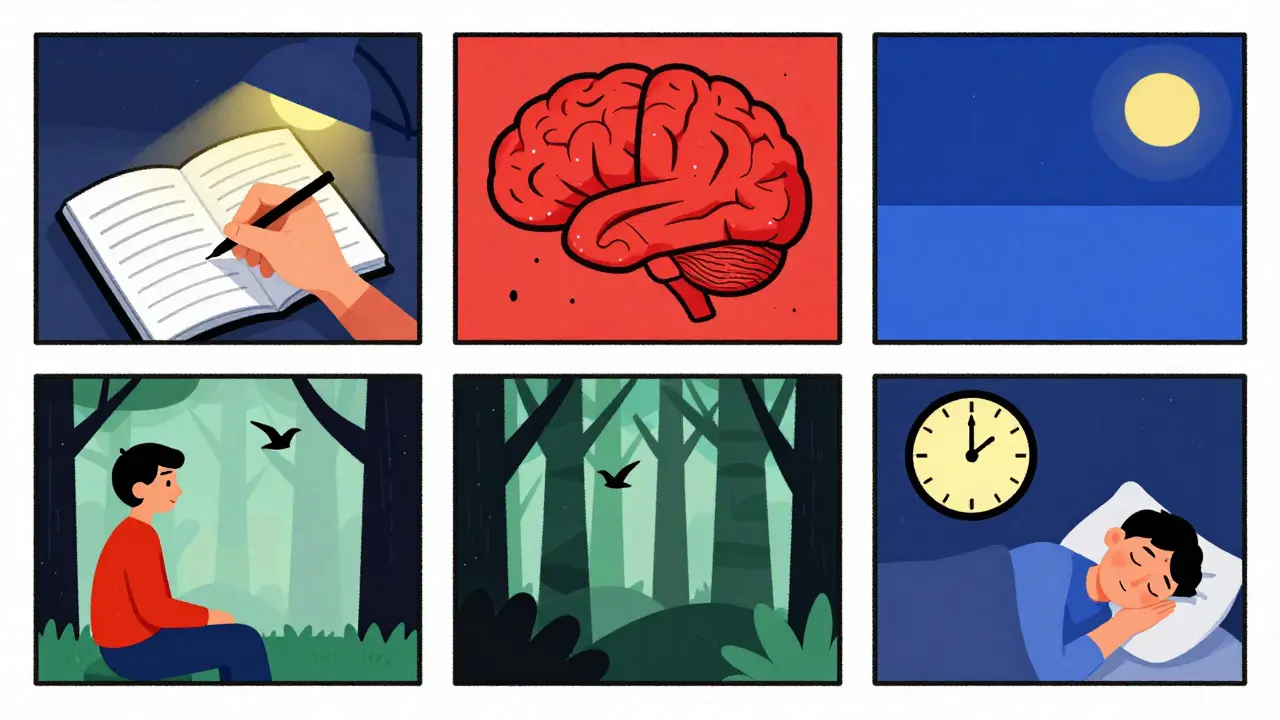
- Write down the nightmare-right after you wake up. Use a pen and paper, not your phone. The light from screens can disrupt your sleep cycle. Write everything you remember: the setting, the people, the sounds, the emotions. Don’t judge it. Just record it.
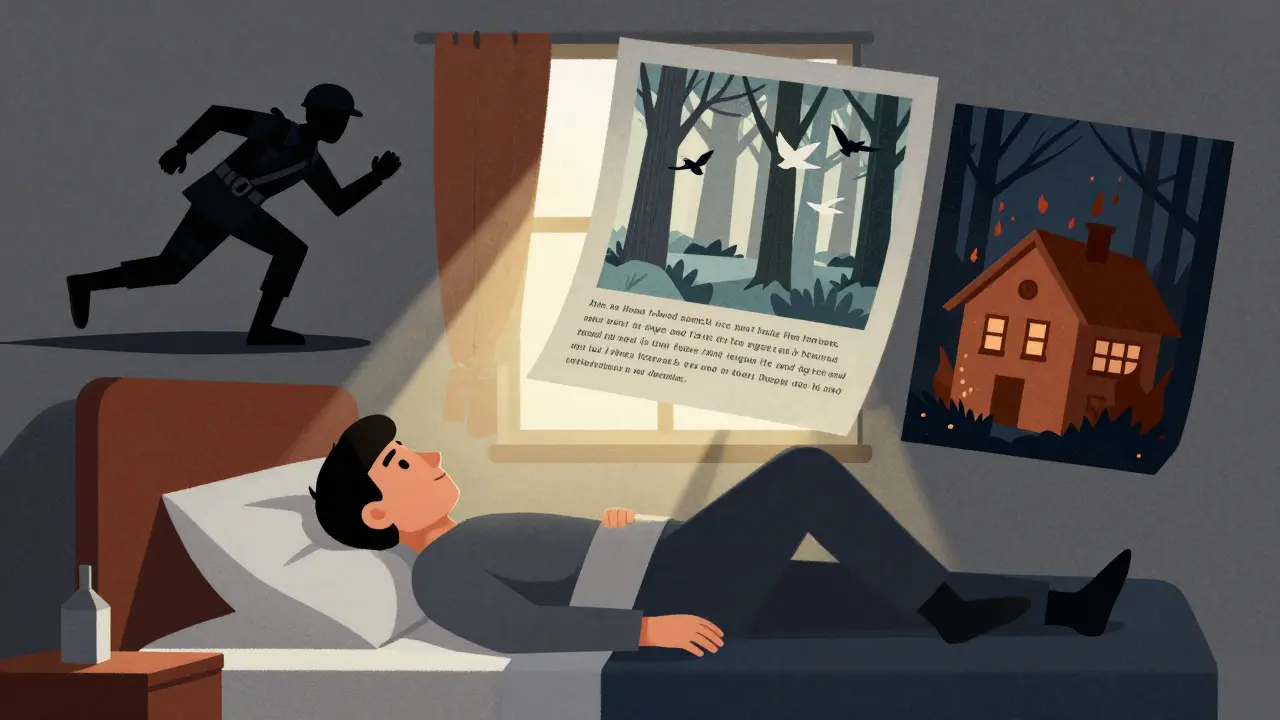
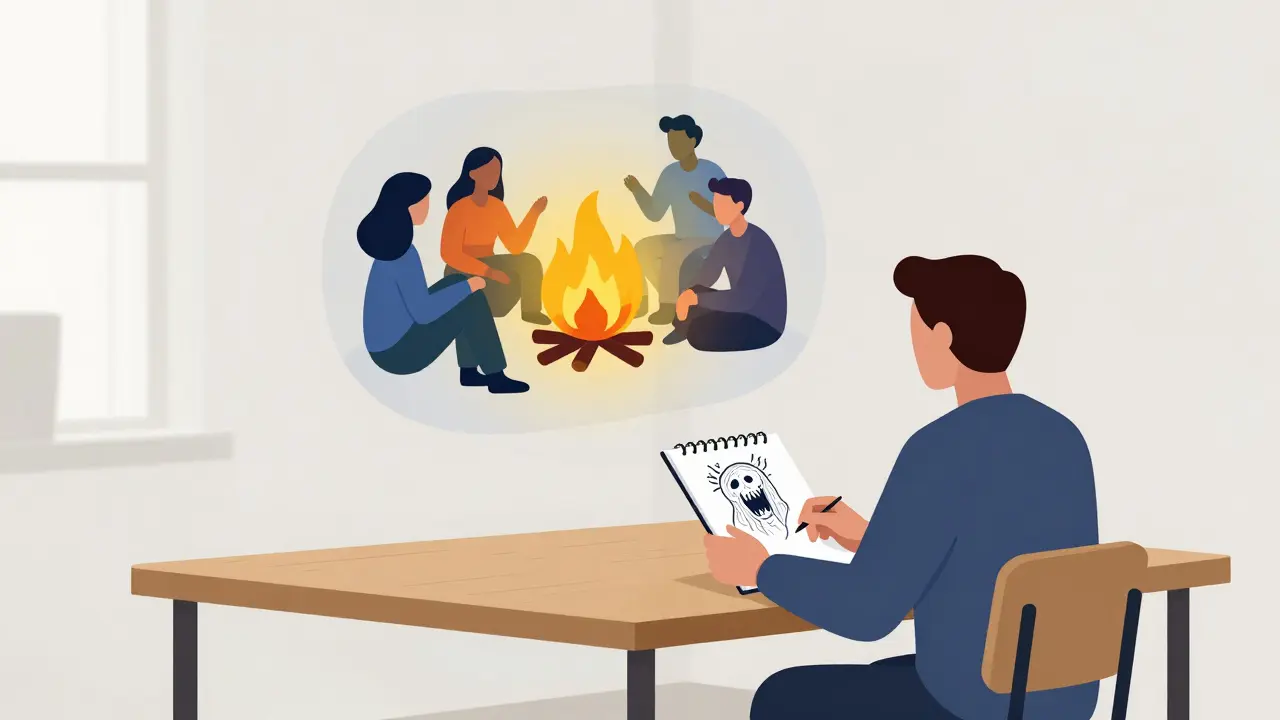
- Change the dream-while you’re awake. Now, rewrite the nightmare. Make it less scary. Make it end differently. Maybe you escape. Maybe someone helps you. Maybe the threat turns into something harmless. It doesn’t have to be realistic. It just has to feel better. A woman who dreamed of being chased by a soldier rewrote it as walking through a quiet forest, hearing birds. A veteran who dreamed of explosions changed it to sitting by a campfire, telling stories with his squad. The goal isn’t to make it happy. It’s to make it safe.
- Rehearse the new version-every night before bed. Spend 10 to 15 minutes imagining the new dream in your mind. Picture it clearly. Feel the calm. Do this while sitting up, not lying down. Some people use calming music or progressive muscle relaxation to help focus. Don’t force it. Just let the new image settle in.
- Repeat daily. This is where most people quit. It takes consistency. You won’t see results overnight. But by the third or fourth night, your brain starts to recognize the new script. After 2-3 weeks, nightmares become less frequent. After 4-6 weeks, many people stop having them altogether.
It sounds easy. But it’s not. Changing a nightmare that’s tied to real trauma can feel wrong. Like you’re disrespecting what happened. That’s normal. Clinicians call this the “memory vs. dream” distinction. Your memory of the event is real. The nightmare is your brain’s distorted replay. IRT doesn’t change the past. It changes how your brain tells the story while you sleep.
Why IRT works better than pills
For years, doctors prescribed prazosin-a blood pressure drug-to treat PTSD nightmares. It was the go-to. But in 2018, a major U.S. military study found it worked no better than a sugar pill. The same study showed IRT had lasting results, even after treatment ended.
Here’s what the data says:
- IRT reduces nightmare frequency by an average of 70-80%
- Improves sleep quality by nearly 90%
- Reduces overall PTSD symptoms by 40-50%
- Benefits last 6-12 months after treatment ends
And it’s not just veterans. IRT works for survivors of assault, accidents, fires, natural disasters-even refugees who’ve fled war zones. The Department of Veterans Affairs now offers IRT in 92% of its medical centers. Other countries, including Australia and the UK, have adopted it as standard care.
What doesn’t work with IRT
IRT isn’t a cure-all. It’s not designed for people with severe insomnia, sleep apnea, or other sleep disorders. If you’re not sleeping because your breathing stops at night, IRT won’t fix that. You need a sleep study first.
It also doesn’t work well if you’re still in active danger-like someone in an abusive relationship. You need safety before you can safely change your dreams.
And some people struggle with the rewriting step. They get stuck trying to make the new dream “perfect.” That’s a trap. You don’t need a Hollywood ending. You just need a version that doesn’t make you wake up screaming. A calm scene. A quiet room. A hand on your shoulder. That’s enough.
What to expect during treatment
Most people start seeing changes after 2-3 weeks. Nightmares become less vivid. The fear fades. You might still dream, but you don’t wake up in panic. Some people report feeling more rested within days, even before nightmares stop.
Therapists usually ask you to keep a dream log: record the frequency, intensity (on a scale of 0-10), and how much distress it caused. Progress isn’t always linear. Some nights, the old nightmare returns. That’s okay. Just write it down, then go back to your new script. Don’t give up.
Success isn’t about never having a nightmare again. It’s about not letting them control you. If you wake up once a month and can fall back asleep without panic? That’s a win.
How to get started
IRT isn’t something you do alone. You need a trained clinician-preferably one who specializes in trauma and sleep. You can’t just read a guide and expect it to work. The process requires guidance to avoid retraumatization.
Ask your doctor for a referral to a therapist trained in IRT. If you’re a veteran, contact your VA center. Many now offer IRT through telehealth. If you’re in Northern Ireland or elsewhere in the UK, check with NHS mental health services or trauma centers. Organizations like Phoenix Australia and the International Society for Traumatic Stress Studies have directories of certified providers.
Don’t wait until you’re broken. If nightmares are stealing your sleep, your peace, your life-there’s a proven way out. You don’t have to live with them forever.
What if IRT doesn’t work for me?
It works for most-but not everyone. If you’ve tried IRT for 6-8 weeks and see no change, talk to your therapist. Maybe you need a different approach. Some people benefit from combining IRT with cognitive behavioral therapy for insomnia (CBT-I). Others need more time. Rarely, a different trauma therapy like EMDR might help.
But don’t assume it’s you. Often, it’s the technique not being done right. Make sure you’re rehearsing daily. Make sure your new script is genuinely less distressing. Make sure you’re not rushing the process.
And remember: even small progress counts. One less nightmare a week. One fewer panic attack at 3 a.m. That’s still healing.
Can imagery rehearsal therapy help with nightmares that aren’t from trauma?
Yes. While IRT was developed for PTSD-related nightmares, it’s also effective for idiopathic nightmares-those without a clear trauma trigger. Studies show it reduces frequency and intensity in people who’ve had recurring bad dreams since childhood, even without PTSD. The mechanism is the same: changing the dream script in your mind before sleep rewires how your brain processes fear during dreaming.
Do I have to remember my nightmares to do IRT?
You need enough detail to rewrite them. If you only remember fragments, start there. Write down whatever you recall: a sound, a feeling, a face. Even vague memories can be shaped into a new script. The goal isn’t perfect recall-it’s reducing fear. Your brain will fill in gaps over time as you practice.
Can I do IRT on my own without a therapist?
It’s possible, but not recommended-especially if your nightmares are tied to trauma. Without guidance, you might accidentally reinforce fear or retraumatize yourself. A trained therapist ensures you’re rewriting the dream safely, and helps you navigate emotional resistance. For simple, non-trauma nightmares, self-guided IRT can work. But if you have PTSD, work with a professional.
How long does it take to see results with IRT?
Most people notice changes within 2-3 weeks of daily practice. Nightmares become less intense or less frequent. Significant improvement-like cutting nightmares in half-usually happens between sessions 3 and 5. Complete cessation often occurs by week 6. Consistency matters more than speed.
Is IRT covered by insurance?
In the U.S., IRT is covered by Medicare, VA benefits, and most private insurers when delivered by licensed mental health professionals for diagnosed PTSD or nightmare disorder. In the UK, it may be available through NHS mental health services, though access varies by region. Always check with your provider. Many clinics offer sliding-scale fees if cost is a barrier.
What if my new dream feels weird or fake?
That’s normal. Your brain is used to the old nightmare. The new version might feel silly or unnatural at first. Don’t judge it. The goal isn’t realism-it’s relief. A peaceful scene doesn’t have to make sense. A warm light. A quiet room. A dog lying beside you. Those are enough. Over time, your brain will accept it as a safe alternative.
Final thought: Your dreams don’t have to be your prison
Nightmares aren’t a sign of weakness. They’re a sign your brain is still trying to process something it couldn’t handle at the time. IRT doesn’t ask you to fix the past. It gives you a tool to change the future-starting with the next time you close your eyes.
You’ve survived the trauma. Now, you can reclaim your sleep. One dream at a time.





Mike Rose
January 29, 2026 AT 16:58Beth Beltway
January 30, 2026 AT 23:43April Allen
January 31, 2026 AT 20:36Sheila Garfield
February 1, 2026 AT 18:12Niamh Trihy
February 3, 2026 AT 14:30Marc Bains
February 4, 2026 AT 03:08Lily Steele
February 4, 2026 AT 09:47Sidhanth SY
February 5, 2026 AT 13:12Adarsh Uttral
February 7, 2026 AT 00:55Rohit Kumar
February 7, 2026 AT 06:49Blair Kelly
February 8, 2026 AT 10:40Claire Wiltshire
February 8, 2026 AT 15:40Shawn Peck
February 9, 2026 AT 23:08