
The stakes are high. People with COPD who also have sarcopenia face mortality rates 20-40% higher than those without it. But when you tackle muscle loss head-on, the numbers shift in your favor. Research shows that integrated management can slash hospitalization rates by 32% and significantly bump up the 5-year survival probability in severe cases. It's not about becoming a bodybuilder; it's about regaining the strength to live your life on your own terms.
How to Spot Sarcopenia in COPD
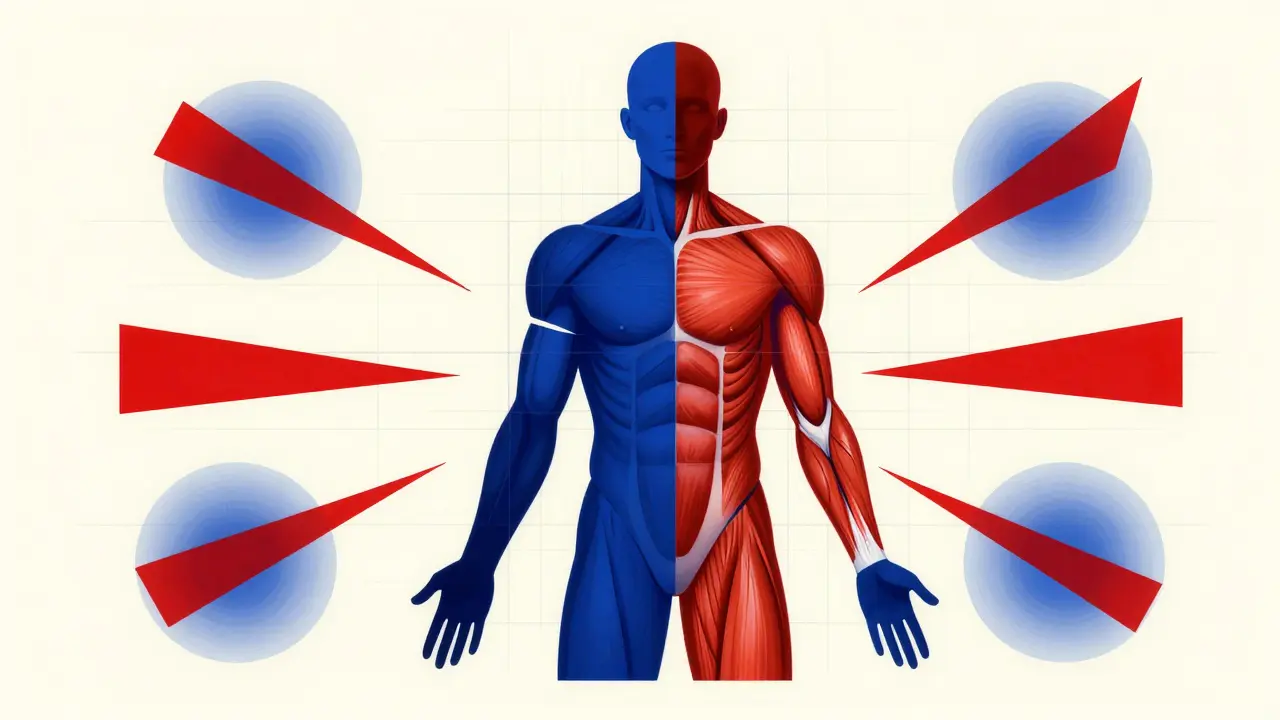
Sarcopenia doesn't happen overnight. In the context of COPD, it's a progressive decline. Most people think of muscle loss as something that happens in the legs, but in COPD, the atrophy often hits the upper body and respiratory muscles harder. In fact, about 68% of COPD patients show significant wasting in the pectoralis major-the chest muscle-compared to only 22% of people without the disease. This makes breathing even harder, creating a vicious cycle where you move less because you're tired, and you get weaker because you move less.
Doctors typically look for three main red flags to diagnose the condition: low muscle strength (like a weak handgrip), low muscle quantity (measured via a DEXA scan), and low physical performance (such as a slow walking speed). However, standard body mass index (BMI) markers often fail COPD patients because their body composition is unique. A more accurate tool now used is the Pectoralis Muscle Index (PMI), which looks at chest muscle area relative to BMI to get a true picture of wasting.
The 'Perfect Storm' Behind Muscle Loss
Why does COPD cause muscle loss in the first place? It's not just about moving less. Experts describe it as a "perfect storm." Systemic inflammation is a huge driver; high levels of proteins like TNF-α and IL-6 in the blood actually correlate with lower grip strength and less muscle mass. Essentially, the body is in a state of chronic stress that breaks down muscle faster than it can be rebuilt.
Then there's the oxygen factor. Nocturnal Hypoxemia-where oxygen levels drop below 88% during sleep-is a major culprit. If your blood oxygen dips for more than 30% of the night, your risk of severe sarcopenia jumps by 47%. When your muscles don't get enough oxygen, they can't maintain their structure, leading to an annual muscle mass decline of about 3.2%, which is nearly double the rate of normal healthy aging.
| Feature | Age-Related Sarcopenia | COPD-Associated Sarcopenia |
|---|---|---|
| Primary Muscle Affected | Lower extremities (legs) | Respiratory and upper limb muscles |
| Annual Muscle Loss Rate | 1-2% | ~3.2% |
| Key Driver | Aging / Inactivity | Inflammation / Hypoxemia / Inactivity |
| Impact on Breathing | Minimal | Severe (Pectoralis atrophy) |
Resistance Training: Building Strength Without Gasping
You can't just jump into a standard gym routine. For someone with COPD, a heavy set of weights can lead to intense shortness of breath (dyspnea), which is why about 42% of patients actually need supplemental oxygen during their workouts. The key is a slow, progressive approach. Many successful programs start at just 30-40% of your one-repetition maximum (1-RM)-essentially using very light weights or resistance bands-and gradually increase the load over 8 to 12 weeks.
The goal is to hit major muscle groups 2-3 times a week. If you feel your breathing getting too heavy, the fix isn't to quit; it's to increase the rest periods. Taking 2-3 minutes between sets allows your oxygen levels to stabilize. A program at the Cleveland Clinic showed that combining this supervised training with protein supplements led to a 23% improvement in 6-minute walk distance. That's the difference between needing a wheelchair for a trip to the mall and being able to walk it yourself.
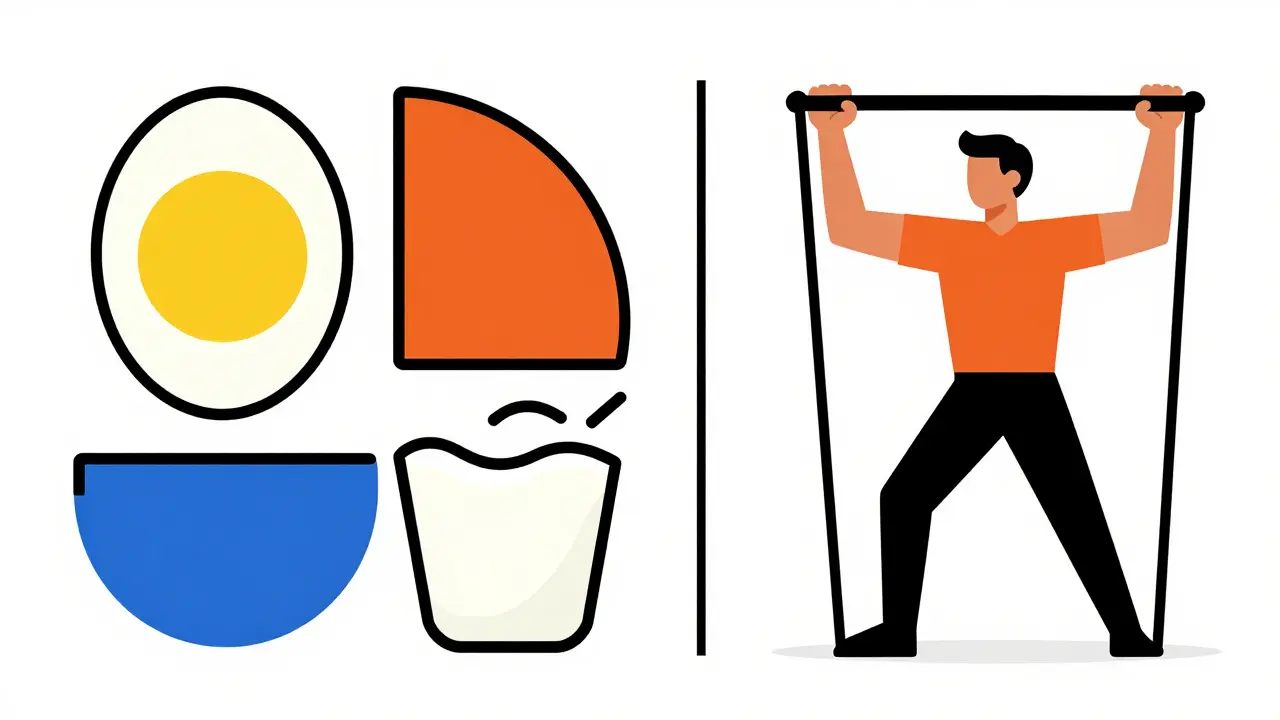
Fueling the Muscle: The Protein Strategy
Exercise is the spark, but nutrition is the fuel. Most people with COPD eat around 0.8 to 1.0 grams of protein per kilogram of body weight. For a sarcopenic patient, that's simply not enough. To actually grow muscle, you need to aim for 1.2 to 1.5 g/kg/day. If you weigh 70kg, you're looking at roughly 84 to 105 grams of protein daily.
How you eat that protein matters as much as how much you eat. Your body can't process a massive protein shake all at once. Instead, split your intake across four meals, aiming for 0.3 to 0.4 g/kg per meal. This keeps muscle protein synthesis active throughout the day. Additionally, focusing on Leucine-an amino acid found in whey protein, eggs, and soy-is a game changer. Adding 2.5 to 3.0 grams of leucine per meal has been shown to boost the anabolic (muscle-building) response by 37% in COPD patients.
Practical Steps for Starting Your Recovery
Getting started can feel overwhelming, especially if you've had a recent flare-up. The biggest mistake is trying to do too much too fast. Start with resistance bands or 1-2 pound weights. Focus on movements that help your daily life, like standing up from a chair (squats) or lifting a light object (bicep curls). If you have a portable oxygen concentrator, keep it handy; don't wait until you're breathless to use it.
Manage your expectations. You won't feel a change in a week. Most patients report a noticeable difference in their ability to perform daily tasks after about 12 weeks of consistency. If you hit a symptom flare-up, don't abandon the program. Scale back to very light stretching or gentle movement, and ramp back up as your breathing stabilizes. The most important thing is to avoid the total sedentary trap that happens during and after an exacerbation.
Can I do resistance training at home?
Yes, you can, but it's highly recommended to start with a supervised pulmonary rehabilitation program first. Once you know your oxygen requirements and the correct form, resistance bands and light dumbbells are excellent tools for home use. Always have a way to monitor your oxygen and a way to call for help if you experience severe dyspnea.
What is the best protein source for COPD muscle loss?
Whey protein is often the best choice because it is rich in leucine, which triggers muscle growth. If you prefer whole foods, Greek yogurt, lean chicken, fish, and eggs are great options. For those with appetite loss (anorexia) common in advanced COPD, high-calorie protein supplements can help meet the 1.2-1.5 g/kg daily goal without feeling overly full.
How do I know if I have sarcopenia?
The most reliable way is through a medical screening. Your doctor may use a handgrip strength test (where men under 27kg and women under 16kg are flagged) or a Short Physical Performance Battery (SPPB) test. Imaging like a CT scan at the L3 vertebrae level or a DEXA scan can also quantify the actual muscle mass you've lost.
Will lifting weights make my breathing worse?
It can cause a temporary increase in shortness of breath (dyspnea), which is why modification is key. By using lower weights (30-40% of your max), increasing rest intervals to 2-3 minutes, and using supplemental oxygen if needed, you can build strength without putting undue stress on your lungs.
How long does it take to see results?
Consistency is key. While some may feel a slight improvement in energy sooner, meaningful gains in muscle strength and physical function typically take 8 to 12 weeks of regular training and increased protein intake.