
For decades, treating Type 2 Diabetes was almost entirely about one number: your blood sugar. If your HbA1c dropped, the treatment worked. But we now know that high blood sugar is just the tip of the iceberg. The real danger lies in how uncontrolled diabetes silently damages your heart and kidneys over time. This is where SGLT2 inhibitors change the game. These medications do more than lower glucose; they actively protect vital organs, reducing the risk of heart failure hospitalizations and slowing kidney disease progression. Understanding this shift from simple sugar control to organ protection is crucial for anyone managing diabetes today.
How SGLT2 Inhibitors Work Differently
To understand why these drugs are so effective, you have to look at what happens inside your kidneys. Your kidneys filter your blood constantly. Normally, they reabsorb almost all the glucose (sugar) back into your bloodstream because your body needs it for energy. This process happens mainly in the proximal tubule via a protein called Sodium-Glucose Cotransporter 2 (SGLT2). In people with diabetes, this transporter works overtime, pulling too much sugar back in, which keeps blood glucose levels dangerously high.
SGLT2 inhibitors, often referred to as "gliflozins," block this specific transporter. By inhibiting SGLT2, the drug forces your kidneys to excrete excess glucose through your urine. This mechanism is unique because it does not rely on insulin. Many traditional diabetes medications work by squeezing more insulin out of your pancreas or making your cells more sensitive to it. As beta-cell function declines in later stages of diabetes, those methods become less effective. SGLT2 inhibitors bypass the pancreas entirely, offering a reliable way to lower blood sugar regardless of insulin levels.
This process also leads to other beneficial side effects. When glucose leaves the body in urine, it takes calories with it. This results in modest weight loss, typically around 2-3 kg (4-6 lbs). Additionally, the presence of glucose in the urine pulls water along with it (osmotic diuresis), which lowers blood pressure slightly and reduces fluid volume. While this might sound like a minor detail, this reduction in fluid load is exactly what helps relieve strain on the heart.
The Cardiovascular Breakthrough
The true revolution of SGLT2 inhibitors wasn't discovered until after they were already on the market. In 2015, the EMPA-REG OUTCOME trial published in The New England Journal of Medicine shocked the medical community. Researchers expected to see if Empagliflozin (Jardiance) helped prevent heart attacks. Instead, they found it drastically reduced deaths from cardiovascular causes by 38% and hospitalizations for heart failure by 35%. This was unexpected because previous studies had shown mixed results for other diabetes drugs regarding heart health.
Since then, multiple large-scale trials have confirmed these benefits across different agents in the class:
- Canagliflozin (Invokana): The CANVAS program showed a 14% reduction in major adverse cardiovascular events.
- Dapagliflozin (Farxiga): The DECLARE-TIMI 58 trial demonstrated significant reductions in cardiovascular death and heart failure hospitalization.
- Ertugliflozin (Steglatro): The VERTIS CV trial confirmed safety and cardiovascular benefit.
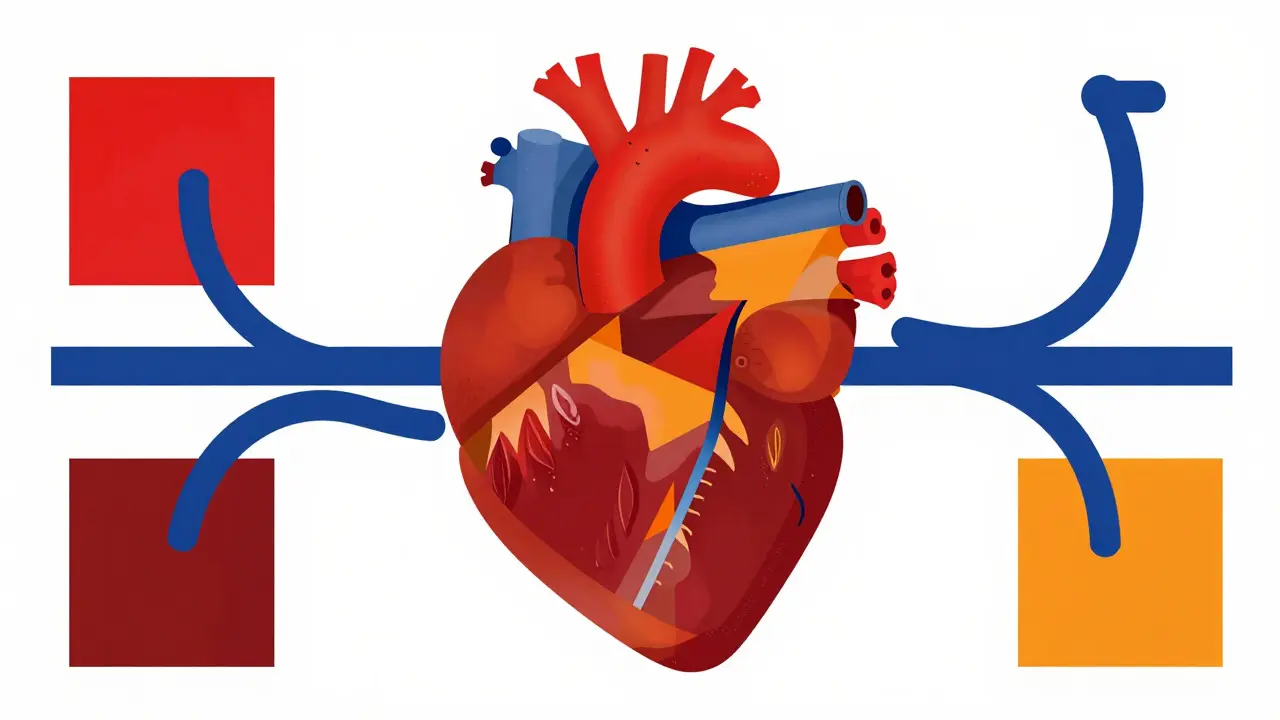
These findings led to a major paradigm shift. The American Heart Association and the European Society of Cardiology now recommend SGLT2 inhibitors for patients with heart failure, even if they don't have diabetes. Drugs like Jardiance and Farxiga are now considered foundational therapy for heart failure with reduced ejection fraction (HFrEF). They improve how efficiently the heart pumps blood and reduce the likelihood of being admitted to the hospital for fluid overload.
Kidney Protection Beyond Glucose Control
Your kidneys are highly susceptible to damage from high blood sugar and high blood pressure. Diabetic kidney disease (DKD) is the leading cause of end-stage renal disease worldwide. Traditionally, doctors relied on ACE inhibitors or ARBs to slow this progression. SGLT2 inhibitors have added a powerful new layer of protection.
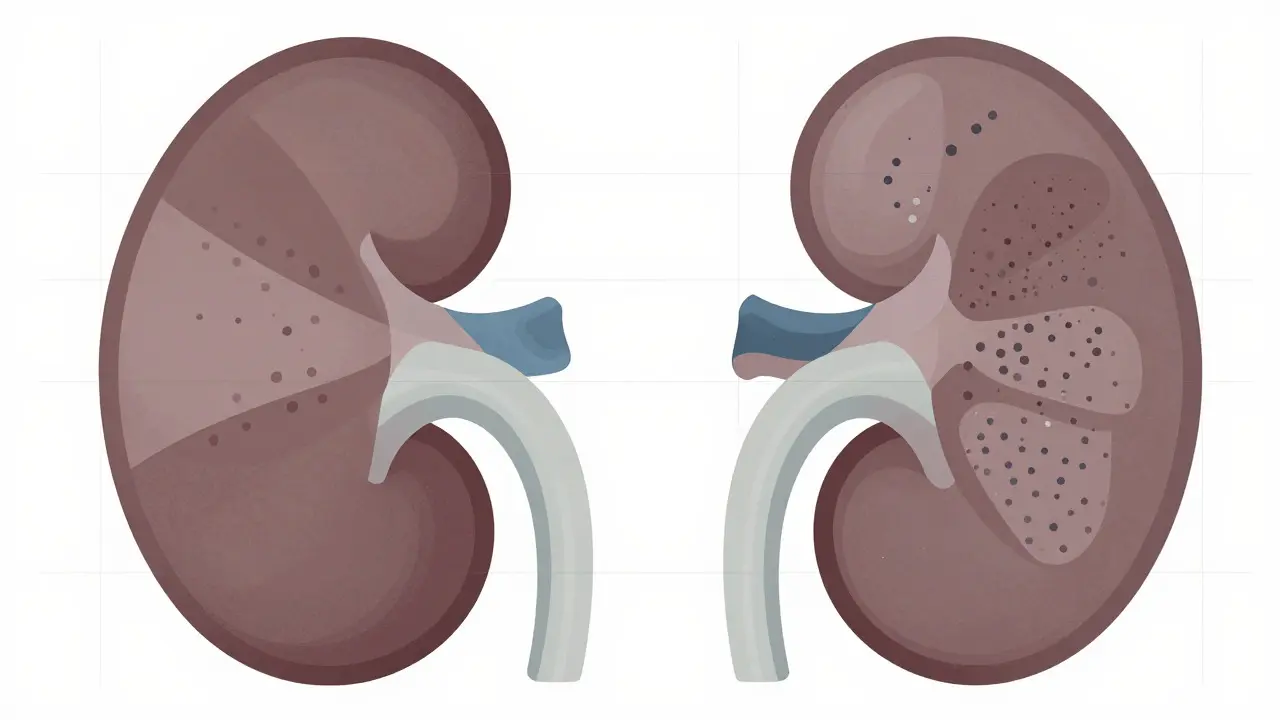
The CREDENCE trial, focusing on canagliflozin, showed a 30% reduction in the risk of kidney failure, doubling of serum creatinine, or kidney-related death. Similarly, the DAPA-CKD trial proved that dapagliflozin slowed kidney disease progression in patients with chronic kidney disease, regardless of whether they had diabetes. How does this happen? It’s largely due to hemodynamic changes within the kidney itself.
When you start an SGLT2 inhibitor, you might notice a slight dip in your estimated glomerular filtration rate (eGFR) during the first few weeks. This often scares patients who think their kidneys are failing. However, this initial drop is actually a sign that the drug is working. It reduces the pressure inside the filtering units of the kidney (glomeruli), which prevents long-term scarring and damage. After 2-3 months, the eGFR stabilizes at a new baseline, and the long-term decline in kidney function slows down significantly compared to placebo groups.
Comparison With Traditional Diabetes Medications
Not all diabetes medications are created equal when it comes to organ protection. Here is how SGLT2 inhibitors stack up against older classes of drugs:
| Medication Class | Primary Mechanism | Heart Benefit? | Kidney Benefit? | Weight Effect |
|---|---|---|---|---|
| Metformin | Reduces liver glucose production | No proven mortality benefit | Mild protective effect | Neutral or slight loss |
| Sulfonylureas | Stimulates insulin release | None | None | Weight gain |
| DPP-4 Inhibitors | Increases incretin levels | Neutral | Neutral | Neutral |
| SGLT2 Inhibitors | Blocks glucose reabsorption | Yes (Reduces HF hospitalization) | Yes (Slows CKD progression) | Modest loss |
While metformin remains the first-line treatment for most people due to its low cost and long safety record, it lacks the robust cardiorenal protection seen with SGLT2 inhibitors. Sulfonylureas carry a higher risk of hypoglycemia and weight gain without offering any heart or kidney perks. For patients with existing heart or kidney issues, guidelines now strongly suggest adding an SGLT2 inhibitor early in the treatment plan, often alongside metformin.
Safety Profile and Side Effects
Like any medication, SGLT2 inhibitors come with potential side effects. Because they increase sugar in the urine, they create a favorable environment for yeast and bacteria. The most common complaints are genital mycotic infections (yeast infections), occurring in about 4-5% of users. These are usually mild and treatable with antifungal creams, but good hygiene and staying hydrated can help prevent them.
A more serious, though rare, risk is Diabetic Ketoacidosis (DKA). Unlike typical DKA, which happens when blood sugar is very high, SGLT2 inhibitors can cause "euglycemic DKA," where blood sugar levels are normal or only slightly elevated. This makes it harder to diagnose. Symptoms include nausea, vomiting, abdominal pain, and fatigue. Patients are advised to check ketone levels if they feel ill, especially before surgery or during severe illness. The FDA requires a boxed warning for this risk.
There is also a small increased risk of volume depletion, which can lead to dizziness or low blood pressure, particularly in elderly patients or those taking diuretics. Starting with a lower dose and monitoring fluid status can mitigate this. Another concern raised in earlier trials was a slight increase in lower-limb amputations with canagliflozin, prompting careful patient selection for those with poor circulation or neuropathy.
Who Should Consider SGLT2 Inhibitors?
Based on current guidelines from the American Diabetes Association (ADA) and nephrology societies, SGLT2 inhibitors are recommended for:
- Patients with Type 2 Diabetes and established Cardiovascular Disease.
- Patients with Type 2 Diabetes and Chronic Kidney Disease (CKD), defined by albuminuria or reduced eGFR.
- Patients with Type 2 Diabetes and Heart Failure, regardless of ejection fraction.
- Patients seeking weight loss and blood pressure reduction as part of their metabolic management.
If you fall into any of these categories, asking your doctor about SGLT2 inhibitors could be a pivotal step in protecting your long-term health. The goal is no longer just to manage numbers on a lab report, but to preserve the function of your heart and kidneys for years to come.
Do SGLT2 inhibitors work if I don't have diabetes?
Yes. Recent trials like DAPA-CKD and EMPA-KIDNEY have shown that SGLT2 inhibitors provide significant kidney and heart benefits in patients with chronic kidney disease and heart failure, even if they do not have diabetes. Some doctors now prescribe them off-label or under newly approved indications for non-diabetic kidney protection.
Will SGLT2 inhibitors cure my diabetes?
No, they do not cure diabetes. They manage blood sugar levels by removing excess glucose through urine. However, by protecting your heart and kidneys and aiding in weight loss, they address the complications associated with the disease more effectively than many other drugs.
What should I do if I get a yeast infection while taking Jardiance or Farxiga?
Genital yeast infections are a common side effect. Keep the area clean and dry, wear breathable cotton underwear, and consult your doctor. They may prescribe an antifungal cream or oral medication. Staying well-hydrated also helps flush out the urinary tract.
Can I take SGLT2 inhibitors if my kidney function is low?
It depends on the severity. Most SGLT2 inhibitors are effective and safe down to an eGFR of 30 mL/min/1.73m². Below that, their ability to lower blood sugar decreases, but they may still offer some kidney protection. Always follow your nephrologist's advice regarding dosage adjustments.
Are generic versions of SGLT2 inhibitors available yet?
As of mid-2026, patent protections for major brands like Jardiance and Farxiga are expiring or have recently expired in some markets, leading to the availability of generic versions. This has significantly reduced costs, making these life-saving medications more accessible to patients who previously struggled with insurance coverage.