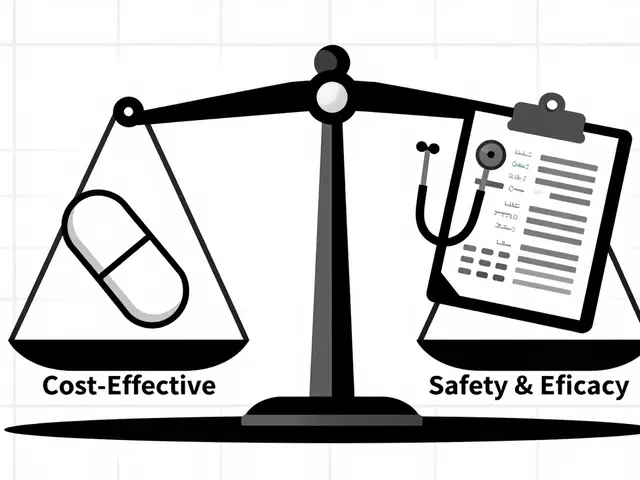
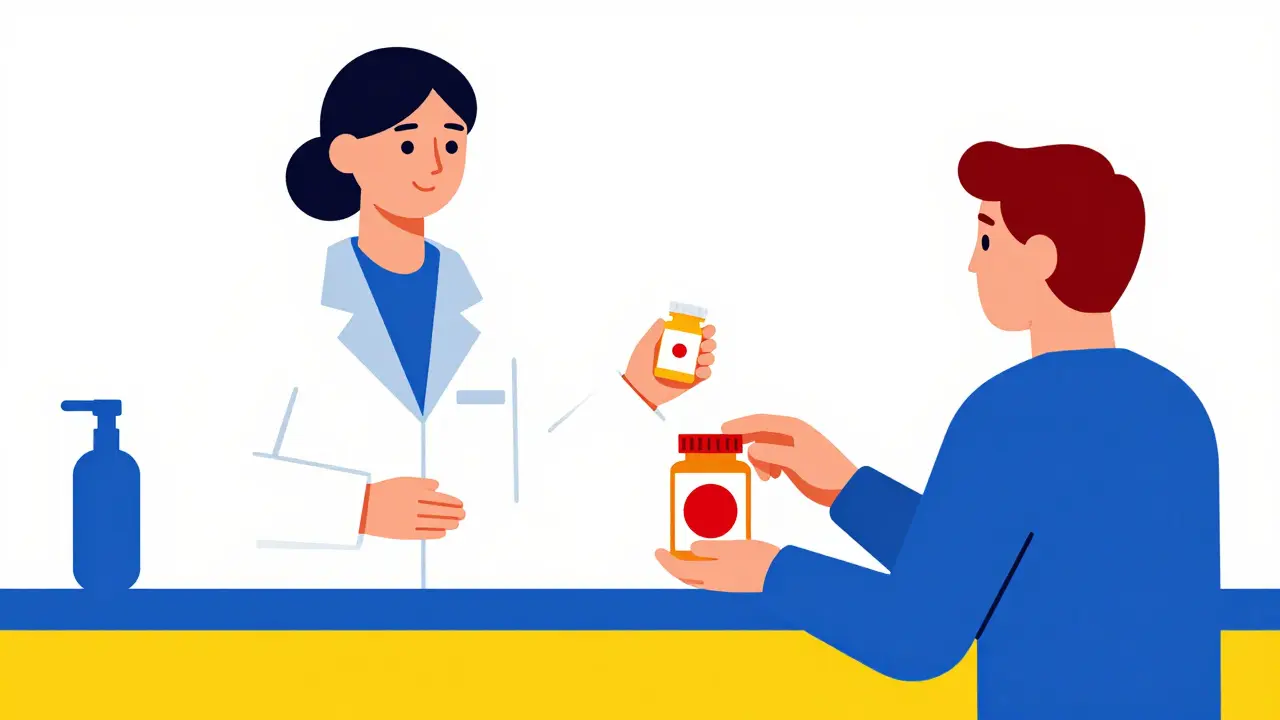
You walk into the pharmacy to pick up your prescription, and the pharmacist asks if you'd like the generic version to save twenty dollars. For many, the answer is a quick "yes." But for a surprising number of people, that question triggers an immediate "no." Why? Because on paper, the drugs are identical. They have the same active ingredients and the same job to do. Yet, Brand Loyalty in Medications is a psychological phenomenon where patients persistently prefer a specific pharmaceutical brand over generic alternatives, despite equivalent therapeutic efficacy and lower costs for the generics. It's not about the chemistry; it's about the mind.
This preference isn't just a quirk of a few stubborn patients. It's a massive economic driver. In the U.S., for example, generics make up about 90% of prescriptions by volume, but brand-name drugs still gobble up 78% of the total pharmaceutical revenue. People are effectively paying a premium for a name and a logo, often without a clinical reason to do so. But to understand why, we have to look past the pill and into the psychology of trust and risk.
The Psychological Safety Net
For most of us, taking medication is a high-stakes activity. When you're dealing with a chronic illness or a mental health condition, the fear of a "bad batch" or a slight dip in effectiveness feels like a genuine threat. This is where psychological comfort kicks in. Familiarity breeds trust. When a patient sees the same packaging and the same brand name they've used for a decade, it creates a sense of stability.
Interestingly, this isn't just something affecting older generations. A 2022 Fortune survey found that 35% of Gen Z consumers actually prefer brand-name meds, even when they are 79% more expensive than generics. For these younger users, it's often about a "value-driven trust." They aren't loyal because their parents were; they're loyal because they perceive the brand as a guarantee of quality and safety. About 62% of Gen Z in that study cited quality and safety as their main reason for sticking with the brand.
The "Invisible" Difference: Inactive Ingredients
While the active ingredient-the part that actually treats the disease-is the same in both versions, the "inactive" ingredients are not. These are the fillers, binders, and dyes that hold the pill together. For 99% of people, this doesn't matter. But for some, it's a dealbreaker. Some patients report allergic reactions to a specific dye in a generic version, or they find that a different binder changes how the drug is absorbed in their gut.
This is particularly true in psychiatric medications. You'll see much stronger brand loyalty in antidepressants or antiepileptics than you will in something like a statin for cholesterol. If a blood pressure pill is slightly off, you might not notice for weeks. If a psychiatric med fluctuates, the patient might feel a sudden slide back into anxiety or depression. This "therapeutic fluctuation" is a major driver of loyalty. On platforms like Reddit, users often share stories of trying three different generics before concluding that only the original brand provides the consistent stability they need.
| Feature | Brand-Name Drugs | Generic Drugs |
|---|---|---|
| Active Ingredient | Original patented formula | Identical to brand |
| Inactive Ingredients | Standardized by manufacturer | Varies by manufacturer |
| Cost | Significantly higher | Much lower |
| Psychological Trust | High (due to familiarity) | Variable (depends on education) |
| Regulatory Status | FDA Approved | FDA Bioequivalent (A-rated) |
The Role of the Doctor's Influence
We often think the choice is entirely up to the patient, but the physician is the primary gatekeeper. Even when doctors know that two drugs are bioequivalent, their own biases play a role. According to a 2023 GlobalData survey, about 40% of physicians would still prescribe the brand-name version if cost weren't an issue. This varies by country; for instance, 57% of Japanese physicians show a preference for brands, often due to different local regulatory standards for generic approval.
There is also a subtle psychological effect where physicians prescribe brands to patients with chronic diseases to avoid the hassle of the patient complaining about a switch. If a doctor tells a patient, "I'm giving you the brand because it's more reliable for your specific condition," that creates a powerful anchor of loyalty that no amount of cost-saving advice can easily break.

Demographics and the Loyalty Gap
Education and income play a surprising role in who sticks to brands. You might assume that people with more education would be more likely to trust the science of generics, but the data shows a complex picture. A 2023 PMC study found that lower-educated consumers were actually 1.54 times more likely to remain brand loyal regardless of price changes. For some, the brand is the only "proof" of quality they have in a system they don't fully trust.
Geographically, we see huge swings. In Spain, around 13% of consumers absolutely refuse generics, no matter what the doctor says or how much money they save. This suggests that in some cultures, the brand is viewed not just as a product, but as a gold standard of care that cannot be compromised.
How to Move Toward Generics
If you're a patient or a provider trying to bridge the gap between brand loyalty and generic acceptance, the key is education on Bioequivalence
the scientific demonstration that a generic drug delivers the same amount of active ingredient into a patient's bloodstream at the same rate as the brand-name drug . The FDA uses the "Orange Book" to rate generics; an "A-rated" generic is considered therapeutically equivalent. When pharmacists take the time to explain this-averaging about 7 minutes of focused counseling-generic acceptance rates jump by 32%.The shift is happening slowly. Large employers are now using tiered formularies, essentially charging higher copays for brands to nudge people toward generics. We're also seeing the rise of Biosimilars
highly similar versions of biological medicines, which are more complex than traditional chemically synthesized drugs . These are much harder to switch to because the drugs themselves are more complex, and only 32% of eligible patients switch within the first year. Brand loyalty is stickiest when the medicine is most complex.Are brand-name drugs actually more effective than generics?
Clinically, no. Regulatory bodies like the FDA require generics to be bioequivalent, meaning they must deliver the same active ingredient to the bloodstream at the same rate. Any perceived difference in effectiveness is usually due to the placebo effect or sensitivities to different inactive ingredients (fillers/dyes).
Why do some people feel a difference when switching to generics?
It usually comes down to two things: the placebo effect (or "nocebo" effect) and inactive ingredients. While the active drug is the same, different fillers or binders can occasionally affect how a drug is absorbed or cause mild allergic reactions, which patients interpret as the drug "not working" as well as the brand.
Which types of medications have the highest brand loyalty?
Psychiatric medications, antiepileptics, and complex biologics tend to have the highest loyalty. This is because patients in these categories are more sensitive to subtle changes in how a drug feels or works, and the consequences of a therapeutic fluctuation are perceived as more severe.
Does the price of brand-name drugs drop when a generic enters the market?
Not always. In a phenomenon known as the "generics paradox," some originator companies actually raise the price of the brand-name drug once a generic is available, targeting the loyal patient segment that refuses to switch regardless of cost.
How can I tell if a generic is truly equivalent to a brand?
You can ask your pharmacist to check the FDA's Orange Book. Look for an "A-rating," which confirms that the generic is therapeutically equivalent to the brand-name version in terms of bioequivalence and clinical performance.