
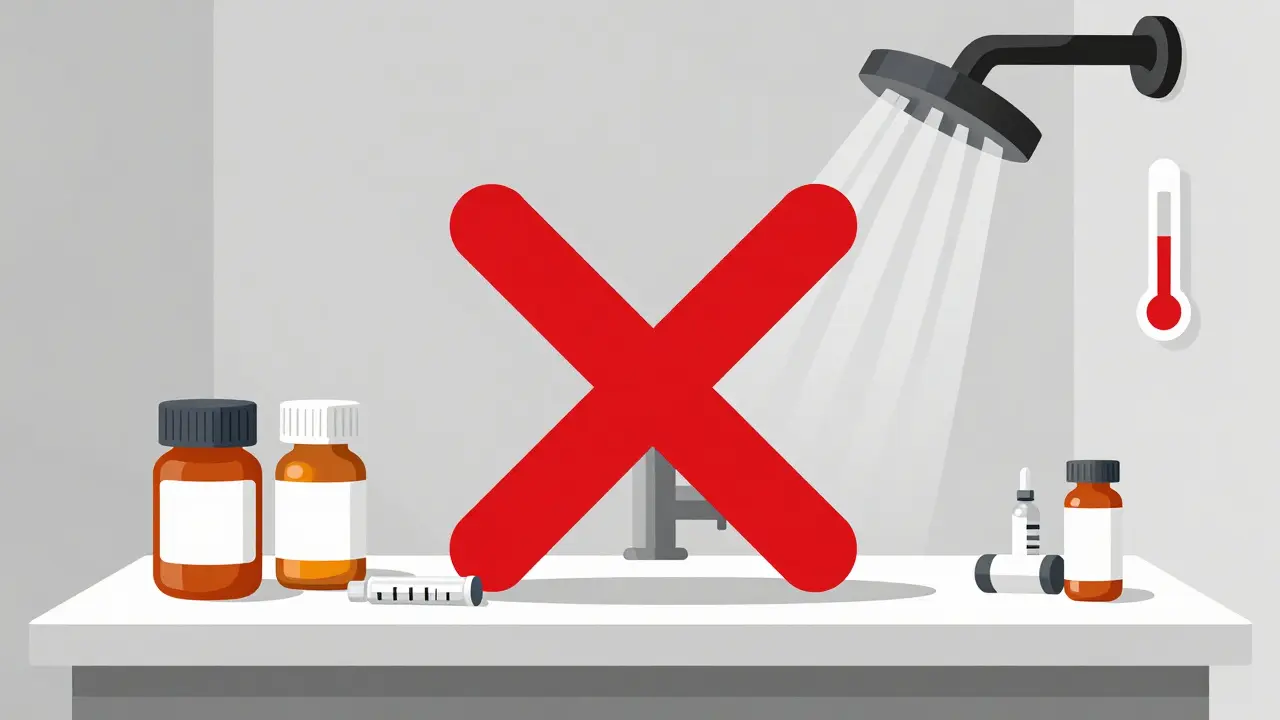
Most people don’t think about where they keep their medicine until it’s too late. That bottle of aspirin sitting above the sink? The insulin left on the kitchen counter? The antibiotics tucked in a drawer beside the toothpaste? These aren’t just inconvenient habits-they’re risking your health and wasting money. In the U.S. alone, medication storage mistakes lead to $20 billion in wasted drugs every year. And it’s not just about money. Degraded pills can lose potency, turn toxic, or even cause infections. You don’t need a pharmacy degree to keep your meds safe. You just need to know a few simple, science-backed rules.
Why Your Medicine Expires Sooner Than It Should
Expiration dates aren’t arbitrary. They’re based on strict testing by drugmakers to prove the medicine stays strong and safe under specific conditions. The FDA requires that drugs maintain 90-110% of their labeled potency until that date. But if you store them wrong, they can lose effectiveness months-or even weeks-before the printed date.
Heat, moisture, and light are the three biggest killers of medicine. Humidity is the worst offender. A bathroom medicine cabinet can hit 95% humidity during a hot shower. That’s enough to break down aspirin 300% faster than it should. Tablets get sticky. Capsules swell. Liquid antibiotics grow mold. And it’s not just the bathroom. Kitchens are just as bad. The area near the stove can swing 15°C in under 30 minutes. That kind of temperature rollercoaster destroys antibiotics, thyroid meds, and even some pain relievers.
Where to Store Medications (And Where Not To)
Forget the bathroom. Forget the kitchen counter. Forget the dashboard of your car. These are all death traps for medicine.
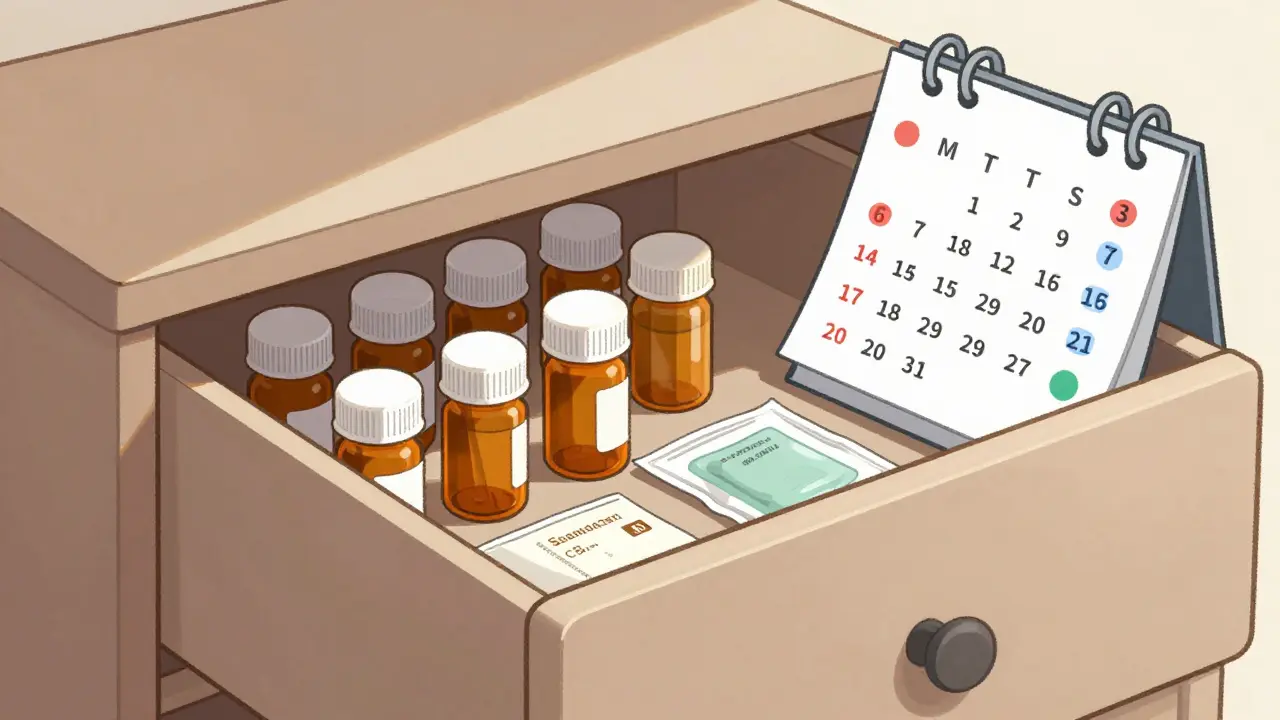
The best place? A cool, dry, dark spot-like a bedroom dresser drawer. It’s away from steam, away from heat, and away from direct sunlight. Studies show storing meds in drawers instead of bathroom cabinets cuts humidity exposure by 45%. That’s a big win.
If you have refrigerated meds-like insulin, certain eye drops, or liquid antibiotics-keep them in the main part of the fridge, not the door. The door swings open too often. The center shelf stays steady between 2-8°C (36-46°F), which is what manufacturers test for. Never freeze medicine unless the label says to. Freezing can ruin the chemical structure of many drugs.
Some meds need extra care. Nitroglycerin tablets? They must stay in their original dark glass bottle. Light breaks them down fast. Insulin? Once opened, it can sit at room temperature for up to 28 days. But if you’re traveling and it’s hot, keep it cool. Don’t let it bake in a sunlit bag.
The Power of the Original Bottle
Never transfer pills to a pill organizer unless you have to-and even then, only for short-term use. The original bottle isn’t just for labeling. It’s designed to protect.
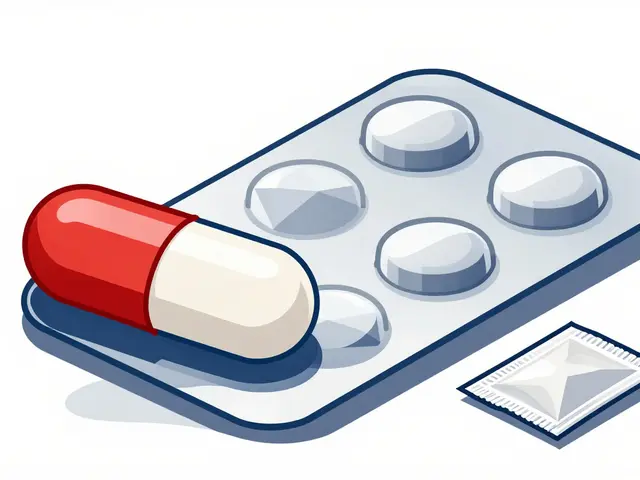
Amber prescription bottles block 97% of UV light. Clear plastic? Not even close. Sunlight degrades vitamin D, antidepressants, and heart meds. The bottle also seals out moisture. A plastic bag or Tupperware doesn’t cut it. And don’t remove the cotton or desiccant pack inside. That little thing is there to soak up humidity.
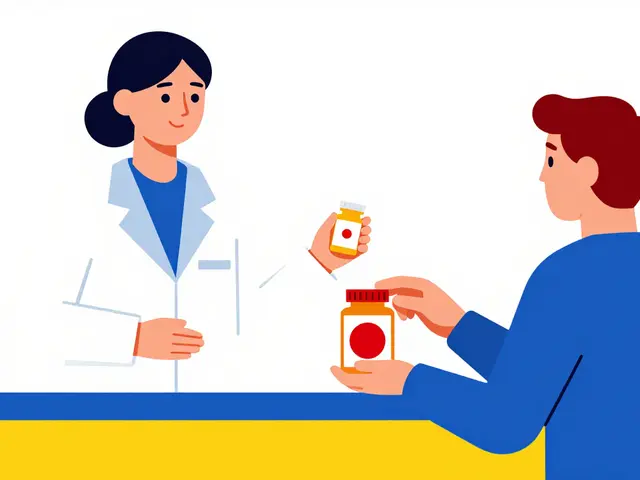
Always keep the label on. It has the name, dose, expiration date, and storage instructions. If you lose it, call your pharmacy. Don’t guess. Taking the wrong dose of blood pressure medicine or thyroid pills can be dangerous.
How to Spot When Medicine Has Gone Bad
Not all expired meds look obviously broken. But there are warning signs you can’t ignore:
- Aspirin that smells like vinegar-that’s acetylsalicylic acid breaking down. Don’t take it.
- Tablets that changed color-yellowing, dark spots, or chalky patches mean chemical changes. Toss it.
- Liquid meds with particles-if you see cloudiness, strings, or floating bits in eye drops, insulin, or syrups, throw it out. That’s contamination.
- Capsules that stick together or leak-moisture ruined the shell. The powder inside may be compromised.
- Strange odor or taste-if something smells or tastes off, it’s not just unpleasant. It’s unsafe.
When in doubt, throw it out. A $10 pill isn’t worth a trip to the ER.
Organize and Track to Avoid Waste
One of the easiest ways to prevent early expiration? Know what you have-and when it expires.
Set up a monthly check. Pick one day, like the first Sunday of the month, and go through all your meds. Use colored stickers to mark them: red for this year, blue for next year, green for two years out. A study at the University of Wisconsin found this simple system cut expired meds by 63%.
Assign one person in the household to handle this. It’s not a chore-it’s a safety habit. Kaiser Permanente found households that did monthly checks prevented 89% of unnecessary disposal.
Keep everything in one place. A locked cabinet in a cool room works best. It keeps kids and pets out, and makes it easier to check. Don’t scatter meds across the house. You’ll forget what you have-and when it’s due.
What About Expired Meds? Can You Still Use Them?
You’ve probably heard stories about military stockpiles still working 15 years past expiration. That’s true-but only because they were stored in climate-controlled vaults. That’s not your bathroom drawer.
For everyday use, never rely on expired meds. Especially not for critical conditions: heart meds, insulin, epinephrine, or antibiotics. A weak antibiotic won’t kill the infection-it might make it stronger. A degraded EpiPen might not save your life.
The FDA’s Shelf Life Extension Program found most drugs in perfect storage stay potent longer. But they also say: “This does not apply to medications stored in homes.” Don’t gamble with your health.
How to Dispose of Old or Expired Medicine Safely
Never flush pills down the toilet. Don’t throw them in the trash without mixing them with something unpleasant (like coffee grounds or cat litter). Both methods pollute water and risk accidental ingestion.
Use a drug take-back program. The DEA runs National Prescription Drug Take Back Day twice a year. In 2024, over 11,000 collection sites will be open on October 26. Pharmacies, police stations, and hospitals often have drop boxes year-round. Find your nearest one at dea.gov.
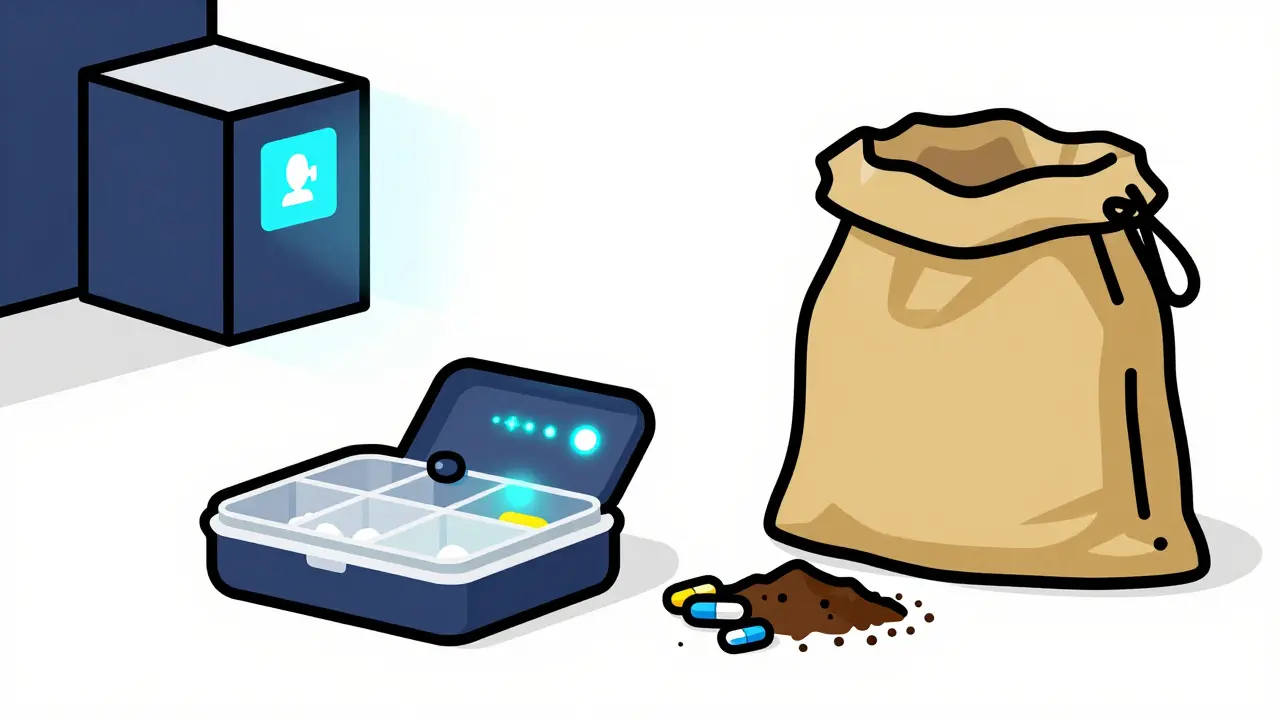
If no take-back is available, mix pills with dirt, coffee, or cat litter. Seal them in a plastic bag. Toss in the trash. Remove and destroy labels first to protect your privacy.
What’s Changing in Medication Storage?
Things are getting smarter. New prescription labels now include icons showing storage needs-like a snowflake for refrigerated, or a sun with a slash for light-sensitive. Merck’s new heat-stable insulin can stay at 30°C for 56 days, a huge help for people in hot climates.
Smart pillboxes like MedMinder Pro now track temperature and humidity. They alert you if your meds are getting too warm or damp. And by 2025, the FDA plans to require real-time stability indicators on high-risk drugs-think color-changing labels that show if the medicine has degraded.
Meanwhile, research is testing prescription bottles with built-in silica gel to keep humidity 45% lower than normal. That could be a game-changer for people in humid areas.
But none of that matters if you don’t use the basics right. Keep meds cool, dry, dark, and in their original bottles. Check them monthly. Dispose of them safely. That’s all you need to stop wasting money-and protect your health.
Can I store my medicine in the fridge?
Only if the label says to. Most pills don’t need refrigeration. But insulin, some liquid antibiotics, eye drops, and certain suppositories do. Always store them in the center of the fridge-not the door-where the temperature stays steady between 2-8°C. Never freeze medicine unless instructed.
Is it safe to keep pills in a pill organizer?
Short-term use is fine-for a week or two while traveling. But don’t leave meds in a plastic organizer for months. They lose protection from light and moisture. Always keep the original bottle as your main storage. Use the organizer only as a helper, not a replacement.
What should I do if my medicine looks or smells weird?
Throw it out. Discoloration, strange odors, clumping, or particles mean the drug has degraded. Taking it could be ineffective or dangerous. Don’t risk it. Even if it’s just one pill. Your safety isn’t worth saving a few dollars.
Do all medications expire at the same rate?
No. Liquid meds, insulin, and eye drops degrade faster than tablets. Antibiotics and heart medications are especially sensitive to heat. Aspirin breaks down in humid air. Always check the label for specific storage instructions. If it’s not clear, ask your pharmacist.
Can I use expired allergy or pain meds?
For non-critical, occasional use-like a headache or seasonal allergies-some expired pills may still work. But don’t count on it. Their potency drops over time. If you’re having a severe reaction or chronic condition, never use expired meds. Better to spend $10 on a new bottle than risk a hospital visit.
How can I tell if my medicine is still good after a power outage?
If your fridge lost power for more than 4 hours, throw out any refrigerated meds unless you’re certain they stayed below 8°C. For room-temp meds, check for changes in color, smell, or texture. If anything seems off, discard them. When in doubt, contact your pharmacist or doctor. Don’t guess.
Where’s the best place to store meds in a small apartment?
A locked drawer in your bedroom or a closet shelf away from windows and heat sources. Avoid kitchens, bathrooms, and near electronics like TVs or routers-they give off heat. Use a small, sealed container with a silica gel pack if humidity is high. The goal is cool, dry, dark, and out of reach.

Chloe Hadland
January 25, 2026 AT 18:24So many people just toss meds in the bathroom and never think twice. This post literally saved me from accidentally using my grandma's expired blood pressure pills last month. Thanks for the clarity.
Shelby Marcel
January 26, 2026 AT 19:34omg i had no idea the cotton in the bottle was there to absorb moisture 😳 i always threw it out thinking it was trash
Alexandra Enns
January 28, 2026 AT 11:17Wow, another feel-good article from the pharmaceutical-industrial complex. Let me guess-next you’ll tell us to buy brand-name drugs because ‘they’re better stored’? Newsflash: the FDA doesn’t regulate how you keep your meds at home, and most expiration dates are just marketing ploys to sell more pills. I’ve got insulin from 2018 that still works fine in my drawer. Stop fearmongering.
Amelia Williams
January 28, 2026 AT 16:43THIS. I just moved into a tiny apartment with no closet and I was storing my thyroid meds above the microwave-yikes. Now I’ve got a little lockbox on my bedroom shelf with a silica gel pack I bought off Amazon. My anxiety dropped 50%. Also, I started labeling everything with colored dots like the article said and I actually look forward to my monthly med check now? Who knew health could feel this satisfying?
Juan Reibelo
January 28, 2026 AT 17:00Let’s be real: the bathroom cabinet myth is outdated. Modern homes have exhaust fans, low-humidity environments, and even some cabinets are designed with moisture barriers. I’ve stored my asthma inhalers above my sink for 7 years-no degradation, no issues. The real problem is people who don’t read labels. If your meds say ‘store at room temperature,’ they mean room temperature-not ‘the back of the fridge.’
Patrick Gornik
January 29, 2026 AT 21:12Let’s deconstruct the ontological framework of pharmaceutical preservation. The very notion of an ‘expiration date’ is a capitalist construct-designed to induce obsolescence anxiety. The FDA’s Shelf Life Extension Program proves that most compounds remain bioactive for decades under controlled conditions. But here’s the paradox: the same system that enforces rigid storage protocols in hospitals denies the public access to climate-controlled storage. We’re being conditioned to fear degradation while corporations profit from perpetual repurchasing. The desiccant pack? A placebo for compliance. The real solution? Decentralize drug storage infrastructure. Stop treating medicine like a disposable consumer good.
blackbelt security
January 31, 2026 AT 21:03My dad’s a retired paramedic. He taught me this: if your pills look like they’ve been through a war, they have. I once found a bottle of amoxicillin that had turned yellow and smelled like old socks. I tossed it. No regrets. Better safe than sorry.
Marie-Pier D.
February 2, 2026 AT 07:00Thank you for writing this with so much heart 💖 I used to keep my insulin in the fridge door until my cousin told me it was getting too warm. Now I keep it on the middle shelf and I even have a little note taped to the fridge: ‘INSULIN HERE - DO NOT TOUCH’ 😅 It’s such a small thing, but it feels like self-care now. Also, I love the colored stickers idea-I’m doing it this Sunday!
Luke Davidson
February 3, 2026 AT 15:28My aunt in Florida keeps all her meds in a shoebox under her bed because her bathroom is basically a sauna. She swears by it. I thought she was nuts… until I checked the humidity levels in her house-90% all summer. Turns out, her shoebox is drier than her cabinet. So maybe it’s not just about location-it’s about microclimate. Good reminder to think outside the drawer.
Karen Conlin
February 5, 2026 AT 07:17I’m a nurse and I’ve seen too many people take expired antibiotics because ‘it’s just a cold.’ It’s not. It’s how superbugs spread. This post is spot-on. Also, if you’re using a pill organizer for more than two weeks, you’re doing it wrong. I give my patients a free one-year supply of amber pill vials through our clinic. They’re cheaper than your coffee habit. Protect your meds like you protect your phone-no heat, no moisture, no sun.
Tommy Sandri
February 6, 2026 AT 14:46While the article presents a compelling case for standardized medication storage, it lacks consideration for socioeconomic disparities. Not all individuals have access to climate-controlled bedrooms, locked cabinets, or even refrigerators. In low-income urban dwellings, the ‘ideal’ storage conditions described are often unattainable. Policy interventions-such as subsidized humidity-controlled containers or community storage hubs-should accompany such guidelines to ensure equity in pharmaceutical safety.
Sushrita Chakraborty
February 8, 2026 AT 14:29As someone from India, where monsoon humidity can reach 95%, I can confirm: bathroom cabinets are death traps. We’ve been using sealed plastic containers with silica gel for decades-long before this trend hit the West. Also, in our households, the eldest daughter is traditionally responsible for medicine management. It’s not just practical-it’s cultural. I’m glad to see Western medicine catching up.
Phil Maxwell
February 10, 2026 AT 00:54Just read this after my dog got into my old painkillers. Scared me straight. I’m throwing everything out tomorrow and buying a lockbox. Thanks for the nudge.