
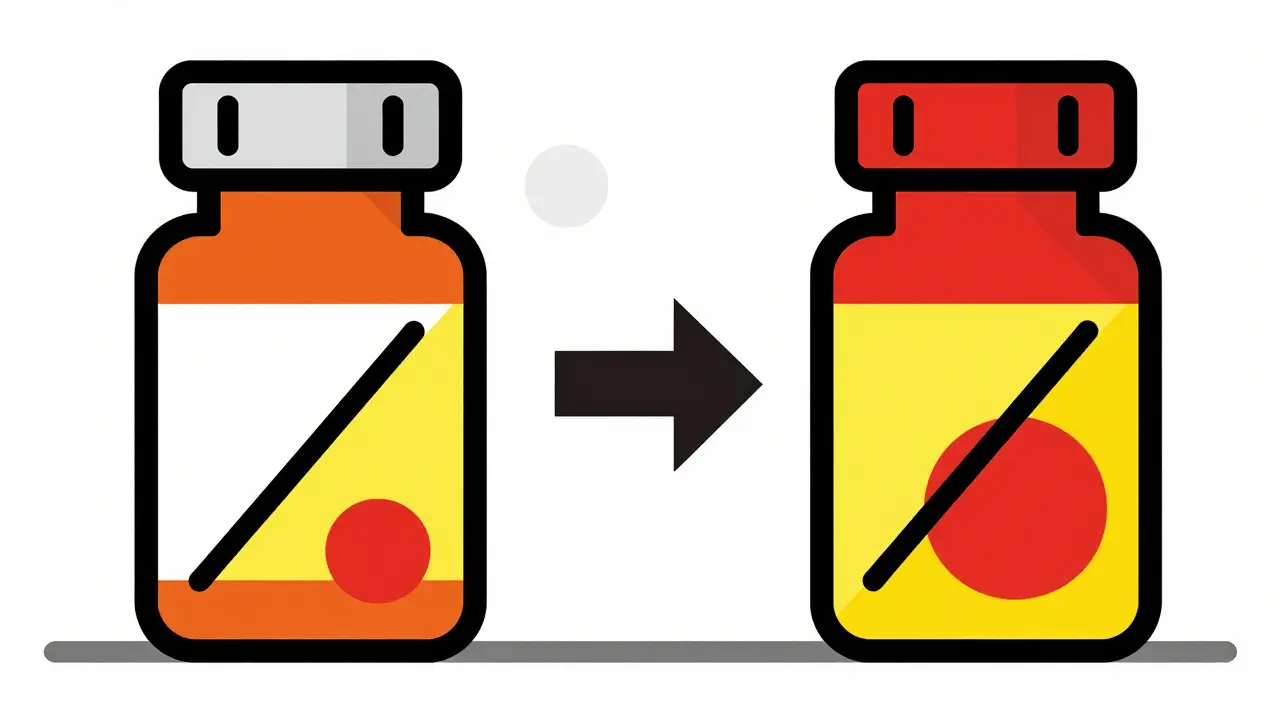
Have you ever stared at a prescription bottle, noticed the price tag was a fraction of what you expected, and wondered if you were getting the real deal? It’s a question that keeps many people up at night. You’ve been taking a specific brand-name drug for years, your doctor switches you to a generic version to save money, and suddenly you’re worried. Is it really the same medicine? Or are you risking your health for a few dollars?
The short answer is yes. For the vast majority of patients, generic drugs are medications with the same active ingredients, strength, and dosage form as their brand-name counterparts, approved by regulatory bodies like the FDA to be therapeutically equivalent. They work just as well. But the long answer involves some nuance about how these pills are made, why they look different, and when you might actually need to stick with the original brand.
How Generics Earn Their Place on the Shelf
To understand why generics are trusted, you have to look at the rules they play by. The modern system started with the Hatch-Waxman Act (officially the Drug Price Competition and Patent Term Restoration Act) of 1984. This law created a pathway for generic manufacturers to prove their drugs were safe without repeating every expensive clinical trial from scratch.
The key requirement is bioequivalence. This means the generic must deliver the active ingredient into your bloodstream at nearly the same rate and extent as the brand-name drug. The FDA requires that the generic’s absorption rates fall within a tight window: 80% to 125% of the brand-name drug’s profile. If a generic fails this test, it doesn’t get approved. Period.
Think of it like two different brands of coffee. One might cost more and come in a fancy bag, but if both brew to the exact same caffeine strength and taste, they’ll wake you up equally. The generic has the same active pharmaceutical ingredient (API), the same strength, and works the same way in your body.
The Invisible Differences: Inactive Ingredients
If the active part is identical, why do generic pills look so different? They can’t look exactly like the brand-name version because trademark laws prevent confusion. So, manufacturers change the color, shape, or size. To do this, they use different inactive ingredients, also known as excipients, which include fillers, binders, coatings, and dyes that hold the pill together but don’t treat your condition.
For most people, these differences don’t matter. But for a small subset of patients, they can. If you have a severe allergy to lactose, and the brand-name drug uses sucrose while the generic uses lactose as a filler, you could have a reaction. Similarly, certain dyes might trigger sensitivities in rare cases. This isn’t about effectiveness; it’s about tolerance.
It’s worth noting that while the active ingredients in US generics often come from global suppliers-78% of APIs originate from China and India according to recent FDA reports-the manufacturing facilities are inspected rigorously. The quality control standards remain high regardless of where the raw materials start their journey.
When "Good Enough" Isn't Good Enough: Narrow Therapeutic Index Drugs
Here is where things get tricky. Not all drugs are created equal when it comes to precision. Some medications have a Narrow Therapeutic Index (NTI). These are drugs where a tiny difference in blood concentration can mean the difference between being cured and suffering serious side effects or toxicity.
Examples include warfarin (a blood thinner), levothyroxine (for thyroid conditions), and certain anti-seizure medications like phenytoin. For these drugs, the FDA applies stricter bioequivalence limits, requiring the generic to match the brand within 90% to 111.11%, rather than the standard 80-125% range.
Even with tighter controls, some specialists advise caution. Dr. Gary Francis, an endocrinologist, has noted that while most patients tolerate generic levothyroxine fine, 5-10% may experience fluctuations in their hormone levels due to subtle formulation differences. If you are on an NTI drug, talk to your doctor before switching. You might need to stay on one specific manufacturer’s version to keep your levels stable.

What the Data Says About Effectiveness
Skeptics often point to anecdotal stories online, but large-scale studies tell a different story. A major study published in JAMA Internal Medicine in 2019 analyzed data from 3.5 million patients across 13 therapeutic areas, including diabetes, hypertension, and depression. The result? No statistically significant difference in clinical outcomes between brand-name and generic drugs.
Surprisingly, some research even suggests generics might perform better in real-world settings. A 2020 study in Nature Scientific Reports looking at Austrian national data found lower death rates and fewer cardiac events among patients using generic antihypertensives compared to brand-name versions. Researchers attributed this not to the drug itself, but to "residual confounding"-meaning patients who could afford brands might have had other health advantages, or those on generics were monitored more closely due to cost-conscious care models.
The bottom line from the medical community is clear. The American Medical Association affirms that generic medications are therapeutically equivalent. Former FDA Director Dr. Janet Woodcock stated plainly that generics "work the same as brand-name drugs and are just as effective."
The Cost Factor: Why Generics Matter
Let’s talk money, because this is the biggest driver behind the generic revolution. In the United States, generics account for 90% of all prescriptions dispensed but only about 23% of total pharmaceutical spending. That’s a massive saving. The Congressional Budget Office estimates this system saves the healthcare system approximately $373 billion annually.
| Feature | Brand-Name Drug | Generic Drug |
|---|---|---|
| Active Ingredient | Original formula | Identical to brand |
| Bioequivalence Standard | Reference standard | 80-125% of brand (or 90-111% for NTI) |
| Inactive Ingredients | Specific proprietary mix | May differ (fillers, dyes) |
| Average Cost Savings | $0 (Baseline) | 80-85% lower |
| Approval Process | Full clinical trials required | Bioequivalence testing required |
Why are they cheaper? Because generic manufacturers don’t pay for the initial research, development, and massive clinical trials that the original company spent billions on. By the time a patent expires, the science is already proven. The generic maker just has to prove their version matches the original. This competition drives prices down dramatically. An average cash price for a brand-name drug might be $685 per prescription, while a generic might cost $15.

Addressing Common Concerns and Myths
Despite the evidence, misconceptions persist. A 2022 Consumer Reports survey found that 42% of adults believe generics are less effective. Where does this fear come from?
One reason is the nocebo effect. If you believe a drug won’t work, your brain can actually diminish its perceived effectiveness or amplify minor side effects. Another factor is inconsistency. If you switch pharmacies, you might get a generic from Manufacturer A one month and Manufacturer B the next. While both are approved, the inactive ingredients might differ slightly, causing a sensitive patient to feel a change. This isn’t a failure of the drug; it’s a sensitivity to the filler.
There are also isolated reports, particularly among epilepsy patients, of breakthrough seizures after switching to generic antiepileptics. However, clinical studies haven’t consistently confirmed this link. Often, the issue is adherence-patients skipping doses or taking them at irregular times-rather than the medication itself.
Practical Tips for Patients
If you’re considering switching to generics or have been switched, here is how to handle it smartly:
- Stick to one pharmacy: This ensures you likely receive the same manufacturer’s generic each time, reducing variability in inactive ingredients.
- Monitor NTI drugs closely: If you take warfarin, levothyroxine, or lithium, ask your doctor if you should stay on a specific brand or manufacturer.
- Check for allergies: Read the label for inactive ingredients if you have known sensitivities to dyes or fillers like lactose.
- Don’t self-adjust: Never stop taking a medication because you think it’s "weaker." Talk to your pharmacist if you feel a difference.
- Use identification tools: Apps like Medisafe or the FDA’s Drugs@FDA database can help you identify your pills if the appearance changes unexpectedly.
Your pharmacist is your best ally here. Under Medicare Part D and many private plans, you have access to medication therapy management. Use it. Ask questions. If a generic doesn’t agree with you, there is often a solution, whether that’s trying a different generic manufacturer or, in rare cases, going back to the brand name if your insurance allows it.
The Future of Generics and Biosimilars
The landscape is evolving. As biologic drugs (complex proteins made from living cells) lose patent protection, we are seeing the rise of biosimilars. These are similar to generics but for biologics. Because biologics are more complex, proving equivalence is harder, which is why biosimilars currently make up only a small fraction of the market despite high potential savings.
The FDA is also tightening regulations on complex generics, like inhalers and topical creams, ensuring they meet rigorous equivalence standards. With initiatives like the Generic Drug User Fee Amendments (GDUFA), the goal is to speed up approvals while maintaining safety. The future looks bright for affordable healthcare, provided we continue to trust the science behind these life-saving alternatives.
Are generic drugs always cheaper than brand-name drugs?
Yes, almost always. Generic drugs typically cost 80-85% less than their brand-name equivalents because manufacturers do not incur the high costs of initial research, development, and clinical trials. This competition drives prices down significantly for consumers and the healthcare system.
Can I switch between different generic manufacturers?
Generally, yes. All FDA-approved generics must meet strict bioequivalence standards. However, if you are sensitive to inactive ingredients or taking a Narrow Therapeutic Index (NTI) drug, sticking to one manufacturer via a consistent pharmacy is recommended to avoid minor variations in fillers or dyes.
What is bioequivalence?
Bioequivalence is a measure used by the FDA to ensure that a generic drug delivers the same amount of active ingredient into a patient's bloodstream over the same period as the brand-name drug. The generic must show absorption rates within 80-125% of the brand-name drug's profile to be approved.
Are there any risks associated with generic drugs?
The risks are minimal for most people. The primary concerns involve allergies to inactive ingredients (like dyes or fillers) or sensitivity in patients taking Narrow Therapeutic Index drugs (e.g., warfarin, levothyroxine). For the vast majority of conditions, generics are as safe and effective as brand-name medications.
Why do generic pills look different from brand-name pills?
Trademark laws prevent generic drugs from looking exactly like the brand-name version to avoid consumer confusion. Therefore, manufacturers use different colors, shapes, and sizes. These differences are due to inactive ingredients, which do not affect the drug's therapeutic action.
Aswin Ashokan
June 6, 2026 AT 05:02typical western ignorance
you people complain about the price but refuse to understand that manufacturing happens in india and china because it is efficient
the api quality from our facilities is superior to what you produce locally with your inflated labor costs
stop being lazy critics of global supply chains when you benefit from them
Rosy Centire
June 7, 2026 AT 14:35Aswin, your nationalist rhetoric is as misplaced as your understanding of pharmaceutical regulations.
The FDA’s inspection protocols are rigorous precisely because they recognize the complexities of global sourcing. It is not about 'ignoring' where drugs come from; it is about enforcing standards that protect public health regardless of geography.
Your assertion that Indian or Chinese facilities are inherently superior ignores the vast variability in quality control across different manufacturers in those regions. The US regulatory framework exists to mitigate exactly the risks you seem to dismiss so casually.
We do not need to be 'lazy critics' when we are engaged citizens demanding transparency and safety. Your aggressive tone does not compensate for the lack of nuance in your argument.
William Storm
June 8, 2026 AT 05:10One must consider the philosophical implications of bioequivalence; is a pill merely the sum of its chemical parts, or does the brand imbue it with an ontological weight?
I find the 80-125% range to be a fascinating exercise in statistical tolerance, yet one wonders if the soul of the medication remains intact when stripped of its proprietary packaging.
It is pretentious to assume that all patients are mere biological machines responding identically to identical inputs; there is an art to healing that generic mass production often overlooks.
Wendy Engelmann
June 10, 2026 AT 00:37i think william is overthinking this
most people just want their blood pressure to stay down without going bankrupt
the science is pretty clear on this topic and stressing out about the 'soul' of the pill isn't helping anyone
just take the med and trust the process
Lisa Thomas
June 10, 2026 AT 16:13omg i switched to generic levothyroxine last year and felt like crap :(
my doctor said stick to one manufacturer and now i feel better
so yeah for some people it matters even if the stats say otherwise
listen to your body guys
Nicholas Bowling
June 11, 2026 AT 22:35everything is a scam
they change the filler and suddenly you have side effects but its not the drug its your mind
classic gaslighting by the medical industry
i only buy from my local guy who gets them direct from the source no middlemen no lies
Jay Foreman
June 13, 2026 AT 13:46nicholas you are being dramatic again
buying meds from a 'local guy' is illegal and dangerous
please stop posting this kind of nonsense here it makes us all look bad
stick to the pharmacy and follow the law thanks
Cathy N
June 14, 2026 AT 05:44i appreciate the detailed breakdown of ntis
it helps to know when to ask for specific brands
thanks for sharing this info
Stephanie Francis
June 14, 2026 AT 06:25This article is absolutely vital for patient advocacy! 😡
We cannot allow insurance companies to force switches without proper monitoring, especially for NTI drugs. It is negligent!
I demand more transparency from pharmacies regarding which manufacturer they use. We deserve to know if we are getting Manufacturer A or B.
Let’s keep pushing for these rights! 💪
Daniel Tremblay
June 14, 2026 AT 15:59Oh, how quaint. You Americans worry about fillers while we in Canada struggle with actual access issues.
But sure, let’s pretend the system is perfect when generics are involved. The savings are nice, I’ll give you that, but don’t act like you’ve solved healthcare.
Just stick to one pharmacy, as the article says, and try not to explode when the color changes. It’s just dye, not poison. 🙄