Black Box Warning Risk Assessment Tool
Step 1: Select a Medication Category
Choose the type of medication you are considering or currently taking.
Opioid Pain Relievers
Used for moderate to severe pain management.
SSRI Antidepressants
Commonly prescribed for depression and anxiety disorders.
NSAIDs
Non-steroidal anti-inflammatory drugs for pain and swelling.
Tyrosine Kinase Inhibitors
Targeted cancer therapies affecting cell growth.
Step 2: Assess Your Profile
Select any factors that apply to your current health situation.
Step 3: Usage Context
How do you plan to use this medication?
Your Risk-Benefit Analysis
Imagine picking up a new prescription and seeing a stark, black-bordered box at the top of the label. It doesn’t just say “side effects may occur.” It screams that this drug could cause death or serious injury. This is not a scare tactic; it is the Black Box Warning, also known as a boxed warning, which is the most severe safety alert issued by the U.S. Food and Drug Administration (the federal agency responsible for protecting public health by regulating food, drugs, medical devices, and cosmetics). If you are a patient or a healthcare provider, understanding what this means-and what it doesn’t mean-is critical for making safe medical decisions.
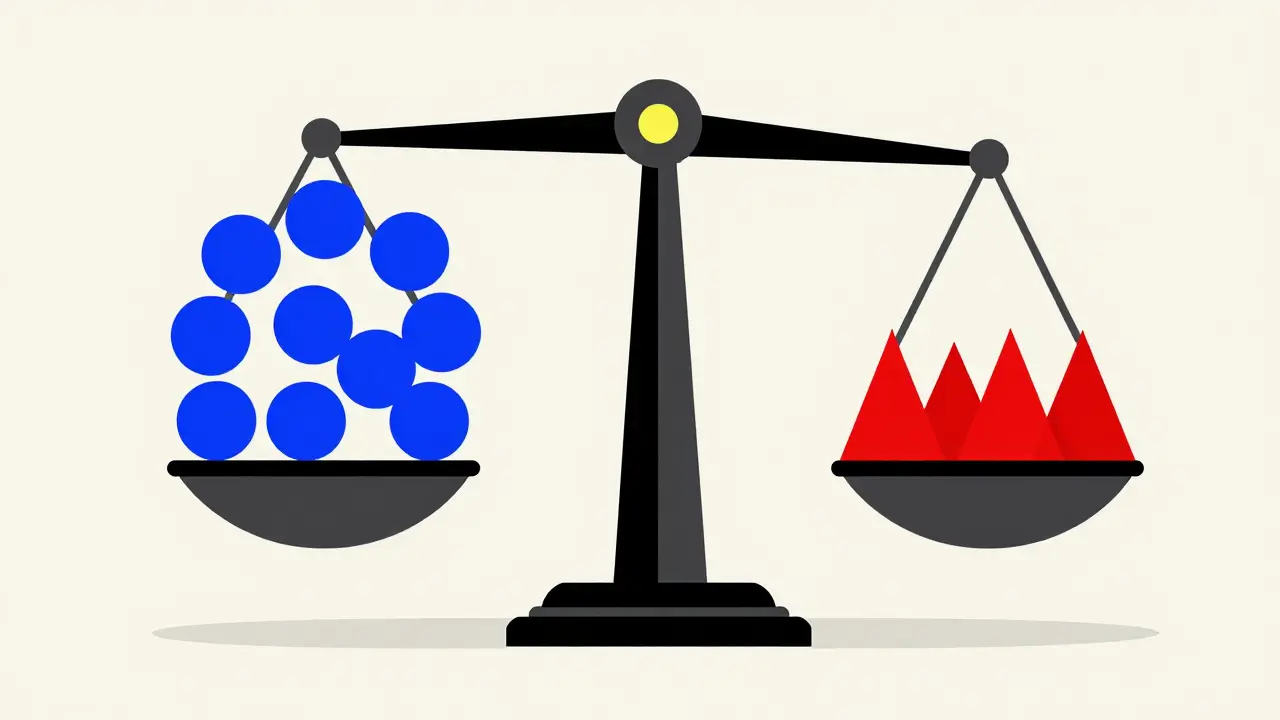
You might wonder why some medications carry this heavy label while others do not. The answer lies in rigorous data analysis and post-market surveillance. A black box warning does not mean a drug is banned or inherently "bad." Instead, it signals that the benefits of the medication must be carefully weighed against significant, potentially life-threatening risks. For many conditions, such as severe depression or certain cancers, these drugs remain the best-or only-option available. The key is awareness.
What Exactly Is a Black Box Warning?
To understand the gravity of a boxed warning, you first need to look at how drug labeling works. Every prescription drug comes with a package insert, often called the "prescribing information." This document details dosage, side effects, interactions, and clinical trial data. Within this text, the FDA mandates specific sections for warnings. The black box warning sits at the very top, enclosed in a distinct border, ensuring it is the first thing a prescriber sees.
This format was formalized through regulatory guidance following the Kefauver-Harris Amendments of 1962, which strengthened drug approval processes after the thalidomide tragedy. Today, over 400 medications carry these warnings. They are reserved for situations where evidence demonstrates a clear, significant risk that requires immediate attention from prescribers. Unlike standard "precautions" or "contraindications," a boxed warning highlights risks that are preventable but severe, such as liver failure, suicidal thoughts, or birth defects.
The presence of this warning changes the conversation between you and your doctor. It shifts the dynamic from routine prescribing to shared decision-making. Your provider is legally and ethically required to discuss these specific risks with you before starting treatment. It is a safeguard designed to ensure informed consent.
How Does the FDA Decide to Issue One?
The process isn't arbitrary. The FDA monitors drug safety continuously, even after a medication has been approved and sold in pharmacies. This phase is known as post-marketing surveillance. While clinical trials involve thousands of participants, real-world usage involves millions. Rare but serious side effects often only emerge when a drug is used by a broader population over a longer period.
The FDA typically considers issuing a black box warning in three specific scenarios:
- Risk outweighs benefit for some patients: The drug carries a risk so serious that it must be considered during prescribing, potentially outweighing the benefits for certain individuals.
- Preventable harm: Serious side effects could be lessened through appropriate use, such as strict monitoring, avoiding specific drug interactions, or adhering to precise dosing schedules.
- Required restrictions: Specific restrictions must be applied to ensure safe use, such as requiring special training for prescribers or limiting use to specific populations (e.g., hospital settings only).
Data flows into this decision-making process primarily through the FDA Adverse Event Reporting System (FAERS), a database that collects reports of adverse events and medication errors from healthcare providers, manufacturers, and consumers via the MedWatch program. When a signal emerges-suggesting a pattern of serious harm-the FDA reviews the evidence. If the risk is deemed significant and preventable, they mandate the boxed warning update to the drug's label.
Common Medications with Black Box Warnings
You might be surprised by how common these warnings are. They appear across various therapeutic classes. Here are a few categories where boxed warnings are frequent:
| Drug Class | Potential Risk Highlighted | Why the Warning Exists |
|---|---|---|
| Opioid Pain Relievers | Addiction, Abuse, Misuse, Overdose, Death | High potential for dependency and respiratory depression can lead to fatal outcomes if misused. |
| SSRI Antidepressants | Suicidal Thoughts and Behaviors | In children, adolescents, and young adults, these drugs may increase the risk of suicidal thinking, especially in the first few months of treatment. |
| NSAIDs (Non-Steroidal Anti-Inflammatory Drugs) | Cardiovascular Thrombotic Events & GI Bleeding | Increased risk of heart attack, stroke, and stomach/intestinal bleeding, particularly with long-term use. |
| Tyrosine Kinase Inhibitors (Cancer Drugs) | Bleeding, Perforation, Poor Wound Healing | These powerful cancer treatments can interfere with normal healing processes and blood clotting. |
Notice that none of these drugs are off the market. Opioids are essential for acute pain management. SSRIs are lifelines for millions suffering from depression. NSAIDs are staples for inflammation. The warning ensures that the prescriber knows exactly what they are dealing with and monitors the patient accordingly.
Does a Black Box Warning Mean You Should Avoid the Drug?
This is the most critical question. The short answer is: not necessarily. A black box warning is not a prohibition; it is a flag. Dr. Meghan Lehmann, a registered pharmacist at Cleveland Clinic, emphasizes that a medication carrying a black box warning doesn’t mean it shouldn’t be taken. Instead, it means the risks and benefits must be carefully discussed.
Consider the case of rosiglitazone, a diabetes medication. When the FDA mandated a boxed warning regarding its link to heart attacks, research showed that its use decreased by 70%. However, it still affected 3.8 million people. Why? Because for many patients, the benefit of controlling blood sugar outweighed the cardiovascular risk, provided they were monitored closely. Conversely, pioglitazone, another diabetes drug with similar risks, did not see the same drop in usage because it lacked the same level of media coverage and specific warning emphasis. This illustrates that the warning itself is a tool for context, not an automatic veto.
If you have a condition that makes you vulnerable to the warned risk-for example, a history of suicide attempts when considering SSRIs, or severe heart disease when considering NSAIDs-you and your doctor might choose an alternative. But if no better alternative exists, or if the alternative carries its own severe risks, the drug with the black box warning may still be the right choice.
How Patients and Providers Can Manage the Risk
Managing a drug with a boxed warning requires active participation from both sides. For healthcare providers, the American Academy of Family Physicians (AAFP) recommends using the STEPS approach: Safety, Tolerability, Effectiveness, Price, and Simplicity. Before prescribing, they should review the specific risks outlined in the box, consider the patient’s unique health profile, and establish a monitoring plan.
For patients, here is what you should do:
- Ask Questions: Don’t just read the leaflet. Ask your doctor, "What is the specific risk mentioned in the black box for my medication?" and "How will we monitor for it?"
- Report Side Effects: If you experience unusual symptoms, report them immediately. You can also submit reports directly to the FDA via MedWatch. This data helps protect others in the future.
- Understand Monitoring Requirements: Some boxed warnings require regular blood tests (e.g., liver function tests) or ECGs. Ensure you keep these appointments.
- Review Alternatives: Ask if there are other medications without this specific warning that could achieve the same therapeutic goal.
Transparency is key. The FDA continues to refine its guidance on warnings, aiming for more patient-centered communication that conveys absolute risk rather than just relative risk. Until then, the black box remains the strongest visual cue in pharmacology.

The Impact of Media and Public Perception
It is worth noting that the effectiveness of a black box warning can vary based on external factors. As seen with rosiglitazone, media exposure plays a huge role. When a warning gets press coverage, public awareness spikes, leading to changes in prescribing behavior. However, this can sometimes lead to unnecessary fear or discontinuation of effective therapies.
Patient advocacy groups have increasingly engaged with this process, petitioning for additional warnings on specific medications. While this raises important safety issues, it also highlights the complexity of risk communication. The goal is not to eliminate all risk-which is impossible in medicine-but to manage it intelligently. The competitive landscape among pharmaceutical companies is also affected; drugs with black box warnings may face reduced market share compared to alternatives, driving innovation toward safer profiles.
Frequently Asked Questions
Can a black box warning be removed?
Yes, it is possible. If new studies show that the risk was overstated or if safer ways to use the drug are established, the FDA may remove or modify the warning. However, this is rare and requires substantial new evidence demonstrating that the risk is no longer significant or preventable.
Do over-the-counter (OTC) drugs have black box warnings?
Generally, no. Black box warnings are specific to prescription drugs. OTC medications use different labeling standards, such as "Drug Facts" panels, which list warnings and precautions but do not use the black box format. If an OTC drug poses a severe risk, it is usually reclassified as prescription-only or removed from the market.
How is a black box warning different from a contraindication?
A contraindication means the drug should NOT be used in specific situations (e.g., pregnancy) due to unacceptable risk. A black box warning indicates a serious risk that exists even when the drug is used correctly, requiring careful monitoring and consideration. You can have a black box warning without a total contraindication.
Who decides if a drug needs a black box warning?
The U.S. Food and Drug Administration (FDA) makes the final decision. They rely on data from clinical trials, post-marketing surveillance (via FAERS), and expert advisory committees. Pharmaceutical companies may propose warnings, but the FDA mandates them based on scientific evidence of serious risk.
Should I stop taking my medication if it has a black box warning?
Never stop taking a prescribed medication abruptly without consulting your doctor. Suddenly stopping some drugs (like antidepressants or blood pressure meds) can be dangerous. Discuss your concerns with your healthcare provider. They can help you weigh the risks versus benefits and determine if switching to an alternative is safe and appropriate for your situation.