

Imagine buying a life-saving medication at the pharmacy. You trust that it works exactly like the brand-name version because it is a generic. But what if invisible dust or microbes had contaminated it during production? That scenario is prevented by strict cleanroom standards. These environmental controls are not just about keeping things tidy; they are scientifically defined barriers against airborne particles and microbial contaminants. For generic drug manufacturers, meeting these standards is non-negotiable. Regulatory bodies mandate that generics must be bioequivalent to their reference products, meaning they must perform identically in the body. If the environment where the drug is made is compromised, that equivalence breaks down.
The foundation of this safety net lies in regulations like the U.S. Food and Drug Administration's Current Good Manufacturing Practices (cGMP) found in 21 CFR Parts 210 and 211. Originally codified in 1978 after the Kefauver-Harris Amendments, these rules require proof of effectiveness and safety. In Europe, EudraLex Volume 4, specifically Annex 1, governs sterile manufacturing. The recent revision of Annex 1, effective August 25, 2023, tightened requirements significantly, emphasizing contamination control strategies over simple particle counts. Globally, the ISO 14644-1 standard provides the technical language for classifying air cleanliness, bridging the gap between regional regulations.
Understanding Cleanroom Grades and Particle Limits
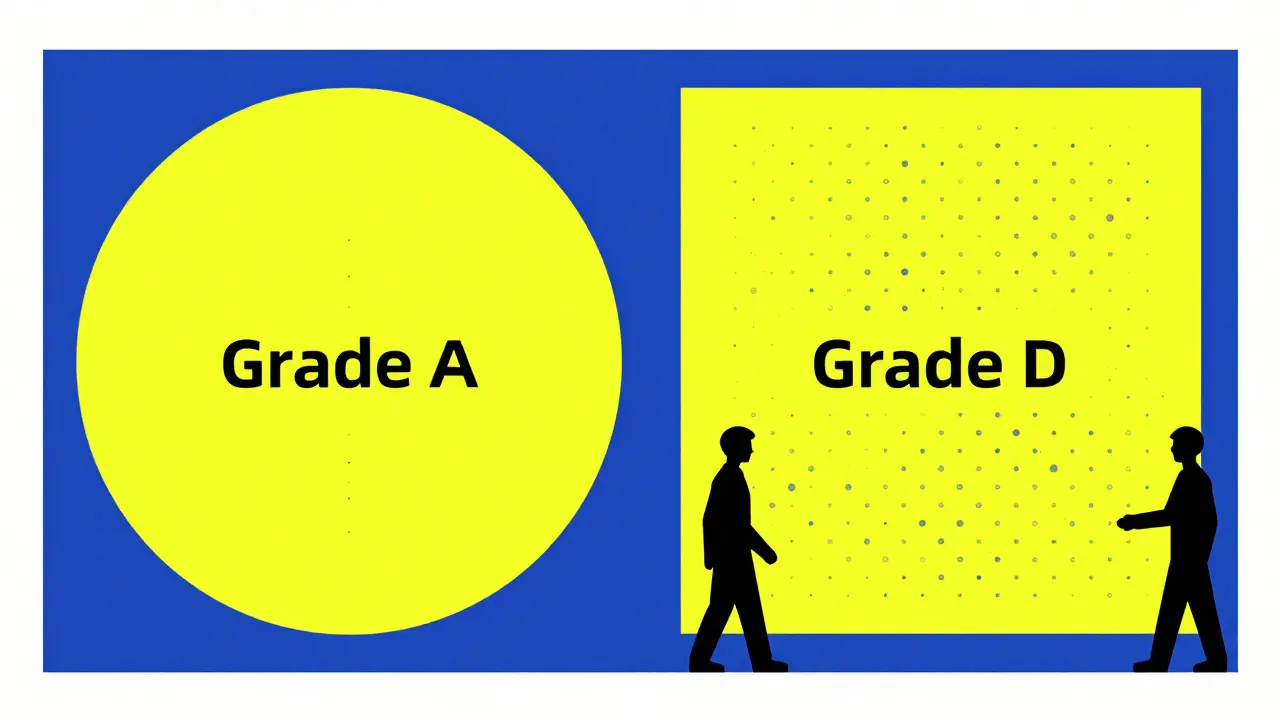
Cleanrooms are not one-size-fits-all. They are classified into grades based on how many particles are allowed in the air. This classification system determines the level of protection required for different types of drugs. The most critical areas use Grade A environments, which correspond to ISO Class 5. In these zones, unidirectional laminar airflow sweeps across the product at speeds of 0.36 to 0.54 meters per second. This airflow prevents particles from settling on open vials or syringes. During operations, a Grade A room must contain no more than 3,520 particles larger than 0.5 micrometers per cubic meter. To maintain this, the room requires at least 60 air changes per hour and a positive pressure differential of 10 to 15 Pascals relative to adjacent areas.
Grade B areas serve as background environments for Grade A operations. At rest, they meet ISO Class 5 standards, but during operation, they allow up to 3,520,000 particles ≥0.5μm/m³. These rooms need continuous particle monitoring and at least 40 air changes per hour. Moving down the scale, Grade C (ISO Class 7 at rest) allows higher particle counts during operation, capped at 35,200,000 particles ≥0.5μm/m³, with a minimum of 20 air changes per hour. Grade D, equivalent to ISO Class 8 at rest, permits up to 35,200,000 particles ≥0.5μm/m³ and requires only 10 air changes per hour. Temperature across all these zones must stay between 18-26°C, and relative humidity between 30-60%, according to WHO guidelines. Microbial limits are equally strict, ranging from 1 colony-forming unit (CFU) per plate in Grade A to 200 CFUs in Grade D.
| Grade | ISO Equivalence | Max Particles ≥0.5μm (Operational) | Air Changes/Hour | Typical Use Case |
|---|---|---|---|---|
| Grade A | ISO Class 5 | 3,520 / m³ | ≥ 60 | Sterile filling, aseptic processing |
| Grade B | ISO 5 (Rest) / ISO 7 (Op) | 3,520,000 / m³ | ≥ 40 | Background for Grade A operations |
| Grade C | ISO 7 (Rest) / ISO 8 (Op) | 35,200,000 / m³ | ≥ 20 | Preparation of solutions, lyophilization |
| Grade D | ISO Class 8 (Rest) | No specific limit | ≥ 10 | Non-sterile preparation, component washing |
Regulatory Differences: FDA vs. EU GMP
While the goal is universal-safe drugs-the path differs slightly between regions. The FDA’s approach in 21 CFR 211.46 focuses on facility design to prevent contamination but does not explicitly mandate ISO classes. Instead, it relies on performance-based outcomes. In contrast, the European Union’s GMP Annex 1 provides explicit ISO equivalencies for each grade, offering a more prescriptive framework. This difference creates complexity for global manufacturers. For instance, a generic manufacturer producing sterile injectables for both markets must align with the stricter EU definitions while satisfying the FDA’s outcome-based inspections.
Another key distinction involves compounding pharmacies versus large-scale manufacturing. USP Chapter <797> addresses compounding pharmacies with less stringent requirements, permitting ISO Class 7 buffer areas. However, for mass-produced generic drugs, the standard remains ISO Class 5 for critical zones. The Japanese Pharmaceutical Affairs Law aligns closely with International Council for Harmonisation (ICH) standards but adds an extra layer of monitoring by requiring checks at the 1.0-micrometer particle size. For generic drug makers, this means navigating a web of expectations. An Abbreviated New Drug Application (ANDA) submission must prove equivalence to the reference product, even if that innovator product was made under older or different standards. This puts immense pressure on generic facilities to exceed basic compliance.
The High Cost of Compliance for Generics
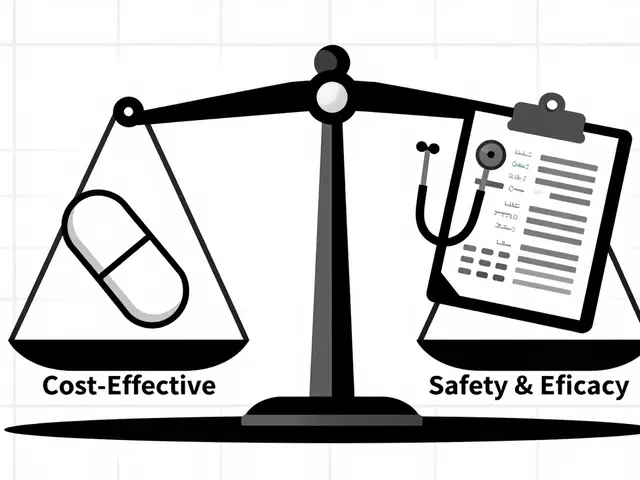
Strict cleanroom standards come with a steep price tag. Implementing an ISO Class 5 cleanroom costs between $250 and $500 per square foot, according to industry cost analyses. For generic manufacturers operating on slim margins of 15-20% compared to the 70-80% margins of innovator companies, these costs are a significant burden. A Pfizer facility manager noted that upgrading HVAC systems to meet higher grades can cost millions and require months of downtime. Yet, the alternative is far worse. Non-compliance leads to FDA Form 483 observations, warning letters, and potentially devastating recalls. In fiscal year 2022, the FDA issued 228 cGMP-related warning letters, making up 63% of all enforcement actions that year.
Consider the 2012 meningitis outbreak linked to the New England Compounding Center. It resulted from inadequate environmental controls and sterilization processes, leading to dozens of deaths. Such tragedies underscore why regulators do not compromise on standards. Even for smaller players, the financial risk of failure outweighs the upfront investment. Teva Pharmaceuticals, for example, reduced contamination events from 12 to 2 per year by implementing advanced isolator technology in Grade A areas. This improvement helped secure FDA approval for their generic Copaxone after previous rejections. Conversely, Aurobindo Pharma faced a $137 million recall in 2022 due to inadequate Grade B monitoring, illustrating the severe consequences of cutting corners.
Implementation Challenges and Best Practices
Building a compliant cleanroom is only half the battle. Maintaining it requires rigorous personnel training and operational discipline. Human behavior is often the biggest source of contamination. Surveys indicate that 42% of generic manufacturers cite personnel gowning procedures as the most frequent cause of deviations. Training staff takes time; certification typically requires 40 to 60 hours of instruction. Workers must learn to move slowly, avoid sudden gestures, and follow strict entry protocols. Real-time monitoring systems, costing $50,000 to $100,000 per room, help detect airflow disruptions caused by movement immediately.
Environmental factors also pose challenges. Maintaining precise humidity levels in tropical climates requires specialized dehumidification systems, adding 20-30% to HVAC costs. Initial validation of a cleanroom takes three to six months and can cost up to $500,000 depending on complexity. Documentation is equally critical. Facilities must maintain 15 to 20 standard operating procedures covering everything from environmental monitoring to equipment calibration. The FDA’s emphasis on data integrity means every measurement must be traceable and unalterable. Resources like ISPE’s Good Practice Guide for HVAC and PDA Technical Reports provide detailed implementation steps to help manufacturers navigate these complexities.
Future Trends in Cleanroom Technology
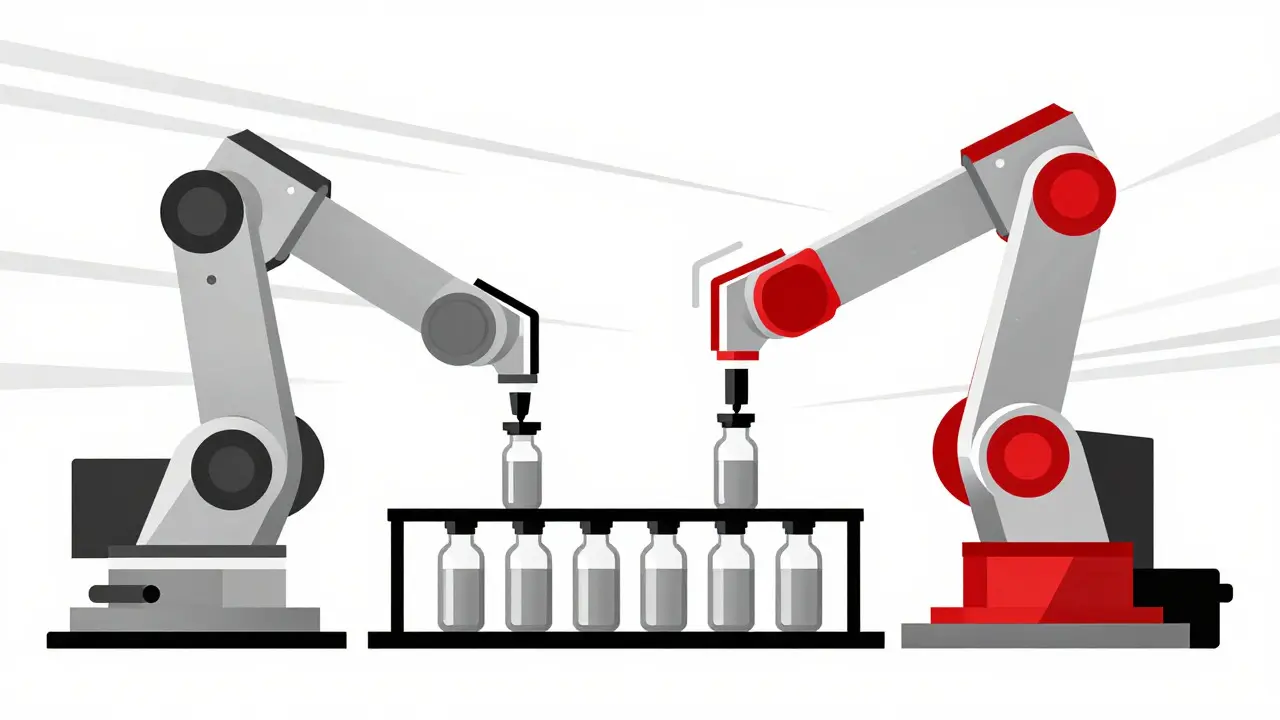
The landscape of pharmaceutical manufacturing is evolving. Automation and artificial intelligence are beginning to reduce the human element in cleanrooms. McKinsey projects that increased automation could cut operational costs by 25-30% by 2028. Robotics can handle sterile filling with greater precision and less variability than humans. Additionally, the rise of complex generics, such as biosimilars, is driving demand for even stricter controls. The FDA estimates that by 2025, 50% of new ANDAs will require Grade A/B environments, up from 35% in 2022. Single-use systems are also gaining traction, reducing the need for extensive cleaning validation. As regulations harmonize further, particularly with the FDA aligning closer to the revised EU Annex 1, manufacturers who invest in flexible, high-standard facilities today will be best positioned for tomorrow’s market.
What is the difference between ISO Class 5 and Grade A cleanrooms?
In practice, they are equivalent. Grade A is the term used in EU GMP Annex 1, while ISO Class 5 is the international standard defined by ISO 14644-1. Both specify a maximum of 3,520 particles ≥0.5μm per cubic meter during operation. The main difference lies in regulatory context rather than technical specification.
Why are cleanroom standards stricter for generic drugs?
Generic drugs must demonstrate bioequivalence to their brand-name counterparts. Since patients switch between brands and generics, any variation in purity or potency due to contamination could affect therapeutic outcomes. Strict standards ensure that the generic product performs identically to the reference listed drug, maintaining patient safety and efficacy.
How much does it cost to build a pharmaceutical cleanroom?
Costs vary widely based on grade and size. An ISO Class 5 (Grade A) cleanroom typically costs between $250 and $500 per square foot to construct. Additional expenses include HVAC systems, HEPA filtration, monitoring equipment, and initial validation, which can add hundreds of thousands of dollars to the total project budget.
What happens if a generic drug manufacturer fails cleanroom inspections?
Consequences can be severe. Regulators may issue Form 483 observations, warning letters, or place the facility on import alerts. In extreme cases, products are recalled, and manufacturing licenses can be suspended. Financial losses from recalls and halted production can reach millions of dollars, threatening the viability of the company.
Do non-sterile drugs need cleanrooms?
Yes, but the requirements are less stringent. Non-sterile solid dosage forms often require Grade C or D environments. While they do not need the ultra-clean conditions of sterile injectables, they still require controlled temperature, humidity, and particulate matter to prevent cross-contamination and ensure product stability.



Earl Oleary
July 29, 2026 AT 18:23Most people think cleanrooms are just fancy rooms with white suits, but they have no idea about the physics involved. The real issue is that the FDA and EU play different games with their regulations. You see ISO Class 5 in Europe as Grade A, but the FDA just wants outcomes. It creates a mess for manufacturers who have to satisfy both. The particle counts are strict, sure, but it is the airflow dynamics that matter most. Laminar flow at 0.36 meters per second is not just a number, it is a shield. If you mess up the pressure differential of 10 to 15 Pascals, the whole system fails. People forget that human error is the biggest contaminant source. Gowning procedures take forever and still cause deviations. The cost of building these spaces is insane too. Five hundred dollars per square foot for Grade A is a joke when margins are thin. Generic makers are squeezed from all sides. They have to prove bioequivalence while spending millions on HVAC systems. One mistake leads to a Form 483 or worse. The meningitis outbreak showed us what happens when corners are cut. Teva fixed their issues with isolators, which is smart. But small players struggle to afford that tech. Automation will help eventually, but right now it is expensive. We need better harmonization between agencies. Until then, manufacturers are stuck navigating this bureaucratic maze.
Sean Allwurden
July 30, 2026 AT 21:13Great breakdown of the regulatory landscape here. The shift towards contamination control strategies in the new EU Annex 1 is a game changer for sterile manufacturing. It moves the focus away from just counting particles to understanding the entire process risk. This aligns well with modern quality by design principles. Implementing real-time monitoring systems can be costly, but the data integrity benefits are worth it. Facilities need to ensure their SOPs are robust enough to handle the increased scrutiny. Training personnel remains the critical bottleneck in maintaining compliance. Investing in advanced isolator technology reduces human interaction significantly. This approach minimizes the risk of particulate shedding during aseptic processing. Collaboration between engineering and quality teams is essential for successful implementation. We should also look at single-use systems as a viable alternative for complex generics. They reduce cleaning validation burdens and lower cross-contamination risks. The industry is moving in the right direction despite the high initial capital expenditure. Long-term savings come from reduced deviation rates and faster batch releases. Manufacturers who adapt early will gain a competitive edge in the global market. Regulatory inspectors are increasingly looking for proactive risk management plans. It is not just about meeting limits anymore; it is about demonstrating control.
Deva Vidya
July 31, 2026 AT 12:10This is such an important topic for patient safety. Knowing that generic drugs go through these rigorous checks gives me peace of mind. It is reassuring to see how much effort goes into keeping medicines pure. The standards really protect us from invisible threats like microbes. I hope more people understand the value of these environmental controls. It makes me trust the pharmacy counter a lot more. Great job explaining the technical details in a way we can grasp. The future looks bright with automation improving efficiency. Let us keep supporting high-quality healthcare infrastructure. Every detail matters when it comes to our health. These workers deserve recognition for their diligence. Safety first always!
Crystal Tadlock
August 1, 2026 AT 14:29They want us to believe the suits protect us but the air is full of lies. Big Pharma hides behind these rules to charge more money. The FDA is in their pocket so they let them get away with murder. Look at the recalls and deaths that still happen. It is all a scam to keep us sick and paying. The cleanrooms are just theater for the public. Real medicine does not need sterile boxes. They poison us with chemicals anyway. Wake up sheeple.
Katie Caruthers
August 2, 2026 AT 20:40It is absolutely infuriating that companies cut corners on something as vital as life-saving medication. How dare they risk our lives for profit? The lack of empathy in corporate boardrooms is staggering. We deserve better than subpar manufacturing processes. These standards are the bare minimum, yet some fail even that. It makes my blood boil thinking about contaminated drugs reaching shelves. Accountability must be enforced strictly without mercy. No excuses for negligence in healthcare. Our health is not a commodity to be cheapened. Demand justice for every victim of poor quality control. Silence is complicity in this systemic failure. Stand up for your rights as a consumer. Do not let them walk over us again.
Laura Odom
August 4, 2026 AT 08:11lol u guys are so serious abt this stuff. its just dust man. why make such a big deal outta it. the govts just wanna control us with rules. i bet the air outside is cleaner than those fancy rooms. stop worrying so much and live life. science is boring af anyway. whatever floats ur boat i guess.
MiMi Stanley
August 5, 2026 AT 13:44I read about the New England Compounding Center case years ago and it still haunts me. The tragedy could have been prevented with proper oversight. It highlights the importance of consistent enforcement across all facilities. Small compounding pharmacies often operate under different rules than large manufacturers. This discrepancy creates dangerous loopholes in the supply chain. Patients rarely know where their medication was actually produced. Transparency in sourcing would help restore public trust. Monitoring humidity and temperature seems simple until you try to maintain it constantly. Tropical climates present unique challenges for HVAC systems. Dehumidification adds significant operational costs that impact drug pricing. Yet, skipping these steps risks product stability and efficacy. Data integrity is another crucial aspect often overlooked. Tampering with records undermines the entire verification process. Auditors need access to raw, unaltered data streams. Technology can aid in securing this information better than paper logs. Continuous improvement should be the norm, not the exception. Learning from past failures drives innovation in safety protocols.
Najmunisa Govender
August 7, 2026 AT 13:15The article mentions that human behavior is the biggest source of contamination, which is quite poignant! It reminds us that technology alone cannot solve every problem. We must invest heavily in training and culture change within organizations. Empathy for the workers who endure long hours in restrictive gowns is also necessary. Their dedication ensures the purity of our medications. Recognizing their efforts boosts morale and reduces errors. Strict protocols are essential, but kindness fosters compliance. A supportive environment leads to better outcomes for everyone involved. Thank you for sharing this insightful perspective on pharmaceutical safety.
Vineet Hawelia
August 7, 2026 AT 15:46The distinction between Grade A and ISO Class 5 is often misunderstood by non-specialists. While technically equivalent in particle limits, the regulatory context differs significantly. EU GMP Annex 1 provides a prescriptive framework, whereas the FDA emphasizes performance-based outcomes. This divergence complicates global supply chains for multinational corporations. Harmonization efforts by the ICH aim to bridge these gaps gradually. However, regional variations persist due to historical precedents and legal structures. Manufacturers must navigate this complexity with precision and care. Documentation plays a pivotal role in demonstrating compliance to diverse regulators. Standard operating procedures must be meticulously maintained and updated regularly. Validation studies require rigorous statistical analysis to confirm consistency. Environmental monitoring programs must detect deviations before they impact product quality. Calibration of instruments is equally critical for reliable data generation. Traceability of every measurement ensures accountability throughout the lifecycle. Adherence to these standards safeguards public health effectively.
ANINDA GHOSH
August 9, 2026 AT 09:50In the grand tapestry of human endeavor, the pursuit of purity reflects our deepest desires for order amidst chaos. Cleanrooms stand as temples of science, where the invisible is tamed by rigorous discipline. 🌟 The philosophical implication is profound: we seek to eliminate the impure to preserve the essence of healing. Each particle counted is a testament to our commitment to truth. The interplay of air and space becomes a metaphor for mental clarity. Just as we filter the air, we must filter our intentions. 🙏 Let us honor the unseen labor that protects our bodies. In this sterile sanctuary, humanity finds its highest expression of care. May we always strive for excellence in all things. 🕊️
Tad Cronn
August 9, 2026 AT 16:55You all miss the point entirely. The real issue is not the particles but the people managing the facilities. Most managers are incompetent bureaucrats who don't understand the actual work. They hide behind forms instead of fixing problems. The toxic culture in pharma companies drives good engineers away. Everyone is afraid to speak up about issues. That is why deviations keep happening. It is a systemic failure of leadership, not technology. Fix the management structure first. Then maybe the cleanrooms will work properly. Until then, it is just theater for shareholders.