
Imagine this: A patient walks into your pharmacy with a prescription for a controlled substance. It’s only been ten days since their last fill. They claim they lost the rest. You check the system, and suddenly you see another prescription for the same drug from a different doctor at a different pharmacy. This isn’t just an inconvenience; it is a major red flag for potential drug diversion or dangerous therapeutic duplication.
Early refills and duplicate therapy mistakes are among the most critical safety challenges in modern healthcare. These errors can lead to severe consequences, including overdose risks, wasted resources, and legal liabilities for providers. According to the Centers for Disease Control and Prevention (CDC), which identifies medication non-adherence as a critical cardiovascular disease prevention issue, preventing these mistakes requires more than just vigilance-it demands systematic change.
The Hidden Risks of Early Refills and Duplicate Therapy
Why do early refills happen? Often, it stems from poor communication between patients, prescribers, and pharmacists. The American Academy of Family Physicians (AAFP), which provides guidelines for family medicine practices, notes that many practices historically treated refill requests as unexpected events rather than predictable occurrences. This reactive approach leads to chaos: more phone calls, longer processing times, and discontinuity of care if the request falls to someone other than the primary provider.
When patients request early refills repeatedly-especially for controlled substances-it signals potential misuse. The Drug Enforcement Administration (DEA), which regulates controlled substances in the United States, mandates strict controls for Schedule II substances, say, Schedule II drugs that generally cannot be refilled under any circumstances. Yet, confusion remains. Some patients believe insurance policies allowing a "5-day early" window mean they can use up medication faster. Others try tactics like offering to pay cash, thinking this bypasses scrutiny.
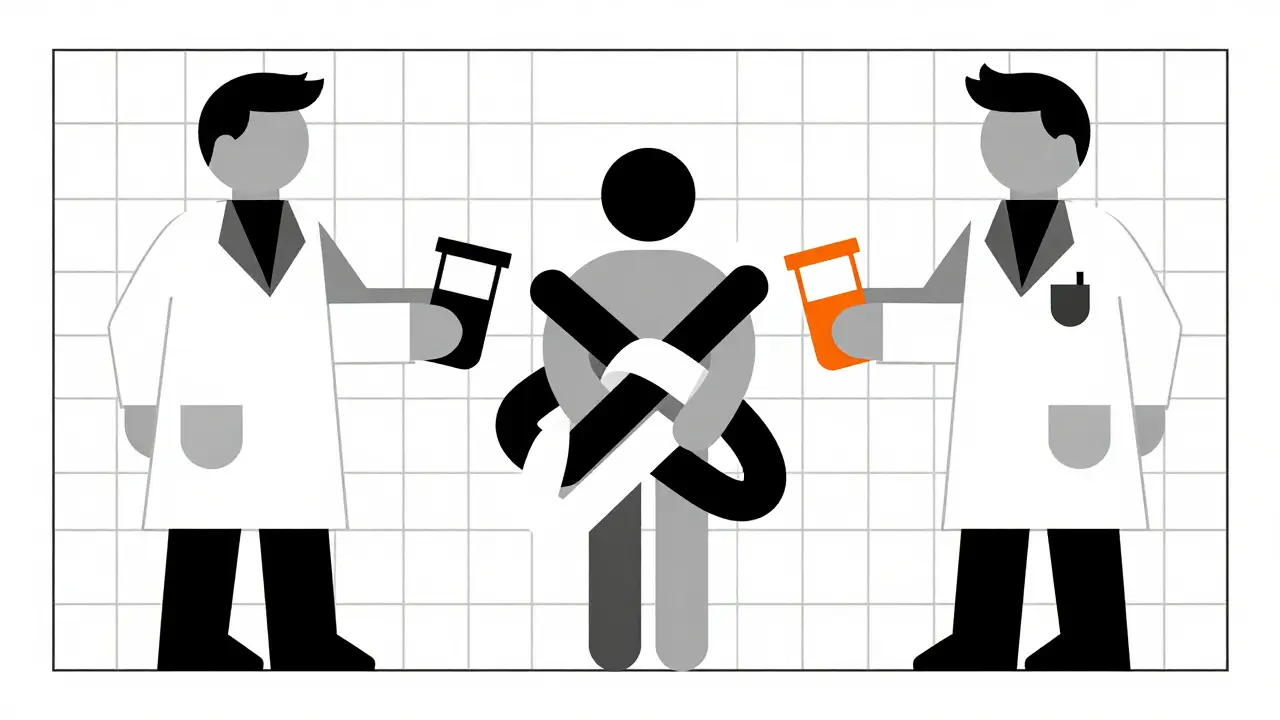
Duplicate therapy adds another layer of danger. When a patient sees multiple specialists without coordinated care, they may receive overlapping prescriptions. For example, one doctor might prescribe an antihypertensive while another prescribes a similar medication, unaware of the first. This not only increases the risk of adverse effects but also complicates treatment plans. As Dr. Ian Stewart, B.Sc.Phm., R.Ph., emphasizes, "It cannot be assumed that since the patient has taken the medication previously, a therapeutic assessment is unnecessary."
Building Standardized Refill Protocols
To combat these issues, healthcare systems must adopt standardized refill protocols. Research published in PMC (2022) shows that approximately 89% of vendor-supplied refill protocols were amended to incorporate evidence-based guidelines and best practices. Here’s how you can build effective protocols:
- Categorize Medications by Risk Level: Not all medications carry the same risk. Low-risk drugs like nasal steroids can follow automated protocols, while high-risk medications such as opioids require direct provider oversight.
- Implement Tiered Systems: The AAFP describes a three-tiered protocol system:
- A worksheet for low-risk medications.
- A "3 Month Meds" worksheet for chronic conditions like hypertension or diabetes, where refills are allowed if the patient was seen within the last three months.
- A specialized worksheet for sensitive categories like birth control.
- Define Clear Rules for Controlled Substances: Establish policies where controlled substances can only be filled two days early, with exceptions reserved for legitimate emergencies approved by the provider.
These protocols reduce ambiguity and empower staff to handle routine cases efficiently. For instance, nurses can approve refills that pass protocol checks, freeing up providers to focus on complex cases. One health system reported that 24% of refill requests failed due to temporal rules (e.g., overdue lab tests), but medical assistants could pend orders or schedule visits, limiting the need for direct provider intervention.
Leveraging Technology for Error Prevention
Technology plays a pivotal role in preventing early refills and duplicate therapy. Electronic Health Record (EHR) systems allow providers to include notes indicating when a prescription was picked up early and use phrases like "cancel all prior" to stop automatic refill reminders. However, technology alone isn’t enough-it must integrate seamlessly into clinical workflows.
Clinical Decision Support (CDS), which enhances decision-making through data analysis tools help identify patterns indicative of misuse. For example, CDS can flag repeated requests for early refills from different prescribers or pharmacies. Additionally, pharmacists should register for access to Clinical Viewers, which provide visibility into prescriptions filled at other pharmacies. This transparency helps detect gaps in service care timelines, signaling possible polypharmacy or hoarding behaviors.
Insurance companies also contribute by enforcing stricter early refill restrictions. Standard policies typically allow a 30-day supply about five days early, but habitual early refills raise alarms. Plans like the SHPNC Medicare Retirees Base PPO Plan explicitly limit early dispensing to minimize excessive use, waste, and stockpiling of prescription medications.
Training Staff and Engaging Patients
No amount of technology will succeed without proper training and patient engagement. Pharmacists and support staff need ongoing education on recognizing signs of misuse and adhering to established protocols. Role-playing scenarios during team meetings can prepare them for challenging interactions, such as dealing with patients who insist their doctor authorized an early refill despite conflicting information.
Patient education is equally important. Many individuals simply don’t understand why early refills aren’t always permitted. Explain clearly that these safeguards exist to protect their health. Use relatable examples: "If we give you too much medication too soon, it could interact dangerously with other drugs you’re taking." Encourage open dialogue so patients feel comfortable discussing concerns instead of resorting to manipulative tactics.
Regular check-ins further strengthen trust. Gather updates on responses to drug therapy and changes in medical history whenever new or refill prescriptions are processed. This proactive approach fosters collaboration and reduces misunderstandings.
Addressing Common Challenges
Even with robust protocols and technology, challenges persist. Consider these common hurdles and solutions:
| Challenge | Solution |
|---|---|
| Patient claims loss of medication | Verify history via EHR/CDS before approving early refills. |
| Misunderstanding insurance policies | Educate patients on allowable windows versus habitual early fills. |
| Lack of coordination among providers | Promote shared records and encourage inter-provider communication. |
| Staff burnout from manual processes | Automate low-risk approvals using customizable tech tools. |
For higher-risk medications prescribed less frequently, prioritize creating targeted refill protocols based on monitoring needs and potential adverse events. Regularly review and update these protocols to keep pace with evolving regulations and emerging trends.
Future Directions in Medication Safety
The future lies in deeper integration of patient data across healthcare systems. Imagine a world where every interaction-from initial diagnosis to final refill-is tracked comprehensively, enabling real-time detection of anomalies. Such advancements would significantly enhance our ability to prevent early refills and duplicate therapy mistakes.
Innovations in artificial intelligence promise even greater precision. AI algorithms could analyze vast datasets to predict which patients are most likely to engage in risky behavior, allowing preemptive interventions. Meanwhile, blockchain technology offers secure, tamper-proof record-keeping, ensuring accurate tracking of prescriptions regardless of location.
As regulatory pressures intensify following crises like the opioid epidemic, staying ahead means embracing both proven strategies and cutting-edge solutions. By combining human expertise with advanced tools, we create safer environments for everyone involved.
What defines an early refill?
An early refill occurs when a patient requests a replacement prescription before the expected end date of their current supply. While some insurance plans permit filling a 30-day supply up to five days early, habitual early refills warrant investigation for potential misuse.
How can pharmacists spot duplicate therapy?
Pharmacists should regularly review patient profiles for compliance issues, changes in drug therapy, duplicated therapy, and discontinued therapy. Accessing Clinical Viewers provides insight into prescriptions filled elsewhere, helping uncover hidden duplications.
Are there exceptions for early refills of controlled substances?
Yes, but only under specific conditions. Exceptions apply for legitimate purposes, such as travel or documented loss/theft, and require explicit approval from the prescribing provider. Routine early refills remain prohibited per DEA guidelines.
Why is patient education crucial in preventing errors?
Educated patients understand the rationale behind refill restrictions and are less likely to attempt workarounds. Open communication builds trust, encouraging honest discussions about medication management and reducing instances of deceptive behavior.
What role does technology play in safeguarding against misuse?
Technology enables efficient identification of suspicious patterns through features like EHR annotations, CDS alerts, and centralized databases. Automation streamlines workflows, minimizing human error while maximizing accountability.