
SSRI Side Effect Management Tool
This tool helps you identify your common SSRI side effects and provides practical management strategies based on the latest clinical evidence. Select your symptoms to get personalized advice.
Select Your Symptoms
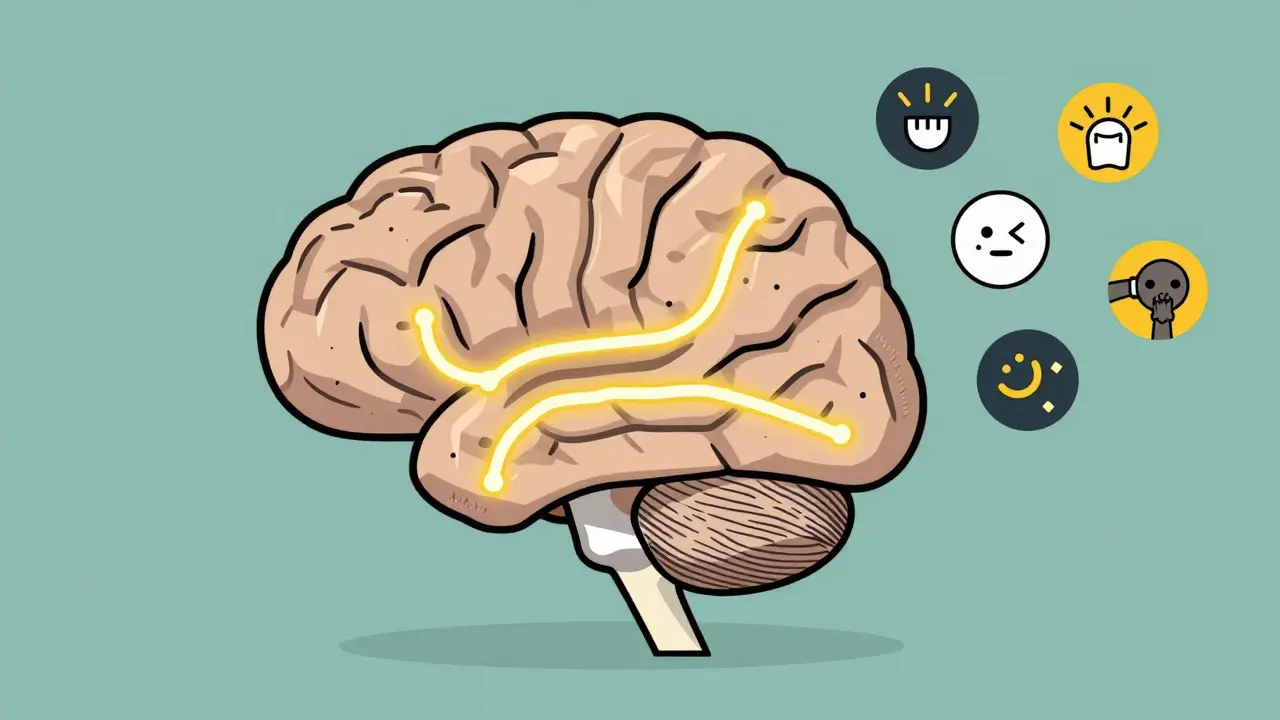
When you start taking an SSRI-whether it's sertraline, fluoxetine, or escitalopram-you're not just fighting depression or anxiety. You're also adjusting to a chemical shift in your brain that can ripple through your whole body. For many, the benefits outweigh the downsides. But for others, the side effects are hard to ignore. Some fade after a few weeks. Others stick around. And a few? They can be serious. This isn't about scaring you. It's about knowing what to expect, when to worry, and what you can actually do about it.
Most Common Mild Side Effects (And Why They Happen)
Up to 86% of people on SSRIs report at least one side effect in the first few weeks. Most are mild, but that doesn’t mean they’re easy to live with. The top offenders? Nausea, drowsiness, dry mouth, and trouble sleeping. These aren’t random. SSRIs boost serotonin, and serotonin doesn’t just live in your brain. It’s also in your gut. That’s why nausea hits so hard early on-your digestive system is reacting to the sudden surge. About half of all users feel this in the first week. For most, it fades within 3 to 4 weeks. Taking the pill with food helps. A 2023 survey found 63% of users saw improvement this way.
Drowsiness and insomnia? Both are common, and they seem contradictory. That’s because serotonin affects multiple brain pathways. Some people feel foggy; others can’t fall asleep. Timing matters. If you’re tired all day, try taking it at night. If you’re wired and can’t sleep, take it in the morning. Many patients report better results just by switching the time of day.
Weight gain is another big concern. About 49% of long-term users notice a change. It’s not always about appetite. SSRIs can slow metabolism, change how your body stores fat, and even affect insulin sensitivity. A 2023 meta-analysis found that people who added regular exercise and a structured diet gained 3.2 kg less over six months than those who didn’t. It’s not a cure, but it helps.
Sexual Dysfunction: The Most Troublesome Side Effect
Here’s the truth: if you’re on an SSRI long-term, your sex life might change. Studies show 56% of users report sexual side effects. But real-world reports tell a starker story. On Reddit’s r/antidepressants, 68% of 1,247 users said sexual dysfunction was their biggest problem. And 42% said it lasted more than six months.
It’s not just about libido. Men may struggle with erection or delayed ejaculation. Women may have trouble reaching orgasm. These aren’t psychological. They’re chemical. SSRIs overstimulate serotonin receptors in the spinal cord, which dampens sexual response. It’s not your fault. It’s not your partner’s fault. It’s the medication.
Some strategies help. Lowering the dose can reduce symptoms in 40% of cases. A 2021 study found that scheduled “medication holidays”-taking a day or two off each week-worked for 28% of users. Adding sildenafil (Viagra) improved function in 67% of men in a controlled trial. Bupropion, an antidepressant that doesn’t affect serotonin the same way, is often added to counteract sexual side effects. It’s not a one-size-fits-all fix, but options exist.
Serious Side Effects You Can’t Ignore
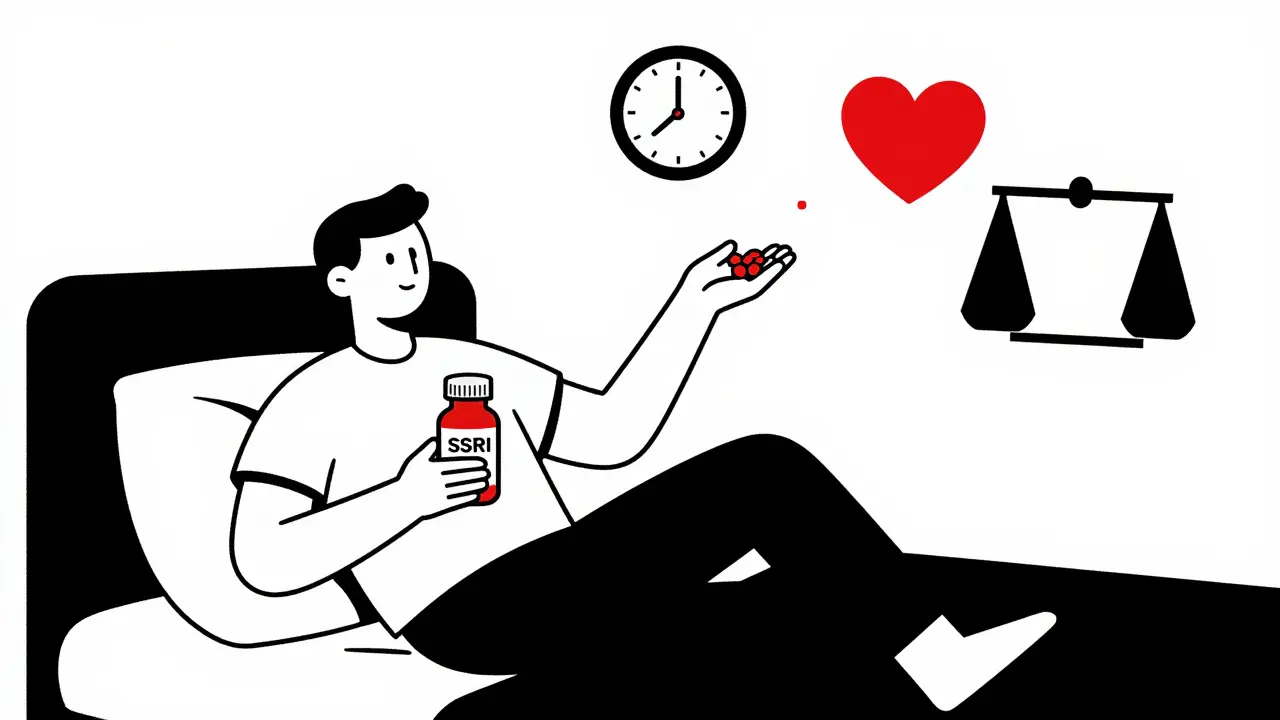
Most side effects fade. But some need immediate attention. Serotonin syndrome is rare, but dangerous. It happens when serotonin builds up too much-usually when SSRIs are mixed with other drugs like tramadol, certain painkillers, or even St. John’s wort. Symptoms start with sweating, tremors, or a fast heartbeat. If you develop confusion, high fever, or muscle rigidity, go to the ER. Left untreated, it can be fatal.
Hyponatremia-low sodium in the blood-is another risk, especially in older adults. SSRIs are the most common antidepressant cause. Signs include confusion, nausea, headaches, and in severe cases, seizures. If you’re over 65, take a diuretic, or have kidney issues, your doctor should check your sodium levels early on.
Extrapyramidal symptoms (EPS) are less talked about but real. Akathisia-feeling restless, unable to sit still-is the most common. Dystonia (involuntary muscle contractions) and tremors also occur. These are more likely in older people or those with Parkinson’s. If you feel like you can’t stop moving, or your muscles are tightening without reason, tell your doctor. It’s not anxiety. It’s a drug reaction.
Discontinuation Syndrome: Why You Can’t Just Stop
One of the biggest mistakes people make? Stopping SSRIs cold turkey. Even if you feel better, your brain has adapted. Suddenly removing the drug can trigger withdrawal-like symptoms: dizziness, nausea, electric-shock sensations, anxiety, and insomnia. This isn’t addiction. It’s your nervous system readjusting.
Paroxetine and fluvoxamine are the worst offenders because they leave your system fast. Fluoxetine lasts longer, so withdrawal is milder. The rule? Never stop without a plan. Taper slowly-no more than 10-25% of your dose every 2 to 4 weeks. If you feel symptoms creeping back, slow down even more. A 2020 APA guideline says most symptoms resolve within 3 weeks if you taper properly.
Who’s Most at Risk? And How Doctors Are Adapting
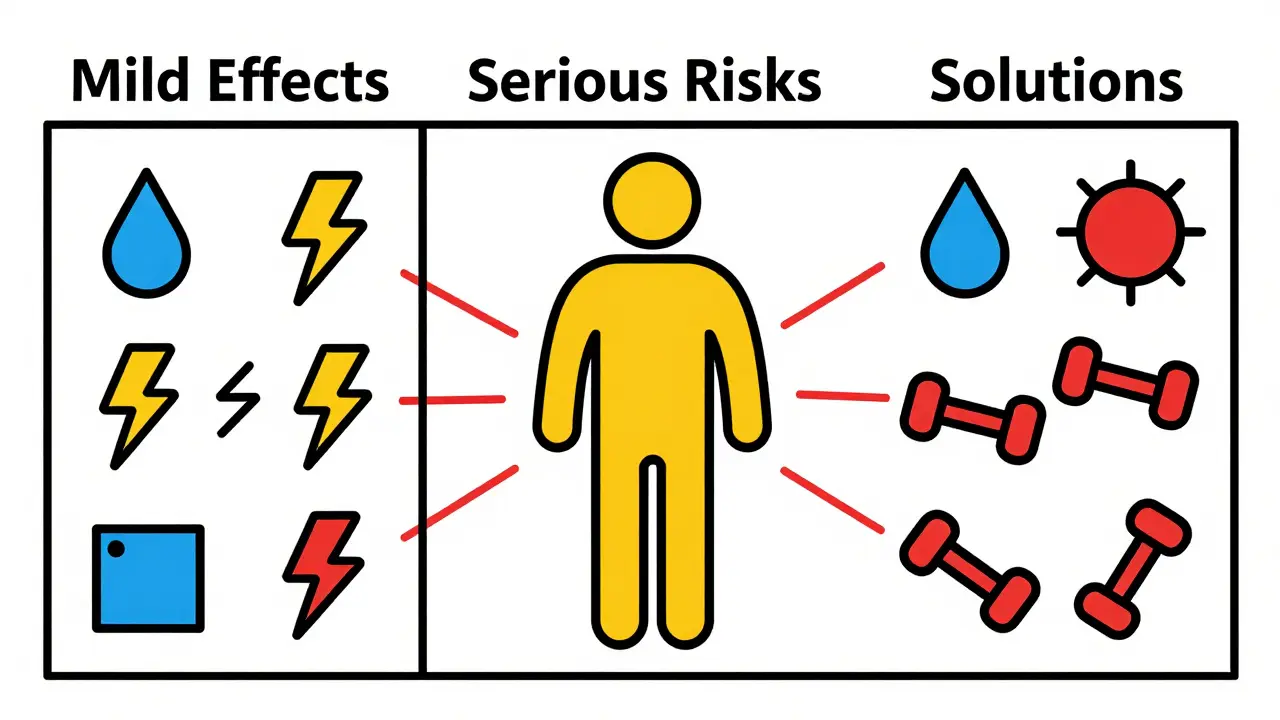
Not everyone reacts the same. Women, older adults, and people with low body weight are more likely to experience hyponatremia. Those with a history of bipolar disorder may face mood switches. Genetic testing is now used by 63% of psychiatrists to predict who might struggle with side effects. Certain gene variants make people more sensitive to serotonin changes.
Drug companies are trying to fix this. Lu AF35700, a next-gen SSRI in Phase III trials, cuts sexual dysfunction by 37% compared to current options. Time-release formulations are being tested too. Early data shows they reduce nausea and headaches by 31% by avoiding sharp spikes in blood levels.
Doctors are also talking more. In 2023, 78% of psychiatrists said they now spend 15+ minutes explaining side effects before prescribing. The NAMI “Know Your Options” campaign helped 500,000 people report side effects to their providers-a 22% increase. That’s progress.
What You Can Do Right Now
- If nausea hits: Take your pill with food. Wait it out. Most cases fade in 3 weeks.
- If you’re sleeping poorly: Try moving your dose to the morning. If you’re too tired, try nighttime.
- If sex is affected: Talk to your doctor. Dose reduction, bupropion, or sildenafil are real options.
- If you feel restless or twitchy: Don’t assume it’s stress. It could be EPS. Get checked.
- If you want to stop: Never quit cold turkey. Work with your doctor on a taper plan.
- If you’re over 65 or on diuretics: Ask for a sodium test after 2 weeks.
SSRIs changed how we treat depression. But they’re not magic pills. They’re tools. And like any tool, they come with risks. The goal isn’t to avoid them. It’s to manage them-so you can keep taking them if they help.
Are SSRI side effects permanent?
Most side effects fade after a few weeks as your body adjusts. Sexual dysfunction and weight gain can persist long-term, but they often improve with dose changes, lifestyle adjustments, or switching medications. In rare cases, symptoms like akathisia or sexual dysfunction may linger after stopping, but this is uncommon. Always discuss persistent symptoms with your doctor.
Which SSRI has the fewest side effects?
Citalopram is generally the best-tolerated SSRI, followed by fluoxetine and sertraline. Paroxetine and fluvoxamine have higher rates of side effects, especially sexual dysfunction and discontinuation symptoms. However, individual responses vary. What’s mild for one person might be severe for another. Your doctor may use genetic testing to help choose the best fit.
Can SSRIs cause weight gain even if I eat the same?
Yes. SSRIs can slow your metabolism and affect how your body stores fat, even without changes in eating habits. They may also increase cravings for carbs and sugar. Studies show that combining regular exercise with a balanced diet can reduce weight gain by an average of 3.2 kg over six months compared to no lifestyle changes.
Is it safe to take SSRIs with other medications?
Not always. Mixing SSRIs with other serotonin-boosting drugs-like tramadol, migraine meds (triptans), certain painkillers, or St. John’s wort-can cause serotonin syndrome, a potentially life-threatening condition. Always tell your doctor about every medication, supplement, or herbal product you’re taking. Even over-the-counter cold medicines can interact.
How long does it take for SSRI side effects to go away?
Gastrointestinal issues like nausea and diarrhea usually improve within 1-4 weeks. Drowsiness and insomnia may settle in 2-6 weeks. Sexual side effects and weight gain often take months to stabilize. If symptoms don’t improve after 6-8 weeks, talk to your doctor about adjusting your dose or switching medications. Patience helps, but you don’t have to suffer silently.





Donna Fogelsong
March 22, 2026 AT 22:04They're hiding the long-term neuroadaptation data. You think your brain resets after stopping? Think again.
Sean Bechtelheimer
March 24, 2026 AT 12:10Seth Eugenne
March 25, 2026 AT 02:51rebecca klady
March 26, 2026 AT 02:43Namrata Goyal
March 26, 2026 AT 16:43Zola Parker
March 28, 2026 AT 10:36florence matthews
March 30, 2026 AT 01:25Kenneth Jones
March 31, 2026 AT 16:45Mihir Patel
April 1, 2026 AT 04:55Kevin Y.
April 2, 2026 AT 11:02