

Dry Mouth Product Selector
Get Personalized Recommendations
Answer these questions to find the best products for your dry mouth situation
If your mouth feels like cotton wool all day, even after drinking water, you’re not alone. Dry mouth - or xerostomia - affects about 1 in 10 adults and up to 3 in 10 people over 65. It’s not just annoying; it’s a real threat to your teeth and gums. Saliva doesn’t just help you swallow or talk. It washes away food, neutralizes acids, and protects against cavities. When it dries up, your mouth becomes a breeding ground for decay, infections, and bad breath.
The biggest culprit? Medications. Over 500 common prescriptions - from blood pressure pills to antidepressants - list dry mouth as a side effect. Chemotherapy, radiation to the head and neck, and autoimmune conditions like Sjögren’s syndrome also play a role. But here’s the good news: you don’t have to just live with it. With the right products and daily habits, you can take back control.
What Makes a Dry Mouth Product Actually Work?
Not all mouthwashes or sprays are created equal. The best ones don’t just add water - they mimic saliva. That means they need three things: moisture, pH balance, and cavity protection.
Look for products with carboxymethylcellulose or hydroxyethyl cellulose. These thickening agents help the product stick to your mouth longer, giving you relief for up to 4 hours. That’s why Biotène Oralbalance Moisturizing Gel is a saliva substitute designed to replicate natural saliva’s pH and viscosity. It’s the top pick among dentists and hygienists for nighttime use.
Another key ingredient is xylitol. Unlike sugar, xylitol doesn’t feed cavity-causing bacteria - it actually starves them. That’s why ACT Dry Mouth Moisturizing Lozenges are a dentist-recommended option that delivers xylitol slowly to protect teeth while soothing dryness. Mayo Clinic specifically recommends xylitol-containing products for people with dry mouth because they reduce cavity risk by up to 40% compared to sugar-based alternatives.
Avoid anything with alcohol, sodium lauryl sulfate (SLS), or artificial sweeteners like saccharin. Alcohol dries you out further. SLS can irritate sensitive mouth tissue. And saccharin can leave a bitter aftertaste that makes drinking water less appealing - exactly what you don’t want.
Top Dry Mouth Products You Can Trust
Here’s what works, based on professional recommendations and real user results:
- Biotène Dry Mouth Oral Rinse is an alcohol-free rinse with xylitol and moisturizing agents that cleans without burning. It’s priced around $13 for 33.8 fl oz and used twice daily.
- Biotène Oralbalance Moisturizing Gel is a thick, overnight gel that lasts up to 4 hours. Apply a pea-sized amount to your tongue and gums before bed. Costs about $8.30 for 1.5 oz.
- XyliMelts are adhesive discs that slowly dissolve on your gums, releasing xylitol and moisture over hours. Perfect for travel or nighttime use. Each disc costs roughly $0.29 - pricier per unit, but lasts longer.
- TheraBreath Dry Mouth Oral Rinse is a clinically tested rinse with oxygenating agents that fight odor-causing bacteria while moisturizing. Comes in Mandarin Mint and Tart Berry flavors.
- Colgate Dry Mouth Toothpaste is a fluoride toothpaste formulated without SLS and with added moisturizers to reduce sensitivity. Use it twice daily - even if you’re using other products.
Many people try water or sugar-free gum first, but those alone aren’t enough. Water doesn’t stick. Gum only works if you chew constantly. The best approach combines targeted products with smart habits.
Daily Habits That Make a Real Difference
Products help - but habits fix the root problem. Here’s what to do every day:
- Sip water all day. Don’t wait until you’re thirsty. Keep a bottle nearby and take small sips. Ice chips work too - they melt slowly and keep your mouth moist longer.
- Chew sugar-free gum or suck on xylitol lozenges. Do this 3-4 times a day, especially after meals. It triggers your remaining saliva glands to work. Avoid gum with sorbitol or aspartame - they can cause bloating.
- Breathe through your nose. Mouth breathing dries you out fast. If you snore or have nasal congestion, try a saline nasal spray before bed or talk to your doctor about allergies or sleep apnea.
- Use a humidifier at night. Especially in winter or dry climates. A cool-mist humidifier adds moisture to the air, which keeps your mouth and throat from drying out while you sleep.
- Avoid sugary or acidic drinks. Soda, fruit juice, and energy drinks are sugar bombs that wreck your teeth when saliva is low. Even diet sodas are acidic and can erode enamel. Stick to water, milk, or unsweetened tea.
- Brush with fluoride toothpaste and rinse with a dry mouth mouthwash. Use a soft brush and gentle strokes. Don’t rinse with water after brushing - just spit. That leaves the fluoride on your teeth longer.
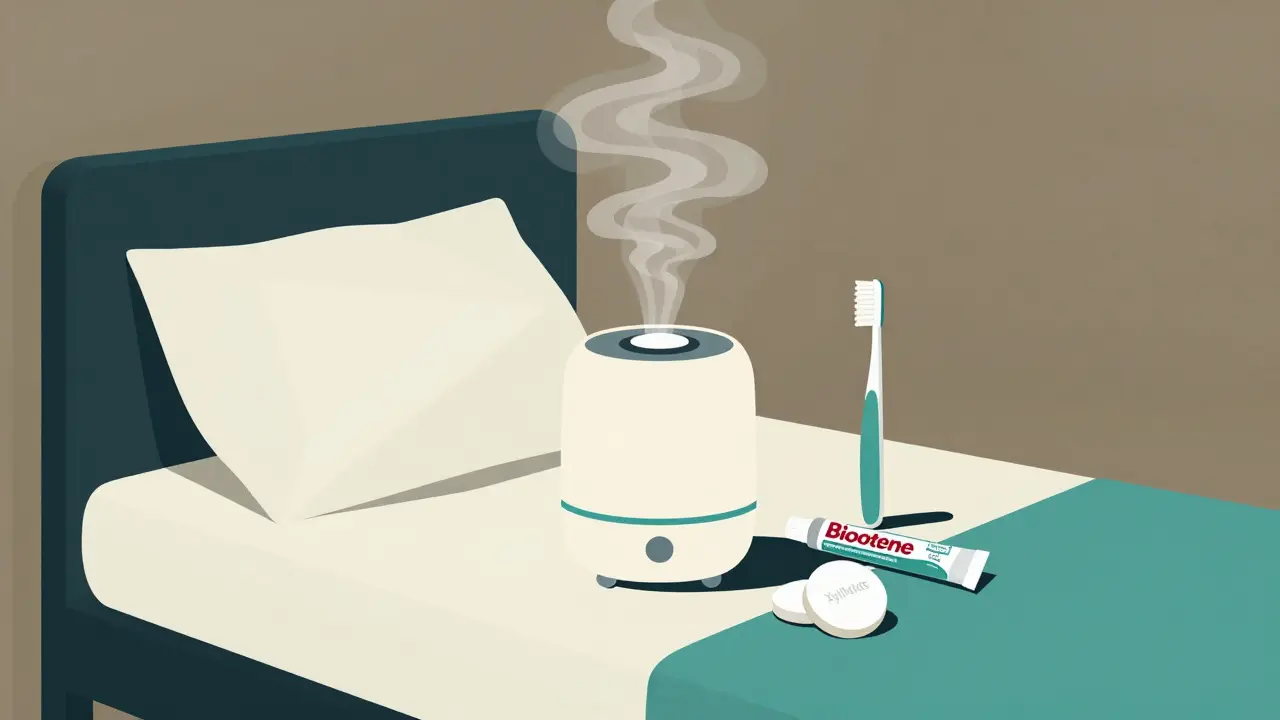
Nighttime Routine for Maximum Relief
Dry mouth often gets worse at night. That’s when saliva production drops the most - and you’re not sipping or swallowing. Here’s a simple nighttime plan:
- Brush your teeth with fluoride toothpaste (no rinsing).
- Apply a thin layer of Biotène Oralbalance Gel to your gums, tongue, and inner cheeks.
- Use a fluoride rinse like ACT Dry Mouth Rinse if your dentist recommends it - especially if you’re at high risk for cavities.
- Turn on your humidifier.
- If needed, place one XyliMelts disc on your gum before bed - it dissolves slowly and keeps you comfortable until morning.
This routine cuts down on morning bad breath, sore throat, and that awful “cotton mouth” feeling when you wake up.
When to See a Dentist or Doctor
If you’ve tried the products and habits above for 2-3 weeks and still feel like your mouth is parched, it’s time to dig deeper.
See your dentist if you notice:
- More cavities than usual
- Sores or cracks in your lips or corners of your mouth
- Difficulty swallowing or speaking
- White patches or a burning sensation
Your dentist can:
- Check for early decay or fungal infections like thrush
- Prescribe a custom fluoride tray to wear at night
- Recommend prescription saliva stimulants like pilocarpine (if appropriate)
See your doctor if dry mouth started after a new medication. They might adjust your dose, switch your drug, or check for underlying conditions like diabetes or thyroid issues.
Don’t ignore it. Dry mouth isn’t just discomfort - it’s a warning sign your oral health is at risk.
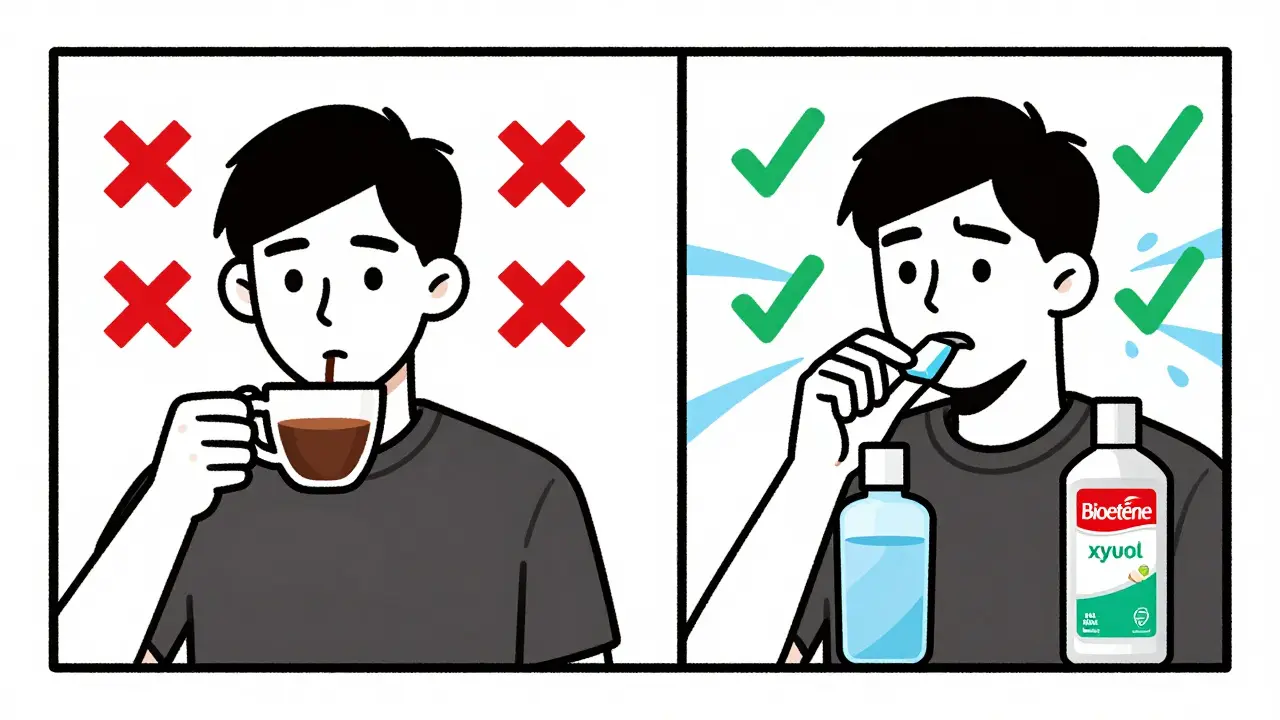
What Doesn’t Work (And Why)
Some common fixes make things worse:
- Drinking coffee or alcohol. Both are diuretics - they make you lose more fluid. Even one cup of coffee can dry you out for hours.
- Using mouthwash with alcohol. It feels refreshing at first, but it strips moisture and irritates sensitive tissue. Many popular brands still contain it - read the label.
- Chewing gum with sugar. Sugar feeds bacteria that cause cavities. With no saliva to wash it away, the damage happens faster.
- Waiting until you’re thirsty. By then, you’re already dehydrated. Dry mouth isn’t always about water intake - it’s about saliva production.
There’s no magic bullet, but consistency is. Stick with the right products and habits, and you’ll notice a difference in just a week.
Can dry mouth go away on its own?
Sometimes - if it’s caused by temporary dehydration or breathing through your mouth while sick. But if it’s from medication, aging, or a medical condition, it won’t resolve without treatment. The longer you go untreated, the higher your risk for cavities and gum disease.
Is Biotène better than ACT for dry mouth?
They serve different purposes. Biotène is better for long-lasting moisture - especially the gel for nighttime. ACT is stronger for cavity prevention because it’s packed with xylitol and fluoride. Many people use both: ACT rinse in the morning, Biotène gel at night.
Can I use regular toothpaste if I have dry mouth?
You can, but it’s not ideal. Regular toothpaste often contains sodium lauryl sulfate (SLS), which can irritate dry tissue and make your mouth feel more uncomfortable. Fluoride toothpaste made for dry mouth - like Colgate Dry Mouth or Sensodyne Pronamel - is gentler and more effective at protecting your teeth.
Does drinking more water help dry mouth?
It helps a little, but not enough. Water hydrates your body, but it doesn’t replace saliva. Saliva has enzymes, proteins, and minerals that water doesn’t. That’s why you need products that mimic saliva - not just sip more water.
Are dry mouth products covered by insurance?
Most over-the-counter products aren’t covered. But if your dry mouth is caused by a medical condition like Sjögren’s syndrome or cancer treatment, your doctor may prescribe a saliva stimulant (like pilocarpine) that insurance might cover. Always check with your provider.
How long does it take for dry mouth products to work?
You’ll feel immediate relief from sprays and rinses - within seconds. But for lasting improvement - less discomfort, fewer cavities, better sleep - it takes 1-2 weeks of consistent use. Stick with it. The benefits build over time.
Next Steps
Start simple: buy one bottle of Biotène Oral Rinse and one tube of fluoride toothpaste made for dry mouth. Use them twice daily. Add a humidifier if you don’t have one. Sip water between meals. Chew xylitol gum after lunch.
In two weeks, reassess. If your mouth feels less dry and your breath is fresher, you’re on the right track. If not, talk to your dentist about a custom fluoride tray or prescription options. Dry mouth is manageable - but only if you treat it like the health issue it is.



Harsh Khandelwal
December 25, 2025 AT 08:41Bro, I swear the government put something in the water to make our mouths dry so we buy all this Biotène crap. You ever notice how every toothpaste ad now has some scientist in a lab coat whispering about "saliva replacement"? It’s a scam. They just want your money. I drank a gallon of water yesterday and my mouth still felt like a desert. Coincidence? I think not.
Lindsey Kidd
December 26, 2025 AT 10:39Yessss this is SO helpful!! 🙌 I’ve been dealing with dry mouth since chemo and Biotène Gel at night changed my life. No more waking up with my tongue stuck to the roof of my mouth 😭 Also, XyliMelts are magic on road trips. Thank you for listing the *actual* ingredients to avoid - SLS is the devil. 💖
Rachel Cericola
December 27, 2025 AT 07:14Let me just say - if you’re still using regular toothpaste with SLS and thinking it’s fine, you’re actively damaging your oral mucosa. This isn’t opinion, this is clinical fact. The American Dental Association has published multiple studies showing SLS increases mucosal irritation by up to 60% in xerostomia patients. And don’t get me started on alcohol-based rinses - they’re not "refreshing," they’re chemical arson. The fact that these products are still mainstream is a public health failure. You need moisture, pH buffering, and antimicrobial agents - not minty deception. Colgate Dry Mouth isn’t "just another toothpaste," it’s a medical-grade barrier. Use it. Twice. Daily. No excuses.
Blow Job
December 28, 2025 AT 00:34Just wanted to say this post is legit. I’ve been in the same boat - on meds that dry me out like a desert wind. The humidifier tip? Game changer. I got a cheap one off Amazon and suddenly I’m not waking up sounding like a dragon. Also, sipping water constantly is boring as hell, but it works. I keep a bottle on my desk and take a sip every time I check email. Weird habit, but my teeth are thanking me.
Christine Détraz
December 28, 2025 AT 05:54I appreciate how practical this is. I used to think dry mouth was just "getting older," but honestly? I didn’t realize how much it was wrecking my smile. I started using the ACT lozenges after lunch and noticed my bad breath disappeared in like 3 days. Also, the nighttime gel? I used to wake up with cracked lips - now I don’t even need chapstick. Small changes, huge difference. Thank you for not just listing products but explaining why they work.
Bhargav Patel
December 29, 2025 AT 21:09One cannot help but reflect upon the profound anthropological implications of oral hydration in the modern age. The human salivary apparatus, an evolutionary marvel honed over millennia, now finds itself rendered obsolete by pharmaceutical interventions and digital distraction. We sip water while scrolling, breathe through our mouths while slumped before screens, and yet expect biological equilibrium to persist. The products recommended herein are not merely palliatives - they are technological prostheses compensating for a civilization’s neglect of its own physiology. One might ask: Is the dry mouth a symptom, or a metaphor?
Joe Jeter
December 30, 2025 AT 23:29Everyone’s acting like this is some groundbreaking discovery. I’ve had dry mouth since 2012. None of these products "work." They just make you feel like you’re doing something. I stopped using them. I started drinking pickle juice. It’s acidic, it’s salty, it makes my mouth water. Works better than all this $15 gel nonsense. Also, fluoride toothpaste? That’s just fluoride. It’s not a magic potion. Stop being manipulated by marketing.
Sidra Khan
December 31, 2025 AT 15:01Okay but why is Biotène always the first recommendation? It’s literally just water with cellulose and a fancy label. I tried it. My mouth felt like I’d been sucking on a tissue. And why is XyliMelts so expensive? You’re paying for the *idea* of a disc, not the science. Also - who says you can’t just use sugar-free gum? I’ve been chewing Trident for 8 years and my teeth are fine. This post feels like an ad for a dental supply company.
Lu Jelonek
January 1, 2026 AT 11:52In Japan, we use a traditional remedy called "kuchibeni" - a gentle herbal rinse made from roasted green tea and seaweed. It’s not flashy, but it’s soothing, naturally antimicrobial, and doesn’t contain any synthetic thickeners. I’ve found it works beautifully alongside a humidifier. Sometimes the oldest solutions are the most gentle. Just a thought - not everyone has access to these products, and not everyone needs them.
Ademola Madehin
January 2, 2026 AT 16:18MY MOUTH IS DRY AND I’M SO TRAUMATIZED 😭 I WAS ON ANTIDEPRESSANTS FOR 5 YEARS AND NOW I CAN’T EVEN TALK WITHOUT MY TONGUE STICKING TO THE ROOF. I TRIED EVERYTHING. Biotène? Too thick. ACT? Tastes like medicine. XyliMelts? I swallowed one by accident and thought I was dying. I started sucking on ice cubes like a baby and now I have a whole freezer full. I cry every night. Someone please help me. I’m not just talking about dry mouth - I’m talking about my soul being parched.
siddharth tiwari
January 3, 2026 AT 02:24u guys are all being scammed. bionte is made by big pharma to sell more drugs. xylitol? it’s from corn and they’re all gmo. i read on a forum that dry mouth is caused by 5g networks messing with your salivary glands. i stopped using my phone for 3 days and my mouth felt better. also, dont brush your teeth. saliva is your friend. let it do its job. the system wants you to buy toothpaste.
suhani mathur
January 3, 2026 AT 11:59Wow. So you spent 2000 words telling people to use products that cost $80 a month and then casually drop that insurance won’t cover any of it? Cute. Meanwhile, I just chewed a piece of sugar-free gum and drank water. My mouth’s fine. Also - who even uses gel at night? I’m not a lizard. This feels like a dentist’s affiliate link blog. Thanks for the overcomplicated solution to a simple problem.