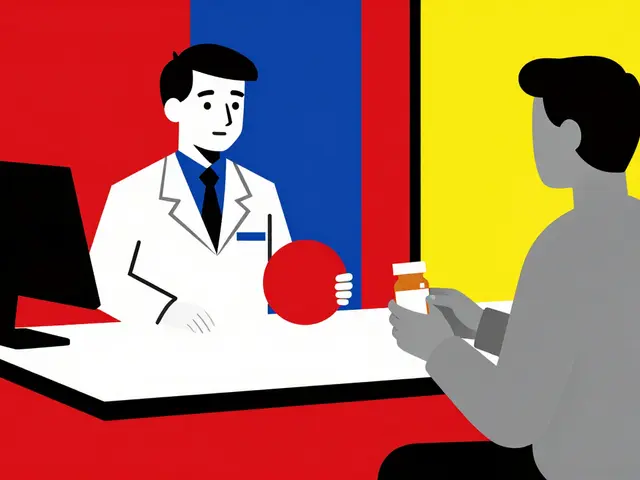

You take a pill for your headache. It works. But what if I told you that the pill might have been completely inactive? Or worse, what if the exact same chemical compound works better when it has a fancy brand name on the bottle, and worse when it’s labeled as a "generic"? This isn’t just about marketing tricks; it is about how your brain physically changes the way your body reacts to medicine based on what you believe.
We often think of medicine as pure chemistry. You swallow a molecule, it travels through your bloodstream, binds to a receptor, and poof-symptoms vanish. While that biological process is real, it is only half the story. The other half happens in your mind. This is the placebo effect, and when it comes to generic drugs, it plays a massive role in whether you feel better or worse. Understanding this connection is crucial because your expectations can literally alter the efficacy of your treatment.
The Science Behind Belief: How Expectations Change Biology
It used to be thought that the placebo effect was just "in your head" in a dismissive sense. Today, we know it is very much in your body. When you expect a treatment to work, your brain releases its own natural painkillers and stress regulators. Researchers like Ted Kaptchuk at Harvard Medical School have shown that these aren't imaginary feelings; they are measurable neurobiological events.
Consider a 2015 study from the University of Hamburg. Participants were given a placebo pill. Half were told it was original brand aspirin; the other half were told it was generic acetylsalicylic acid (ASA). Functional MRI scans revealed a stark difference. The group that believed they had the brand-name drug showed significantly stronger activation in the dorsolateral prefrontal cortex-the part of the brain responsible for processing expectations. Their brains were literally preparing for relief before the pill even dissolved. The generic-labeled group did not show this level of activation. The chemical was identical, but the brain's response was not.
This phenomenon extends beyond pain. In conditions like depression, where the placebo response rate is high (around 30-40%), the power of expectation is even more pronounced. If you doubt the medication, your brain may fail to engage the necessary pathways for recovery, regardless of the drug's potency.
The Brand Name Bias: Why Packaging Matters More Than You Think
Why does a label change biology? Because branding signals quality and trust. We are conditioned to associate expensive, well-known brands with superior results. A pivotal 2016 study published in Health Psychology by Faasse et al. demonstrated this clearly. They gave students with headaches two types of placebo pills: one labeled "Nurofen" (a popular brand) and one labeled "Generic Ibuprofen."
The results were striking. The "Nurofen" placebo provided pain relief equivalent to actual ibuprofen. The "Generic" placebo provided significantly less relief. The brand name alone increased the magnitude of the placebo effect by roughly 30-40%. Participants explicitly stated they trusted the brand more and expected it to work better. This isn't just vanity; it's a therapeutic advantage built into the psychology of consumption.
| Label Type | Pain Reduction (Scale 1-10) | Reported Side Effects | Brain Activation (Expectation Centers) |
|---|---|---|---|
| Brand Name (e.g., Nurofen) | 2.8 points | Low | High (Strong expectation signal) |
| Generic Label | 1.5 points | Moderate | Lower (Weaker expectation signal) |
| No Label / Plain | Minimal | Variable | Lowest |
The price tag also matters. In a 2017 study published in Science, researchers applied an identical cream to participants' arms. Some were told it cost $100; others were told it cost $2. Those who believed they had the expensive cream reported twice as much pain relief. Spinal cord recordings confirmed that their nervous systems were objectively dampening pain signals more effectively. Your wallet talks to your nerves.
The Nocebo Effect: When Doubt Creates Symptoms
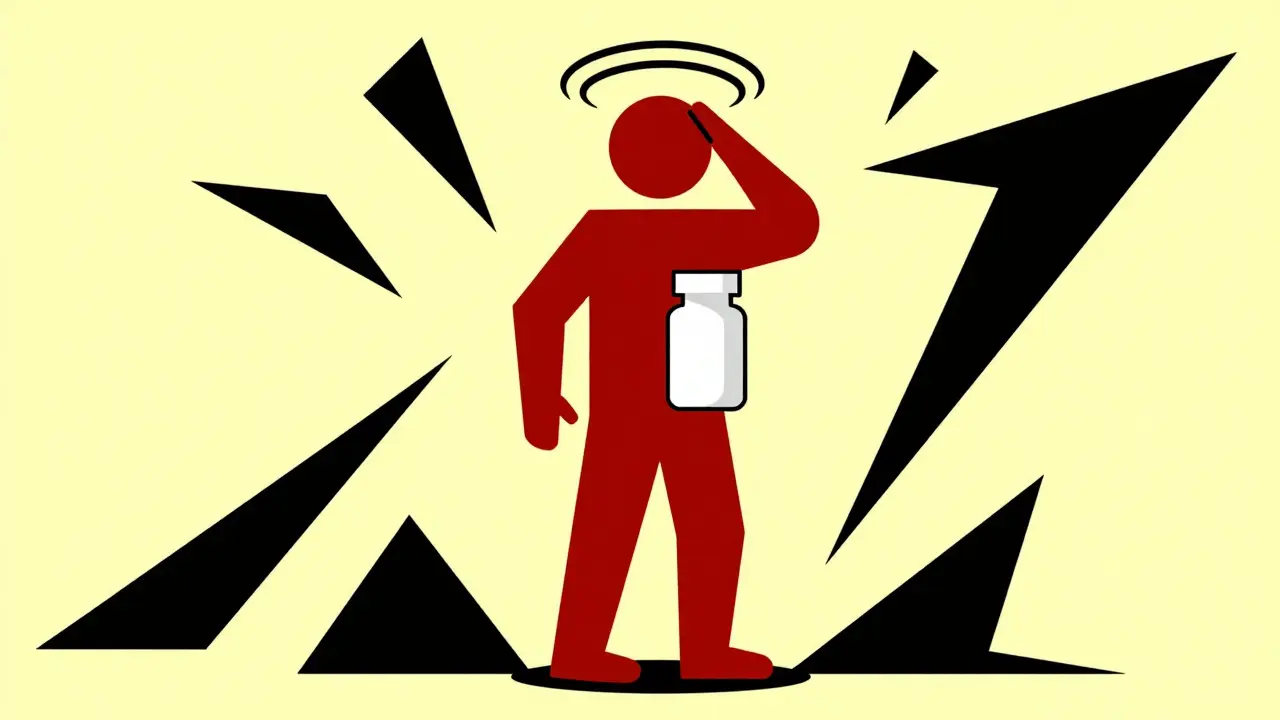
If positive expectations can heal, negative expectations can harm. This is the nocebo effect. It is the mirror image of the placebo effect, where the belief that a treatment will cause side effects actually triggers those symptoms.
This is particularly dangerous with generic medications. Many patients hear whispers that generics are "weaker" or contain different fillers that cause issues. Dr. Ulrike Bingel, Director of the Center for Mind, Brain and Behavior, notes that anxiety about medication causes patients to hyper-monitor their bodies. They start noticing benign sensations-a slight twinge in the muscle, a minor stomach rumble-and interpret them as drug-induced pain.
In large statin trials, between 4% and 26% of patients taking placebos discontinued the trial due to perceived side effects like muscle pain. They were taking sugar pills, yet they felt real pain because they expected statins to hurt their muscles. A 2021 analysis estimated that these negative perceptions reduce the real-world effectiveness of generics by 8-12%, costing healthcare systems billions in lost adherence and unnecessary doctor visits.
Reddit discussions among pharmacy students reveal this daily. Patients frequently report that their generic antidepressant "doesn't work" compared to the brand, even when blood tests show identical concentrations of the active ingredient. The doubt itself becomes a barrier to healing.
Do Enhanced Generics Solve the Problem?
Pharmaceutical companies know about this bias. Some have started producing "premium generics" with packaging that mimics brand-name aesthetics, hoping to capture that psychological boost. Teva Pharmaceutical’s "Advil Migraine" is a branded generic that looks and feels like the original, capturing significant market share despite being chemically identical to cheaper alternatives.
But does this actually help patients? The evidence is mixed. A 2019 study by Dr. Charlotte Blease found that enhancing the packaging of generic beta-blockers did not improve blood pressure outcomes or reduce anxiety compared to plain generic packaging. In fact, plain generic packaging sometimes led to greater anxiety reduction. This suggests that simply slapping a nicer box on a generic pill doesn't automatically fix the underlying trust issue. The context of the prescription and the doctor's explanation matter far more than the color of the bottle.

Bridging the Gap: Practical Strategies for Better Outcomes
So, how do we ensure you get the full benefit of your generic medication? It starts with communication. The gap between brand and generic performance is largely a gap in confidence. Healthcare providers play a critical role here.
- Explicit Equivalence Education: Doctors should spend an extra minute explaining that generics must meet strict FDA standards. They must deliver the same amount of active ingredient within 8-13% of the brand-name drug-a range well within therapeutic limits. Knowing this reduces uncertainty.
- Avoid Negative Framing: Never say "it's just a generic." Instead, use phrases like "this is the same active medication as [Brand Name], approved for identical results." Mentioning that it is "cheaper" can inadvertently trigger the nocebo effect, as lower price is subconsciously linked to lower quality.
- Expectation Priming: Recent research from Oxford (2023) shows that brief educational videos or explanations about how the brain supports healing can increase treatment efficacy by 28%. Telling a patient, "Your brain will help this medicine work," can activate those helpful neurobiological pathways.
- Standardized Packaging Cues: Including clear statements like "FDA-approved equivalent to [Brand]" on the label has been shown to increase patient confidence by 34% and adherence by 19%.
For patients, the takeaway is simple: Trust the science. Generic drugs are rigorously tested. If you switch from a brand to a generic, give it time. If you feel anxious, talk to your pharmacist. Addressing the fear directly can neutralize the nocebo effect and allow the medication to do its job.
The Bottom Line on Perception and Potency
The placebo effect with generics is not a flaw in the system; it is a feature of human biology. Our minds are deeply intertwined with our physical health. By recognizing that perception affects outcomes, we can stop fighting against our own psychology. We don't need to buy expensive brand-name drugs to get better results. We need to cultivate confidence in the treatments we already have. When you believe your medicine works, your body is more likely to agree.
Are generic drugs chemically identical to brand-name drugs?
Yes. Regulatory agencies like the FDA require generic drugs to contain the same active ingredient, in the same dose and strength, as the brand-name drug. They must also demonstrate bioequivalence, meaning they perform similarly in the body. The only differences are usually in inactive ingredients like colors or flavors, which do not affect therapeutic efficacy.
Can the placebo effect make a generic drug work better?
The placebo effect enhances the overall treatment outcome. Studies show that if a patient believes strongly in a generic drug's effectiveness, their brain may release endorphins and other neurotransmitters that complement the drug's action, potentially leading to faster or more complete symptom relief compared to a skeptical patient taking the same pill.
What is the nocebo effect in the context of generics?
The nocebo effect occurs when negative expectations cause real physical symptoms. If a patient believes a generic drug is inferior or unsafe, they may experience side effects like headaches or nausea, even if the drug itself is inert or well-tolerated. This is driven by anxiety and heightened bodily awareness.
Does paying more for a brand-name drug guarantee better results?
Not necessarily. While higher prices can create a stronger placebo effect due to perceived value, the clinical efficacy of the active ingredient remains the same. However, for some patients with high suggestibility, the psychological boost from a premium brand may lead to subjectively better experiences, though this is not a pharmacological improvement.
How can doctors help mitigate negative perceptions of generics?
Doctors can use "expectation management" techniques. This involves explicitly stating the equivalence of generics, avoiding negative language like "just a generic," and educating patients on the rigorous testing standards. Spending just 2-3 minutes on this explanation has been shown to significantly improve adherence and outcomes.