Post-Marketing Pharmacovigilance Interactive
Side Effect Detection Calculator
Clinical trials typically involve between 1,000 and 5,000 participants. Use this calculator to see the probability of a rare side effect being detected during trials versus post-marketing surveillance.
Probability in Clinical Trials
Probability in Real World (1M users)
Global Surveillance Systems
| Region | Primary System | Annual Reports |
|---|---|---|
| United States | MedWatch / FAERS | ~2,000,000 |
| European Union | EudraVigilance | ~2,400,000 |
| Japan | PMS System | ~150,000 |
| United Kingdom | Yellow Card Scheme | ~87,000 |
Key Features & Capabilities
-
300M+ RecordsU.S. Sentinel InitiativeActive Surveillance
-
30 CountriesEU GVP FrameworkStandardization
-
Started 1964UK Yellow CardHistorical Significance
-
4-10 YearsJapan ReexaminationRegulatory Cycle
The Underreporting Challenge
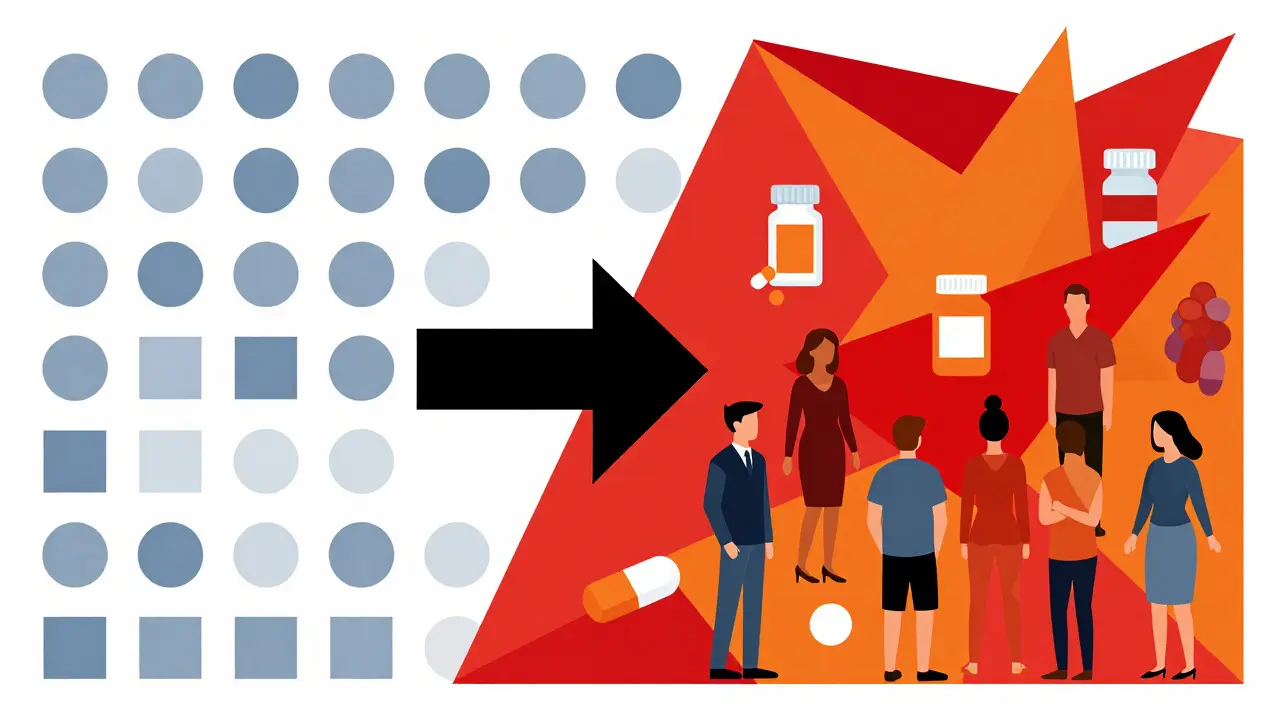
Despite advanced technology, human reporting remains flawed. Visualize the gap between actual adverse events and reported ones.
Why Report?
- Triggers vital safety signals for regulators.
- Helps identify risks missed in clinical trials.
- Can lead to label updates or market withdrawals.
- Protects future patients from harm.
Imagine you’ve just been prescribed a new medication. The doctor says it’s safe, the trials were successful, and millions of people are using it. But what happens if a rare side effect-one that didn’t show up in those initial tests-starts appearing in real life? This is where post-marketing pharmacovigilance, or PMPV for short, steps in. It’s the ongoing safety net that watches over drugs after they hit the market, catching hidden dangers before they cause widespread harm.
Clinical trials are rigorous, but they’re limited. They usually involve between 1,000 and 5,000 participants who are carefully screened to be relatively healthy. Real life is messy. Patients take multiple medications, have different genetic backgrounds, and live varied lifestyles. PMPV bridges the gap between controlled trial environments and the chaotic reality of everyday medicine use. Without this system, we’d be flying blind once a drug leaves the laboratory.
The Origin Story: Why We Monitor Drugs After Approval
Pharmacovigilance wasn’t always a standard practice. Its modern roots trace back to a tragic chapter in medical history: the thalidomide disaster of the early 1960s. Thalidomide was marketed as a safe sedative and morning sickness remedy, but it caused severe birth defects in thousands of babies worldwide. This catastrophe exposed a glaring flaw in drug regulation-we had no systematic way to track long-term or rare side effects after a drug was approved.
In response, the World Health Organization (WHO) launched its International Drug Monitoring Programme in 1968. This marked the birth of global pharmacovigilance. Today, it’s a mandatory requirement in almost every country. The European Medicines Agency (EMA) introduced Good Pharmacovigilance Practices (GVP) in 2012, creating a strict framework for how companies must monitor their products. Meanwhile, the U.S. Food and Drug Administration (FDA) runs the Adverse Event Reporting System (FAERS), which processes around 2 million reports annually. These systems ensure that if a problem emerges, regulators can act quickly to protect public health.
How Side Effects Are Actually Detected
You might wonder how a single patient’s bad reaction becomes part of a global safety alert. The process relies on several surveillance methods working together.
- Spontaneous Reporting Systems: This is the most common method. Doctors, patients, or pharmacists report suspected side effects directly to authorities. In the U.S., this is done through the FDA’s MedWatch program, established in 1993. It receives about 1.2 million reports each year. In the UK, the Yellow Card Scheme, started in 1964, collects similar data. While simple, this method suffers from underreporting-studies suggest only 1% to 10% of actual adverse events are ever reported.
- Active Surveillance via Electronic Health Records (EHR): Instead of waiting for reports, regulators mine existing data. The FDA’s Sentinel Initiative, launched in 2008, accesses records from over 300 million patients. By scanning these databases, algorithms can spot unusual patterns, like a spike in liver issues among users of a specific painkiller.
- Patient Registries and Prescription Event Monitoring: For high-risk drugs, companies may track specific groups of patients over time. This longitudinal approach helps identify long-term risks that spontaneous reports might miss.
These tools feed into massive databases. The EMA’s EudraVigilance database, for instance, held 28.5 million individual case safety reports as of late 2022. From this ocean of data, experts look for "signals"-clues that a drug might be causing harm more often than expected.
From Signal to Action: What Happens Next?
Finding a signal is only the first step. Once a potential safety issue is detected, a rigorous evaluation process begins. Regulatory bodies like the FDA’s Office of Surveillance and Epidemiology or the EMA’s Pharmacovigilance Risk Assessment Committee (PRAC) analyze the data to determine if the link is causal or coincidental.
If a risk is confirmed, several actions can follow:
- Label Updates: The simplest fix is updating the drug’s prescription label to warn doctors and patients about the new side effect.
- Risk Management Plans (RMPs): For higher risks, manufacturers must implement specific measures. This could include patient alert cards, restricted distribution programs, or mandatory testing before prescribing. Between 2015 and 2020, 92% of new molecular entities approved by the FDA required at least one such measure.
- Market Withdrawal: In extreme cases, the drug is pulled from the market entirely. The most famous example is Vioxx (rofecoxib). Approved in 1999 based on trials with 5,000 patients, post-marketing surveillance of over 80 million users revealed a nearly doubled risk of heart attacks. Merck withdrew the drug in 2004, preventing an estimated 88,000 to 140,000 excess heart attacks.
This process isn’t instantaneous. According to ICH guidelines published in 2023, signal validation should take 30 days, assessment 60 days, and regulatory action within 120 days. However, delays do happen. A 2021 study noted that 40% of required post-marketing studies were delayed beyond agreed timelines, highlighting the need for stricter enforcement.
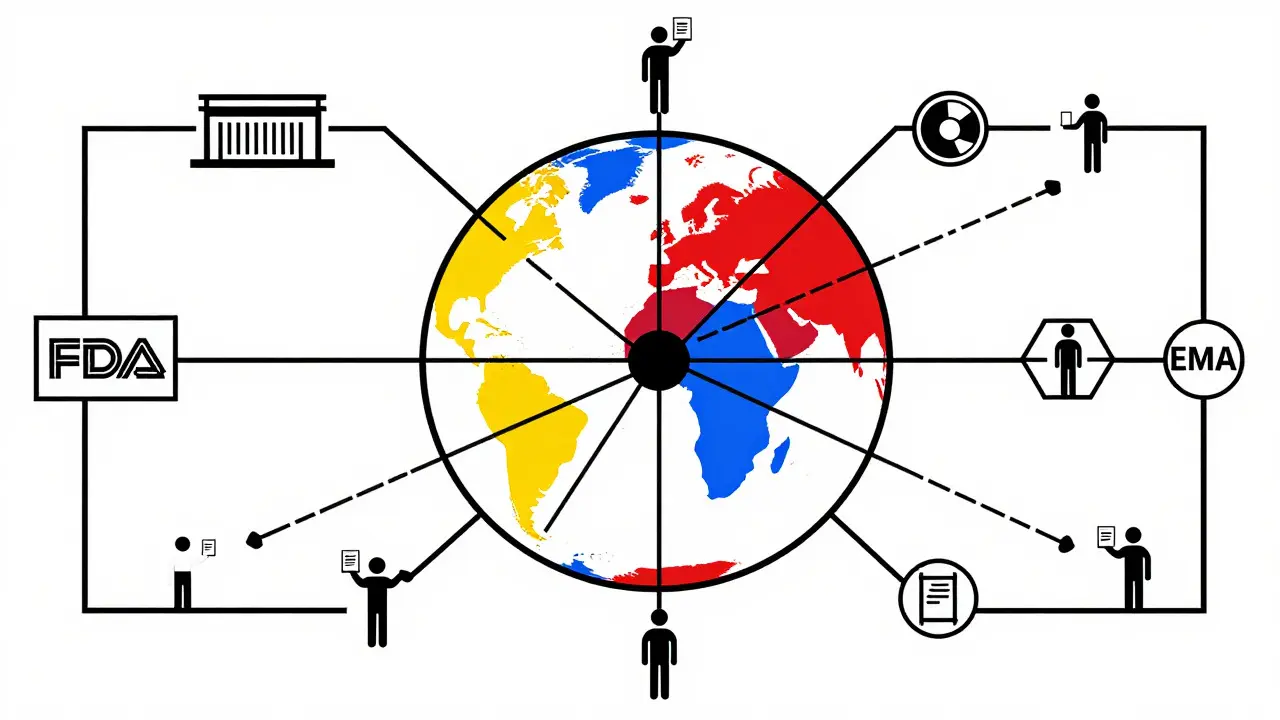
Global Differences in Drug Safety Monitoring
While the goal is universal, the methods vary significantly by region. Understanding these differences helps explain why some risks are caught faster in certain countries.
| Region | Primary System | Annual Reports Processed | Key Feature |
|---|---|---|---|
| United States | MedWatch / FAERS | ~2 million | Active surveillance via Sentinel System (300M+ records) |
| European Union | EudraVigilance | ~2.4 million | Harmonized GVP framework across member states |
| United Kingdom | Yellow Card Scheme | ~87,000 | World’s first PV program; strong mobile app adoption |
| Japan | PMS System | ~150,000 | Mandatory 4-10 year reexamination periods for new drugs |
The EU benefits from standardized rules across 30 countries, though implementation varies. The U.S. leads in active surveillance technology, leveraging AI to scan electronic records proactively. Japan takes a unique approach by requiring intensive monitoring periods immediately after approval, ensuring close watch on new therapies. Despite these strengths, all systems face challenges. Underreporting remains a global issue, with Africa having only 38 operational national centers serving 54 countries, resulting in drastically lower reporting rates compared to Europe.

The Role of Technology and Future Trends
Technology is transforming how we catch side effects. Traditional manual review is slow and prone to error. Enter artificial intelligence. The FDA launched Sentinel System 3.0 in 2023, using natural language processing to analyze 5 million new patient records daily. This AI-driven approach identifies potential safety signals 73% faster than previous methods.
Other innovations are on the horizon:
- Blockchain for Data Integrity: Companies like Novartis and Roche are piloting blockchain to secure data sharing between institutions, achieving 99.8% data integrity in trials. This ensures that safety data hasn’t been tampered with.
- Wearable Integration: Patient-generated data from devices like smartwatches is being integrated into safety monitoring. Apple’s partnership with Pfizer allows for real-time tracking of conditions like atrial fibrillation, providing continuous safety data outside clinical settings.
- Social Media Mining: AI systems can now scan platforms like Reddit or Twitter for mentions of side effects. IBM Watson Health demonstrated an 87.4% accuracy rate in predicting adverse drug reactions from social media posts, offering an early warning system for emerging trends.
By 2030, the WHO aims to increase global reporting rates by 50% and reduce signal detection time by 75%. McKinsey projects that real-world evidence from pharmacovigilance will influence 65% of regulatory decisions by then, up from just 28% in 2022. This shift means your daily experiences with medication could directly shape future drug approvals and warnings.
Why Your Report Matters
Despite advanced tech, human input remains crucial. Healthcare professionals often find reporting cumbersome-a 2022 AMA survey found 68% of physicians called the process tedious, taking an average of 22 minutes per report. Yet, 89% acknowledged its importance. Patients are even less aware; only 12% of consumers knew about MedWatch in a 2021 focus group.
If you experience a unexpected side effect, don’t assume it’s “just part of the deal.” Reporting it contributes to the collective knowledge base that keeps everyone safer. Whether through a doctor’s office, a pharmacy app, or an online portal, your voice adds a data point that could trigger a vital safety signal. In the world of post-marketing pharmacovigilance, every report counts.
What is the difference between clinical trials and post-marketing pharmacovigilance?
Clinical trials test drugs on small, controlled groups (usually 1,000-5,000 people) before approval to prove efficacy and basic safety. Post-marketing pharmacovigilance monitors drugs after they are widely used by diverse populations, detecting rare or long-term side effects that trials missed due to their limited scope.
How can I report a side effect to the FDA?
You can report side effects through the FDA’s MedWatch program. You can submit a report online via the FDA Safety Information and Adverse Event Reporting System, fill out a paper form (Form 3500A), fax it, or mail it. Healthcare professionals can also report directly through their institutional channels.
Why are so few adverse events reported?
Underreporting is a major challenge. Studies estimate only 1% to 10% of adverse events are reported. Reasons include lack of awareness among patients, the time-consuming nature of reporting forms for doctors, and the assumption that minor side effects aren’t worth reporting.
What is the Sentinel Initiative?
The Sentinel Initiative is the FDA’s active surveillance system. Launched in 2008, it uses electronic health record data from over 300 million patients to proactively detect safety signals without relying solely on voluntary reports. It uses advanced analytics to spot unusual patterns in real-time.
Can a drug be withdrawn from the market due to post-marketing findings?
Yes. If post-marketing surveillance reveals serious risks that outweigh benefits, regulators can mandate a withdrawal. The classic example is Vioxx, which was pulled in 2004 after data showed a significantly increased risk of heart attacks and strokes among its users.