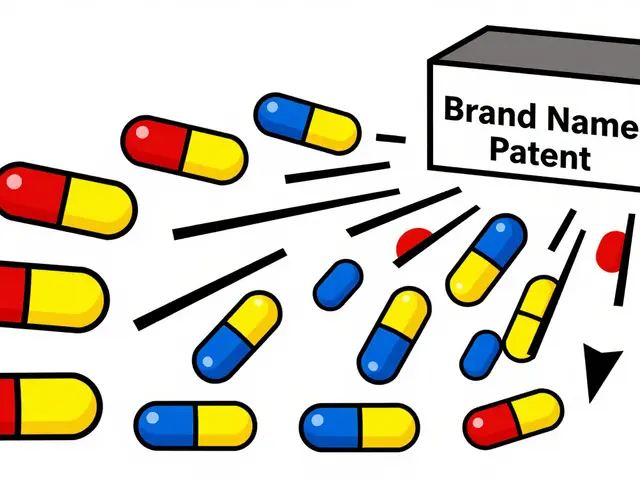
Have you ever wondered why your prescription looks different than the one you got last month? You are not alone. For healthcare providers, switching patients to generic medications is pharmaceutical products that contain the same active ingredients as brand-name drugs but are typically sold at significantly lower prices after patent expiration is a daily routine. It saves money, it helps the system run, and for most drugs, it works perfectly. But behind the scenes, there is a complex world of regulations, patient fears, and rare but serious clinical hiccups.
We often hear that generics are identical to brand names. That is mostly true, but "mostly" leaves room for questions. Providers-doctors, pharmacists, and nurses-are on the front lines of this transition. They see the data, they hear the complaints, and they make the calls on when to stick with a brand and when to switch. This article breaks down what real case studies and provider experiences tell us about using generic drugs in modern practice.
The Science Behind the Switch: Bioequivalence Explained
To understand provider confidence, you have to look at the rules. The U.S. Food and Drug Administration (FDA) does not let just any pill into the market. Under the Hatch-Waxman Act of 1984, which established the modern regulatory framework for generic drug approval, manufacturers must prove bioequivalence. This means the generic must deliver the same amount of active ingredient into a patient's bloodstream within the same timeframe as the brand name.
Specifically, the FDA requires that the generic’s performance falls within an 80-125% range compared to the brand-name product. This applies to two key metrics: Cmax (the peak concentration of the drug in the blood) and AUC (the total exposure over time). If a generic meets these standards, it gets an 'AB' rating in the FDA's Orange Book. This rating tells pharmacists that the drug is therapeutically equivalent and safe to substitute automatically.
For the vast majority of medications, this science holds up. A major 2019 study published in JAMA Internal Medicine looked at ten common drugs, including heart medications like amlodipine and antidepressants like sertraline. The researchers found no significant differences in clinical outcomes between patients taking authorized generics, regular generics, or brand-name versions. Hospitalization rates and medication discontinuation were nearly identical across all groups. For providers treating hypertension or depression, this data offers strong reassurance that the switch is clinically neutral.
When Caution Is Warranted: Narrow Therapeutic Index Drugs
However, medicine is rarely black and white. There is a specific group of drugs where providers exercise extreme caution: those with a narrow therapeutic index (NTI). These are medications where a small change in dose can lead to toxicity or treatment failure. Think of warfarin (a blood thinner), levothyroxine (for thyroid issues), or immunosuppressants used by transplant patients.
In these cases, the 80-125% bioequivalence window might feel too wide. A provider managing a stable transplant patient knows that even a slight fluctuation in drug levels could risk organ rejection. Consequently, many doctors will write "dispense as written" on prescriptions for NTI drugs to prevent automatic substitution. A 2015 systematic review highlighted that a significant portion of research on generic substitution focuses on these high-stakes areas, including epilepsy and organ transplantation. Here, the margin for error is slim, and providers prefer consistency over cost savings.

The Antiepileptic Dilemma: Seizures and Stability
Perhaps the most debated area in generic substitution is antiepileptic drugs (AEDs). Epilepsy management relies heavily on keeping brain chemistry stable. The American College of Neurology specifically recommends against mandatory substitution of AEDs without both patient and physician approval. Why? Because case reports exist of breakthrough seizures occurring when patients switched from brand-name AEDs to generic versions.
One documented case series showed patients who had been seizure-free on brand-name lamotrigine experienced recurrence after switching to a generic version. Crucially, most regained control when switched back to the brand. This does not mean all generic AEDs fail; rather, it highlights that individual patient sensitivity varies. For neurologists, the fear of a single breakthrough seizure-which can lead to injury or loss of driving privileges-often outweighs the potential cost savings. As a result, substitution rates for AEDs remain much lower (around 52%) compared to statins (98%).
Regulatory Action: The Concerta Case Study
Providers also watch how regulators respond to real-world problems. A notable example is the FDA’s investigation into generic versions of Concerta (methylphenidate), a medication for ADHD. In 2016, the FDA received a surge of complaints regarding "lack of effect" for two specific generic manufacturers. Patients reported that the medication wore off too quickly or didn't work at all.
The FDA launched a multi-disciplinary review, analyzing adverse events, laboratory testing, and application data. They found that the manufacturing process for these specific generics resulted in faster drug release than intended. The outcome? The FDA changed the therapeutic equivalence ratings for these products from 'AB' to 'BX' in the Orange Book. This meant they were no longer considered fully interchangeable without careful consideration. This case demonstrates that the system works: when signals emerge, regulators act, and providers are updated. It reinforces the importance of monitoring patient feedback rather than assuming all generics perform identically in every context.

Patient Perceptions and the Role of Communication
Data is only half the battle. The other half is the patient sitting in the exam room. User experiences reveal a significant gap between clinical evidence and patient belief. Many patients worry that "cheaper means worse." A 2024 survey in Greece found that while women were slightly more likely to follow physician advice on generics than men, trust remains fragile. Healthcare providers serve as the primary information source, yet some pharmacists themselves have expressed doubts about generic quality, which can trickle down to patients.
Dr. Sarah Ibrahim, featured in an FDA podcast, emphasized that counseling improves usability and compliance. When a doctor takes thirty seconds to explain, "This generic has the exact same active ingredient and has passed rigorous FDA testing," patient anxiety drops. Studies show that willingness to approve a generic switch increases significantly after brief discussions. Conversely, confusion arises when patients receive different-looking pills from different manufacturers throughout the year. One patient might get a blue oval in January and a white round tablet in March for the same drug. Without explanation, this visual inconsistency fuels distrust.
Economic Impact and Provider Decision-Making
Let’s talk numbers. Generics account for approximately 90% of all prescriptions dispensed in the United States but represent only 23% of total pharmaceutical spending. This efficiency is vital for the healthcare system. However, state regulations create friction. Some states require patient consent for substitution, while others mandate it. Research by Dr. William Shrank showed that states requiring patient consent had 25% lower generic substitution rates, leading to unnecessary use of expensive brand-name drugs.
For providers, the decision tree is becoming clearer. For common conditions like high cholesterol or acid reflux, the evidence supports seamless substitution. Eliminating consent requirements for certain medications could generate millions in savings, as shown in earlier Medicaid analyses. But for complex cases, the human element prevails. Electronic health records now include therapeutic equivalence indicators, helping doctors make informed choices instantly. The goal is not to ban generics but to apply them intelligently, balancing economic necessity with clinical precision.
Are generic medications always as effective as brand-name drugs?
For the vast majority of medications, yes. The FDA requires generics to demonstrate bioequivalence, meaning they deliver the same amount of active ingredient into the bloodstream within the same timeframe. Large-scale studies, such as those published in JAMA Internal Medicine, show no significant difference in clinical outcomes for common drugs like statins, antidepressants, and blood pressure medications. However, for narrow therapeutic index drugs (like warfarin or certain epilepsy meds), individual responses may vary, requiring closer monitoring.
Why do some providers avoid switching patients to generic antiepileptic drugs?
Antiepileptic drugs (AEDs) manage delicate brain chemistry. Even small fluctuations in drug levels can trigger breakthrough seizures. The American College of Neurology advises against mandatory substitution without approval because case studies have documented seizure recurrence in patients switched from brand-name AEDs to generics. Since the consequences of a seizure can be severe, many neurologists prefer the stability of a consistent brand product.
What is the significance of the 'AB' rating in the FDA Orange Book?
The 'AB' rating indicates that a generic drug is therapeutically equivalent to the reference listed brand-name drug. It means the generic has met all FDA standards for bioequivalence and quality. Pharmacists can generally substitute AB-rated generics automatically. Products with a 'B' rating (like BX) are not considered therapeutically equivalent due to differences in formulation or performance, requiring special consideration before substitution.
How can providers address patient concerns about generic quality?
Communication is key. Providers should explain that generics undergo rigorous FDA testing to ensure safety and efficacy. Addressing the visual differences (color, shape) caused by different manufacturers can reduce confusion. Emphasizing that the active ingredient is identical and highlighting the cost benefits often increases patient acceptance and adherence. Brief counseling sessions have been shown to improve compliance and outcomes.
What happened with the generic Concerta controversy?
In 2016, the FDA investigated complaints that two specific generic versions of Concerta were less effective than the brand name. Analysis revealed that these generics released the drug too quickly. The FDA responded by changing their therapeutic equivalence ratings from AB to BX in the Orange Book, signaling that they were not fully interchangeable. This case highlights the FDA's ability to monitor post-market performance and adjust regulations based on real-world evidence.