Rhabdomyolysis Risk Estimator
Select applicable factors below to see how they influence your risk profile for medication-induced rhabdomyolysis.
Your Risk Assessment
Relative Risk Multiplier:
1.0x
Compared to baseline average population
Risk Level:
* This tool is for educational purposes only and does not constitute medical advice. Always consult your healthcare provider regarding medication interactions.
You might feel a strange ache in your shoulders or notice your urine turning the color of tea. Most people ignore these signs, assuming it’s just a bad workout or dehydration. But when these symptoms appear alongside certain medications, they can signal rhabdomyolysis, a serious condition where damaged muscle tissue releases harmful substances into the blood. It is not just soreness; it is a medical emergency that can lead to permanent kidney damage or worse if left untreated.
This isn't about extreme exertion alone. While crush injuries and marathon running are famous causes, a significant portion of cases-about 7% to 10%-stem directly from how our medicines interact with each other. If you take daily prescriptions, especially for cholesterol or gout, understanding this risk could save your life.
The Silent Danger of Drug Interactions
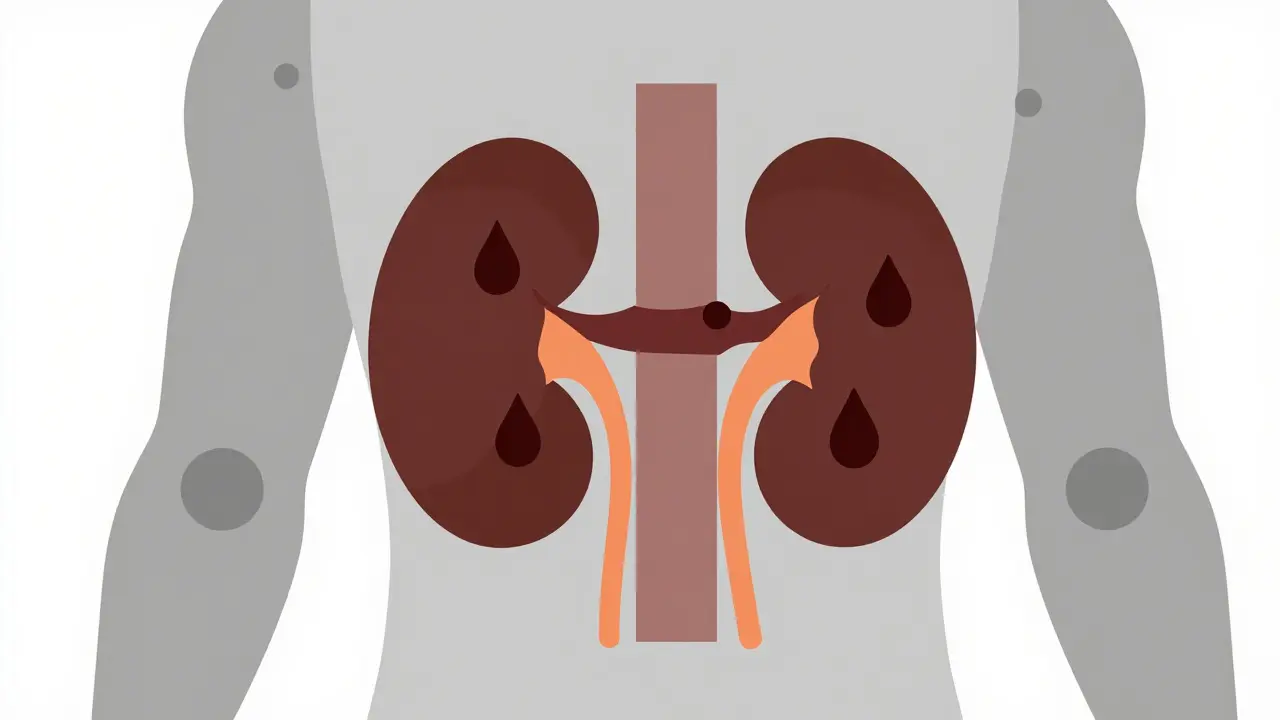
Rhabdomyolysis occurs when skeletal muscle cells break down rapidly. Inside these cells are proteins like myoglobin and enzymes such as creatine kinase (CK). When the cell membrane ruptures, these contents leak into your bloodstream. Myoglobin is particularly dangerous because it is toxic to the kidneys. As it travels through the renal system, it can clog the tiny filtering tubes, leading to acute kidney injury (AKI).
The scary part? The classic "triad" of symptoms-muscle pain, weakness, and dark urine-only shows up in about half of all cases. Many patients present with vague complaints like nausea, fever, or general fatigue. According to a 2019 systematic review in the Journal of Clinical Medicine, drug-induced cases often fly under the radar until the damage is done. By the time CK levels spike above 5,000 U/L, the kidneys may already be struggling.
Who is most at risk? Age and biology play a huge role. Patients over 65 face more than three times the risk compared to younger adults. Women are also 1.7 times more likely to develop this condition than men. If you have existing kidney issues (eGFR below 60), that risk jumps by 4.5 times. These aren't just statistics; they represent real vulnerabilities in how our bodies process medication as we age.
Statin Therapy: The Most Common Culprit
When doctors talk about medication-induced rhabdomyolysis, statins, cholesterol-lowering drugs like atorvastatin and simvastatin are usually the first name on the list. They account for roughly 60% of all drug-related cases. Specifically, atorvastatin (Lipitor) and simvastatin (Zocor) are responsible for nearly 80% of statin-related reports in the FDA's database.
Statins themselves are generally safe and life-saving for heart health. The danger arises when they mix with other drugs that inhibit the enzyme CYP3A4. This enzyme lives in your liver and gut, working hard to break down medications so they don't build up to toxic levels. When another drug blocks CYP3A4, statin levels in your blood can skyrocket, turning a helpful dose into a muscle-toxic one.
Consider this scenario: You start taking simvastatin for high cholesterol. A month later, you get a sinus infection and your doctor prescribes erythromycin, an antibiotic. Erythromycin is a potent CYP3A4 inhibitor. Suddenly, your body can't clear the simvastatin fast enough. Within days, your CK levels could exceed 20,000 U/L, triggering severe muscle breakdown. This specific interaction increases the risk of rhabdomyolysis by nearly 19-fold, according to FDA pharmacovigilance data.
Other High-Risk Medication Combinations
While statins get the most attention, they are not alone. Several other common medications carry significant risks when combined incorrectly.
| Medication Class | Common Drugs | Dangerous Interaction With | Risk Factor Increase |
|---|---|---|---|
| Fibrates | Gemfibrozil | Simvastatin | 15-20x higher risk |
| Colchicine | Colcrys | Clarithromycin / Strong CYP3A4 inhibitors | 14.2x higher risk |
| Antiretrovirals | Zidovudine | HIV treatment protocols | 12.3% incidence of high CK |
| Tyrosine Kinase Inhibitors | Erlotinib | Simvastatin | Severe cases within 72 hours |
| Anesthetics | Propofol | Prolonged ICU infusion | 68% mortality if syndrome develops |
Take colchicine, a standard treatment for gout. On its own, it’s manageable. But combine it with clarithromycin (another antibiotic) or strong CYP3A4 inhibitors, and the European Journal of Clinical Pharmacology found that nearly 9% of patients developed rhabdomyolysis. The European Medicines Agency issued specific warnings in 2021 about this combination, citing a 14-fold increase in risk based on over 1,200 adverse event reports.
Even cancer treatments pose risks. Erlotinib, used for lung cancer, interacts dangerously with simvastatin. Case studies show patients developing CK levels over 20,000 U/L within just three days of starting this combo. These aren't rare anomalies; they are predictable chemical collisions that healthcare providers must anticipate.
Recognizing the Early Warning Signs
Catching rhabdomyolysis early is critical. Because the full symptom triad appears in only 50% of cases, you need to look beyond just "sore muscles." Pay attention to these subtle clues:
- Unexplained Dark Urine: This is often described as "cola-colored" or "tea-colored." It indicates myoglobin is leaking into your urine. If your urine looks darker than usual without drinking less water, seek help immediately.
- Profound Weakness: Not just tiredness, but actual inability to lift arms or stand up easily. This often affects large muscle groups like thighs, hips, and shoulders.
- Swelling and Tenderness: Muscles may feel firm, swollen, or painful to the touch, even without recent exercise.
- Nausea and Fever: These systemic symptoms often accompany the muscle breakdown due to the release of inflammatory markers.
Timing matters too. Research shows that over 50% of drug-induced cases occur within the first 30 days of starting a new medication or changing a dosage. If you’ve recently added a new pill to your regimen and feel "off," don’t brush it off. Your body might be sounding an alarm.
Diagnosis and Immediate Treatment
If you suspect rhabdomyolysis, go to the emergency room. Diagnosis relies heavily on blood tests. The gold standard is measuring creatine kinase (CK) levels. Normal CK is usually under 200 U/L. In rhabdomyolysis, it often exceeds 1,000 U/L, and severe cases can hit 100,000 U/L. A level above 1,000 U/L has a 99.2% specificity for the condition, making it a reliable diagnostic marker.
Treatment is aggressive and immediate. The primary goal is to protect your kidneys. Doctors will stop the offending medication right away. Then comes hydration. You’ll receive intravenous fluids-typically 3 liters of normal saline in the first six hours-to flush myoglobin out of your system. The target is a urine output of 200-300 mL per hour.
In some cases, doctors add sodium bicarbonate to your IV fluids. This alkalinizes your urine, preventing myoglobin from precipitating and clogging the kidney tubules. Monitoring electrolytes is crucial too. Muscle breakdown releases potassium, which can cause fatal heart rhythms if levels get too high (hyperkalemia). Calcium levels may drop (hypocalcemia), requiring careful management.
In severe cases where kidney failure occurs, dialysis becomes necessary. About 50% of treated patients develop acute kidney injury, and mortality rates range from 5% to 15% in those who require dialysis. Speed saves lives here.
Prevention Strategies for Polypharmacy Patients
The rise of polypharmacy-taking five or more medications-is a major driver of these emergencies. Elderly patients facing this reality are 17 times more likely to experience drug-induced rhabdomyolysis. Here is how you can stay safe:
- Maintain a Master List: Keep an updated list of every prescription, over-the-counter drug, and supplement you take. Share this with every doctor and pharmacist you see.
- Ask About Interactions: Before starting any new medication, ask specifically: "Could this interact with my current meds to affect my muscles or kidneys?"
- Avoid Self-Medicating: Don’t grab leftover antibiotics or herbal supplements without checking with your provider. Even natural remedies can inhibit CYP3A4 enzymes.
- Monitor Symptoms: If you’re on statins, fibrates, or colchicine, report unexplained muscle pain or dark urine immediately. Don’t wait for your next appointment.
- Consider Genetic Testing: Emerging research highlights the SLCO1B1*5 allele, which increases simvastatin-induced myopathy risk by 4.5 times. Ask your doctor if genetic screening is appropriate for you.
Regulatory bodies are catching up too. The FDA’s Sentinel Initiative monitors these risks closely, and the EMA now requires statin labels to explicitly warn against strong CYP3A4 inhibitors. However, the responsibility also falls on us to be informed advocates for our own health.
How long does it take for rhabdomyolysis to develop after starting a new medication?
Most drug-induced cases occur within the first 30 days of starting a new medication or changing a dosage. For statins specifically, symptoms typically appear around 29 days after initiation. However, interactions can happen quickly, sometimes within 48 to 72 hours, especially with potent inhibitors like macrolide antibiotics.
Can rhabdomyolysis happen without muscle pain?
Yes. The classic triad of muscle pain, weakness, and dark urine only presents in about 50% of cases. Some patients experience only mild discomfort or no pain at all, while others present with non-specific symptoms like nausea, fever, or fatigue. This is why monitoring CK levels and urine color is critical for high-risk patients.
What is the biggest risk factor for medication-induced rhabdomyolysis?
The combination of advanced age (over 65), female sex, and pre-existing kidney disease significantly increases risk. Additionally, taking multiple medications (polypharmacy), particularly those involving CYP3A4 inhibitors like certain antibiotics or antifungals alongside statins or colchicine, creates the highest danger zone.
Is rhabdomyolysis reversible?
In many cases, yes, if treated promptly. Complete recovery typically takes 12 to 13 weeks for patients who do not develop kidney failure. However, if acute kidney injury occurs and dialysis is needed, recovery can take up to 28 weeks. About 44% of survivors report persistent muscle weakness six months after the incident.
Which antibiotics are most dangerous to mix with statins?
Macrolide antibiotics like erythromycin and clarithromycin are particularly risky because they strongly inhibit the CYP3A4 enzyme. Azole antifungals like itraconazole also pose significant risks. If you are prescribed these while on a statin, your doctor may temporarily pause the statin therapy or switch to a safer alternative like pravastatin or rosuvastatin.