
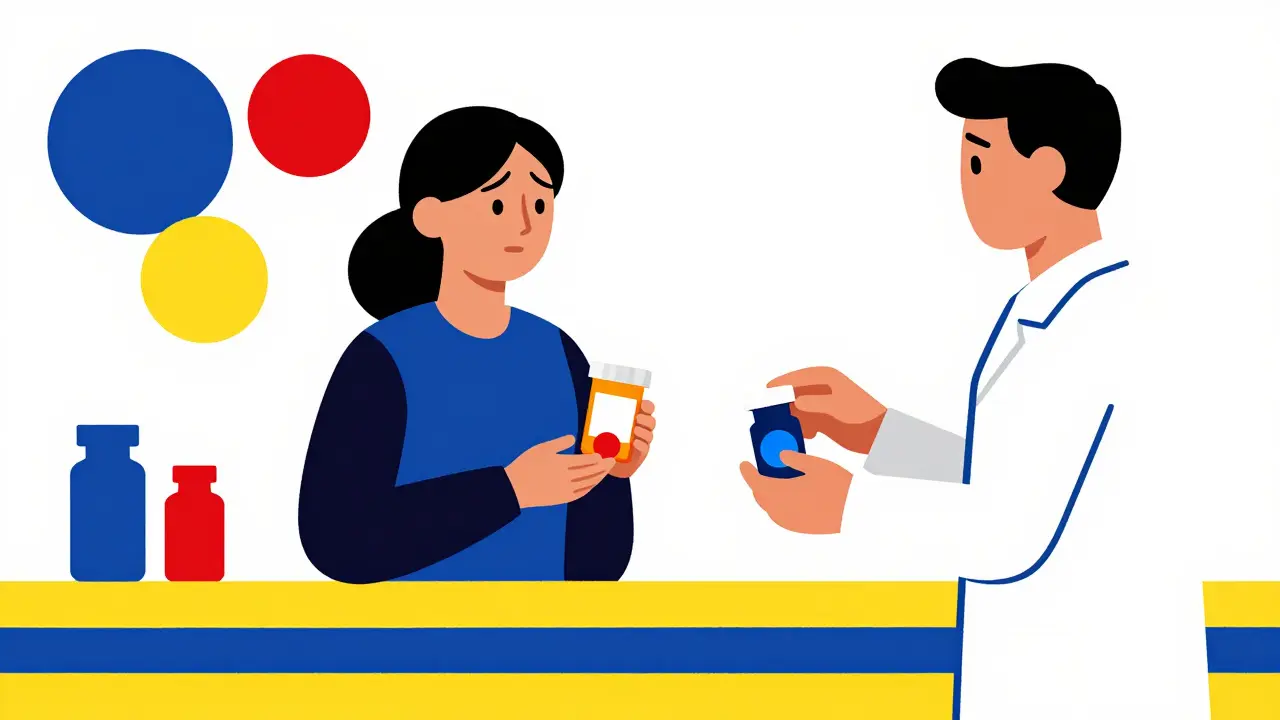
Imagine standing at a pharmacy counter, holding a prescription that looks completely different from what you took last month. The pill is a different color. Maybe it’s smaller. You ask the pharmacist if this is the right medicine, but the explanation flies over your head because it’s in English. This scenario plays out thousands of times a day for Spanish-speaking patients in the United States. It creates fear, confusion, and sometimes leads people to stop taking life-saving treatments altogether.
This is why Spanish-language resources on generic medications are not just nice-to-have extras-they are critical tools for patient safety and health equity. With nearly 62 million Hispanic residents in the U.S., bridging the gap between medical terminology and everyday understanding is essential. These resources help explain that a generic drug works exactly like its brand-name counterpart, even if it looks different.
The Core Problem: Confusion Over Appearance and Cost
Why do we need specialized guides for generic drugs? The answer lies in two main factors: appearance and cost. When a doctor switches a patient from a brand-name drug to a generic version, the active ingredient remains the same. However, the inactive ingredients-those that determine the pill’s color, shape, and size-often change. For a patient who relies on visual cues to recognize their medication, this change can be alarming.
Dr. Maria Hernandez, an Associate Professor of Medical Education at Harvard Medical School, highlighted this issue in a 2022 study. She noted that while bilingual resources have reduced medication errors by 23% since 2015, confusion about generics remains a top cause of non-adherence. Many patients believe that a different-looking pill means a weaker or different medicine. Without clear explanations in their native language, they may refuse the cheaper option or, worse, double up on doses thinking they aren’t getting enough.
Cost is the other major driver. According to testimony before the House Committee on Energy and Commerce, 68% of Spanish-speaking patients seek generic alternatives due to financial concerns. Yet, only 32% fully understand the concept of therapeutic equivalence-the idea that generics must meet strict FDA standards to prove they work the same way as brand names. Resources that fail to address this trust gap leave patients vulnerable to misinformation.
Key Tools for Patients and Providers
Several high-quality resources have emerged to help both patients and healthcare providers navigate these conversations. These tools range from simple lists to interactive apps, each serving a specific role in ensuring safe medication use.
| Resource Name | Primary Audience | Key Feature | Best Use Case |
|---|---|---|---|
| AHRQ My Medicines List | Patients & Caregivers | Bilingual tracking sheet with QR codes for video explanations | Daily medication management and inventory checks |
| MedlinePlus Español | General Public | Comprehensive database with side-by-side brand/generic comparisons | Researching specific drug information and side effects |
| Wake AHEC Translation Card | Pharmacists & Nurses | Dialogue templates for explaining appearance changes | Clinical interactions and bedside communication |
| NIH Medicamento Genérico App | Mobile Users | Visual comparisons, cost calculators, and Q&A functionality | On-the-go verification and cost savings analysis |
The Agency for Healthcare Research and Quality (AHRQ) offers one of the most practical tools: the "My Medicines List." Updated in early 2024, this resource allows users to document both the brand name and generic name of their medicines, along with dosage and frequency. The recent addition of QR codes linking to video explanations in multiple Spanish dialects addresses the literacy barrier, making it accessible to those who struggle with reading complex text.
For healthcare providers, the Wake AHEC pharmacy translation card is invaluable. It provides ready-made phrases like "Esta medicina tiene una apariencia diferente, pero es lo mismo" (This medicine looks different, but it is the same). This direct approach tackles the visual anxiety patients feel when they see a new pill bottle. Studies show that using such visual aids and clear scripts can reduce generic medication confusion by 37%.
Navigating Regional Terminology Differences
One of the biggest challenges in creating these resources is the diversity of the Spanish language itself. There is no single "Spanish" for medicine. Terms vary significantly between Spain, Mexico, and South American countries. For example, the pain reliever known as "acetaminofén" in Latin America is called "paracetamol" in Spain. Both refer to the same generic compound, but using the wrong term can confuse a patient.
Elena Rodriguez, a translation expert, criticized many older resources for ignoring these regional nuances. In her 2023 analysis, she pointed out that failing to address these variations causes significant confusion, especially for patients who travel or live in diverse communities. Modern resources like MedlinePlus now include regional terminology notes, helping users identify which word applies to their context.
Another common pitfall involves words that look similar but mean different things. For instance, "pastillas" generally means pills, but in some regions, it specifically refers to birth control pills. Misunderstanding this distinction could lead to serious medication errors. Professional guides now emphasize the importance of using neutral Spanish or confirming local usage during consultations.
Building Trust Through Visuals and Audio
Text alone is often not enough to build trust in generic medications. Visual and audio elements play a crucial role in patient education. The National Institutes of Health’s "Medicamento Genérico" app, launched in late 2023, has been downloaded over 147,000 times. Its success stems from features like side-by-side images of brand versus generic versions. Seeing that the pills might differ in color but share the same molecular structure helps demystify the process.
Kaiser Permanente implemented a similar strategy in their Spanish medication portal. By including audio pronunciations of medication names, they helped patients correctly communicate with pharmacists. Correct pronunciation is vital; mispronouncing "farmacia" (pharmacy) or specific drug names can lead to misunderstandings. Lingoda’s pharmacist communication guide emphasizes proper phonetics, noting that anglicized pronunciations can hinder clear dialogue.
These multimedia approaches address the root of the fear: the unknown. When patients can see, hear, and read consistent information, their confidence grows. A survey by the California Health Care Foundation found that 78% of Spanish-preferring patients felt more confident using generics after receiving bilingual guides with visual aids.
Practical Steps for Patients and Families
If you or a family member relies on Spanish-language resources for medication management, here are actionable steps to ensure safety:
- Use the AHRQ List: Download the "My Medicines List" and fill it out together with your provider. Note both the brand and generic names.
- Ask About Appearance: Before leaving the pharmacy, ask if the pill will look different. Use the phrase: "¿Se verá diferente la pastilla genérica?" (Will the generic pill look different?)
- Verify Regional Names: If you traveled recently, confirm the drug name used in your current region. Check MedlinePlus for regional variations.
- Leverage Technology: Install the NIH app or use hospital portals that offer video explanations. Watch the clips on bioequivalence to understand why generics are safe.
- Engage Pharmacists: Encourage your pharmacist to use translation cards or speak slowly. Do not hesitate to ask them to repeat instructions or write them down in Spanish.
Remember, switching to a generic should never feel like a gamble. It is a standard, regulated practice designed to save money without sacrificing health. Understanding the resources available empowers you to make informed decisions.
The Future of Language Access in Pharmacy
The landscape of medication education is evolving rapidly. Epic Systems Corporation is piloting AI-powered translation tools in electronic health records. These systems automatically generate Spanish explanations tailored to a patient’s regional background. While still in testing phases across 37 hospitals, this technology promises to personalize communication at scale.
Regulatory pressures also drive improvement. Section 1557 of the Affordable Care Act mandates language access, and the CLAS Standards require culturally appropriate materials. As the Hispanic population grows-projected to reach 111 million by 2060-the demand for high-quality, nuanced resources will only increase. Healthcare systems that invest in these tools today are building trust that will pay off in better adherence and healthier outcomes tomorrow.
For now, the combination of established guides like AHRQ’s lists, digital tools like the NIH app, and trained providers using translation cards offers a robust safety net. The goal is simple: every patient, regardless of language, should know exactly what they are taking and why it works.
What is the difference between a brand-name and a generic medication?
Brand-name and generic medications contain the same active ingredients and work the same way in the body. The main differences are usually the price and the appearance (color, shape, size) due to different inactive ingredients. Generics must meet FDA standards for bioequivalence, meaning they deliver the same amount of active ingredient into your bloodstream over the same period.
Why do generic pills look different from brand-name pills?
Generic manufacturers cannot copy the exact trademarked appearance of a brand-name drug. They use different dyes and binders to create the pill, which results in different colors or shapes. This does not affect the drug's effectiveness. Resources like the NIH app provide side-by-side images to help patients recognize these normal variations.
Are there reliable Spanish-language resources for checking medication names?
Yes. MedlinePlus offers extensive bilingual databases. The Agency for Healthcare Research and Quality (AHRQ) provides the "My Medicines List" in Spanish. Additionally, the National Institutes of Health (NIH) developed the "Medicamento Genérico" mobile app, which includes visual comparisons and cost calculators.
How can I ensure my pharmacist understands my Spanish dialect?
If you notice confusion, explicitly state where you are from (e.g., Mexico, Colombia, Spain) so the pharmacist can adjust their terminology. Use clear phrases like "No entiendo esta palabra" (I don't understand this word). Many pharmacies now have translation cards or apps that support regional variations to bridge this gap.
Is it safe to switch between generic manufacturers?
Yes, it is generally safe. All generic drugs approved by the FDA must demonstrate bioequivalence to the brand-name reference product. While the pill's appearance may change slightly between manufacturers, the therapeutic effect remains consistent. If you have concerns about a specific switch, consult your doctor or pharmacist.
What should I do if I think my generic medication isn't working?
Do not stop taking the medication abruptly. Contact your healthcare provider immediately. Sometimes, the perceived lack of efficacy is due to placebo effects related to the pill's appearance, or other health factors. Your provider can verify if the generic is appropriate for you or if a brand-name alternative is medically necessary.
Where can I find bilingual medication lists for my appointments?
You can download the "My Medicines List" from the AHRQ website. It is available in both English and Spanish and includes fields for brand names, generic names, dosages, and reasons for taking each medication. Bringing this list to appointments helps ensure accurate communication with all providers.
Do generic medications have the same side effects as brand names?
Yes, because they contain the same active ingredient, the potential side effects are essentially the same. However, rare allergic reactions to inactive ingredients (like dyes or fillers) can occur if you switch manufacturers. Always report any new symptoms to your doctor.

Roderick Gooden
May 29, 2026 AT 16:19It is absolutely critical that we address the systemic failures in healthcare communication, especially when it comes to the nuances of generic medication appearances and the subsequent confusion among Spanish-speaking populations who are already marginalized by language barriers that prevent them from accessing adequate care. The fact that a simple change in pill color or shape can lead to non-adherence is not just a minor inconvenience but a profound failure of our medical infrastructure to prioritize patient safety over cost-cutting measures that ignore the human element of trust and understanding. We must recognize that the inactive ingredients, while chemically inert in terms of therapeutic effect, play a massive psychological role in how patients perceive their treatment, and ignoring this reality is negligent at best and dangerous at worst.
Aishwarya Thankachan
May 29, 2026 AT 22:31OMG yes!! 🙌🏽 This is so true! 💊✨ I work in pharma compliance & this bioequivalence stuff is huge right now 📈 The FDA standards are strict but the visual gap is real 😬 #HealthEquity
ANGELA CHINENYE
May 30, 2026 AT 03:31The resources mentioned here are genuinely helpful; however, it is important to note that the AHRQ list requires consistent updating by the patient, which can be a burden for elderly individuals who may struggle with digital literacy or memory issues. It would be beneficial if pharmacists could proactively provide these printed lists during every refill, ensuring that the patient always has an up-to-date reference. Furthermore, the QR codes linking to video explanations are a fantastic addition, as they cater to those who prefer visual learning over reading dense text, thereby bridging the literacy gap effectively. We should advocate for hospitals to integrate these tools into their standard discharge protocols to ensure continuity of care.
Jonathan Paul
May 31, 2026 AT 23:14look i dont need no fancy app to tell me whats in my pills its all just chemical slop anyway why do we even bother with generics when the big pharma guys know what works best? its stupid to think a cheap pill is the same as the brand name you get what you pay for people are gullible idiots for believing this propaganda about saving money on meds
Lenny Cruz
June 2, 2026 AT 02:37The notion that 'cheap' implies inferior is a quaint, bourgeois misunderstanding of pharmaceutical economics. Generic drugs are subjected to rigorous FDA scrutiny regarding bioequivalence, meaning the active ingredient's absorption rate and extent are statistically indistinguishable from the brand-name counterpart. To suggest otherwise is to ignore the scientific method in favor of marketing-driven elitism. The real issue isn't the quality of the generic, but the arrogance of assuming that appearance dictates efficacy, a fallacy that persists despite decades of clinical evidence proving otherwise.
Aswin Narayan J
June 2, 2026 AT 22:40You guys are missing the point entirely! In India, we have been using generics for decades without any major issues because we understand that medicine is medicine regardless of the packaging. The problem in the US is the corporate greed that tries to make people believe they need the expensive version. Stop being so naive and start trusting science instead of your eyes!
Jennifer Legore
June 4, 2026 AT 08:05I am thrilled to see such comprehensive information shared here! :) It is wonderful to know that organizations like AHRQ and NIH are taking proactive steps to improve health equity for Spanish-speaking communities. These resources empower patients to take control of their health, and I encourage everyone to utilize the My Medicines List to stay organized. Let us continue to support initiatives that promote clear communication and understanding in healthcare! :)
Jerry Mathews
June 5, 2026 AT 21:14This is really cool info man. I never thought about how the color of the pill could mess someone up. Makes sense though, if you see something different you might freak out. Good thing there are apps for that now. Helps keep things chill and safe for everyone involved.
Dave Villeneue
June 6, 2026 AT 15:12Your analysis lacks depth. You fail to acknowledge the placebo effect's significant role in perceived efficacy differences between brand and generic formulations. Patients often report adverse effects due to expectation bias rather than physiological reaction. This cognitive dissonance is not addressed adequately in your superficial overview.
Alyssa Zucker
June 6, 2026 AT 19:35I hear you. It’s scary when your medicine changes. I wish more doctors would just explain it clearly instead of rushing through it.
Francis Saul
June 6, 2026 AT 21:13hey great post thanks for sharing this info its really helpful for my mom she speaks spanish and gets confused alot at the pharmacy so im gonna print out that list for her hope it helps her feel better about taking her meds