
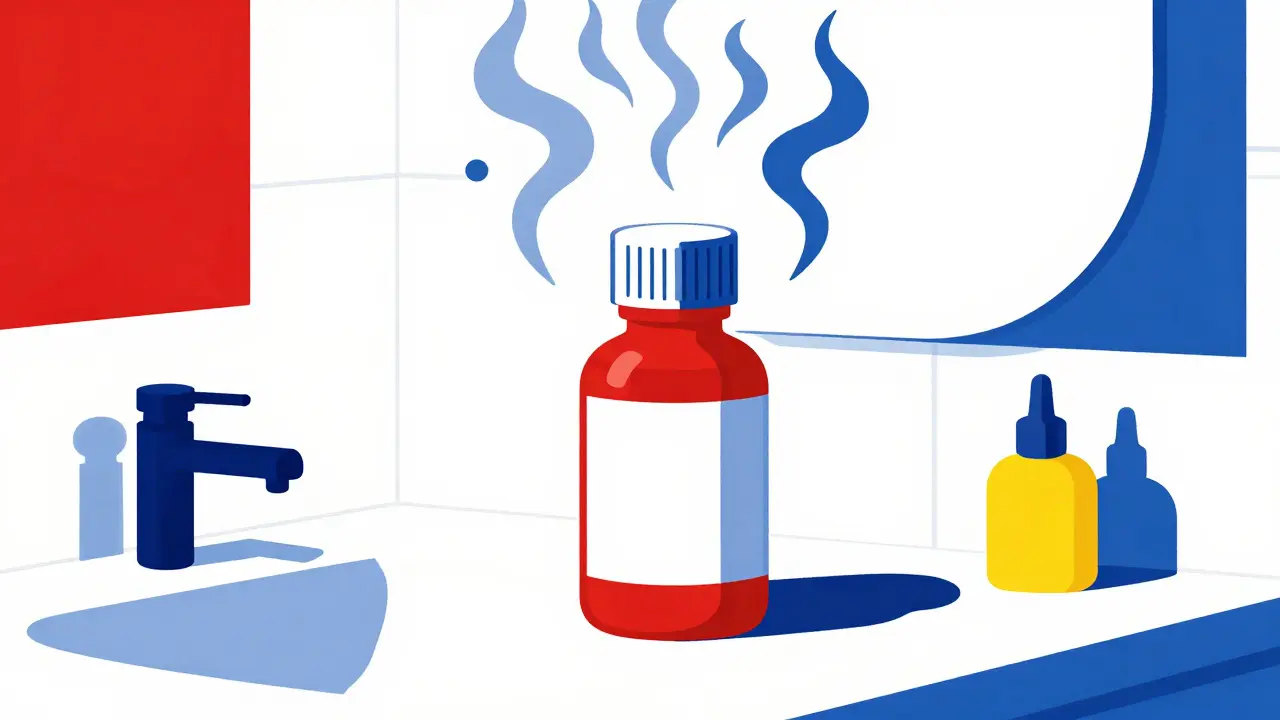
You probably check the date on the bottle before taking a pill, but that date is actually a bit of a lie. The expiration date is a guarantee based on a specific set of conditions-usually a cool, dry place. If your meds have been sitting in a humid bathroom or a hot car, they might be expired medications long before the calendar says so.
Heat and moisture don't just make a pill look weird; they physically break down the chemical bonds that make the drug work. When those bonds break, the medicine loses its potency. In some cases, it doesn't just stop working-it can actually change into something that irritates your body or causes unexpected side effects. If you're relying on a life-saving drug, "mostly working" isn't good enough.
| Medication Type | Sensitivity Level | Primary Risk | Critical Temperature Limit |
|---|---|---|---|
| Biologics (Monoclonal Antibodies) | Extreme | Protein denaturation | Must stay between 2-8°C |
| Insulin / Injectables | High | Rapid potency loss | Degrades quickly above 25°C |
| Liquid Antibiotics | High | Chemical breakdown | Requires refrigeration |
| Solid Tablets (Acetaminophen) | Low | Slow degradation | Stable up to 30°C |
The Science of Chemical Breakdown
Every drug has a stability profile. Think of it like a structural blueprint. When a medication is exposed to heat, the molecules start moving faster and colliding, which can snap the chemical bonds that create the active ingredient. Potency is the specific concentration of an active ingredient required to produce a biological effect. When heat kills that potency, you're essentially taking a placebo or a diluted version of your medicine.
Humidity adds another layer of danger. Moisture acts as a catalyst for Hydrolysis, which is a chemical reaction where water breaks the bonds of a compound. A classic example is aspirin. When aspirin hits moisture, it can decompose into vinegar (acetic acid) and salicylic acid. Not only does this mean the pill won't help your headache as well, but the resulting chemicals can cause significantly more stomach irritation than a fresh tablet would.
High-Risk Zones: Where You're Accidentally Killing Your Meds
Most people store their medicine in the bathroom, but that's actually one of the worst places for them. Why? Because every time you take a shower, the humidity in that room spikes to between 70% and 90%. That moisture seeps into bottles, especially if the caps aren't airtight, and begins the degradation process.
The kitchen is another danger zone. Storing a bottle of pills next to the oven or on a windowsill exposes them to temperatures that can easily climb above 32°C (90°F). And then there's the "car mistake." On a sunny day, the interior of a car can hit 60°C (140°F). This isn't just bad for the chemicals; it can be physically dangerous. For instance, Inhalers can actually explode if the propellant expands too much due to heat exceeding 49°C (120°F).
When "Almost Working" Is a Medical Emergency
For a vitamin C supplement, a 10% drop in potency is barely noticeable. But for life-saving medications, it's a disaster. Consider insulin. Research shows that insulin can lose up to 20% of its strength after just 24 hours at 37°C (98.6°F). For a diabetic patient, that loss of potency leads to uncontrolled blood glucose levels and potential hospitalization.
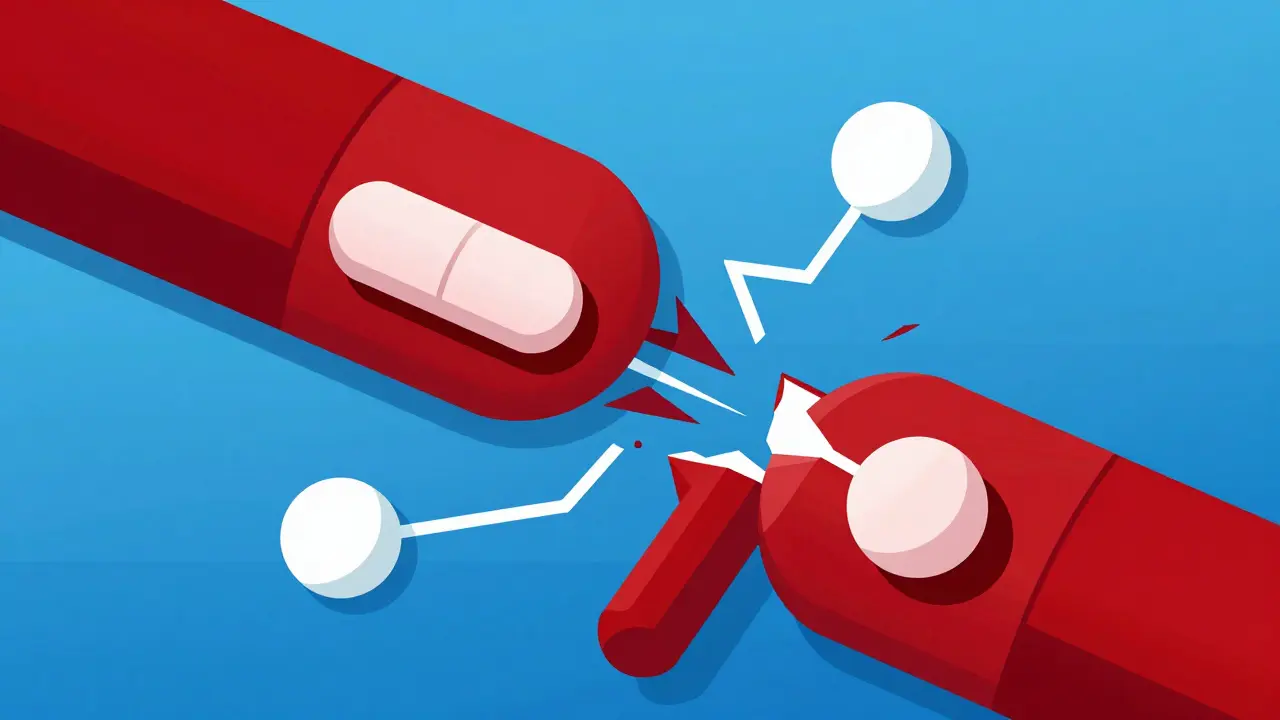
Similarly, EpiPens can suffer mechanical failures or chemical degradation when kept in hot environments, with failure rates hitting 15-20% when exposed to heat above 30°C. In an anaphylactic shock scenario, a failed EpiPen is a fatal outcome. Even antibiotics are at risk; if an antibiotic loses 30-40% of its potency, it might not kill all the bacteria in an infection, which can actually contribute to the development of antibiotic resistance.
Spotting the Warning Signs
You can't always tell if a drug has degraded just by looking at the date, but there are physical red flags. If you notice any of these, toss the medication and call your pharmacist:
- Color Shifts: A white pill turning yellow or brown is a huge sign of chemical change.
- Texture Changes: Tablets that feel softer, crumble easily, or stick together in the bottle.
- Smell: A strange, vinegary, or sharp odor (especially in aspirin).
- Capsule Damage: Cracked, chipped, or "melty" capsules. Heat can damage the exterior coating, which might cause an extended-release drug to dump all its active ingredients into your system at once instead of slowly over 12 hours.
How to Store Your Meds Properly
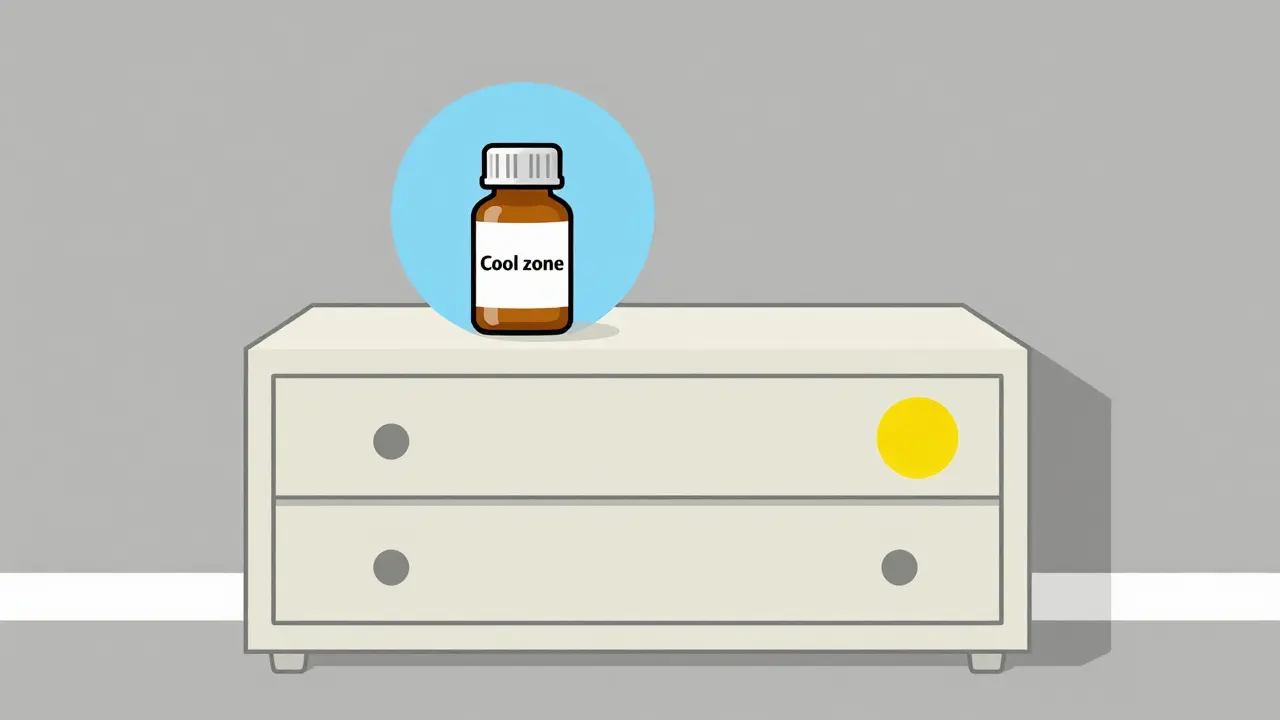
The goal is to mimic the environment where the drug was tested: cool, dry, and dark. The gold standard for storage is a temperature between 15-25°C (59-77øF) with humidity levels below 60%.
- Ditch the Bathroom: Move your meds to a bedroom dresser or a dedicated cool closet.
- Keep it Original: Always keep medications in their original containers. Those bottles are designed to provide a specific level of moisture and light protection.
- Use Cool Packs: If you're traveling with insulin or other temperature-sensitive biologics, use specialized pharmacy-grade cool packs rather than just relying on a hotel room's air conditioning.
- Pack Light: Instead of taking your entire 90-day supply on a trip to a tropical climate, take only what you need and leave the rest in a climate-controlled home.
Can I still take medication if the expiration date is a few months away but it was left in a hot car?
It is risky. The expiration date assumes the drug was stored correctly. High heat can cause medications to degrade rapidly, meaning the drug could be ineffective or harmful even if the date hasn't passed. If it was a life-saving medication (like insulin or an EpiPen), you should replace it immediately.
Why is the bathroom a bad place for medicine?
Bathrooms experience extreme humidity spikes (often 70-90%) every time someone showers. This moisture can penetrate medication containers and trigger hydrolysis, a process that breaks down the chemical structure of the drug and reduces its potency.
Do all medications need to be refrigerated?
No. Most solid tablets are stable at room temperature. However, biologics (like monoclonal antibodies), certain insulin types, and some antibiotic suspensions must be refrigerated to prevent the protein structures from denaturing or the active ingredients from breaking down.
What happens if I take an antibiotic that has lost potency due to heat?
If the antibiotic is sub-potent, it may not be strong enough to fully eliminate the bacteria causing your infection. This can lead to the infection persisting and, more seriously, can help bacteria develop resistance to that specific drug.
Are liquid medications more sensitive than pills?
Yes. Liquid and injectable medications are generally much more susceptible to temperature extremes than solid tablets. This is because the active ingredients are already dissolved, making them more reactive to environmental changes.

Jay Vernon
April 7, 2026 AT 16:05I always keep mine in the bedroom now! 💊🏠
Darius Prorok
April 8, 2026 AT 02:11Everyone knows the bathroom is the worst spot. It's basic common sense really.
Grace Lottering
April 9, 2026 AT 13:09Big Pharma loves this. They want us buying new bottles faster. The heat is just a cover. Wake up.
Benjamin cusden
April 10, 2026 AT 20:39The mention of hydrolysis is elementary, but I find the lack of discussion regarding the specific kinetic rates of degradation in varying pH environments to be quite amateurish. One would expect a more rigorous chemical analysis than this simplified narrative.
dwight koyner
April 11, 2026 AT 16:51It is imperative to remember that patients with chronic conditions should consult their healthcare provider before discarding medication based on physical changes. While a color shift is a strong indicator of degradation, some medications have stabilizers that may cause slight variations without compromising the active pharmaceutical ingredient's efficacy. Maintaining a temperature-controlled environment is the best preventative measure, but professional verification ensures patient safety above all else.
Jitesh Mohun
April 12, 2026 AT 05:27stop keeping meds in cars man its just stupid no one should be doing this in 2024 just use a bag and take it inside
Victoria Gregory
April 13, 2026 AT 06:45It's so interesting how we just trust the labels without thinking about the environment... 🌿✨ I wonder if we can find a more natural way to stabilize things? Just a thought!! 😊
Laurie Iten
April 14, 2026 AT 14:39the paradox of preservation is that we seek stability in a world that is inherently chaotic and changing
Ruth Swansburg
April 15, 2026 AT 14:13Stay vigilant with your health! Let's all move our meds today! Be proactive!
Nathan Kreider
April 16, 2026 AT 00:12I'm glad I saw this because I used to keep my vitamins by the stove. I'll move them to a cool spot right now. Thanks for the tip!
Jamar Taylor
April 17, 2026 AT 22:50Let's turn this into a win for everyone! Start a new habit today by organizing a safe medicine cabinet in a cool room. It only takes five minutes to make a huge difference in your health journey. Keep pushing for a better, safer lifestyle for yourself and your family. You've got this! Small changes lead to big results in the long run, so let's get those pills out of the bathroom and into a safe zone right now!