
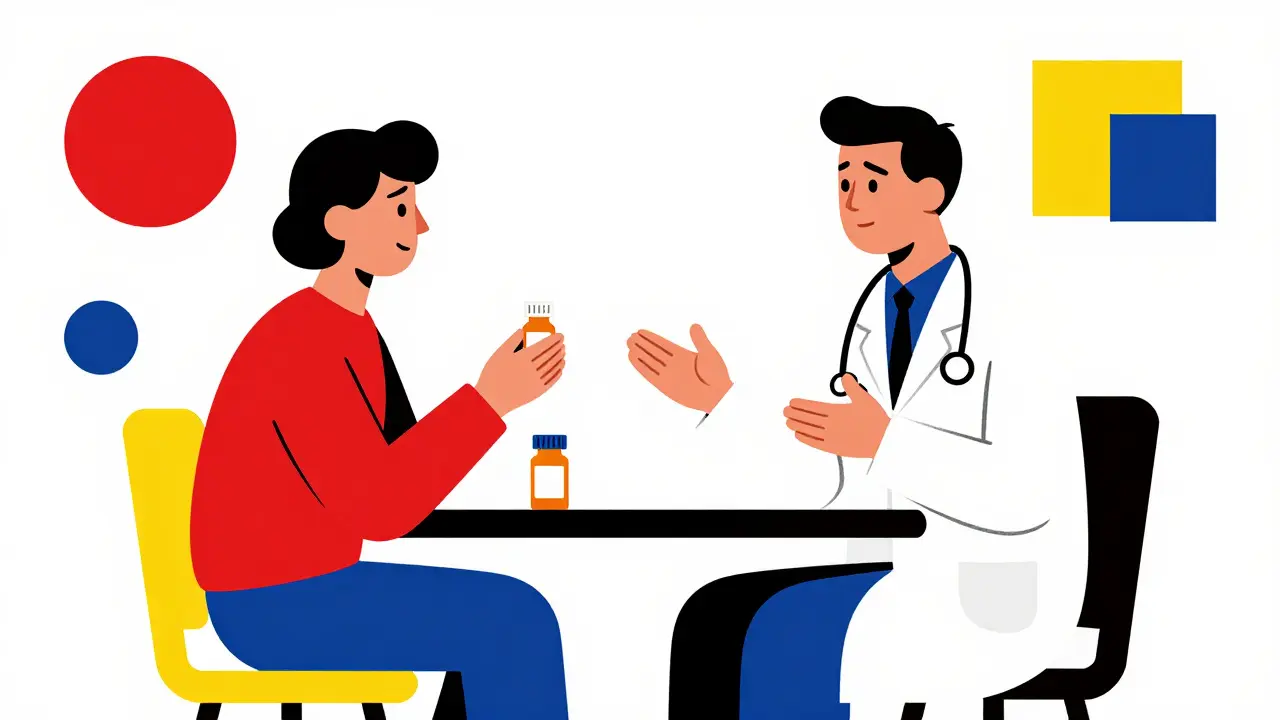
Imagine you are sitting in a consultation room with a patient who has been taking the same blood pressure medication for years. They look worried. "I noticed my pill looks different today," they say. "The pharmacy gave me a generic version. Is it going to work the same way?" This is not a rare scenario. It happens every day in clinics across the country. As healthcare providers, we face this question constantly. We need clear answers backed by hard data, not just reassurance.
The core of this issue lies in understanding what clinical outcomes data actually tells us about the real-world effectiveness and safety of generic medications compared to their brand-name counterparts. For decades, the assumption has been that generics are equivalent. But patients feel differently sometimes. Do studies support the assumption? The short answer is yes, but the details matter. Let’s look at what the evidence says so you can confidently guide your patients.
How Generics Are Approved: The Bioequivalence Standard
To understand why generics work, you have to look at how they get approved. In the United States, the process is governed by the Hatch-Waxman Act of 1984, which established the legal framework for generic drug approval without requiring full-scale clinical trials like those needed for new brand-name drugs. Instead, manufacturers use an Abbreviated New Drug Application (ANDA). The key requirement here is bioequivalence.
Bioequivalence means the generic drug delivers the active ingredient into the bloodstream at a rate and extent similar to the brand-name drug. The FDA mandates that the 90% confidence intervals for pharmacokinetic parameters-specifically AUC (area under the curve) and Cmax (maximum concentration)-must fall within 80-125% of the reference product. This might sound like a wide range, but it is statistically designed to ensure no clinically meaningful difference in effect. For most drugs, this standard holds up perfectly in practice.
However, there are exceptions. Drugs with a narrow therapeutic index (NTI), such as tacrolimus or warfarin, require stricter scrutiny. These drugs have a small window between being effective and being toxic. For these, regulators often apply Scaled Average Bioequivalence (SCABE) criteria. A 2020 study published in Nature Scientific Reports looked at transplant recipients switching between brand and generic tacrolimus over 42 days. The results showed equivalence through intra-individual variability assessments, proving that even for sensitive NTI drugs, modern generics perform reliably when monitored correctly.
What Large-Scale Studies Reveal About Efficacy
When we move from lab tests to real-world populations, the data becomes even more compelling. A landmark 2019 study in PLOS Medicine analyzed 1.3 million matched patient pairs across seven drug classes. They used propensity score matching to control for confounding factors, ensuring a fair comparison. The findings were striking: hazard ratios for clinical endpoints consistently clustered around 1.00, indicating no significant difference in outcomes.
| Drug Class / Example | Outcome Measured | Hazard Ratio (Generic vs Brand) | Statistical Significance |
|---|---|---|---|
| Cardiovascular (Amlodipine) | Cardiovascular events | 0.91 (95% CI 0.84-0.99) | Generics slightly superior |
| Metabolic (Glipizide) | Insulin initiation due to poor control | 1.01 (95% CI 0.97-1.05) | No significant difference |
| Bone Health (Alendronate) | Non-vertebral fractures | 1.00 (95% CI 0.96-1.05) | No significant difference |
| Psychiatric (Escitalopram) | Psychiatric hospitalization | 1.05 (95% CI 1.01-1.10) | Slightly higher risk with generics |
Notice the pattern here. For cardiovascular and metabolic drugs, generics performed identically or even better than brands. Why better? Often because patients on generics had better adherence due to lower costs. However, psychiatric medications showed a slight uptick in hospitalization rates with generics. Does this mean generics fail in psychiatry? Not necessarily. Further analysis suggested this was partly confounded by perception and other social determinants of health, not just the molecule itself. Still, it highlights where providers should pay closer attention.

The Nocebo Effect: When Belief Shapes Outcome
One of the biggest challenges providers face isn’t the chemistry of the pill-it’s the psychology of the patient. If a patient believes a generic won’t work, it might not. This is known as the nocebo effect. Studies show that when patients are aware they are switching to a generic, they report more side effects and less efficacy, even if blinded trials show no difference.
A 2017 FDA systematic review found no consistent evidence of adverse clinical outcomes from generic versions of CNS or cardiovascular drugs. Yet, switch-back rates-where patients go back to the brand after trying the generic-were higher among those who perceived a difference. Interestingly, authorized generics (brand-name drugs sold under a generic label) had lower switch-back rates (1.8%) compared to traditional generics (2.7%). Since the active ingredient and manufacturer are identical in authorized generics, the difference likely stems from packaging and patient perception rather than pharmacology.
As providers, our role is to bridge this gap. We must educate patients that the FDA’s rigorous approval process ensures safety. Mentioning that only 0.02% of adverse event reports involve generic-specific concerns can help alleviate fears. Shared decision-making is key. Acknowledge their concern, explain the science simply, and monitor them closely during the transition.
Economic Impact: Why Generics Matter Beyond Cost
While clinical equivalence is the primary concern, the economic argument for generics is undeniable. According to the Congressional Budget Office, generics saved the U.S. healthcare system $1.68 trillion between 2008 and 2017 alone. In 2021, savings reached $377 billion. With generics accounting for 90% of prescriptions dispensed but only 23% of total drug spending, they are the backbone of affordable care.
This cost-effectiveness allows providers to prescribe necessary treatments without breaking the bank for patients or insurers. Lower out-of-pocket costs lead to better adherence. When patients can afford their medication, they take it consistently. Better adherence leads to better clinical outcomes. So, prescribing generics isn’t just about saving money; it’s about improving public health by removing financial barriers to treatment.

Practical Guidelines for Providers
So, how do you handle this in your daily practice? Here are some actionable steps based on current evidence:
- Check the Orange Book Rating: The FDA’s Orange Book lists therapeutic equivalence codes. Most generics are 'A-rated,' meaning they are therapeutically equivalent. Only 3% are 'B-rated,' usually due to complex delivery systems or NTI status. Exercise extra caution with B-rated products.
- Monitor NTI Drugs Closely: For drugs like levothyroxine or warfarin, consider staying with one manufacturer if possible, or monitor levels more frequently during switches.
- Educate Proactively: Don’t wait for the patient to ask. Explain that generics undergo strict bioequivalence testing. Use simple analogies, like comparing two different brands of table salt-they look different but function the same.
- Address Appearance Differences: Patients often worry about color or shape changes. Reassure them that inactive ingredients (dyes, binders) vary but do not affect the active drug’s performance.
- Document Switches: Note any switch from brand to generic in the chart, especially for high-risk patients, to track potential issues.
Future Directions: Complex Generics and Biosimilars
The landscape is evolving. The FDA released draft guidance in 2023 on complex generic products, including inhalers and topical formulations, where bioequivalence is harder to prove. Additionally, biosimilars-biologic versions of expensive brand-name drugs-are entering the market. While biosimilars follow a different regulatory pathway (351(k)), the principle remains similar: demonstrating similarity in safety, purity, and potency.
Emerging research focuses on real-world evidence generation using large databases. A 2023 study in JAMA Network Open involving 2.1 million diabetes patients found identical HbA1c control between generic and brand-name metformin. This reinforces the message: for the vast majority of conditions, generics are safe, effective, and essential.
Are generic drugs really as effective as brand-name drugs?
Yes, extensive clinical outcomes data shows that generic drugs are therapeutically equivalent to brand-name drugs for nearly all therapeutic classes. The FDA requires generics to demonstrate bioequivalence, meaning they deliver the same amount of active ingredient into the bloodstream at the same rate. Large-scale studies involving millions of patients confirm no significant differences in efficacy or safety for most drugs, including cardiovascular and metabolic medications.
Why do some patients feel worse on generic medications?
This is often due to the nocebo effect, where negative expectations lead to perceived side effects or reduced efficacy. While the active ingredient is identical, inactive ingredients like dyes or fillers may differ, causing minor allergic reactions in rare cases. Additionally, psychological bias plays a major role. Studies show that when patients are unaware they are taking a generic, reported side effects drop significantly. Providers should address these concerns proactively to improve adherence.
Should I avoid generics for narrow therapeutic index (NTI) drugs?
Not necessarily, but extra caution is advised. NTI drugs, such as warfarin or levothyroxine, have a small margin between therapeutic and toxic doses. While FDA-approved generics meet strict bioequivalence standards, individual patients may be sensitive to small variations. Best practice is to stick with one manufacturer once a stable dose is achieved, or monitor drug levels more frequently during switches. Always check the FDA Orange Book for therapeutic equivalence ratings.
What is the difference between a generic and an authorized generic?
An authorized generic is the exact same product as the brand-name drug, manufactured by the same company, but sold under a generic label after patent expiration. Traditional generics are made by different manufacturers. Clinically, there is no difference in active ingredients or efficacy. However, studies suggest patients may have higher acceptance of authorized generics due to familiarity with the original manufacturer, leading to lower switch-back rates.
How much money do generics save the healthcare system?
Generics save billions annually. From 2008 to 2017, they saved the U.S. healthcare system an estimated $1.68 trillion. In 2021 alone, savings reached $377 billion. With generics representing 90% of prescriptions dispensed but only 23% of total drug spending, they are crucial for maintaining affordability. These savings allow for broader access to necessary treatments and reduce financial strain on both patients and insurance providers.

shreya sinha
June 13, 2026 AT 19:18Lee Coates
June 14, 2026 AT 04:28Miranda River
June 15, 2026 AT 04:58Brandon Brodsky
June 16, 2026 AT 10:09Ganesh Honikol
June 16, 2026 AT 15:06Callie Skipper
June 18, 2026 AT 12:01AnneKatherine Stiekes
June 19, 2026 AT 19:24Emily Barnhill
June 21, 2026 AT 15:36