When you pick up a generic prescription at the pharmacy, you are trusting that it works exactly like the brand-name version. But once that pill leaves the factory and enters your body, who is watching to make sure it stays safe? The answer lies in a complex, often invisible system run by the FDA (U.S. Food and Drug Administration). Unlike new drugs, which undergo years of clinical trials before hitting the market, generic drugs skip most of those tests. Instead, they rely on proving bioequivalence the proof that a generic drug delivers the same amount of active ingredient into the bloodstream as the reference brand drug. This shifts the heavy lifting of safety monitoring from pre-approval trials to post-market surveillance.
This isn't just about catching bad batches; it's about detecting subtle failures that only appear when millions of people use a product over time. The system is designed to catch manufacturing defects, ingredient variations, and rare side effects that were missed during initial testing. Understanding how this works helps patients and healthcare providers know where to look when things go wrong.
The Core Mechanism: From Bioequivalence to Continuous Monitoring
The foundation of generic drug regulation was laid by the Hatch-Waxman Act of 1984 legislation that created the Abbreviated New Drug Application (ANDA) pathway for generic approvals. This law allowed manufacturers to submit an ANDA instead of a full New Drug Application (NDA), provided they could prove their product was bioequivalent to an already-approved "reference listed drug." Because the assumption is that if the chemical delivery is identical, the safety profile will be too, the FDA’s job doesn’t end at approval-it actually begins there.
The Office of Generic Drugs (OGD) the FDA division responsible for reviewing generic drug applications and overseeing post-market safety leads this effort through its Clinical Safety Surveillance Staff (CSSS). Established formally in 2008, this team handles roughly 1.2 million adverse event reports annually. Their goal is to ensure therapeutic equivalence-meaning the generic performs just as well and safely as the brand name-in real-world conditions.
A critical concept here is the "Weber Effect." Named after researcher David Weber, this phenomenon describes a spike in safety reports-often 300% to 400% higher-during the first year after a generic drug launches. This surge happens because doctors and patients are hyper-aware of the switch. The FDA uses this data carefully, distinguishing between genuine safety signals and noise caused by heightened scrutiny.
Data Streams: How the FDA Catches Problems
The FDA doesn't rely on one source of information. It aggregates data from multiple channels to build a complete picture of a drug's performance. Here are the primary tools:
- Drug Quality Reporting System (DQRS): This is the backbone of quality monitoring. It processes 45,000 to 60,000 quality complaints every year. These aren't just side effect reports; they include issues like tablets that don't dissolve, liquids with precipitates, or patches that fall off. Data analysts use custom SAS programs to cluster these complaints by manufacturer, lot number, and defect type to spot emerging patterns.
- MedWatch Reports: This voluntary reporting system captures adverse events from consumers and healthcare professionals. In 2020, it received approximately 140,000 submissions. About 68% of these come from healthcare professionals, with pharmacists making up a significant portion (42%) of professional submitters.
- Prescription Data (IMS Smart & Symphony): To understand if a complaint rate is abnormal, the FDA needs to know how many people are taking the drug. They integrate market share data from IMS Smart and Symphony datasets. For example, if Manufacturer A holds 30% of the market but generates 70% of the complaints for a specific issue, that triggers a deep dive investigation.
- Sentinel Initiative: While used more extensively for branded drugs, this distributed database connects 19 healthcare organizations covering over 100 million patients. It allows for active surveillance rather than waiting for spontaneous reports.
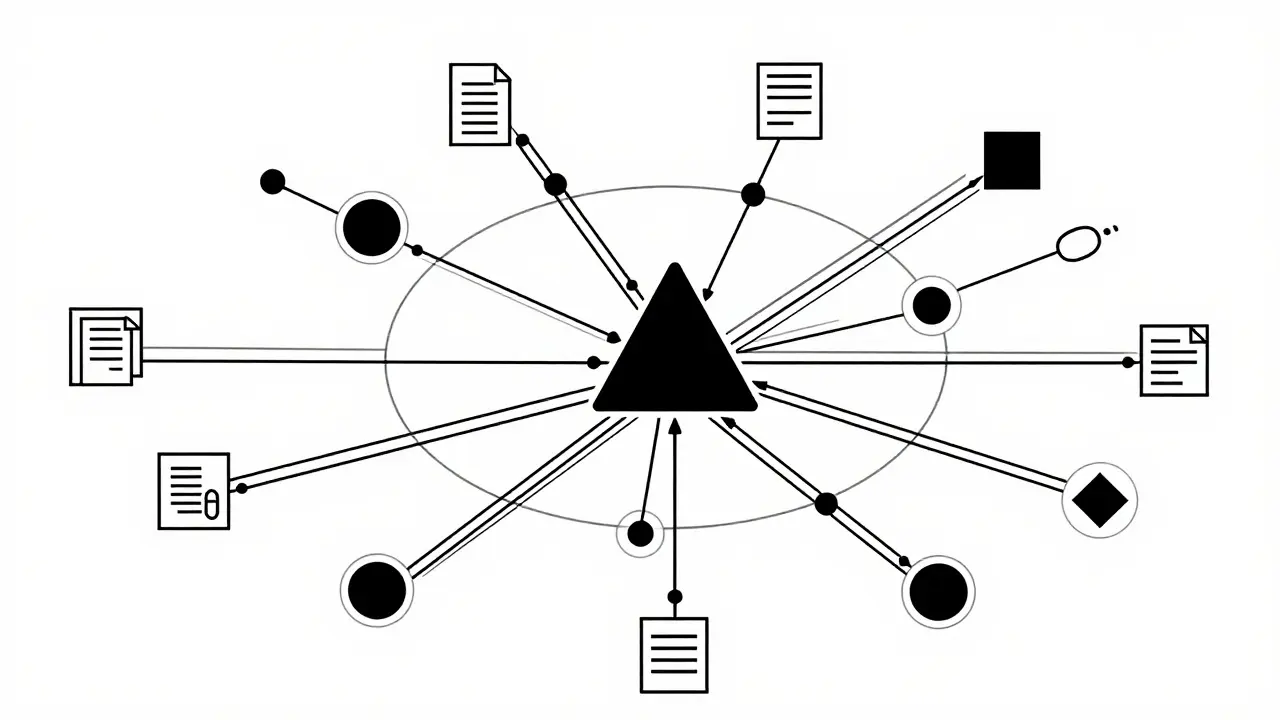
The integration of these streams is crucial. A single complaint might be ignored, but a cluster of similar complaints across different data sources flags a potential signal. The CSSS completes around 120 to 150 Health Hazard Evaluations (HHEs) annually, assessing both the likelihood and severity of adverse events to determine if recalls or other actions are needed.
The Challenge of Therapeutic Inequivalence
While the FDA’s system is excellent at catching acute quality defects-like a tablet failing to disintegrate-it struggles with a subtler problem: therapeutic inequivalence. This occurs when a generic drug fails to provide the same clinical benefit as the brand name, even if it meets bioequivalence standards on paper.
Dr. Robert Temple, former Deputy Center Director for Clinical Science at the FDA, noted in a 2018 JAMA commentary that the current system is "less sensitive to subtle efficacy differences" that might manifest as treatment failure. This gap is particularly concerning for drugs with narrow therapeutic indices, such as levothyroxine (used for thyroid conditions) or certain anti-seizure medications, where small variations in blood levels can have serious consequences.
| Issue Type | Detection Method | Effectiveness | Typical Lag Time |
|---|---|---|---|
| Manufacturing Defects (e.g., tablet cracking) | DQRS Complaint Clustering | High | Weeks to Months |
| Acute Adverse Events | MedWatch Spontaneous Reports | Moderate | Months |
| Therapeutic Inequivalence | Clinician Feedback / MedWatch | Low | 6-9 Months+ |
| Rare Side Effects | Sentinel Initiative / Literature Review | Moderate | Variable |
A 2021 Government Accountability Office (GAO) report found that only 65% of potential therapeutic inequivalence signals were adequately investigated due to resource constraints. The case of levothyroxine sodium tablets in 2019 illustrates this delay: despite 217 MedWatch reports citing issues, it took 18 months to fully investigate the therapeutic gaps. This highlights a critical limitation: without mandatory post-approval bioequivalence testing, the FDA relies heavily on external reporting to catch efficacy failures.
Decision Making and Industry Collaboration
Safety signals don't lead to action automatically. They are evaluated by the OGD Clinical Safety and Surveillance Committee, which meets monthly. This multidisciplinary group includes experts from the Office of Pharmaceutical Quality (OPQ) and the Office of Surveillance and Epidemiology (OSE). According to FDA documentation, 85-90% of their monthly meetings address generic drug safety issues.
The committee assesses whether a signal represents a true risk or statistical noise. If a risk is confirmed, the FDA works with manufacturers to implement corrective actions. The Generic Pharmaceutical Association (now part of the Association for Accessible Medicines) claims that 90% of signals are resolved through these manufacturer-led corrections, avoiding costly recalls. However, patient advocacy groups argue that this process lacks transparency, noting that only 28% of MedWatch submitters feel adequately informed about investigation outcomes.
For complex generics-such as inhalers, patches, and extended-release formulations-the stakes are higher. These products account for about 12% of post-market issues identified between 2018 and 2022. The device component adds another layer of complexity, as mechanical failures (like a patch not adhering properly) can directly impact drug delivery.
Future Directions: AI and Enhanced Transparency
The landscape of generic drug surveillance is evolving. The FDA’s 2023-2027 Strategic Plan outlines several key enhancements aimed at closing existing gaps:
- AI-Powered Signal Detection: Implemented in 2023, machine learning algorithms have reduced false positive signals by 27% in pilot testing. This allows safety officers to focus on high-priority cases rather than sifting through noise.
- Real-Time Claims Integration: Scheduled for Q3 2024, this will integrate pharmacy claims data directly into surveillance systems, providing faster exposure metrics than traditional sales data.
- Mandatory Post-Approval Testing: A proposed rule expected in Q2 2025 would require bioequivalence studies for narrow therapeutic index drugs after approval, addressing the GAO’s concerns about efficacy gaps.
- Patient-Facing Portal: A beta launch planned for Q1 2025 will allow patients to report therapeutic inequivalence directly, bypassing the reliance on healthcare professionals to submit reports.
Funding for these initiatives comes largely from the Generic Drug User Fee Amendments (GDUFA III), which allocates $630 million for post-market activities, with $220.5 million specifically for safety infrastructure. However, industry analysts warn that emerging complex generics, particularly 505(b)(2) hybrid products, may require 25% more resources annually beyond 2027 to maintain adequate oversight.
What You Can Do as a Patient
Understanding this system empowers you to be an active participant in your own safety. If you suspect a generic drug isn't working as well as the previous brand or generic version, don't just switch back silently. Report it. Use the FDA’s MedWatch portal or talk to your pharmacist. Your report contributes to the data stream that keeps the entire supply chain safe. Remember, the FDA’s ability to detect problems depends on the volume and quality of information flowing from the real world.
Does the FDA test generic drugs after they are approved?
Not routinely for bioequivalence. The FDA primarily monitors safety through post-market surveillance systems like DQRS and MedWatch, analyzing complaints and adverse events. Routine re-testing of bioequivalence is not standard practice unless a specific safety signal suggests a problem with drug delivery or composition.
What is the Weber Effect in generic drug safety?
The Weber Effect refers to the sharp increase in safety reports (up to 300-400%) seen during the first year after a generic drug is launched. This happens because healthcare providers and patients are more vigilant when switching from a brand-name drug, leading to higher reporting rates that the FDA must distinguish from actual safety issues.
How does the FDA handle quality complaints like broken tablets?
Quality complaints are processed through the Drug Quality Reporting System (DQRS). Analysts use software to cluster complaints by manufacturer, lot number, and defect type. If a pattern emerges indicating a widespread manufacturing defect, the FDA investigates further and may request recalls or corrective actions from the manufacturer.
Why is therapeutic inequivalence hard to detect?
Therapeutic inequivalence involves subtle differences in how well a drug works clinically, which may not show up in standard bioequivalence tests. Since the FDA does not conduct routine post-market efficacy trials, it relies on spontaneous reports from doctors and patients, which can take months or years to accumulate enough data to confirm a trend.
Can patients report generic drug issues directly to the FDA?
Yes, patients can report adverse events or quality issues via the FDA’s MedWatch program. Additionally, the FDA plans to launch a dedicated patient-facing surveillance portal in early 2025 to streamline reporting of therapeutic inequivalence and other safety concerns.