
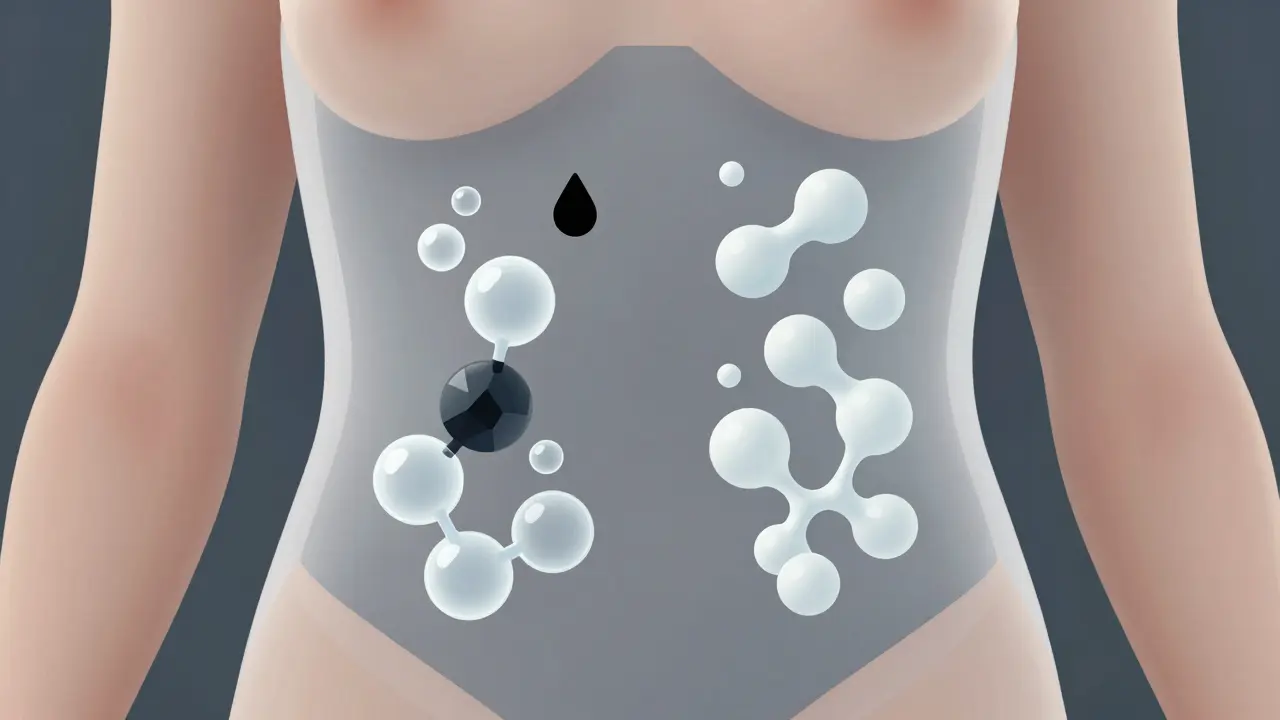
When you feel bloated after eating, or like your stomach is about to burst from trapped gas, reaching for an OTC remedy feels like the only option. But not all gas relief products work the same way. Two main types dominate the shelves: simethicone and enzyme products. Understanding the difference between them can save you time, money, and discomfort.
How Simethicone Works (And Why It’s Fast)
Simethicone doesn’t stop gas from forming. Instead, it helps your body get rid of it faster. It’s a silicone-based compound that breaks down the surface tension of gas bubbles in your gut. Think of it like adding dish soap to oily water - the bubbles pop and merge into bigger ones that are easier to pass. This happens right in your digestive tract. Simethicone doesn’t get absorbed into your bloodstream. It works locally and then leaves your body unchanged.
That’s why it works so quickly. Most people feel relief within 15 to 30 minutes. If you’re on a flight, after a big meal, or just feeling pressure in your abdomen, simethicone can be a lifesaver. Brands like Gas-X, Mylicon, and Phazyme all use it as their main ingredient. A 125mg softgel is the most common adult dose. You can take it up to four times a day after meals or as needed. The maximum daily dose is 500mg - far above what most people need.
Studies show simethicone helps about 73.5% of users with bloating and pressure. In one trial, over 90% of people reported no side effects. It’s safe for kids, pregnant women, and seniors. Even hospitals use it after laparoscopic surgery to help patients pass gas faster. But here’s the catch: if you’re already extremely bloated, simethicone won’t magically shrink your stomach. It only helps with the bubbles. It won’t reduce the total amount of gas your body makes.
Enzyme Products: Stopping Gas Before It Starts
Enzyme products work differently. Instead of helping you expel gas, they stop it from forming in the first place. They do this by breaking down foods your body can’t digest on its own.
The two most common enzymes in OTC products are lactase and alpha-galactosidase. Lactase breaks down lactose - the sugar in milk and dairy. If you get bloated after cheese, ice cream, or yogurt, you might be lactose intolerant. Lactaid and Dairy Digest are examples. They contain 3,000 to 9,000 FCC units per dose. You need to take them right before eating dairy. If you wait too long, they won’t work.
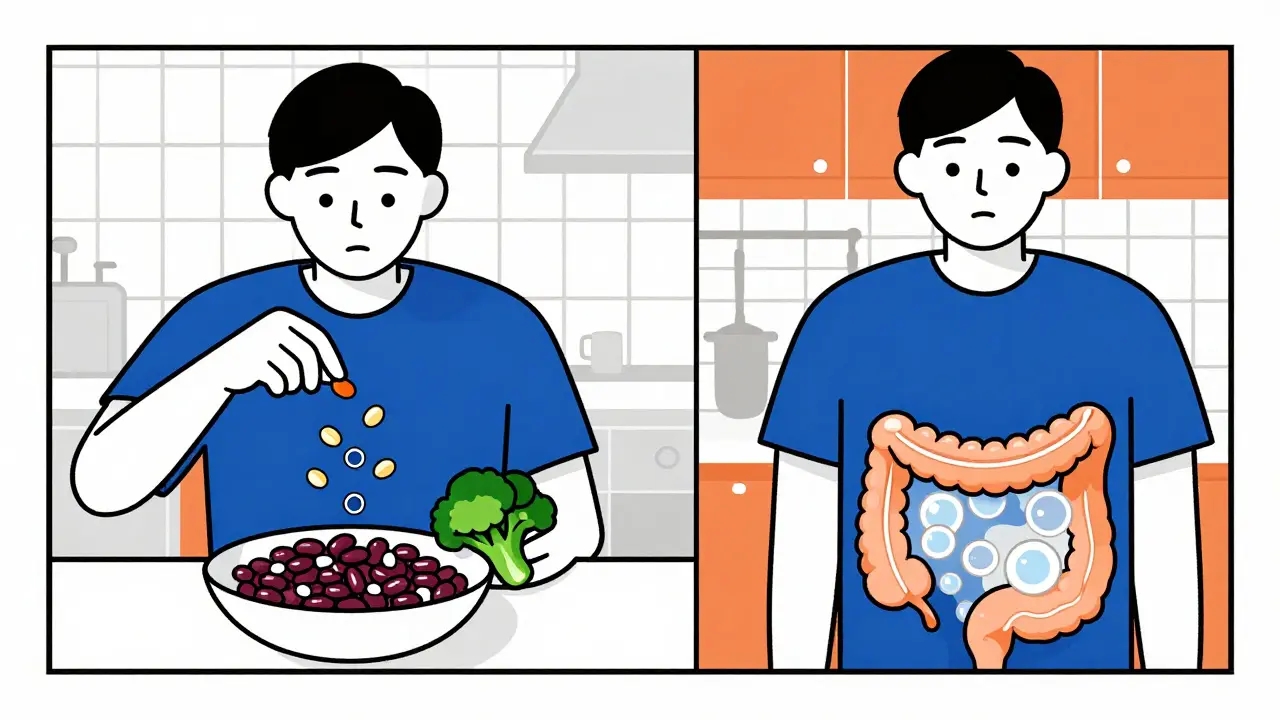
Alpha-galactosidase is the enzyme in Beano. It breaks down complex carbs found in beans, broccoli, cabbage, and onions. These carbs get fermented by gut bacteria, which creates gas. Beano gives you 450 to 1,200 GalU per dose. You need to take it 5 to 10 minutes before eating those foods. It doesn’t help if you take it after. And it doesn’t work for everyone. Some people see big improvements. Others notice almost nothing. It depends on your gut bacteria and the specific food.
For people with known triggers, enzymes are powerful. Lactase prevents symptoms in about 85% of lactose-intolerant users. But alpha-galactosidase only works 45% to 78% of the time. And it’s not useful if you’re already bloated. It’s purely preventive.
Which One Should You Use?
Here’s the simple breakdown:
- Use simethicone when you’re already feeling bloated, gassy, or uncomfortable - especially if you don’t know what caused it.
- Use enzyme products when you know ahead of time what food will cause problems - like beans, dairy, or cruciferous veggies.
Many people use both. They take Beano before eating chili, and then take Gas-X later if they still feel bloated. A Reddit user summed it up: “Simethicone is my emergency button for gas pain, but I use Beano preventatively when I know I’ll be eating problematic foods - they work best as a team.”
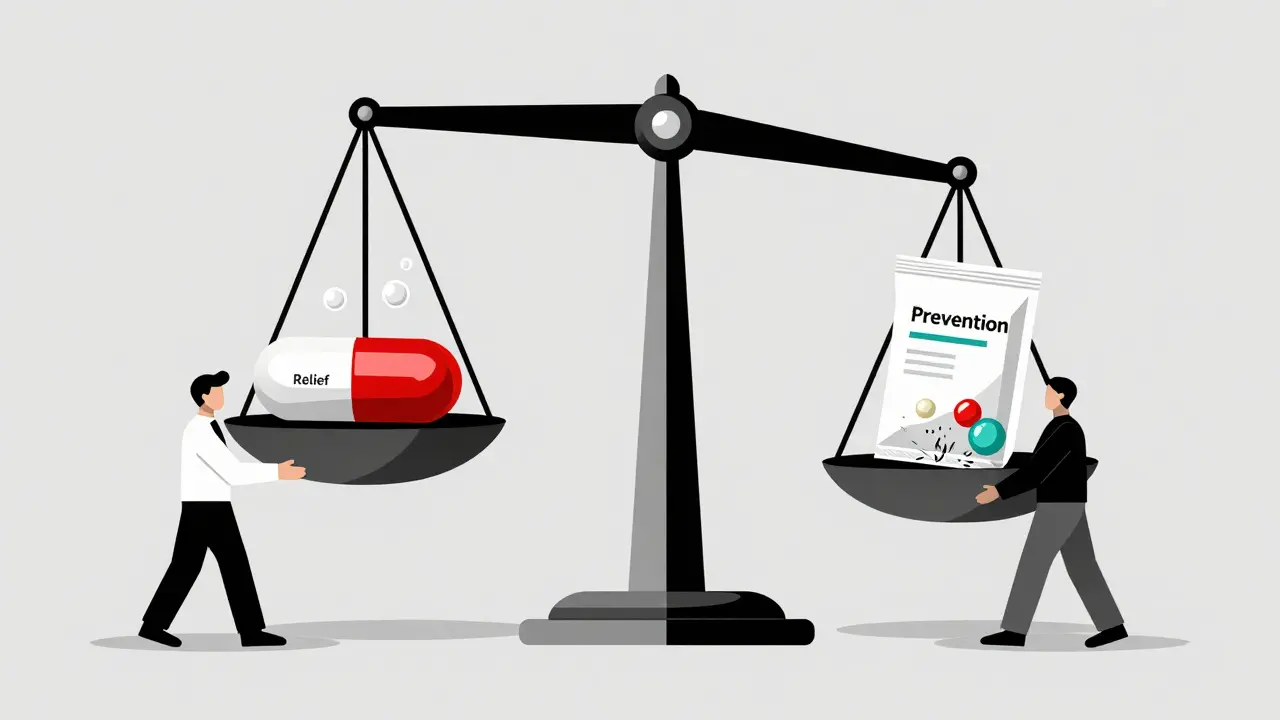
Simethicone wins for convenience. You can take it anytime, anywhere. Enzymes require planning. You have to remember to take them before eating. That’s why simethicone holds about 58% of the OTC gas relief market. Enzymes are growing fast, though - especially as more people get tested for food intolerances.
What About Combination Products?
Products like Gas-Zyme combine simethicone and alpha-galactosidase. They’re gaining popularity, especially among people who eat high-fiber or legume-heavy diets. Sales for these combo products grew nearly 19% last year. They’re more expensive than single-ingredient options, but they offer both prevention and relief in one pill.
They’re not perfect. The enzyme part still needs to be taken before the meal. The simethicone part still only helps with bubbles. But for people who struggle with both prevention and symptom relief, they’re a practical option.
What Doesn’t Work
Don’t expect simethicone to cure chronic bloating. If you’re always bloated, even when you eat clean, it’s not just about gas. It could be IBS, slow digestion, or small intestinal bacterial overgrowth (SIBO). One study found simethicone didn’t help IBS patients with bloating any more than a placebo. That doesn’t mean it’s useless - it just means it’s not a fix for underlying conditions.
Also, don’t believe marketing that says simethicone “prevents gas.” The FDA cracked down on that in 2023. It doesn’t prevent anything. It only helps with bubbles.
Enzymes aren’t magic either. If you’re taking Beano but still eating a lot of beans, you might need to cut back. No supplement replaces dietary changes. And if you’re lactose intolerant, taking lactase every time you eat cheese is better than avoiding dairy forever - but switching to lactose-free milk might be easier in the long run.
Cost, Availability, and Real User Experience
Simethicone is cheap. A 200-count bottle of Gas-X costs around $12.50 at CVS. That’s less than 7 cents per dose. Enzymes are pricier. A 100-count bottle of Beano runs about $19. That’s 19 cents per dose. If you’re using enzymes daily, that adds up.
Amazon reviews tell the story. Gas-X has over 18,700 reviews with a 4.5-star average. Most 5-star reviews say: “Worked instantly,” “Saved me on my flight,” “Finally something that works.” Beano has 6,800 reviews and a 4.2-star rating. The top positive reviews say: “Essential for bean night,” “I don’t miss out on my favorite foods anymore.” But the negative ones? “Didn’t work for me,” “Too expensive for how often I need it,” “Only works if I remember to take it before.”
For lactase, Lactaid has nearly 10,000 reviews and a 4.4-star rating. Eighty-five percent of users who say they’re lactose intolerant report it works well. That’s the highest success rate of any OTC gas remedy.
What Experts Say
Doctors agree: simethicone is the gold standard for immediate relief. The National Institute of Diabetes and Digestive and Kidney Diseases gives it a “Recommended” rating with strong evidence. But they’re clear: it doesn’t reduce gas production.
Enzymes get more cautious ratings. Lactase is “Strongly Recommended” for lactose intolerance. Alpha-galactosidase? Only “Conditionally Recommended.” Why? Because it doesn’t work for everyone. And the science is messy - gut bacteria vary wildly from person to person.
One gastroenterologist put it bluntly: “Simethicone is universally safe, but its effectiveness is often overstated. It doesn’t reduce gas volume. It just makes bubbles easier to pass.”
What’s Next?
Researchers are working on better versions. One company just finished Phase 2 trials on a new microencapsulated simethicone that lasts up to 8 hours instead of 2-3. That could be a game-changer for people who need longer-lasting relief.
At the same time, companies like Viome are using gut microbiome tests to recommend specific enzyme blends for individual people. Instead of guessing whether Beano will work, you’ll know based on your own bacteria.
But for now, the basics still hold. Know your trigger. Use enzymes before meals. Use simethicone after. And if you’re always bloated? Talk to a doctor. OTC meds help symptoms - but they don’t fix root causes.
Can I take simethicone every day?
Yes, simethicone is safe for daily use. The standard adult dose is 40-125mg up to four times a day, with a maximum of 500mg per day. Many people take it after every meal without issue. It’s not absorbed by the body, so there’s no buildup or long-term risk. However, if you’re using it daily for months, it’s worth asking why. Chronic bloating could signal an underlying issue like IBS, SIBO, or food intolerances that need different management.
Do enzyme supplements work for everyone?
No. Enzyme effectiveness varies widely. Lactase works for about 85% of people with lactose intolerance. Alpha-galactosidase (Beano) works for only 45-78% of users, depending on the food and their gut bacteria. Some people have bacteria that break down carbs naturally, so they don’t need enzymes. Others have very sensitive guts where even a small amount of undigested food triggers gas. There’s no way to know if it’ll work for you until you try it - and even then, results can vary by meal.
Can I take simethicone and enzymes together?
Yes, and many people do. Take the enzyme product 5-10 minutes before eating to prevent gas formation. Then, if you still feel bloated afterward, take simethicone to help expel the bubbles. There’s no known interaction between them. In fact, combination products like Gas-Zyme are designed exactly for this purpose. Using both gives you prevention and relief - a smart approach if you eat trigger foods often.
Is simethicone safe for children and babies?
Yes. Mylicon infant drops contain 20mg/mL of simethicone and are specifically designed for babies. Pediatricians often recommend it for colic and infant gas. The dose is based on weight - usually 0.3mL (6mg) up to 12 times a day. It’s safe, non-systemic, and doesn’t interfere with feeding. Always follow the label instructions or consult a pediatrician for dosing.
Why does simethicone sometimes not work?
Simethicone only helps with trapped gas bubbles. If your bloating comes from fluid retention, constipation, slow digestion, or food intolerances, it won’t fix those. Also, if you take it too soon before a meal or don’t chew tablets properly, it may not work as well. And if you’re expecting it to prevent gas - it won’t. It’s not a cure. It’s a tool for symptom relief. If it consistently doesn’t help, your issue might be deeper than excess gas.
Are there natural alternatives to OTC gas remedies?
Yes, but they work differently. Peppermint tea, ginger, and fennel seeds can help relax the gut and ease bloating. Probiotics may improve digestion over time. Avoiding carbonated drinks, eating slowly, and reducing high-FODMAP foods (like onions, garlic, and beans) can cut gas at the source. These aren’t instant fixes like simethicone, but they can reduce how often you need OTC meds. For long-term relief, lifestyle changes often outperform pills.





Ashlyn Ellison
February 8, 2026 AT 05:41Camille Hall
February 9, 2026 AT 06:27Jonah Mann
February 10, 2026 AT 00:41Ken Cooper
February 10, 2026 AT 20:00Marie Fontaine
February 12, 2026 AT 12:14Tatiana Barbosa
February 13, 2026 AT 09:21Frank Baumann
February 14, 2026 AT 10:14THANGAVEL PARASAKTHI
February 14, 2026 AT 23:45Chelsea Deflyss
February 15, 2026 AT 00:30Scott Conner
February 15, 2026 AT 15:16Tasha Lake
February 16, 2026 AT 03:57MANI V
February 16, 2026 AT 10:33Ryan Vargas
February 17, 2026 AT 15:44Chima Ifeanyi
February 18, 2026 AT 07:21