Have you ever taken a pill and felt terrible afterward? Maybe you broke out in a rash, felt nauseous, or got dizzy. Your instinct might be to tell your doctor, "I'm allergic to this." But here is the catch: that reaction might not be an allergy at all. It could just be a side effect. And confusing the two can cost you more than just discomfort-it can lead to weaker medications, higher bills, and even serious health risks.
This isn't just a minor mix-up. According to the CDC, adverse drug events account for roughly 1.3 million emergency department visits every year in the United States. A huge chunk of those visits stem from patients mislabeling normal side effects as dangerous allergies. When you get this wrong, doctors often avoid prescribing effective drugs like penicillin, forcing you onto broader-spectrum antibiotics that come with their own set of problems. So, how do you know the difference, and more importantly, how do you explain it clearly to your care team?
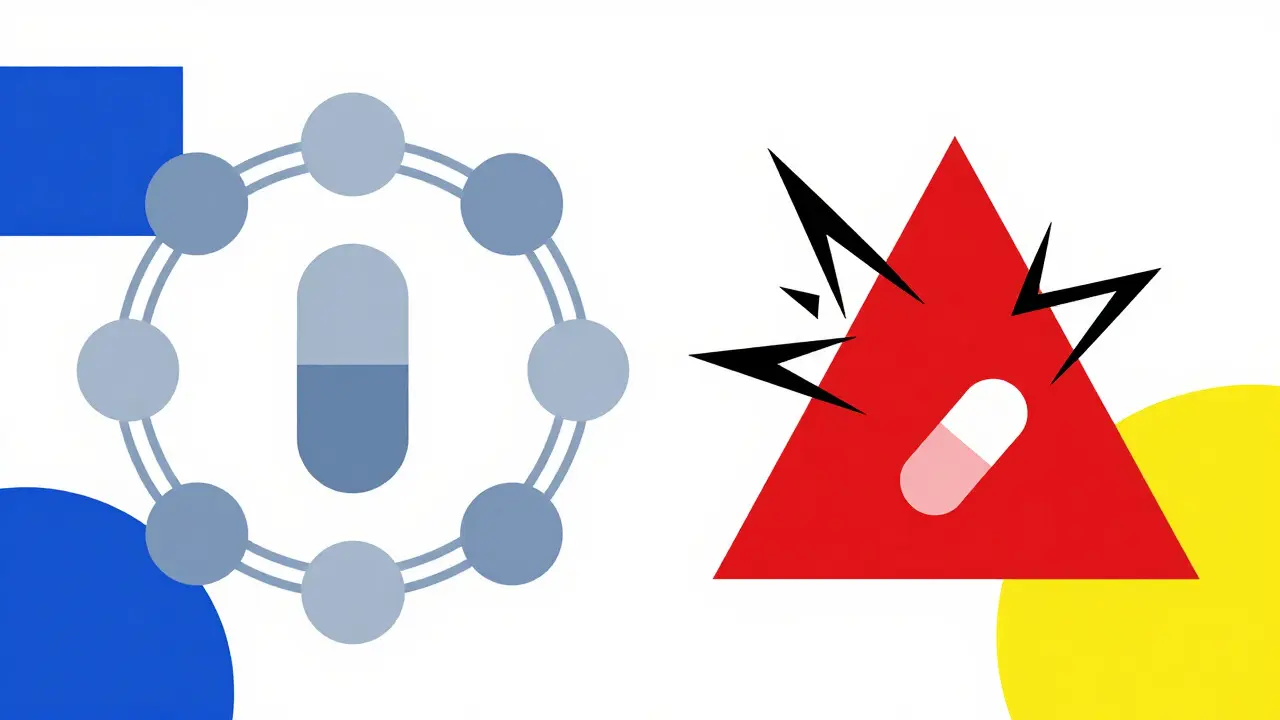
The Real Difference Between Side Effects and Allergies
To talk to your doctor effectively, you first need to understand what is happening inside your body. The distinction comes down to biology, not just how bad you feel.
Side effects are predictable, dose-related responses to a medication that occur because of how the drug works in your system. Think of them as expected collateral damage. If you take ibuprofen (an NSAID), stomach upset is a known side effect because the drug irritates the stomach lining. This happens in 15-30% of users. These symptoms usually show up within hours or days of starting the medication. The good news? They often fade away. About 60-70% of initial side effects resolve on their own within two to four weeks as your body adjusts.
Allergic reactions are immune system responses where your body mistakenly identifies the medication as a harmful invader. This is unpredictable and can happen at any dose, even a tiny one. Symptoms include hives, swelling of the face or throat, difficulty breathing, or anaphylaxis. These reactions typically strike fast-within minutes to hours. Unlike side effects, true allergies require immediate discontinuation of the drug and permanent avoidance. Roughly 7-10% of people have true drug allergies, with penicillin being the most common culprit, affecting about 10% of Americans.
Here is the kicker: Dr. Clifford Bassett, an allergist and author, points out that confusing these two leads to unnecessary avoidance of effective meds. In fact, studies show that 90% of patients who think they are allergic to penicillin can actually take it safely after proper evaluation. Mislabeling a side effect as an allergy means you miss out on the best treatment available.
Why Doctors Need Specific Details
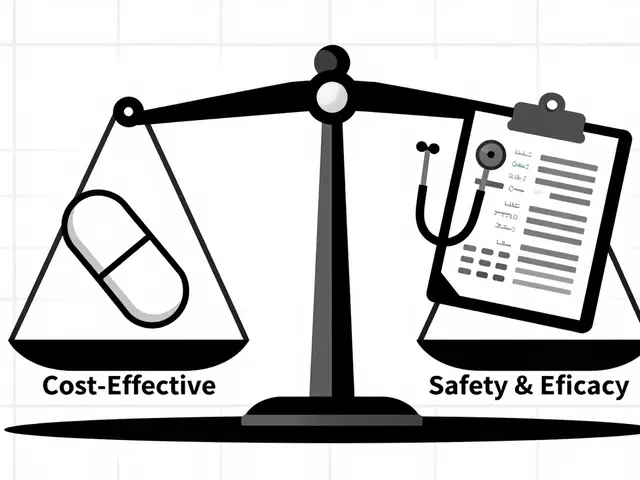
You might wonder why it matters so much if you call it an allergy or a side effect. The answer lies in how medical records work. When you say "allergy," it gets flagged in red in your electronic health record (EHR). Every future doctor sees that flag and assumes danger. This triggers alerts that prevent them from prescribing certain life-saving drugs.
A 2023 analysis by the Institute for Safe Medication Practices found that incorrect allergy labeling increases healthcare costs by $1,200 to $2,500 per patient annually. Why? Because alternative medications are often more expensive, less effective, or require additional monitoring. Plus, there’s a bigger public health risk: when penicillin allergy labels are wrong, patients receive broad-spectrum antibiotics that drive antibiotic resistance. The World Health Organization has highlighted this as a major global threat.
Doctors aren’t trying to ignore you; they’re working with limited information. If you say, "It gave me a headache," they don’t know if that’s a mild side effect that will pass or a sign of a severe reaction. That’s why your role as the observer is critical. You hold the key to accurate diagnosis through precise communication.
| Feature | Side Effect | Allergic Reaction |
|---|---|---|
| Mechanism | Predictable pharmacological action | Immune system activation |
| Timing | Hours to days after starting | Minutes to hours after exposure |
| Common Symptoms | Nausea, drowsiness, headache, dry mouth | Hives, swelling, wheezing, anaphylaxis |
| Dose Relationship | Often dose-dependent (higher dose = worse symptoms) | Can occur at any dose |
| Management | May resolve with time; dose adjustment possible | Immediate discontinuation; permanent avoidance |
| Frequency | 5-20% of patients for common drugs | 7-10% of population overall |
How to Prepare Before Your Appointment
Walking into a doctor’s office and saying, "This med makes me sick," is too vague. To get the right help, you need data. Dr. Jennifer Le from UC San Diego found that patients who brought written symptom logs reduced miscommunication by 37%. Here is how to build that log.
Start tracking 72 hours before your appointment. Use a simple notebook or a notes app on your phone. Record the following for every dose:
- Medication Name and Dose: Write exactly what you took. Bring the actual bottles if you can. UCLA Health found that physical verification reduces errors by 28%.
- Time of Dose: Note when you swallowed the pill.
- Symptom Onset: When did you start feeling off? Minutes later? Hours later? The next morning?
- Symptom Description: Be specific. Instead of "stomach ache," write "sharp pain in upper abdomen after eating." Instead of "rash," describe "red, itchy bumps on arms that spread to chest."
- Severity Scale: Rate it from 1 to 10. Was it annoying but manageable (3/10)? Or did it stop you from working (8/10)?
- Duration: How long did it last? Did it go away on its own? Did it get better when you skipped a dose?
This method aligns with the CDC’s recommended S.O.A.P. documentation style: Subjective symptoms, Objective measurements, Assessment of timing, and Plan for next steps. Using this structure improves provider understanding by 41%, according to a Johns Hopkins study.

Questions to Ask Your Care Team
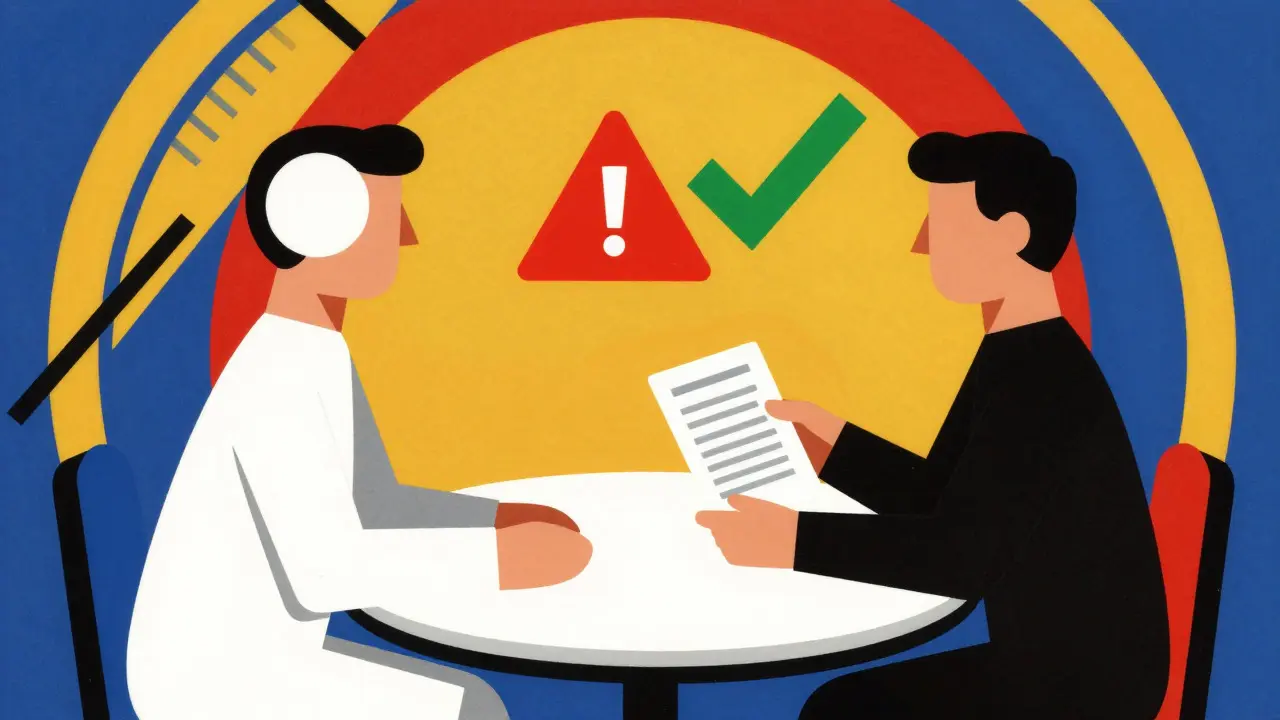
Once you have your log, use it to guide the conversation. Don’t wait for the doctor to ask. Lead with your observations. Here are specific questions to ask, based on guidelines from Harvard Health and the American Liver Foundation:
- "Is this symptom a known side effect or could it be an allergic reaction?" This forces a clinical classification rather than a guess.
- "What percentage of patients experience this side effect?" Knowing if it affects 1% or 50% of users helps gauge severity.
- "Should I stop taking this medication immediately, or should I monitor it?" Clarify the urgency. Allergies mean stop now. Side effects might mean adjust the dose.
- "Are there alternative medications in a different chemical class?" If you truly have an allergy, you need a drug that doesn’t trigger the same immune response. If it’s a side effect, a similar drug in the same class might still cause issues, so a different class is safer.
- "Can we update my medical record to reflect this accurately?" Ensure the EHR says "side effect: nausea" instead of "allergy: penicillin." This prevents future flags.
Dr. Adriane Fugh-Berman from Georgetown University notes that patients who accurately describe symptoms reduce mislabeling by 45%. Being direct saves everyone time and keeps your treatment options open.
Red Flags: When to Seek Immediate Help
Not all reactions wait for an appointment. Some signs indicate a true allergic reaction that needs emergency care. If you experience any of the following after taking a new medication, seek help immediately:
- Trouble breathing or wheezing
- Swelling of the lips, tongue, face, or throat
- Rapid heartbeat or dizziness leading to fainting
- Widespread hives or blistering skin peeling
- Severe abdominal pain with vomiting that won’t stop
These are signs of anaphylaxis or severe cutaneous adverse reactions. Do not wait to see if it gets better. Call emergency services or go to the nearest ER. Once stabilized, inform your primary care provider so they can document the event correctly.
Tools to Help You Track Reactions
You don’t have to rely solely on memory. Several tools can help you distinguish between side effects and allergies. The American Pharmacists Association launched the "Medication Reaction Tracker" app in early 2023. It guides users through validated clinical criteria to help categorize reactions. With over 87,000 downloads, it’s a useful resource for visualizing your symptoms over time.
Additionally, the FDA updated its Drug Safety Communication initiative in 2023 to require clearer patient medication guides. These guides now explicitly separate common side effects (occurring in >1% of users) from allergic reaction symptoms. Check the paper insert in your prescription box. It often lists "Common Side Effects" and "Serious Allergic Reactions" in separate sections. Read both before your next appointment.
Next Steps for Better Medication Safety
Improving communication about medication reactions is a shared responsibility. By preparing detailed logs, asking specific questions, and understanding the biological differences between side effects and allergies, you empower your care team to make better decisions. This not only improves your personal health outcomes but also contributes to broader efforts against antibiotic resistance and medication errors.
If you suspect a past "allergy" was actually a side effect, consider asking your doctor about an allergy evaluation. Many clinics now use protocols like the AAAAI’s Allergy Reconciliation Protocol, which has been shown to reduce penicillin allergy mislabeling by 62%. Removing false allergies from your record opens the door to safer, more effective treatments.
What is the main difference between a side effect and an allergy?
A side effect is a predictable, dose-related response caused by how the drug works in your body, such as nausea or drowsiness. An allergy is an immune system reaction that treats the drug as a threat, causing symptoms like hives, swelling, or breathing difficulties. Side effects often improve over time, while allergies require stopping the drug permanently.
How can I tell if my reaction is an allergy?
Look for immune-system symptoms such as hives, itching, swelling of the face or throat, wheezing, or anaphylaxis. These usually occur within minutes to hours of taking the medication. If you only experience headaches, stomach upset, or dizziness, it is more likely a side effect. However, always consult a healthcare provider for confirmation.
Why does it matter if I label a side effect as an allergy?
Mislabeling a side effect as an allergy can limit your treatment options. Doctors may avoid prescribing effective medications like penicillin, leading to the use of broader-spectrum antibiotics that are more expensive and contribute to antibiotic resistance. Accurate labeling ensures you receive the safest and most effective care.
What should I bring to my doctor's appointment to discuss medication reactions?
Bring all your medication bottles and a written symptom log. Your log should include the date and time of each dose, the specific symptoms experienced, their severity (1-10 scale), and how long they lasted. This detailed information helps your provider distinguish between side effects and allergies accurately.
Can I still take a medication if I had a side effect before?
Often, yes. Many side effects diminish as your body adjusts to the medication. Your doctor might suggest lowering the dose, taking the medication with food, or switching to a different formulation. True allergies, however, usually require avoiding the entire class of drugs.
How common are drug allergies compared to side effects?
Side effects are much more common, occurring in 5-20% of patients for many standard medications. True drug allergies affect about 7-10% of the population. Penicillin is the most commonly reported drug allergy, though studies show that 90% of people labeled as allergic can safely take it after proper testing.